October madness: Too much, too much
Posted: October 20, 2013 Filed under: Art & architecture, Movies | Tags: Armory Show, cats, Hannah Arendt, Pocket Guide to Hell, Siskel Film Center 1 CommentThis is madness! Chicago Ideas Week. Open House Chicago. Chicago Humanities Festival. Chicago International Film Festival. SOFA Chicago. The Internet Cat Video Film Festival.*
How can all these fabulous activities be happening in one month? There are at least five or six other months in Chicago when timid tourists would not have to worry about snow, ice and temps below freezing. Why is all this stuff smashed into one month?
I tried but didn’t partake of everything. Here are a few things I liked recently; some weren’t even part of October Madness.
Walking the Mies staircase
At the Arts Club of Chicago, I walked up and down the iconic Mies staircase. I held my breath and appreciated every step. That was a special experience for an architecture aficionado. I attended a UIC event introducing the new dean of architecture, design and the arts. (I’m writing about that for Gapers Block, and here’s the link to that story.) The Arts Club was one of the Open House Chicago locations. (You can see an image of the staircase on the Arts Club’s Wikipedia page.)
A.T. Kearney’s Chicago office, where I worked for 20+ years, has a similar “floating staircase” linking the firm’s original four floors. I remember occasionally being able to watch the workers install the cables and stairs when it was being constructed in 1992. It is a stunning staircase and certainly the highlight of the firm’s beautifully designed office. It was meant to create spaces for casual and random meetings and enhance socializing among consultants. I didn’t realize at the time that the architect was surely influenced by the Mies design.
Jumping into The Pit at the Chicago Board of Trade
Pocket Guide to Hell tours performed a sterling reenactment of a scene from Frank Norris’ novel The Pit about commodities traders in Chicago in 1898. I’ve been gobbling up the novel on my Kindle in preparation. The performance was a 45-minute scene with costumed traders, authentic props, music and play-by-play announcing by Alex Keefe from WBEZ and two color commentators. Bertolt Brecht even made an appearance to explain his interest in Chicago commodities trading and why he never finished that play. I previewed this in Gapers Block this week.
Hannah Arendt: A film made for discussion
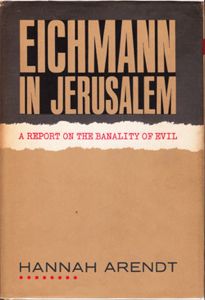 The 2012 German film, Hannah Arendt, directed by Margarethe von Trotta, just finished a two-week run at the Siskel Film Center. Barbara Sukowa does a superb job portraying political theorist/philosopher Arendt in this docudrama. My book group had an intense discussion last year about Arendt’s book, Eichmann in Jerusalem, which the film focuses on. Arendt asked The New Yorker to assign her to cover the 1961 trial of Nazi Adolf Eichmann, captured in Argentina and taken to Israel for trial as a war criminal. Her coverage appeared in a series of articles in the magazine and then was adapted with minor changes for the 1963 book. The film uses actual trial footage of the defendant in his glass cage, the prosecutor and some of the witnesses along with Sukowa as Arendt viewing and reporting on the trial. (The image is the cover of the first edition.)
Her writing developed the concept of the “banality of evil.” She grievously offended much of the American Jewish community by describing Eichmann as an ordinary man, a bureaucrat concerned most with his own advancement, with no personal motives or imagination; he was following orders—the Nuremberg defense. He was banal, not even sinister, and incapable of thinking, she wrote. (Does that mean we are all capable of such horrendous acts?) A brief comment on the Jewish Councils ignited further controversy. She described a group of Jewish leaders who apparently were trying to work in the best interests of local Jews, but in effect collaborating with the Nazis.
The reaction to Arendt’s coverage, and her reaction to that, is the crux of the story. The film isn’t exactly subtle, but it poses some important questions. Questions that deserve discussion.
Wish I was in New York….
If I was in New York this month, I would be sure to see The Armory Show at 100: Modern Art and Revolution, showing at the New York Historical Society. The show presents more than 100 works from the original show in one long gallery. Some of the famous European pieces are included, such as Duchamp’s Nude Descending a Staircase (No. 2) and Matisse’s Fauvist Blue Nude. A New York Times review describes how the American work on one wall seems to be very conservative in comparison to the more explosive nature of the Europeans’ on the opposite side. The show runs until February 23, so maybe I will see it after all. Just not in October.
————————————————-

* Really. A festival of cat videos. The first Internet Cat Video Film Festival was a smash hit when the Walker Art Center in Minneapolis inaugurated it last year. Thousands of people came to sit outside and watch cat videos for hours. The Chicago version was held October 19 at the Irish Heritage Center; a $10 ticket bought you an hour of cat videos. Much as I love kitties, I didn’t go. And I don’t have cats because I have allergies.
Six things you didn’t know you missed in Gapers Block
Posted: October 11, 2013 Filed under: Art & architecture, Theater | Tags: Gapers Block, Hebru Brantley, Interrobang Theatre Project, Six Corners Association, Ted Sitting Crow Garner, Ukrainian Institute of Modern Art, Unity Temple 1 CommentI love writing for Gapers Block. It gives me an excuse to view, think and write about some of the things I love—like theater, art, architecture and design. So here are some things I’ve been writing about recently. You can still catch some of them.
Six Corners dedication of Portage sculpture
The Six Corners Association partnered with the American Indian Center to create a piece of art to celebrate the contributions of Native Americans to the history of the community, which is part of the larger area known as Portage Park. The sculpture titled Portage by artist Ted Sitting Crow Garner is being dedicated at 12 noon Saturday, October 12, at the Six Corners Sears store at the intersection of Cicero, Irving Park and Milwaukee.

Here’s a photo from a slideshow charting the progress of the sculpture. Garner is shown putting it into position on the west side of the Sears store. Image courtesy Six Corners Association.
See my preview here, which includes some of the history of the neighborhood.
In my high school years, I worked at a chain woman’s clothing store on Cicero Avenue across from the Sears store, so I feel a pride of ownership in my old neighborhood.
Even if you miss the dedication, you can drive by and check out the sculpture later.
Hebru Brantley’s The Watch at Pioneer Court
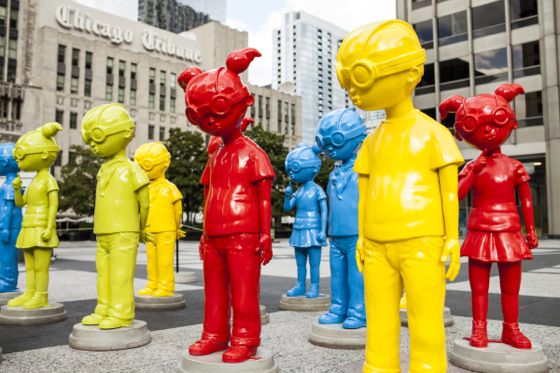 A collection of brightly colored figures has taken up residence at Pioneer Court Plaza, formerly the site of the Marilyn Monroe figure. They’re part of Chicago Ideas Week and created by Chicago artist Hebru Brantley, who is the Chicago Ideas Week 2013 Artist in Residence. Read about them here. They’ll be in place at least until October 20.
Photo by Kristie Kahns, courtesy Chicago Ideas Week.
Ukrainian Institute Artists Respond to Genocide exhibit
I wrote recently about the excellent Bauhaus exhibit at the Ukrainian Institute of Modern Art. The institute recently unveiled its new exhibit, Artists Respond to Genocide, which enables artists to take a broad look at genocide over the last century. The exhibit is made up of paintings, drawings, photography, sculpture and assemblages by 20 local and international artists. Many of them are really gripping, such as the large brightly colored painting by Mary Porterfield titled Engraved, or the woodcut and intaglio prints by Harold Cohen titled Auschwitz, Baba Yar and Genocide. The exhibit recognizes the Holodomor or secret holocaust in the Ukraine in 1932-33 as well as the appalling list of genocides over time. A chilling list in the back of the exhibit program enumerates 13 of them, with the number of fatalities in each.
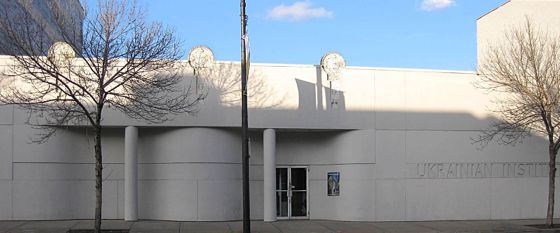
I wrote a preview of this exhibit for Gapers Block. You can see the exhibit until December 1 at this excellent small museum at 2320 W Chicago Ave.
The image is the Stanley Tigerman-designed facade of the building.
Image courtesy Ukrainian Institute of Modern Art.
You can tour Wright’s Unity Temple
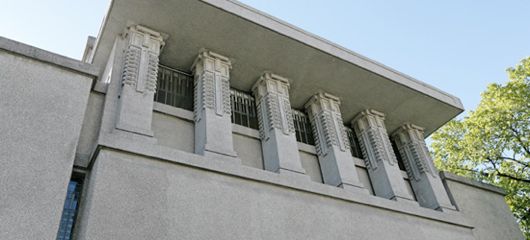 It’s been some time since formal tours of the landmark Frank Lloyd Wright structure, Unity Temple in Oak Park, have been available. Up until now, the only way to see the interior of this innovative building was if you knew someone or by chance went to a program there. (I’ve done both and even happily went to several services with friends. Even an avowed atheist will do anything to see the interior of a famous religious structure.)
But now the FLW Preservation Trust is offering docent-led tours again. Get more information here.
Image courtesy Frank Lloyd Wright Preservation Trust.
Terminus at Interrobang Theatre Project
I’ve seen and reviewed many plays in the last month, but one of the very best was this amazing three-actor blend of monologues produced by Interrobang Theatre Project at the Athenaeum. Here’s how my Gapers Block review started:
“Mark O’Rowe is one of the new generation of Irish playwrights whose work was first seen in the 1990s. In Terminus, being presented by Interrobang Theatre Project, he displays his fascination with language and his passion for words. Terminus isn’t so much a play as a series of stories, intertwined in monologues by three characters, known only as A, B and C. Their stories, set in the streets of Dublin, begin separately, and gradually become more connected, until they are finally merged in a glorious fantasy of blood, sweat, tears and sex.”
Truly, this was one of the finest nights of theater I’ve seen lately. Unfortunately, the play closed last week.
The Benchmark at Step Up Productions
I also reviewed this play about a well-read homeless man and although the lead actor’s performance is excellent, the play as a whole was somewhat flat. I wanted desperately to love it, but couldn’t. But tastes vary and other viewers might well enjoy it. Read my review here and then check out other reviews here.
September, musical birthdays…and nostalgia
Posted: October 3, 2013 Filed under: Design, Music, People | Tags: Berwyn bungalows, Bruce Springsteen, John Coltrane, Leonard Cohen 7 Comments


September. It was a lovely month. Usually it means no more hot weather…for which I shout hurray. On a Sunday morning walk, I celebrated the charms of North Avenue beach by hanging out for a while at the Chess Pavilion. It’s a beautiful refuge from the sun and my favorite place to take a break on the lakefront. The Chess Pavilion was built in 1957, designed by architect Maurice Webster. Sculptor Boris Gilbertson carved the stone chess pieces and the incised chess figures.

The Man–at 64
Happy birthday, Bruce
September is also the month of Bruce Springsteen’s birthday (the 23rd), which gives me an excuse to post a photo of him looking great at whatever his age is. This year it’s 64. Here’s a photo of him on the beach in Rio de Janeiro, where he played his first South American concerts in many years.
Happy birthday, Leonard
And it’s the month of other important birthdays. Like Leonard Cohen (the 21st), who at 79 is still touring, looking fabulous and sounding like his usual charming, gravel-voiced self. He’s sort of a lounge lizard version of Tom Waits. Leonard is still touring on his latest album, Old Ideas. He’ll be in Australia and New Zealand in November. I reviewed his March concert at the Chicago Theater.
Remembering Trane
And it’s also the month to remember the late great John Coltrane, who shares Bruce’s birthday, September 23. If Trane were alive today, he would be 87. His death at the age of 40 was a tragedy and an immense loss to the music world. He was and is today enormously influential to young musicians. He was beginning to experiment with avant-garde jazz (as in his spiritual album A Love Supreme) as well as with eastern religions.
Trane’s biography and legacy are complex. He’s been treated as a religious figure by some African-American churches; there is at least one film about the St. John Coltrane African Orthodox Church in San Francisco; and a church in New Jersey includes him on a list of African-American saints. You’ll find some beautiful images and a great Coltrane quote on that church page. And they hold services every Sunday with the Coltrane liturgy.
Bungalow nostalgia
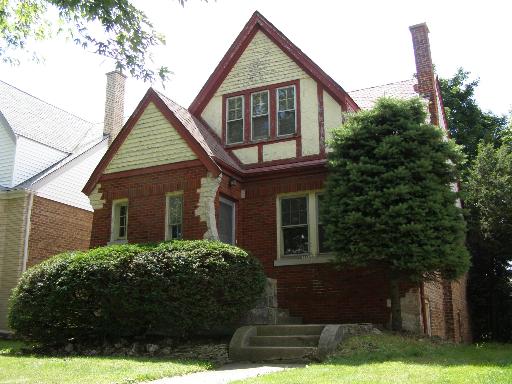
My house, a very fine house
Before going on a Berwyn bungalow tour last week, I was exploring far northwest side real estate to see how bungalows are currently valued. (They are real values, solidly built small houses in pleasant older neighborhoods.) I decided to search for the house where I grew up and was pleased to find a great photo of it from the time of its last sale in 2009. The house is on Rutherford Avenue in the Montclare neighborhood, near the intersection of Grand and Oak Park avenues. My parents bought the house in 1938 and lived there for about 30 years.
The standard bungalows in Berwyn all have similar layouts. Small front hall, living room, dining room, kitchen, half bath and sometimes a small bedroom on the first floor. The second floor typically has sloped ceilings in the two bedrooms plus one full bath. These are small houses, typically 1200-1500 square feet. My parents’ house, even though it didn’t have a bungalow façade, had exactly that inside layout. The developer on that block decided to spiff up the exteriors by applying “Tudor” façades. I could draw the floor plan from memory this minute.
“Super-bungalows,” are larger and have different space layouts, more bedrooms and baths. We saw a few of those in Berwyn Sunday. The tour is a self-guided walking tour to seven or eight houses, with docents stationed at each house to guide visitors through the interiors. It’s an annual event, so put it on your calendar for September 2014. I recommend it highly.
How I spent my week…theater, art, music
Posted: September 25, 2013 Filed under: Art & architecture, Music, Rock and roll, Theater | Tags: Athenaeum Theatre, Interrobang Theatre, Museum of Contemporary Art, Steve Earle, the Bauhaus, The Vic, Ukrainian Institute of Modern Art 1 CommentA great theater experience, plus some cartoon art and memories of the Bauhaus. The finishing touch was a Steve Earle concert. Am I lucky to live in Chicago or what?
Terminus at Interrobang Theatre Project
Mark O’Rowe is one of the new generation of Irish playwrights whose work was first seen in the 1990s. In Terminus, being presented by Interrobang Theatre Project, he displays his fascination with language and his passion for words. Terminus isn’t so much a play as a series of stories, intertwined in monologues by three characters, known only as A, B and C. Their stories, set in the streets of Dublin, begin separately and gradually become more connected, until they are finally merged in a glorious fantasy of blood, sweat, tears and sex. That’s how my review of Terminus begins. It’s a terrific play with thrilling language. Truly a treat to listen to. I recommend it highly.
Modern Cartoonist: Daniel Clowes exhibit at MCA

Daniel Clowes is a well-known graphic novelist, who has published nearly 50 books and magazines. Modern Cartoonist: The Art of Daniel Clowes is his current exhibit at the Museum of Contemporary Art, which runs until October 13. The show is beautifully designed and curated and has many lovely little graphic surprises.
It was very interesting to see the progression and process of Clowes’ work, sometimes from sketch through inking and printing. For some publications, a series of pen and ink on tissue pages was shown. Since so much art today is created on the computer, it’s fascinating to see so many of Clowes’ pages drawn by hand on paper.
Image: Collection of Daniel Clowes. Courtesy of the artist and Oakland Museum of California
Chicago’s Bauhaus Legacy at the Ukrainian Institute of Modern Art
 It’s been years since I visited this little gem of a museum on Chicago Avenue in Ukrainian Village. Do not think it’s only about Ukrainian art; it’s really a center for modern and contemporary art. The Bauhaus exhibit is fabulous and it’s open through this Sunday, September 29. If you are interested in modernism, you don’t want to miss it.
The legacy starts with Lazslo Moholy-Nagy moving to Chicago to establish the US version of the famous German citadel of design. The Bauhaus’ existence was threatened in the 1930s by Hitler’s aversion to modern art. Moholy-Nagy was followed by other artists and designers who moved to Chicago (including Mies van der Rohe). The New Bauhaus went through many name changes and locations and in 1949 became part of the IIT Institute of Design.
The exhibit includes about 150 pieces by 90 artists and designers. Work includes painting, sculpture, photography, architecture plans, furniture and design pieces. A lovely example of the latter is a bar of Dove soap, designed by three students in 1952 as part of a special project funded by Lever Brothers. Dove still uses the same shape for its soap bars. (The original carved wooden prototype is on show at the Chicago History Museum.)
In addition to the main exhibit in the west gallery, the east gallery includes Bauhaus work from the institute’s permanent collection. There’s also a very interesting wall that shows the birth and development of the Ukrainian institute.
I’m going to write a feature on the institute for Gapers Block and I’ll provide a link to it here when I do.
Steve Earle at the Vic 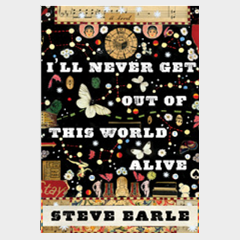
Steve Earle and the Dukes played a great concert at the Vic Saturday. The setlist included many of his fine old songs as well as tracks from his new album, The Low Highway. His band is made up of four musicians: a drummer, upright bass player, lead guitarist and fiddler/mandolin player. Earle plays a number of stringed instruments himself (guitar, mandolin, banjo) and sings lead vocals. Many of his songs (and his occasional patter between songs) involve social commentary. Here are a few lines from the song “The Low Highway.”
Heard an old man grumble and a young girl cry
A brick wall crumble and the white dove fly
A cry for justice and a cry for peace
The voice of reason and the roar of the beast
And every mile was a prayer I prayed
As I rolled down the low highway.
His novel–I’ll Never Get Out of This World Alive–is on my reading list and coming up soon.
Theater update: Three you can see
Posted: September 16, 2013 Filed under: Movies, Music, Theater | Tags: American Blues Theater, Hank Williams, Shattered Globe Theatre, Sideshow Theatre, Theater Wit 3 CommentsIt’s theater season again and I have three new reviews that you’ll be interested in. Plus a special tip on what to see in the future.
Theater picks
9 Circles at Sideshow Theatre

From @HistoryinPix
9 Circles takes us through the depths of Dante’s Inferno by telling the story of an Iraq war veteran who is accused of a terrible crime. The play presents a series of two-person scenes between the ex-soldier and a series of helpful or surreal professionals. The story moves from accusation to trial to execution. The play is gripping, intense and discussion-provoking. It’s a terrific performance by Andrew Goetten, who plays the ex-soldier, and by the other actors in multiple roles. You can read my Gapers Block review here.
The photo at left is the one I reference in the first paragraph of the review. The photo is from the @historyinpix Twitter page and titled “Soldier in Vietnam, 1965.” Click to enlarge it and read what the soldier has written on his helmet.
Hank Williams: Lost Highway at American Blues Theater
This is a lively musical biography but of course the underlying story is tragic. Hank Williams was a brilliant country-blues singer/songwriter in the 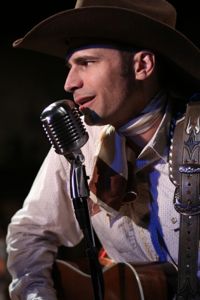 1940s and early 1950s. He influenced many performers who followed him and the play suggests how he was a link to the African-American blues musicians of the period. His life was cut short at the age of 29 because of his addictions to alcohol and prescription drugs. The ABT play does a good job of telling both the tragic story and making you happy to hear a healthy setlist of Williams’ songs. The band (Williams’ Drifting Cowboys) is made up of some excellent Chicago musicians and Matthew Brumlow as Hank comes close to channeling his image, his voice and musical style. Read my Gapers Block review here.
Photo by Johnny Knight; courtesy of American Blues Theater.
Other People’s Money at Shattered Globe Theatre
This is a witty and fast-moving play about corporate raiders in the late 1980s. You remember them, don’t you? Michael Milken, Victor Posner, Carl Icahn? The financial crisis of five years ago this month has brought other corporate names to the forefront. Jamie Dimon, Richard Fuld and Hank Paulson; companies like Lehmann Brothers, Bear Stearns and AIG. So the raiders and their takeovers seem a bit dated now. Nevertheless, this is an interesting and entertaining play and I recommend it. Ben Werling is terrific as Larry the Liquidator. Think of it, as I said in my Gapers Block review, as a drawing room comedy of the 1980s.
NT Live in HD
The Audience, a National Theater Live encore presentation
 The National Theatre of London broadcasts live performances of some of its productions to theaters around the world, similar to the Metropolitan Opera Live in HD broadcasts. NT Live broadcasts a live performance and several encores at the two Northwestern University theaters in Evanston, at the Music Box in Chicago and Renaissance Place in Highland Park.
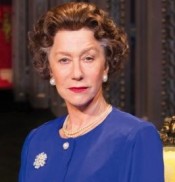
Last week we saw the final broadcast of the commercial, West End production of The Audience by Peter Morgan. Helen Mirren stars as Elizabeth II of England and some talented actors as her various prime ministers over the years. The play is a series of scenes, in random, not chronological, order, in which Mirren ages or reverses her age with very quick changes of wig and costume. It’s brilliantly acted and riveting as it takes the viewers through historical events of Elizabeth’s long career. Her first audience was with Winston Churchill in 1952 and the latest with David Cameron in 2012.
Future NT Live productions this season are three Shakespearean tragedies: Othello, Hamlet and Coriolanus.
Mirren as Queen Elizabeth; photo copyright National Theatre Live.
Remembering Chile’s 9/11
Posted: September 13, 2013 Filed under: Movies, Music, Politics, Theater | Tags: Ariel Dorfman, Bruce Springsteen, Victor Jara, Victory Gardens Theatre 8 CommentsRemembering 9/11/73, the day that changed everything–in Chile
We observed the 12th anniversary of the 9/11 attacks on the World Trade Center this week. News channels had at least one story on the memorial observances. MSNBC relived the entire experience, replaying the NBC news footage from that fateful morning, minute by minute.
 In Santiago, Chile, they remembered their own 9/11, which had an even more profound impact on Chilean society. The Christian Science Monitor reported that “President Sebastian Pinera marked the 40th anniversary of the military coup that overthrew Salvador Allende on Wednesday by urging Chileans to heal from—but never forget—the events of Sept. 11, 1973, that launched a bloody 17-year dictatorship.” Allende was a democratically elected socialist who launched the “Chilean path to socialism.” He nationalized the copper industry (mostly owned by US companies) and used the money to improve education and health care for his people. The US–meaning the CIA–found a way to sow chaos and provoke the military coup. Chile’s national history museum opened an exhibit this week to mark the anniversary.
Chilean writer Ariel Dorfman had a poignant article in the September 8 New York Times, titled “9/11: The Day Everything Changed, in Chile.” He and his friend Claudio Jimeno were among four advisers to President Allende when the government was under threat of a military takeover by the forces of General Augusto Pinochet. The advisers rotated nights at La Moneda, the presidential palace, to keep watch and alert the leader to any emergency. Dorfman was to keep watch on Monday night, September 10, but changed nights with his friend because of a family obligation. The rest is history, of course. Jimeno was taken prisoner in the coup, tortured and became one of the desaparecidos.
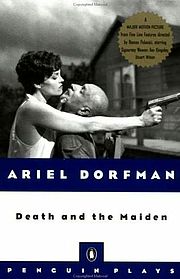
Dorfman is author of the novel and play Death of the Maiden, which has been dramatized on screen as well as stage. Victory Gardens Theatre will mount a production of the play in June 2014. The 1994 film starred Sigourney Weaver as the activist who believed she had been raped and tortured by a doctor who befriends her husband. The events could have happened in most any country under siege today, but it was Chile. Chile after 9/11.
Bruce Springsteen honors Victor Jara, Chilean hero

image courtesy backstreets.com
Bruce and the E Street Band performed in Santiago, Chile, on September 11, their first show in South America since the Amnesty International Human Rights Now! tour in 1988. Bruce took the opportunity to honor Victor Jara, Chilean poet, activist and Allende supporter, by performing his song “Manifiesto” during the encore set. Jara was tortured and killed after the 1973 coup.
Film odysseys, digital and analog
Posted: September 8, 2013 Filed under: Digital life, Movies, Music | Tags: Dave Grohl, Sound City 1 CommentHere are my strong recommendations on three films that illustrate the history of film and music and how technology has affected both art forms. All three films are fascinating and deserve our attention if we care about the popular culture that affects our lives.
The Story of Film: An Odyssey
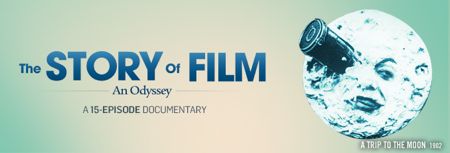 A new series on the history of film (no yawns, please) just started running on cable channel TCM. It’s based on a 15-part, 900-minute documentary series titled The Story of Film: An Odyssey, created by Mark Cousins, a film critic from Northern Island and author of a 2004 book of the same title. The first chapter ran last Monday night (September 2) on TCM and will continue for the next 14 Mondays, at 9pm CT. TCM creates a whole evening around the theme of that week’s episode, showing some of the films referenced before and after The Story of Film episode. You can see the list of films referenced in each episode here. The image in the film poster above is from the 1902 George Méliès film, A Trip to the Moon. (You may remember Méliès as the owner of the toy shop in the recent film Hugo.)
The first episode covering 1895 to 1918 starts with early moving pictures made by Thomas Edison in New Jersey and the Lumière brothers in Lyon, France. Cousins pays attention to changes in film editing and the evolution of movie theaters from nickelodeons to grand movie palaces of Egyptian, art deco and other exotic decor.
As AO Scott wrote when the series was released last year: “It is global in scope, attentive to the political implications of film, generally director-centric and closely attuned to matters of form. There are interviews with academics and filmmakers, visits to cinematic landmarks and a wealth of wonderful clips.”
Watch the trailer.
Side by Side
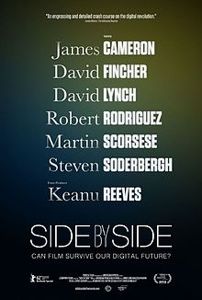 Are you a movie junkie like me who loves the technical side as well as the creative? Then you will appreciate the 2012 documentary, Side by Side, which looks at changes in film technology and focuses on the switch from photochemical film to digital projection. That technology revolution is highly controversial in the movie business, although most theaters have switched to digital completely. (The Gene Siskel Film Center still shows both formats and usually indicates format in its listings.)
Side by Side shows the history and workflow of both kinds of filmmaking and illustrates what is gained and lost in both processes. Keanu Reeves is host and interviews directors and cinematographers about how the technology affects their filmmaking.
The film points out that digital production democratizes the filmmaking process because a filmmaker can go out alone with a single piece of equipment. A digital camera does not require the elaborate equipment and crew that celluloid film does. And it makes every film ever made available for instant viewing. That’s how I can watch old foreign and indie films now on DVD or streaming.
But many directors are saddened or angry by the change and insist the color and image richness of celluloid is lost in digital technology.
Sound City: Live sound, slain by technology
 The 2013 documentary Sound City tells much the same story about the music business. The 108-minute film, directed by musician Dave Grohl (Nirvana, Foo Fighters), tells the story of the legendary Los Angeles recording studio where bands like Tom Petty and the Heartbreakers, Nirvana, Neil Young, Johnny Cash, John Fogerty, Nine Inch Nails, Rage Against the Machine, Fleetwood Mac and Rick Springfield made great music.
Sound City never really joined the digital revolution and continued its tape-based recording in a venue where every room had its own sound quality. But once the digital revolution began, its demise was in sight. Many musicians still prefer the richer sound of tape-based, analog recording. But Sound City and the other great recording studios have disappeared. Grohl bought the original Neve soundboard from Sound City and has it installed in his own Studio 606.
This is a fine documentary, telling the story of a landmark musical institution, its impact on rock and roll, and its demise, slain by technology. Drummer/guitarist Grohl proves himself to be a filmmaker too.
The film will be shown again a few times this week on Palladia or VH1 Classic. And you can buy it from iTunes or on DVD.
Weekend update / no apologies to SNL
Posted: September 6, 2013 Filed under: Art & architecture, Digital life | Tags: E-readers, Old Irving Park, Tony Sparrow 1 CommentSuggestions for two new art installations to explore and some thoughts on reading.
New art and music on the State Street median
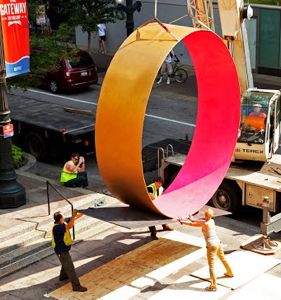
Photo by James John Jetel for Chicago Loop Alliance.
I wrote about the new State Street plaza in June when the public space on the State Street median opened. This pleasant parklet is still there, between Wacker Drive and Lake Street.
Tables and plantings create a place where you can read a book with your lunch or meet a friend for coffee.
Now there’s a new piece of sculpture at the south end of the plaza, created by Dusty Folwarczny. I updated the story about the plaza in Gapers Block this week.
And the Chicago Street Musicians play popup concerts at lunchtime occasionally. It’s an admirable urban oasis.
City melting pot: The new mural in Old Irving Park
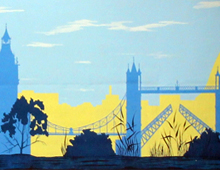 If you’re out and about Saturday morning, you can stop by Irving Park Road and Keeler Avenue for the dedication of the new mural celebrating the Old Irving Park community. You can read my story about it in Gapers Block. Artist Tony Sparrow led a team of artists to create the mural on both walls and all the pillars in the Metra/Union Pacific underpass just west of the Kennedy Expressway underpass. Tony was a delightful host when I visited last week to interview him and tour the neighborhood. (The image shown is a small portion of the mural; thanks to Tony for the image.)
The mural is a world skyline titled Positive Babel: The World Lives, Works and Plays in Old Irving and celebrates the residents of some 70 ethnicities who live in the neighborhood. Old Irving is generally bound by Pulaski Road and Cicero Avenue east and west and Addison Street and Montrose Avenue north and south. The Old Irving Park Association has been working for the last 10 years to improve the neighborhood environment and one of its projects has been turning underpasses into art galleries. The Positive Babel murals are the 10th and 11th created.
If you want to explore the murals on foot, there’s easy street parking on Avondale just east of the Positive Babel underpass.
Reading on the CTA Redux
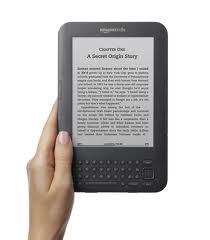 Some time ago, I wrote about how I like to spy on what people are reading on the CTA. I said I never go anywhere without something to read because you never know whether the bus will get stuck in traffic or whether your lunch date will be running late. I complained about how anonymous e-readers keep me from spying on book covers (and I admitted that I read all formats—print, phone, Kindle and iPad).
Now here’s Transit Readings, a fun site where the blogger thrives on photographing people as they ride and read their books, real books. Sometimes the bus or rail line info is included too.
And here he explains what’s he’s doing and his rules for doing it. If you’re reading a book on the Blue Line or the #36, you may find yourself here.
Labor Day agenda: Food, art and street signs
Posted: August 31, 2013 Filed under: Art & architecture, Chicago, Food, Theater | Tags: A Red Orchid Theatre, Blue Sky Bakery, Jack Kerouac, Michael Shannon, Sam Shepard, State and Madison streets 1 CommentA few things on my mind today, some of which you might want to think about too.
Bakery love
I’m fond of the fruits and vegetables from the farmers’ market but I’m also a superfan of good bakeries. I discovered  a new one today and you should try it. It’s Blue Sky Bakery at 3720 N Lincoln, just north of the Addison stop on the Brown line. Street parking should be pretty easy too. I bought some delicious berry scones and an apple-brie croissant baked in a muffin cup. Mmmm-mmm. Lots of delicious-looking cookies and cakes too.
There’s another reason why you should visit Blue Sky Bakery. They provide employment and training for homeless and at-risk youth. So those deliriously luscious baked goods are also helping bring about social change. CBS Channel 2 did a story on Blue Sky recently. Check it out.
Borders at Solti Park
I wrote about these intriguing figures earlier this week in my Art Around Town roundup. Here’s another photo.
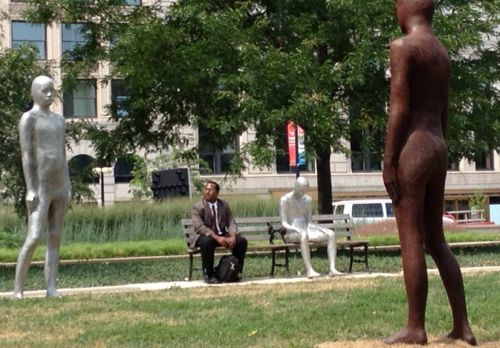
Photo by Nancy Bishop
Theater pick
Simpatico by Sam Shepard runs until September 15 at A Red Orchid Theatre. It’s a terrific show with a gripping first act so get a ticket if you possibly can. That may not be easy because (1) the play has gotten four-star reviews and (2) it’s showing in the tiny A Red Orchid Theatre on Wells Street. The theater describes it like this: “High society meets low life in the slippery netherworld of thoroughbred racing. This tragic-comedy explodes when a simple phone call threatens to undo years of blackmail and false identities.” The small tough cast features Michael Shannon and Guy Van Swearingen. It’s sold out but a standby ticket line forms one hour before each performance.
Reading list
The Mexican Girl by Jack Kerouac. I confess that every once in a while I look at the obituary page if I’m reading an actual newspaper, to see if anyone interesting or important died. One day last week, there was a gem of an obit. The woman who inspired the character Teresa or Terry in Jack Kerouac’s On the Road died at 92. The wonderful part is that she didn’t know the identity of the young man with whom she had a brief affair in 1947.
The short story, The Mexican Girl, was excerpted from the manuscript of On the Road and first published in The Paris Review in 1955. The review paid Kerouac $50 for the story. It was a big hit and resulted in the whole book being published by Viking Press in 1957. I thoroughly enjoyed rereading the story–it starts on page 74 of my edition of On the Road. If you can’t find yours, you can listen to an audio version of the story recorded in 2003.
Chicago street signs
Chicago has a lot of weird and amazing engineering achievements. Reversing the flow of the Chicago River, sending it downstate rather than into Lake Michigan. Raising the grade of the city and all its buildings by five feet to lift the city above the mud and sludge of the unpaved streets. My favorite bit of reengineering, however, happened in 1909, when all the streets in the city were renumbered with State and Madison as the zero point. State Street became zero for east-west streets and Madison for north-south streets.

Hear that, Manhattan? In Chicago, you know exactly where an address is going to be because you have memorized the arterial streets in each direction. Every good Chicagoan does that. You know if you are going to the 2700 block of Halsted Street that it will be a block south of Diversey, which is 2800. In New York, you have to ask what the cross street is because streets are haphazardly numbered as they were built in centuries past.
Patrick Reardon did a nice story on this in the Tribune this week. The story marked the occasion of officially naming the corner of State and Madison streets as Edward Brennan Way, in honor of the private citizen who devised the plan and fought for its acceptance by the City Council.
Gapers Block recap: Art and a little more
Posted: August 28, 2013 Filed under: Art & architecture, Movies, Theater | Tags: American Made Movie, Expo Chicago, Gapers Block, Solti Park, Strange Bedfellows Theatre Leave a commentHere are a few events I’ve been writing about recently on Gapers Block to pique your interest in current and future art events in Chicago.
Art Around Town
Borders, 26 Icelandic Sculptures, in Solti Park
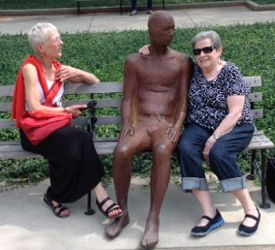
Next time you’re near the Art Institute, meander south to Solti Park at the southeast corner of Jackson and Michigan. You’ll find these pairs of figures – one iron, one steel – that seem to want to talk to you or make you sit down and reflect. And you can sit down next to one of them and look into his eyes. My friend Linnea and I had a conversation with one of them. The Icelandic artist, Steinunn Thórarinsdóttir, modeled the figures after her oldest son. Read my article.
Expo Chicago to Display Art from 120 Galleries
The massive annual art exhibition known as Expo Chicago will return next month with displays from 120 galleries at the Festival Hall at Navy Pier. There will also be contributions from other organizations and a citywide week of arts and culture called Expo Art Week. Included in the week’s activities will be museum and gallery exhibits, music, theater and dance performances. The exhibition is open for public viewing September 20-22. See my Gapers Block story for more info.
Constantly Consuming Culture to Showcase Work of Little-Known Chicago Artists
It may not attract curators and collectors from around the world, but this exhibit September 7-13 at 222 N. DesPlaines St. should be very intriguing. It will show the work of eight local artists, who work in painting, sculpture, found art and video art. Who knows? You may fall in love with a piece of art that you can actually afford to buy. Because the expenses of mounting the show are funded by crowdfunding, the artists will receive 100 percent of any sales at the show. Read about it here.
Theater
Strange Bedfellows Theatre Invents Van Gogh
Strange Bedfellows, another one of our creatively crazy storefront theaters, just finished a run of Inventing Van Gogh, an imperfect but intriguing story about Vincent Van Gogh’s rumored last painting, another of his self-portraits. Strange Bedfellows’ motto is “Redefining mischief,” which makes me want to see what their next play promises. See my Inventing Van Gogh review.
And a movie
American Made Movie Tells Story of Manufacturing Decline, Revival

This 82-minute documentary opens this Friday and runs for a week at AMC Loew’s 600 N Michigan. It repeats the familiar story of US manufacturing’s decline over the last 30-40 years and suggests a rather naïve solution: Buy local, buy American and that will build a new domestic manufacturing base. The story is told with some compelling personal stories and anecdotes about half a dozen businesses, large and small, that changed their practices to survive. Buy local and buy American are practices that some of us can follow. But the big-box stores sell lowest-cost products made overseas and those are the products that many American families can afford. So this film, while well made, is “preaching to the choir.” Read my review.
Image of stars and stripes jewelry by Merrily Made Jewelry, courtesy of the producers; see review for the jewelry story.
 nancy bishop's journal