Big art questions: What is art and who gets to make it?
Posted: March 4, 2015 Filed under: Art & architecture, Theater | Tags: "This Is Modern Art", Idris Goodwin, Kevin Coval, Steppenwolf for Young Adults, Steppenwolf Theatre 1 Comment My review of This Is Modern Art, the new Steppenwolf for Young Adults play, went live on Gapers Block Monday night, soon after the scathing reviews by the two daily newspaper critics had been posted or published. I was surprised at the level of criticism in the two reviews—not criticism of the play itself, but of the theater for producing it at all.
This Is Modern Art (based on true events) is the story of the crew of young graffiti writers who decide they need to define “modern art” on their own terms and so they paint a “piece” (short for masterpiece) on the east wall of the new Modern Wing of the Art Institute. The event actually took place five years ago. In the play, the artists are shown at a party where an art student brags about attending the opening of the Modern Wing and seeing all the masterpieces plus “everybody in the art world.” Clearly Seven (the leader of the crew) knows his art history, but he says “We only paint everywhere else, because they won’t let us paint inside.”
The play acknowledges the illegality of graffiti writing—and also distinguishes between gang graffiti (usually tags) and the street art created by the graffiti writers. Among the criticisms of the play is that it sends the wrong messages to young people. This is a really offensive argument for young people, who do not see themselves as naïve and malleable to suggestion. As my grandson said, “Yeah, I liked the play a lot but that doesn’t mean I’m going to go out and buy spray paint and write on walls.”
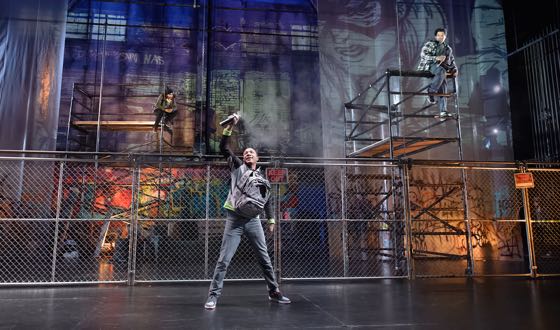 In my review, I commented, “Was what happened an act of vandalism or important artistic commentary? The question deserves to be addressed. The script and the characters acknowledge that they are committing an illegal act. But the important message the play articulates is that art shouldn’t be confined to elite galleries and museums with $18 admission tickets. The graffiti writers are artists shouting to be seen and heard. They demand visibility in a society that decrees them invisible–as artists and as individuals.
Twitter commenters noted, “If you see a Shakespeare or McDonagh drama, do you criticize the artists for glorifying/condoning murder?” And “Does anyone try to ban the Netflix series ‘House of Cards’ because Francis Underwood commits murder to get ahead?” The reviews by the Tribune and Sun-Times critics received their share of Twitter snark. Trust me. It wasn’t pretty.
I have written frequently about street art and post-street art (see Related Posts below) and I find the genre fascinating and vibrant. I wouldn’t want to shut it down. But I agree that I wouldn’t want to wake up one morning and find my house (if I had a house) covered with graffiti. The play also differentiates between “permission walls,” where an owner or a community invites artists to write on or paint walls. This would cover some of the paintings in highway and railroad underpasses that have been sponsored by local communities. Some graffers are happy to be able to show their art on permission walls, while to others, the risk is the drug that fuels their creativity. In any case, I believe they ought to be able to paint public walls and abandoned spaces.
And the Art Institute should have left the “modern art” masterpiece on its east wall for a few days instead of immediately calling in the graffiti blasting crew. And most importantly, Steppenwolf should have commissioned a “piece” for the south wall of their building, to be displayed at least during the run of this thought-provoking play. That would have been a meaningful way for the theater to make a statement supporting their production.
See my review of This Is Modern Art and go to Twitter and search #thisismodernart or @kevincoval to see the commentary about the play.
Let me know what you think about this issue. Who gets to make art and where should it be shown? Please comment below.
Related posts
Art in the gallery and out in the street.
Out in the street: street art and post-street art
New wall mural in Old Irving Park
February reviews: Everything has a music theme
Posted: February 24, 2015 Filed under: Music, Rock and roll, Theater | Tags: Orchard Theatre, Red Orchid Theatre, Redtwist Theatre, Steppenwolf Theatre, Tuta Theatre, Warren Zevon 1 CommentReviews: Theater for thought and laughter
Posted: January 29, 2015 Filed under: Theater | Tags: Court Theatre, Mr Burns: A Post-Electric Play, Shattered Globe Theatre, The Rose Tattoo, The Simpsons, Theater Wit, Waiting for Godot 1 CommentI always say I prefer my theater (and films) to be grim and depressing. No happy-go-lucky musicals with egregious singing and dancing for me. But this week I’ve seen three marvelous plays that made me laugh and made me think. And what could be a better combination for an evening of theater with thoughtful friends?
The Rose Tattoo by Shattered Globe at Theater Wit
 Tennessee Williams’ play about an insular Sicilian-American community on the Gulf Coast is melodramatic, tragic and funny. The rose tattoo of the title is an actual tattoo on the chest of Rosario, the husband of seamstress Serafina. We never meet Rosario because Serafina is widowed early in the play. She mourns him and prays to a statue of Mary and his ashes while trying to keep her teenaged daughter from growing up too fast. Shattered Globe’s production is performed in a small space at Theater Wit, but director Greg Vinkler and his actors make the most of the space and of Williams’ passionate plot and language.
My review for Gapers Block gave it four stars or “highly recommended” for the Theatre in Chicago site. The production runs until Feb. 28.
Mr. Burns: A Post-Electric Play at Theater Wit
 This could be described as a play about The Simpsons, now in its 26th TV season. But it’s really about the world we may have to look forward to, if we don’t rebuild our infrastructure to protect the electric grid. Yes, it’s a post-electric play, taking place in a world of the future that you don’t even want to think about. The three acts show us a vision of the near future, seven years later and 75 years after that. My review appears in Gapers Block and also on Culture Vulture.
Yes, The Simpsons’ plots and characters tie the dystopian epic together. The clever storyline follows the episode from season 5, “Cape Feare,” which satirized the two film versions of Cape Fear in 1962 (Robert Mitchum) and 1991 (Robert De Niro).
The acting, scene design and costuming are all well done, with great creativity in the use of materials and funky lighting when there is no electricity. Jeremy Wechsler’s direction is spot on and the eight actors move from character to character with ease. The production is funny and thought-provoking. However, if you’re not at least a casual Simpsons viewer, you may be in the dark. You can see this until March 1.
Waiting for Godot at Court Theatre
This Samuel Beckett play is one of my very favorites and I never grow tired of seeing it reinterpreted by a new director and cast. Court Theatre’s production, directed by Ron OJ Parsons, is one of the best I’ve seen. One interesting aspect is that it’s performed by an all-African-American cast.
You remember the story. Two tramps, Vladimir and Estragon (Didi and Gogo), a bleak landscape, a leafless tree. They’re hanging out, waiting, of course, for Godot, who never appears and is never explained. In mid-first-act, along comes Pozzo, the plutocrat, and his silent slave Lucky, who is roped by the neck and occasionally whipped by Pozzo.
All four actors are outstanding and among Chicago’s finest. But Allen Gilmore, who plays Vladimir, is so graceful, verbally and physically, that he simply outshines the others. Also Anthony Lee Irons, who plays Lucky, is a joy to see perform his “thinking” monologue. He is brilliantly agile as the philosophical gibberish rolls off his tongue.
Here’s a video clip from the current Court production.
This production is perhaps a bit more physical than some I have seen. It’s a lively performance (lively isn’t usually a word I’d apply to Beckett). The play is about the significance and insignificance of life, about tomorrow and about hope. But it is also a music hall piece with a great deal of humor. And Beckett fully intended it to be funny. He loved vaudeville and silent film comedy and supposedly considered casting Buster Keaton as Gogo and Charlie Chaplin as Didi.
Brian Dennehy was once quoted as saying: “Godot is the greatest thing you can do in theater. It’s incredibly philosophical and deep and significant—and very, very funny.”
Some of the acting pairs who have played Didi and Gogo in the past make me yearn to see their performances. Robin Williams and Steve Martin. Bill Irwin and Nathan Lane. Patrick Stewart and Ian McKellen (with Billy Crudup as Lucky!).
Here’s a wonderful video that shows clips of Stewart and McKellen’s 2013 performance plus the two of them speaking about the play in an interview.
And one more thing: The Humans at American Theater Co.
I saw this play a month ago but haven’t had a chance to write about it here. The Humans by Stephen Karam is a world premiere and another excellent ATC production that lets us observe a family Thanksgiving dinner in real time, including crudités from Costco. The characters—adult children, parents, grandmother—all have a story. Love and lost love, laughter, illness, disability and aging issues. The production received almost unanimous four-star reviews, although I would have given it three stars if I had reviewed it. It runs through Sunday, Feb. 1, with two performances on each weekend day—so it would be a good alternative to that football thing on Sunday.
Follow this blog, please
You can sign up to follow me at Nancy Bishop’s Journal by putting your email address in at the top of the right hand column. You’ll get an email when I post a new article, usually about once a week. No spam, no passwords.
2014: My pop culture memories
Posted: January 2, 2015 Filed under: Art & architecture, Books, Movies, Music, Theater Leave a commentIt’s the beginning of a new year and time to reflect on the pop culture year just ended. Critics did their top 10 lists of everything, but I’m going to do my list of 2014 favorites. Some of these are clearly eccentric choices–not necessarily “the best.” I’ve written about most of them during the year – either here or at Gapers Block or Culture Vulture.
Professionally….

Critics at work in the Sunken Garden
My favorite professional experience – my two weeks at the National Critics Institute at the Eugene O’Neill Theater Center. It was a fabulous and enriching two weeks, complete with inspiration from colleagues and visiting experts, lots of plays to review, and sleep deprivation.
The institute strengthened my ability to write theater criticism and I did a lot of it this year. I wrote about 60 reviews—mostly theater but also reviews of art exhibits—for gapersblock.com and about 20 for culturevulture.net, a national arts website.
For Nancy Bishop’s Journal, I wrote 46 essays, which drew 4500 visitors from 86 countries—mostly the US, UK and Brazil. The two essays that drew the most visitors were:
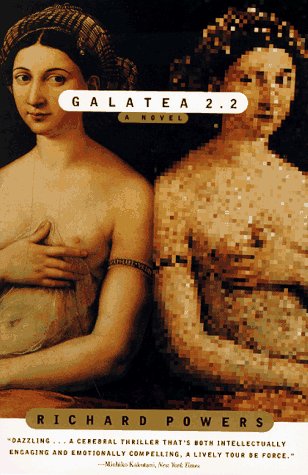 — My review of Spike Jonze’s film Her, which I compared to Richard Powers’ novel Galatea 2.2.
— An article demanding freedom for Oscar Lopez Rivera, a political prisoner in the US for 33 years.
Theater
My favorite experiences as a theater critic and theatergoer aren’t necessarily the plays on other top 10 lists, but they are shows that I found thrilling.
The Hypocrites’ All Our Tragic. This play was a masterful combination of all 32 extant Greek plays by Aeschylus, Euripides and Sophocles, written by Sean Graney. The 12 hours flew by, with plenty of breaks for food and conversation.
Oracle’s The jungle was a searing theater experience; a big story in the smallest space imaginable. My review commented, “Your Chicago ancestors may have greeted the Pilgrims, arrived on the Mayflower or a slave ship, or come in through Ellis Island. Whatever their origin, they’re part of our history. You can relive it in this stirring drama.”
A fabulous visiting production of Arguendo, a dramatization of a Supreme Court First Amendment case, directly from the transcript, by the Elevator Repair Service, the inventive New York theater company. Scroll down in this long post to see my review of Arguendo. The choreography of the justices on office chairs was priceless. Here’s the trailer:
Elevator Repair Service presented Gatz, a word-for-word reading of The Great Gatsby, at the MCA theater in 2006. Here’s a video sample of Gatz.
Also among my 2014 favorites: Seven Homeless Mammoths Wander New England at Theater Wit; a fine production of Martin McDonagh’s The Lieutenant of Inishmore at Aston Rep; and Chicago Shakes’ King Lear highlighted by Larry Yando’s moving performance in the title role. My reviews of The Lieutenant and Lear.
Films
Picking my favorite films of 2014 was really difficult, but here’s my try:
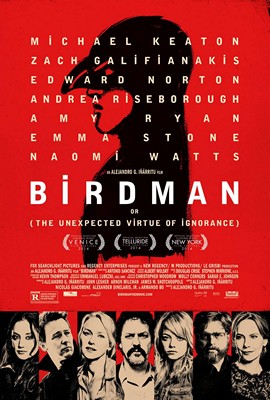 — Birdman, because it’s wildly inventive, sadly realistic, and beautiful to behold—especially if you love the backstage areas of old New York theaters. I’ve seen it twice and loved it both times.
— Boyhood, because Richard Linklater, who is obviously fascinated with the concept of time (re his “Before” film trilogy), took the time to see a boy and his family grow and change over 12 years.
— The Imitation Game. I could nitpick at plot points but the story is fascinating and Benedict Cumberbatch’s performance is award-worthy.
— The Grand Budapest Hotel. Yes, I know this is kind of sweet and quirky or “twee” as Greg Mitchell tweeted. I just saw it for the second time and still enjoyed Wes Anderson’s visual fun and games.
Favorite movie viewing experience: The Cabinet of Dr Caligari with a live organ performance at the Symphony Center on Halloween night.
Plus two exceptional art documentaries:
— National Gallery, a Frederick Wiseman documentary profile of London’s National Gallery, done in his fly-on-the-wall style with no narration or background music.
— The Hairy Who and the Chicago Imagists, about which I wrote two different pieces—first when it was shown here briefly in June and then when the Gene Siskel Film Center showed it in the fall.
Television
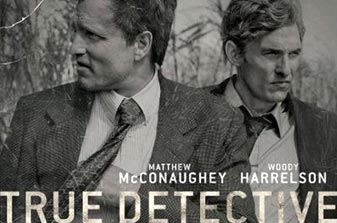 — True Detective, the weird, creepy, gothic HBO series starring Woody Harrelson and Matthew McConnaughey. True Detective will come again this year with a different cast and story line, but I doubt it will compare to year 1.
— The 2013 MusiCares Tribute to Bruce Springsteen, which was finally televised by PBS this fall. Many great performers cover his songs, finding new ways to interpret them, while Springsteen sat in the audience and watched. But he finally got to the stage to give his acceptance speech and play a few of his own songs.
— Sonic Highways, Dave Grohl’s tribute to American music, illustrated with the music and musicians of eight cities on HBO. The Chicago segment was episode 1. You can still view it on demand, if you subscribe to HBO.
Music

Bridgestone Arena, waiting for The Boss. Brad Paulsen photo.
— Bruce Springsteen and the E Street Band in Nashville. No, he didn’t come to Chicago, so we took a road trip.
— The Bruce Springsteen 65th birthday bash at Fitzgerald’s in Berwyn, organized by my friend, June Sawyers. In addition to the music, June and I read literary and not-so-literary commentary on Mr Springsteen.
Biggest musical disappointment: The October concert at the Symphony Center by Chris Thile and Edgar Meyer. The music and the performances were quiet, indistinguishable and without passion. I knew they weren’t going to rock out, but I did expect some enthusiasm.
Favorite album release: Leonard Cohen’s Popular Problems. The opening track, “Almost Like the Blues,” is especially fine. As the Pitchfork reviewer said, his music “sounds slick, but slightly off-kilter.” Springsteen’s High Hopes was also released in 2014, and of course I’ve listened to it many times.
Visual art
My favorite art and museum exhibits:
 — David Bowie Is, which closes this weekend at the MCA. It’s an excellent exhibit and illuminates the genius of a musician who is ever conscious of his identity. My review.
— Magritte: The Mystery of the Ordinary, 1926-1938, at the Art Institute. My comments.
— The new Ed Paschke Art Center in Jefferson Park opened this summer and I was there.
Mecca Flat Blues, an amazing exhibit of one of the many places where Chicago’s architecture and civic life collide, at the Chicago Cultural Center. This was my personal favorite article of the year. Chicago Magazine named it one of the must-reads of the week in April. I reprised it on my blog with added memories of Mies.
Books and authors
— Hilary Mantel’s short stories, The Assassination of Margaret Thatcher. I had only read Mantel’s first book about Thomas Cromwell, Wolf Hall, which won the Man Booker Award. Her short stories are wildly different.
 — John Lahr’s biography, Tennessee Williams: Mad Pilgrimage of the Flesh, is one of the best biographies I’ve ever read. I reviewed it and his appearance onstage at Steppenwolf.
— Stoner, the 1965 novel by John Edward Williams that was recently rediscovered. Julian Barnes declared it the must-read novel of 2013. Stoner was a farm boy who went to college to study agriculture and discovered the world of literature. One reason I loved its quiet prose about a life of disappointments is that it’s mostly set on the campus of the University of Missouri; it was lovely to read Williams’ descriptions of the place where I spent two years.
Holiday reviews: A play or three to end your year
Posted: December 19, 2014 Filed under: Movies, Theater | Tags: Chicago Shakespeare, Gene Siskel Film Center, Irish Theatre Company, Pericles, Remy Bumppo Theatre, Sarah Ruhl, Shining City, Tale of the Princess Kaguya, The Clean House Leave a commentIt’s almost the end of the year and I don’t want you to miss these three plays now on stage in Chicago. Plus notes on a fourth play and a film recommendation.
The Clean House by Remy Bumppo Theatre
 You may have seen Sarah Ruhl’s smart, funny play The Clean House in its first production at the Goodman Theatre in 2006. Even if you did, you might want to see it again by Remy Bumppo, a theater company that always thrills me with its attention to language and diction. In this case, some of the language is Portuguese and Spanish (which I understand un poquito), but the actors always help you along with the sense of what they’re saying in another language.
This play is about cleaning houses, and a lot more than that. It’s a commentary on how we love and care for each other and Ann Filmer’s direction enhances its great humor and charm.
Running time is 100 minutes with one intermission; thru January 11.
Pericles by Chicago Shakespeare
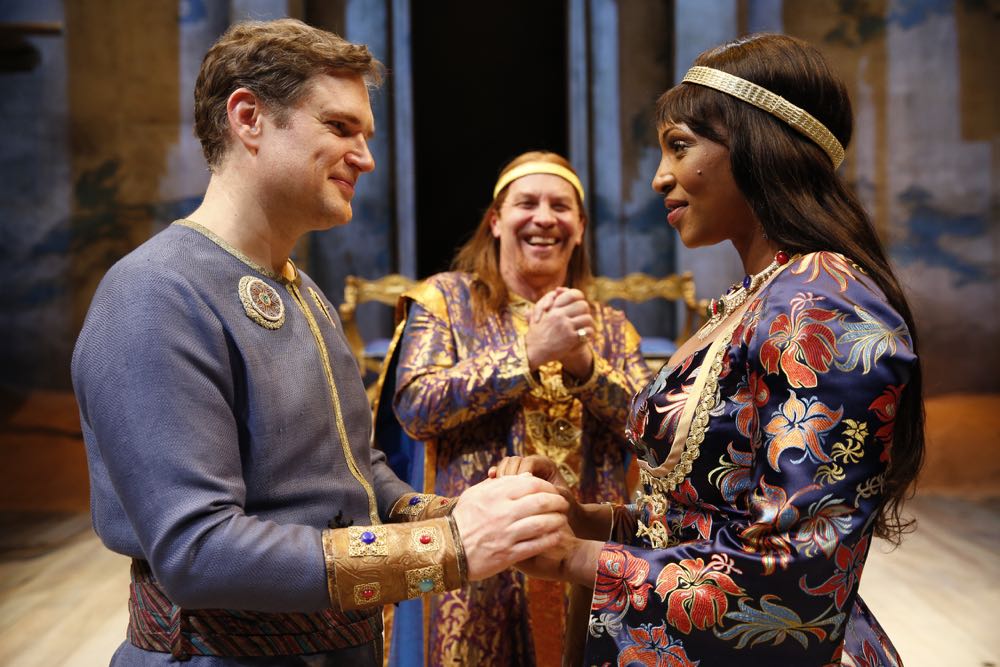 Pericles is one of Shakespeare’s plays that isn’t produced often, but Chicago Shakes has done a great job in staging it to bring out its best parts and subdue its lesser aspects. David Bell’s direction is excellent and the staging, costumes and music are superb. My Gapers Block review calls it a “lush, celebratory production.”
The play has a fine crew of actors, led by Canada’s Ben Carlson in the lead with grand support from Chicago stalwarts Sean Fortunato, Kevin Gudahl, Lisa Berry, Ora Jones and the always delightful Ross Lehman.
It runs 2 hours and 35 minutes with one intermission. My review notes that the first act is too long, but the production is worth your time. You can see it thru January 18.
Shining City by the Irish Theatre Company
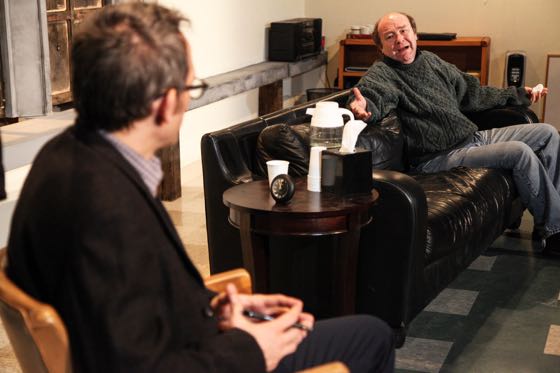 This is one of those minimalist, slightly claustrophobic productions that makes you feel that you’re peering over the shoulders of the characters whose life traumas you’re watching. The staging of this Conor McPherson play in the small Den Theatre space enhances that mood. It’s set in the office of an ex-priest, now-therapist, who is feeling his way through his own life as well as that of his patient.
Beautifully acted, with a special performance by Brad Armacost in the role of John, the patient. In his long monologue, he unburdens his soul and guilt to the therapist. You will be on the edge of your seat, lest you miss a word. Warning: there are ghosts in this play.
This 100-minute, five-scene production runs thru January 4. See my review.
Iphigenia in Aulis at Court Theatre
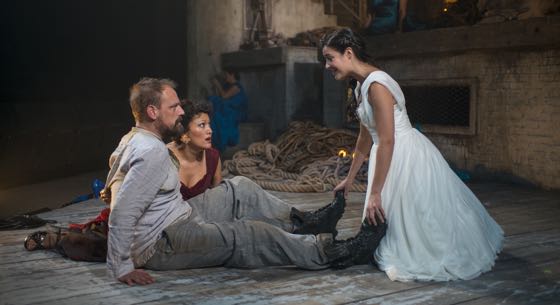 This was a rather low-key production by Court Theatre of the tale of Agamemnon, who sacrificed his daughter Iphigenia so that the winds would blow and send his fleet to attack Troy and bring back “that whore, Helen.” My review of this quote and of the play, which is now closed. Those bloody tales in which human fates rest on the whims of the gods and goddesses never fail to be interesting. However, this play has nowhere near the power of Court’s production, twice mounted, of An Iliad, which I noted in my review.
And on screen: The Tale of the Princess Kaguya at the Gene Siskel Film Center
 This is a new and exquisite entry in the collection of superb work by Japan’s Studio Ghibli, known for its beautiful hand-drawn animated films. I mentioned the work of Studio Ghibli when I reviewed The Wind Rises by Hayao Miyazaki last spring. This new film is by Isao Takahata, drawn in subtle, almost water-color delicacy and black brush-stroke detail. It tells the story of a tiny baby girl adopted by a woodcutter and his wife when he finds her in a bamboo plant. She is an enchanted child and the film, based on a 10th century Japanese folk tale, tells the story of her growth, love and loss.
Runs thru December 30 at the Siskel Film Center–137 minutes. You can see it with Japanese subtitles (my preference) or voiced in English; the Siskel schedule tells which showings are which.
(All photos courtesy of the theater companies.)
Carolina stories: On page, stage and whiteboard
Posted: December 6, 2014 Filed under: Digital life, Theater | Tags: Snow Queen, Triad Stage 2 CommentsI spent Thanksgiving weekend in North Carolina and loved being able to relax and visit with friends and relatives. My older son has lived there for 25 years so I’ve visited dozens of times. We got to meet the new baby cousin in the family; he slept through all the excitement. And I spent time with my two darling and precocious grandsons.
Birthdays and storytelling
The 2-year-old loves to read stories, to which he adds his own interpretations as I’m reading to him. One of our outings was to a birthday party for one of his friends from “school” (day-care). Mom and the two boys and I went to The Little Gym where kid birthday parties are staged. An hour of jumping, bouncing and games, supervised by Mr. DJ and Miss Bethany, then time for cake and birthday treats. If you haven’t been involved with small ones lately, you would be amazed at the birthday party industry that has built up. I’ve been to several play-party venues like this for kid birthday parties, including those for the two grandsons. Birthday parties aren’t held at home any more.
The almost-7-year-old likes to build with Legos and write stories. He has a future as an entrepreneur, I believe. He frequently writes stories, by hand and with colored illustrations. He begged me to “publish” his stories and wanted me to take a photo of a magazine cover so he could put it on his book. I explained copyright infringement. We discussed the nature of e-books and the dilemma of print vs. online. I told him he needs a website, after he asked me how he would get people to buy his book. I can’t wait to see what we’ll discuss next time I see him.
Snow Queen at Triad Stage
The grownups went to the theater one night to see Snow Queen, based on the Hans Christian Anderson story, at Triad Stage in Greensboro. The play, developed for that theater in 2013, was well done with an original folk music score and script. Costuming of the Snow Queen and other fairy tale characters was beautiful and the staging, with large animal puppets, was very creative. This is a professional theater company and most of the actors are Equity. The show featured live musicians on acoustic string instruments. The play is set in Appalachia, which explains the accents of the actors.
Here’s a sneak peek at the play with comments from writer/director Preston Lane. If you’re in the Triad region (Greensboro/Winston Salem/High Point) before December 22, you have a chance to see this production.
Also in performance . . . .
My other treat was watching my son teach a university economics class in time-series analysis—used in statistics and forecasting. (It was the day of my departure and I tagged along with him.) There were six graduate students in the class, so I sat in the last row of the small classroom and tried to be inconspicuous. Of course, my son wasn’t going to let that happen. He introduced me to the class and occasionally asked my opinion.

Image courtesy Wikimedia Creative Commons.
The class was discussing things like ACF (autocorrelation function) and the ARIMA methodology (autoregressive integrated moving average) and my son’s white board formulas included characters that aren’t on my keyboard. This is an image of a time series showing random data points. It’s cool-looking and I like the colors.
With the help of Wikipedia, I followed along superficially and I did perk up when he got to the chi-squared test. I remembered that from my brush with communications research as a grad student. The chi-squared (X²) test is used to determine whether there’s a significant difference between the expected and observed frequencies in categories.
The class also had two interesting stats. Of the six students, three were left handed. And of the eight people in the room, four were left handed, including me, of course. Statistically unlikely since ~10 percent of the population is left handed. And all six students were male, also defying the stats, since 50 percent of the population is female. That may be a comment on the fact that fewer women are involved in STEM courses.
It’s a sad fact that this results in a “yawning imbalance . . . even though they make up 47 percent of the total U.S. workforce, women hold only 24 percent of STEM jobs, according to a 2011 U.S. Department of Commerce study.” Those STEM jobs typically offer higher salaries and better career prospects.
I realize the irony of this comment coming from me. I took only the required STEM courses in college and I spent my career in decidedly non-STEM jobs. I’ve had a successful and happy life and I wouldn’t have changed it. But I would advise young women to consider all their career options and not let themselves be pushed into non-STEM courses and careers.
Anyway, it was fun to watch my son teach and then we had a late lunch. Then to the airport and home.
PTI (the Piedmont-Triad International Airport) has free wifi, as do many other airports. Why don’t O’Hare and Midway have free wifi? OK, they do have those rotating toilet seat covers that make you think you’re sitting on a clean surface. But no free wifi? It’s a tossup as to which is more important.
On stage in Chicago: Dead cats and Irish playwrights
Posted: November 14, 2014 Filed under: Theater | Tags: Aston Rep, Irish Theatre Company, Shaw Chicago, Spartan Theatre Company, Steppenwolf Theatre Company 1 CommentI’ve written about films and filmmakers a lot lately but I have seen a few interesting plays as well. Here are some quick reviews and links to my Gapers Block reviews.
The Lieutenant of Inishmore by Aston Rep
You can see this Martin McDonagh play through November 23. And it’s worth your time to head  north on Clark Street to Raven Theatre’s venue just north of Peterson. The setting is the island of Inishmore in Galway in 1993 and a little background in Irish history helps. I included some background in my review, in which I gave the play four stars—a highly recommended rating.
Here’s how my Gapers Block review begins:
“Four dead fellas, two dead cats … me hairstyle ruined! Did I miss anything?”
That’s the culmination of Martin McDonagh’s grisly black comedy, The Lieutenant of Inishmore, now being crisply staged by Aston Rep at the Raven Theatre.
A Bright Room Called Day by Spartan Theatre Company
 This early Tony Kushner play also runs through November 23 at CIC Theatre on Irving Park Road. I was eager to see this because I admire Kushner’s writing. And poetic language and intriguing political comments do illuminate this story, set in 1932-33 Berlin. It was the end of the Weimar Republic and the beginning of Hitler’s National Socialism. Unfortunately, Kushner inserts 1982 interludes in which a contemporary woman castigates the Reagan administration and compares it to the Hitler era. I’m no fan of Ronald Reagan but this was more than a little overwrought. I also thought the two-act play ran too long at 2.5 hours. All in all, I couldn’t give this production more than two stars—somewhat recommended.
Nevertheless, you may find it interesting. The Berlin scenes and the developing political awareness of the artists who populate those scenes are compelling. The devil and the ghost character plus the strident 1982 commenter…not so much.
In my review, I commented, “there are usually reasons why a rarely performed play is rarely performed. A Bright Room Called Day is such an example. Even Shakespeare wrote a few turkeys.”
The Night Alive at Steppenwolf Theatre
This Conor McPherson play runs thru this weekend at Steppenwolf. You can see it through Sunday, November 16. I’ve rhapsodized before here and here about how much I like Irish playwrights and writers. Martin McDonagh and Conor McPherson are two of my favorites. The Night Alive is a shining example.
The Night Alive is a lovely play about caring for others, about both good and bad people. There’s poetic language that would seem inappropriate if it wasn’t coming from Irish characters. The play is beautifully acted and sharply directed. If you’re looking for something to do this weekend, I can recommend this highly.
I didn’t write a formal review of this, but I will be reviewing McPherson’s Shining City in early December at the Irish Theatre of Chicago (formerly Seanachai Theatre).
Don Juan in Hell at Shaw Chicago
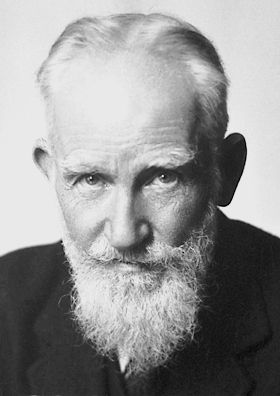 Shaw Chicago produces “reader theater” versions of plays by another great Irish playwright, George Bernard Shaw, and occasionally his compatriots. Some of the productions utilize costumes and makeup but the staging is always actors with their scripts on music stands. They produced an excellent version of Don Juan in Hell, a ~90-minute excerpt from Shaw’s Man and Superman. You can check out my review here: The Devil Wore Red Sneakers.
Watch for their future productions of Wilde’s The Importance of Being Earnest and Shaw’s Major Barbara.
Mini-reviews from October stages
Posted: October 14, 2014 Filed under: Theater | Tags: Court Theatre, Greenhouse Theater Center, Maxwell Anderson, Nambi E. Kelley, Porchlight Music Theatre, Remy Bumppo Theatre, Richard Wright, The Artistic Home, Timeline Theatre Leave a commentHere are brief reviews of plays I’ve seen in the last 10 days. For details and ticket information on any of them, go to theatreinchicago.com and select Review Roundup.
Both Your Houses at Remy Bumppo
By Maxwell Anderson. See it thru November 9
This Maxwell Anderson play is a political charmer, set in 1932. The shenanigans involve the House of Representatives budget committee alternatively cutting expenditures or ensuring that members’ favorite pork projects are funded. A brand new Congressman tries to change everything. Anderson wrote it in frustration with the Hoover administration and its lack of response to the Depression. Remy Bumppo’s production sparkles with terrific performances and a lovely set on the second floor mainstage at the Greenhouse Theater Center. Here’s their trailer.
Danny Casolaro Died for You at Timeline Theatre
By Dominic Orlando. See it thru December 21.
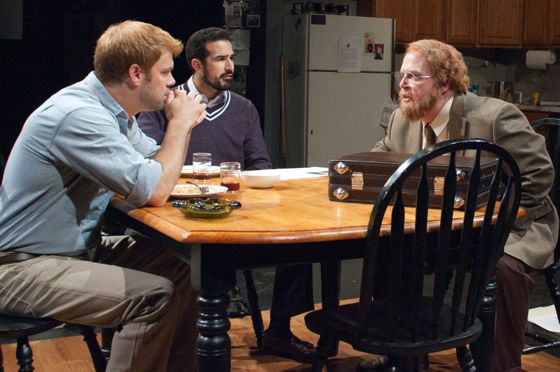 The names and events are vaguely familiar, if you were consuming political news in the 1980s and ’90s. Iran-contra. BCCI (“the world’s sleaziest bank,” according to a Time magazine cover). Bert Lance. The Church committee. Wackenhut Security. The CIA and Central American drug cartels. The Sandinistas. The Iran hostage crisis.
That’s how my Gapers Block review begins. The eponymous Danny is a freelance journalist who tries to put all those pieces together for a big story. The play is well acted and tensely performed. Timeline, which specializes in productions that explore history, does an excellent job, including putting the period in perspective through detailed lobby exhibits and playbill information.
Native Son at Court Theatre
By Nambi E. Kelley from the novel by Richard Wright. See it thru October 19.
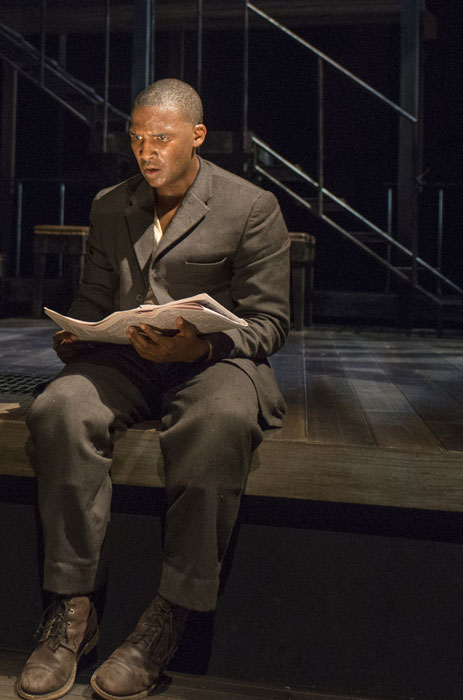 Native Son, Richard Wright’s 1940 novel, is about Bigger Thomas, a young Chicago African-American man without education, money or hope. He gets a job for which he is ill-prepared, and commits murder by accident. The story is tense and disturbing. It’s also grim and depressing, because it’s describing an event 75 years in the past—and not enough change has taken place.
Nambi E. Kelley has written a spine-tingling adaptation, leaving the linear plot line of the novel behind and playing out Bigger’s story in a crisp 90-minute production. The cleverly designed setting of wooden stairs, poles and walkways by Regina Garcia really makes he play work. Seret Scott’s direction holds the story together and made me forget to miss Max, Bigger’s left-wing lawyer, whose character Kelley stripped out of her script.
Some reviewers consider Wright’s character of Bigger to be symbolic and unrealistic. I was part of a discussion group that met with playwright Kelley the night we saw the play. She told us that she had come to love and care about Bigger during the long writing process. That enabled us to care about him in her play. But the Chicago streets where black men, such as Jerod Haynes who plays Bigger, walk today are still mean streets, even though the nature of their danger has changed over the years.
Sweeney Todd: The Demon Barber of Fleet Street at Porchlight Music Theatre
By Stephen Sondheim and Hugh Wheeler. See it thru November 9.
This marvelously bloody and brilliant story never fails to delight. No sappy, sugary musical here. The new Porchlight production directed by Michael Weber at Stage 773 gets very strong performances and creative staging from this talented company. In particular, the two leads, Rebecca Finnegan as the lively Mrs. Lovett and David Girolmo as the demon barber, are superb vocally and dramatically. A very young Miles Blim plays Toby with terrific charm; he’s a high school senior in Oak Park. An excellent five-person musical group led by Doug Peck provides the Sondheim music.
The clever script is loaded with quotable lines. As Mrs. Lovett ponders what to do with the detritus of Mr. Todd’s shaving services, she thinks aloud: “Business needs a lift / Debts to be erased / Think of it as thrift, as a gift / If you get my drift. / Seems an awful waste / I mean, with the price of meat what it is.
At the end of act one, Lovett and Todd perform a delightfully homicidal “A Little Priest.” The song includes my favorite passage, which I have used in a business context to describe the M&A environment. The demon barber advises her,
“The history of the world, my sweet–
is who gets eaten, and who gets to eat!”
The recent New York Philharmonic concert presentation of Sweeney Todd uses the same Christopher Bond adaptation; it’s excellent and is available online on pbs.org. The NY Phil version is presented concert style with costuming and some props with the performers on walkways amongst the orchestra. Its highlight is Emma Thompson’s great comedic turn as Mrs. Lovett.
Here’s a trailer of the Porchlight production.
Watch on the Rhine at The Artistic Home
By Lillian Hellman. See it thru November 16.
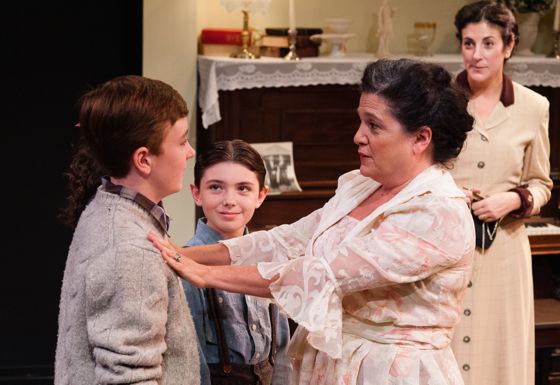 Another play set against an historical landscape is Lillian Hellman’s Watch on the Rhine, now on stage at The Artistic Home on Grand Avenue in Noble Square. The play, first produced in April 1941, was a warning to Americans about the growth of fascism in Europe and its potential in our own country, at a time when most Americans did not believe that. Hellman sets up a compelling pre-war conflict between two characters, both Europeans, but visiting in the US. One is a fascist and the other is an anti-fascist freedom fighter. The performances in this production are excellent and Cody Estle’s direction, including three child actors, is up to the Artistic Home standards.
See my Gapers Block review for details.
September dramas: Serious, smart and sublime
Posted: September 26, 2014 Filed under: Theater | Tags: Chicago Shakes, Isaac's Eye, King Lear, Larry Yando, Moby Dick, Season on the Line, The House Theatre, Writers Theatre 2 CommentsHere are recaps of three plays I’ve seen in the last 10 days. They’re all recommended and all still running so you have time to see them. I’ve been focused on the David Bowie Is exhibit this week and I’ll post my review of that soon.
King Lear at Chicago Shakespeare
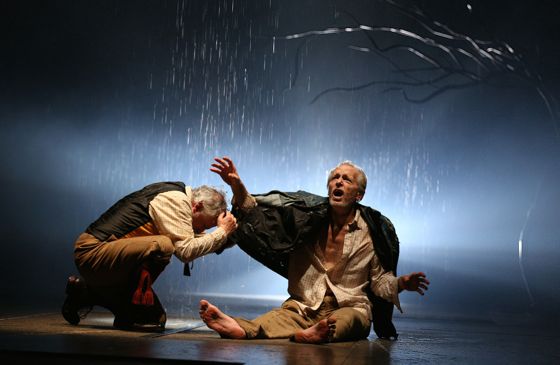
Ross Lehman and Larry Yando. Photo by Liz Lauren.
A four-star production of this Shakespearean masterpiece. The most four-star part of it is the performance by Larry Yando as King Lear. He’s one of Chicago’s finest actors and this is a performance that has “Jeff award” all over it. Here’s how my Gapers Block review begins.
“King Lear, perhaps William Shakespeare’s most-revered play, is an existential tragedy. It’s a story of power and family lost, mind and health destroyed. But it’s also a retirement story and a family tragedy. It’s amazing how deeply and warmly current issues are treated in this 400-year-old masterpiece.
“Fathers mourn relationships with their children. Siblings fight over the estate before the parent dies. Old men suffer the tears and trauma of aging. And most profoundly, we see the onset of dementia in someone who has been a brilliant and powerful leader.”
Lear runs until November 9 at Chicago Shakes’ theater on Navy Pier.
Isaac’s Eye at Writers Theatre
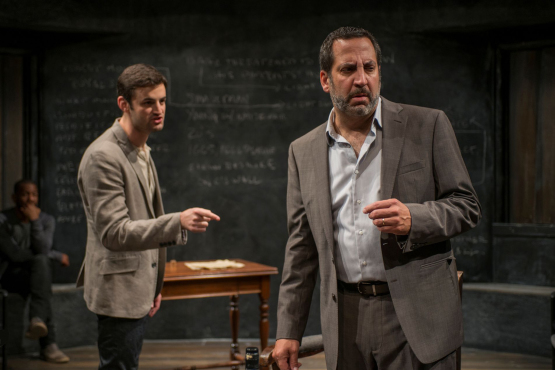
Hooper and Grapey. Photo by Michael Brosilow.
Isaac’s Eye by Lucas Hnath is a smart, funny exercise in what-if. What if a young Isaac Newton and the older and less well-known scientist, the brilliant Robert Hooke, met and discovered they had similar and conflicting interests in color and light? The result is a mesmerizing two-hour play at Writers Theatre’s back-of-the-bookstore location in Glencoe. In this tiny space, you are literally right at the feet of the two great men as they bicker and compete, in modern dress and language. It’s a fascinating post-modern drama.
One of my favorite Chicago actors and old friends, Marc Grapey, plays Hooke with the right amount of antipathy and snark. And Jürgen Hooper plays Newton, with geeky naivete matched by seething ambition. Elizabeth Ledo gives a smart performance as Newton’s girlfriend. The compelling addition to the play is LaShawn Banks as a narrator and dying man, who agrees to undergo Newton’s eye test. He is a constant and energizing presence on the tiny set, keeping the mood dynamic even when he is sort of “offstage.”
Isaac’s Eye runs until December 7 at Writers Theatre. I didn’t review it formally but I’m glad I didn’t miss it. You shouldn’t either.
Season on the Line at the House Theatre
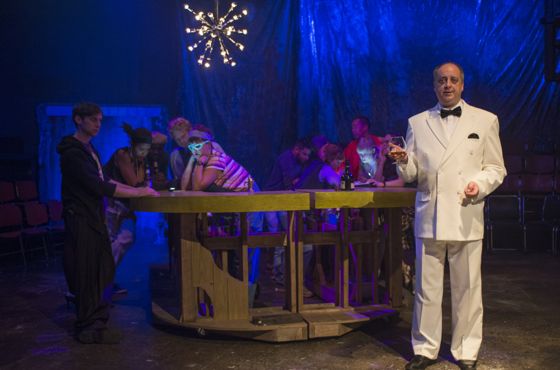
The man in the white suit is the critic. Photo by Michael Brosilow.
I have to confess. I loved this play. This is the headline for my review: “House Theatre Plants a Big Wet Kiss on the Theater Industry.” It is loaded with theater jargon and literary references and the opening night audience of reviewers, Jeff Committee members, friends and relatives clearly loved it as much as I did.
Season on the Line, smartly written by House ensemble member Shawn Pfautsch, is the story of a struggling mid-size theater company that decides to produce a new and inventive production of Melville’s Moby Dick as the culmination of an important season. We are treated to production meetings, rehearsals, after-parties and backstage gossip as the company gets ready to present its first show, The Great Gatsby (a success), and second show, Balm in Gilead (not a success). All the while, the artistic director, played with great intensity and possibly obsession by Thomas J Cox, is focused only on the great white whale. Yes, he’s Captain Ahab. He believes if he can produce a show that wins a four-star review from the influential theater critic, he will save the theater company.
The House Theatre, always an inventive and creative bunch, obviously has great fun with this. They advertise it as an “epic love letter to the American theater.” And it is. If you love theater, you’ll love it. It’s not for amateur theater-goers, however.
Season on the Line, which runs until October 26, is a 3-hour whale, plus two intermissions. That’s right, you’ll be in the theater for 3.5 hours. I loved every minute of it and if you read this far, you will too.
Follow Nancy Bishop’s Journal, please
You can type in your email in the upper right corner of the page to follow me. That means you’ll get an email when I post a new article or review. No password needed, no spam.
Capsule reviews from Chicago stages
Posted: September 17, 2014 Filed under: Theater | Tags: Churchill, Ronald Keaton, Shattered Globe Theatre, Strawdog Theatre, The Arsonists 1 CommentTheater season never really ends in Chicago but there’s always a flurry of openings in September. Here are a few plays I’ve seen recently and recommend for your consideration.
Churchill by SoloChicago
Ronald Keaton, a journeyman Chicago actor, turns himself into the great British leader for this one-man show that’s continuing at the Greenhouse Theater Center. The run is so successful that it’s moving into the large downstairs mainstage space.
Keaton has been a successful Chicago actor for years, performing comedy, drama and musicals, at suburban and city theaters, large and small. But he rarely has performed the leading or “hero” role, until now. He has created his own role, his own show and his own production company, as Chris Jones describes in this article about Keaton.
The show is excellent and Keaton takes us through Churchill’s life from childhood through his period as prime minister during World War II. The 135-minute show, performed with one intermission, runs through Sept. 21 and then Oct 3 to Nov. 9. Here’s a video clip of Keaton as Churchill.
The Whaleship Essex by Shattered Globe Theatre
Shattered Globe, which has a long and solid history among Chicago storefront and midsize theaters, is now staging a stirring tale of shipwreck and survival, based on an actual event that inspired Herman Melville’s Moby Dick. Here’s how my Gapers Block review starts.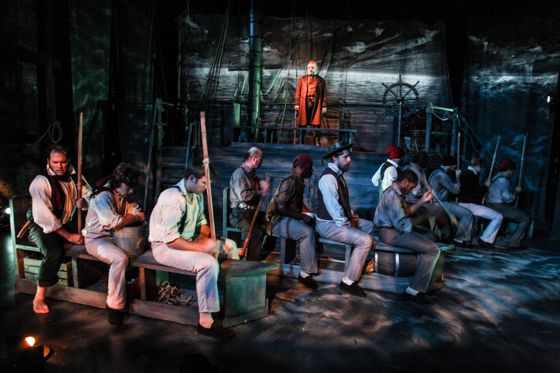
“Tales of the whale–the commercial treasure and leviathan of the sea–and the sailors who set out in wooden ships to hunt them, are endlessly fascinating. Herman Melville’s Moby Dick stands as one of the great adventure tales of world literature.
“A story that inspired Melville is being staged now by Shattered Globe Theatre in the exciting adventure/survival play, The Whaleship Essex by ensemble member Joe Forbrich. The two-hour-plus drama is staged with meticulous attention to nautical detail through the use of lighting, projections and simple wooden benches that serve as the whaleboats in which the whalemen leave the ship to capture whales. Or survive a shipwreck, as the case may be.”
There’s some excellent acting by this large cast, directed by Lou Contey. The acting and creative staging persuade us that the crew is indeed fighting to survive an attack by an enraged whale. Fortunately, a few seamen survived to write accounts of the Essex disaster. The Whaleship Essex continues at Theater Wit on Belmont through October 11.
The Arsonists at Strawdog Theatre
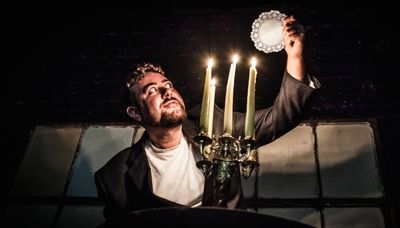 Max Frisch’s 1953 radio play, The Fire Raisers, was adapted for the stage in 1958 and was understood as a metaphor for the rise of the Nazi Party and citizens’ inability to recognize evil. This 2007 adaptation by Alistair Beaton keeps the chilling symbolism of the arsonists who intend to start fires, political or residential.
Director Matt Hawkins does a fine job with Strawdog’s small cast, performing on a two-level stage in their second-storey venue. The chorus of firefighters serves to warn us of coming events as well as fight them when they occur. Time and place are ambiguous in The Arsonists, but it should set off warning bells for all sorts of evil occurrences or political skullduggery in the 21st century.
The Arsonists, 90 minutes with no intermission, runs through Sept. 27 at Strawdog on Broadway near Grace. And here’s a dining tip. Tutto Fresco Trattoria at 3829 N Broadway is a neighborhood jewel and just steps away from the theater.
King Lear at Chicago Shakes
I’m reviewing Chicago Shakespeare’s new production of King Lear, starring Larry Yando. Tonight is opening night, so I’ll post my review later this week.
 nancy bishop's journal