Chaos to classics: Theater mini-reviews
Posted: April 18, 2016 Filed under: Theater 1 CommentThese days I’m doing most of my writing over at Third Coast Review. Check out our new site if you haven’t been there lately and sign up for our weekly newsletter (in the lefthand column) or the new-post feed (below the Events column on the right). We have lots of good content on the Chicago arts and culture scene. Even though I’m spending a lot of time as editor and publisher of Third Coast Review, I intend to maintain Nancy Bishop’s Journal as my personal blog, so forgive my occasional delays in posting. Today I want to tell you about some terrific theater that’s going on in Chicago right now–and a few that I want to remember.
Arcadia at Writers Theatre thru May 1
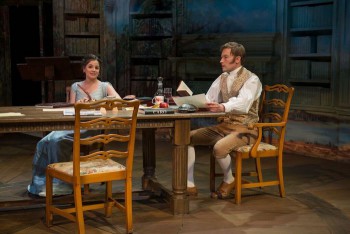 Tom Stoppard’s masterpiece of conversation and complexity about chaos theory, Fermat’s Last Theorem and English gardens. The play is an excellent choice for Writers to open their new theater venue in Glencoe, designed by Studio Gang Architects. My review comments: “Tom Stoppard’s Arcadia, a play that tracks characters from two eras, sometimes in the same scene at the same time, is a complex play interlaced with many intellectual games. The story, not a linear narrative, involves the clash between the rational and the romantic in art and science, as well as in life. Also important is the design of gardens, specifically the gardens of Sidley Park, the country house in Derbyshire, where the play is set.”
The new theater is stunning on the outside but disappointingly bland inside. That may change as more funds are spent on its completion. The main theater space is much larger than the previous venue and has excellent sightlines. But there was one problem. Several people I’ve talked to who attended the opening or another performance complained, as I did, about acoustics. When actors were performing with their backs to us, it was often difficult to hear them. It’s not clear whether this is a problem with the actors, which the director can address, or the acoustics of the venue itself.
The Life of Galileo at Remy Bumppo Theatre thru May 1
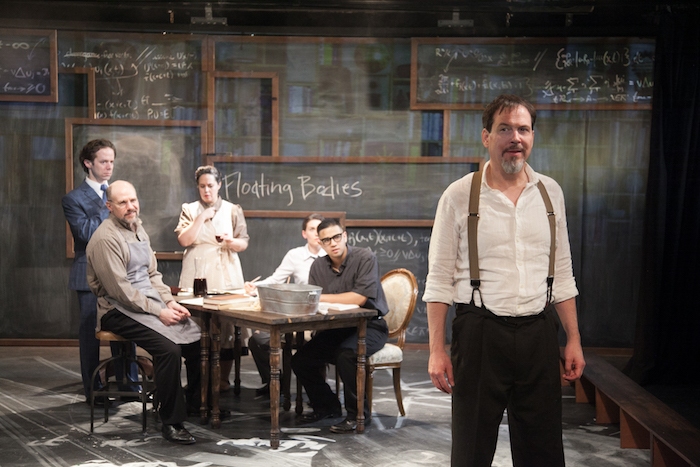 Another intellectual tour de force, Bertolt Brecht’s Life of Galileo is set in the past but foretells the contemporary debates over faith and science. Shawn Douglass, who plays Galileo, my review notes, “convinces us he is a real man of pluses and minuses, not a cardboard historical figure. We live with him through the wrenching changes in his life, through his delight at making discoveries and teaching about them, his conflicts with the church about the Ptolemaic vs. Copernican views of the universe; and his miseries as an underpaid teacher. Most painfully, we watch him recant his beliefs in scientific truth so that he can continue his work, even though circumscribed by the edicts of the church. (He was found guilty of heresy and sentenced to house arrest.)”
It’s beautifully acted, staged and directed, I highly recommend this Remy Bumppo production.
Mary Page Marlowe at Steppenwolf Theatre thru May 29
This new play by Tracy Letts explores the life of one sort-of ordinary woman by showing scenes from her life played by six different actors. Letts’ concept is based on the fact that each of us sees ourselves as different people throughout our lives. My review is not quite finished but I’ll add a link here when it’s posted over at thirdcoastreview.com.
Updated 4/20: My review of Mary Page Marlowe is live now. My summary is not as positive as most others. I gave it a “somewhat recommended” on theatreinchicago.com. The play is well written with smart dialogue; many of the 11 scenes are successful. But the parts don’t add up to a gesamtkunstwerk, as my German-born art history professor used to say. It’s not a coherent, successful total work of art. It’s still worth seeing, however, because a Tracy Letts play is always worth seeing. I still can’t help it wonder if it would have worked better with a single actor playing the adult versions of MPM. If you see it, tell me what you think..
New Country by Fair Trade Productions at The Den Theatre thru May 14
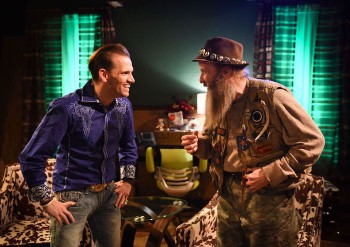 Not a classic theater masterpiece, but a helluva lot of fun, this fast-paced comedy shows us a few hours in the life of a famous country music star and his retinue. To quote my review: “The play is set in a Nashville hotel room on the night of the bachelor party for country music star Justin (played by Michael Monroe Goodman, a musician-actor who starred in the Johnny Cash musical, Ring of Fire, and in Million Dollar Quartet). Justin is young, successful and arrogant and he doesn’t hesitate to let his managers know who’s boss. His beloved pig-farmer Uncle Jim arrives to join the celebration, full of country jokes, and accompanied by his blow-up sex toy, Wanda June.” You dan see whe this is going.
Blood Wedding at Lookingglass Theatre thru April 24
Director Daniel Ostling’s staging of Federico Garcia Lorca’s play has a few good performances but overall the production does not capture the mood that I think Lorca intended. This is partly because, as my review notes, “The original setting for Lorca’s script is rural Spain and his characters include mysterious figures such as the Moon and Death. Ostling’s decision to set his production in the more-realistic Depression-era U.S. diminishes the mythic nature of Lorca’s story. The subdued presentation, quite different from Lookingglass’ usual physical dramas, does not redeem it.” Nevertheless, this play is not often produced, so if you like Lorca’s writing, you still have a weekend to catch this show.
Gone, but not forgotten:
Long Day’s Journey Into Night at Court Theatre
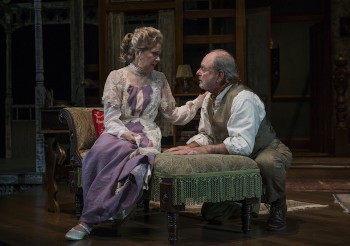 Eugene O’Neill wrote this sad and beautiful drama, modeled after his own family drama, in the 1940s but it was not published or produced until after his death in 1953. My review commented: “If O’Neill is the master of dysfunctional family plays, then Long Day’s Journey Into Night is the masterpiece of the genre. Recognized as one of the greatest plays of the 20th century, the play won the Tony for best play and the Pulitzer Prize for drama in 1957.” The Court production was beautifully acted and staged. Mary Beth Fisher and Harris Yulin played Mr. and Mrs. Tyrone. If you attended, your 3.5 hours was well spent theater time.
In a Little World of Our Own by Irish Theatre
The Gary Mitchell script is a political thriller, a day and night in the life of a Protestant family in Belfast, Northern Ireland. The play is set in the late 1990s, just before the signing of the Good Friday Peace Agreement in 1998, when an uneasy peace reigned in Belfast. Behind the family drama of three brothers is the political story of the UDA (Ulster Defence Association) fighters against the advocates of nonviolence. Matthew Isler gave an outstanding performance as a UDA hard man, always ready for a fight.
A Loss of Roses at Raven Theatre
William Inge’s play is not as sensually exciting as Picnic or as emotionally riveting as Come Back, Little Sheba, but the playwright does have a way of writing about solitary female characters. Raven’s production was well acted and directed, a quiet story of small town America in the 1930s, as my review said.
All photos courtesy of the respective theater companies.
Bingeing on Hamilton: Words and music
Posted: March 25, 2016 Filed under: Books, Music, Theater Leave a comment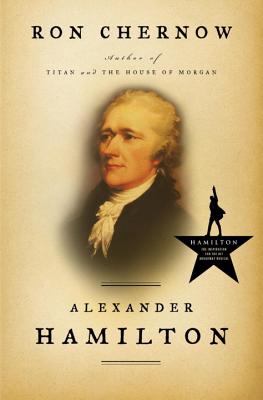 Huge sigh of relief. I finally finished the 800+ page biography of Alexander Hamilton by Ron Chernow. It’s the book that Lin-Manuel Miranda took on a beach vacation to Mexico. It inspired him, first of all, to write a song about our first Treasury secretary and perform it at the White House, and second, to create the Broadway extravaganza known as Hamilton: An American Musical.
In my original review of Hamilton, I predicted that Miranda would be named a MacArthur Fellow (better known as the MacArthur Genius Grant) and he was. Predicting that Hamilton will sweep the Tonys in June isn’t a very big bet.
I saw Hamilton when it opened on Broadway last September and fell madly in love with the show, with Miranda and with our ten-dollar Founding Father. Evidence of my madness?
- I’ve been listening to the cast album almost daily since it was released. I’m waiting impatiently for the script to be released.
- I’m looking forward to seeing Hamilton again, surely more than once, when it opens here in September. (At the dreadful Shubert/LaSalleBank/BankofAmerica/Private Bank Theatre.)
- I find myself hoarding $10 bills.
- I don’t want to hear about replacing A. Hamilton on the tenner. Replace that unsavory president Jackson on the $20 with a deserving female figure.
- His birthday and death date are six months apart on the 11th of January and July. They’re both in my calendar.
I have a pretty good background in American history and political science, but when I saw and thought more about Hamilton, I realized that I had been living with the Jeffersonian concept of American government. Journalism students (Mizzou J-School grad here) are educated to admire Jefferson in particular because of his views of the importance of press freedom and freedom of expression, and his role in drafting the Declaration of Independence and the Constitution. I knew he owned slaves and I knew about the Sally Hemings thing, etc., but never mind. Reading the Hamilton/Federalist Party side of the story, you learn that Jefferson was a vicious opponent of Hamilton’s goals and fought for the agrarian way of life he preferred rather than the urban/mercantilist/manifacturing society that Hamilton fought for. (As an aside, Daveed Diggs is terrific as Jefferson in the Broadway cast.)
Reading Alexander Hamilton gave me a different perspective on American history and the founding decades of our country. Ron Chernow’s book, by the way, is highly readable and fascinating. If it wasn’t, I wouldn’t have read every last word and even devoured the 100 pages of notes. And Miranda’s hiphop operetta does not skimp on the details of Hamilton’s life, his brilliance and his foibles, and the controversies surrounding him. It is a full and complete lesson in American history, delivered with charm and infectious rhythm. The thing about hiphop that makes it work, Miranda says, is that it’s very dense, has more words per measure than most other forms of music. (Sort of Dylan and early Springsteen.)

Here are a few reasons why I’m a fangirl of A-dot-Hamilton.
- Hamilton is the avatar of the cliché known as the American dream; he rose from poverty and orphanhood to become an accomplished and powerful leader. Unlike most of the other Founding Fathers, he did not come from the moneyed, landed class.
He was born on a small island in the Caribbean, of unmarried parents, an absent father and a mother of questionable virtue. He came to the US as a teenager and made his way through college (Kings College, now Columbia University), to George Washington’s staff, to leadership on the battlefield in the Revolutionary War, and to Washington’s cabinet.
2. He produced all kinds of firsts in the early era of this country (despite opposition at every step of the way).
He was the first Secretary of the Treasury, stabilized the economy, designed our financial system, including the National Bank, the gold-based dollar, and the Mint; he established the principle that Congress had the constitutional powers to issue currency, regulate interstate commerce, tax luxury goods such as whiskey, and enact any other laws needed to support the provisions of the Constitution.
Basically, he fought for the concept and principles of the federal government. He created the Coast Guard, the Federalist Party and its newspaper, the New York Post. He used his incredible energy and persuasive abilities to work for the passage of the US Constitution, ensuring our country became a federal government, instead of a bunch of independent states. He was firm in his abolitionist views while his southern colleagues all owned slaves.
3. He was a brilliant thinker, speaker, opinionated and prolific writer, who turned out hundreds of letters, opinion pieces and essays and wrote 51 of the 85 articles in the Federalist Papers. And he was writing by hand with a quill pen and a bottle of ink, my friends. In case you think tapping a few tweets on your smartphone is work.
He often wrote political essays under pen names such as Cato, Publius and Phocion. He was probably the first blogger. (His handle today? @publiusny.)
He founded the New York Post, a Federalist newspaper, in the days when political parties specialized in publishing diatribes against the opposition in their own newspapers.
- Jefferson and Madison and their Republican party fought Hamilton and the Federalists at every step and President Adams banished him from the White House because he suspected him of conspiring with some of Adams’ cabinet officers. (He probably was.)
Chernow’s description of the bitterly fought election of 1800, by the way, is insightful to read and compare with the 2016 campaign. And they didn’t even have Twitter.
By the time Hamilton reached his late 40s, he was no longer a public persona (and he missed the limelight) but was a successful and sought-after lawyer in New York.
He had always had a tenuous relationship with Aaron Burr (who advised him, according to Miranda, to “speak less and smile more”), even though they occasionally appeared to be on friendly terms. Hamilton said negative things about Burr in private on a few occasions and these eventually brought Burr to challenge him to a duel. (An affair of honor, it was called. “Demanding satisfaction” was another way to put it.)
Hamilton, at age 49, was killed by Burr in the duel on July 11, 1804, in the dueling grounds at Weehawken, New Jersey. (The same place where Hamilton’s son Philip was killed in a duel three years earlier, upholding his father’s honor.) Burr shot directly at Hamilton and Hamilton either shot in the air or his gun went off by accident when Burr’s bullet hit Hamilton in the hip, destroying his internal organs.
“I’m not throwing away my shot,” Hamilton sings early in Act 1. “But yo, I’m just like my country / I’m young, scrappy and hungry / and I’m not throwing away my shot.” At the end, he did.
I’m not the only one who is bingeing on Hamilton. There’s new interest in historical sites such as the Grange, the Hamilton home north of Manhattan, and in the Hamilton burial site at Trinity Church in lower Manhattan.
Charlie Rose has featured members of the Hamilton crew several times, including this recent full-hour interview with Lin-Manuel Miranda filmed at his childhood home.
Finally, since March is Women’s History Month, I’ll close by noting that Hamilton’s exemplary wife, Eliza Schuyler Hamilton, who stuck with him through all his battles and infidelities, lived 50 years after her husband’s death and died at age 97 in 1854. She worked for causes such as the establishment of orphanages and helped her friend Dolley Madison raise funds to construct the Washington Monument. She visited the White House and never gave up trying to salvage her husband’s reputation, which was attacked by his enemies after his death. Chernow devotes the first and last chapters of his book to Eliza Hamilton.
In 2009, Miranda performed the lead song about Hamilton at the White House. He said at the time he was working on a Hamilton “concept album.”
Adventures of an art omnivore: Bedrooms to beach creatures
Posted: March 15, 2016 Filed under: Art & architecture 1 Comment
Chris Silva: Remix in “Present Standard”
I’m a bit of an omnivore when it comes to theater, film and art. I often visit art museums and galleries, but the exhibits are usually measured out one at a time. But this week, I had a full plate of art from morning until evening. It was a glorious day.
Van Gogh’s Bedrooms at the Art Institute of Chicago
When I first heard that the Art Institute was creating a major exhibit around three paintings, I thought the curator must have sipped too much absinthe. But this exhibit is another example of exhibit development and design that is being created by today’s best museums. The Van Gogh’s Bedrooms exhibit is now on display in the AIC’s Regenstein Hall. (Walk to the back of the museum, turn right, go up the short flight of stairs and pay homage to Ellsworth Kelly, whose paintings line the corridor leading toward the exhibit. This is my favorite part of the museum. I would give anything for my own Ellsworth Kelly—and my own Ed Paschke.)
The three versions of Van Gogh’s famous painting, “The Bedroom” in Arles, are displayed together in a central area of the exhibit. You can compare the variations in color and brushstrokes on the actual paintings, but you can also learn about the intense research and analysis of the paintings that was done by curators and restorers and compare the three works in other ways. There are videos and enlarged sections on a display wall, comparing minute details of the three works. (When I was sitting down to watch the video/slideshow, three small kids were on the bench next to me. Which only proves kids will watch anything on a screen.)
The early part of the exhibit tells the story of Van Gogh’s life through his reading, his writing, his friends and his yearning for a home. All these elements led to his creation of “The Bedroom.” The curators have also re-created the actual bedroom and you can stand in the spot from which he painted the scene.
Van Gogh also analyzed the painting process and was concerned about accuracy and proportion of landscapes and other outdoor scenes. He created what he called a perspective frame that allowed him to grid out a scene and recreate it on his canvas in the same proportion as the original.
The final section of the exhibit is “the Night Café,” a recreation of the café where Van Gogh spent many hours in Arles. One wall is dedicated to a painting of the café scene. You can sit and browse through the exhibit catalog (for sale too, of course). And watch a video loop that shows the many depictions of Van Gogh in popular culture—in films, television, cartoons and fashion.
Van Gogh’s Bedrooms is on display thru May 10.
Alfred Steiglitz and the 19th Century
This exhibit of 19th century photography is on display thru March 27. Steiglitz was interested in photography as an art and admired photographers who represented what he called Pictorialism: especially Julia Margaret Cameron, David Octavius Hill and Robert Adamson. Steiglitz valued painterly images and printing processes that enhanced this technique. He displayed the work of such photographers in his gallery and promoted them through a photographic journal. The images Steiglitz took of his wife Georgia O’Keefe over a period of years is a notable part of the exhibit.
Steiglitz scorned what he termed commercialism and hobbyism in photography. The work of renowned but realistic photographers such as Mathew Brady and Edward Curtis is not represented under the rubric of Pictorialism.
Food for the artlover. A fine choice for lunch when you’re in the art neighborhood is the Museum Café on the lower level of the Art Institute. A variety of preparation counters offer healthy and delicious lunches with a global flare. The pleasant dining area looks out on to McKinlock Court. The Museum Café is superior in my mind to the overrated Terzo Piano in the Modern Wing.
Strandbeest: The Dream Machines of Theo Jansen at the Chicago Cultural Center
After lunch with friends, I walked a few blocks over to the Chicago Cultural Center, the grand 19th century building that was Chicago’s first central public library. The Chicago Department of Cultural Affairs and Special Events (DCASE) offers many free public exhibits and events, as well as a comfortable lounge and work area on the Randolph Street side of the building. (A fine place to spend time between meetings.)
The Theo Jansen exhibit of kinetic creatures (strandbeest means beach creatures in Dutch) built from PVC tubes is in the Sidney R. Yates Gallery on the 4th floor of the building. In the first part of the exhibit, you can see the parts and fastenings that make up the beests. In a video loop, Jansen talks about the creative and construction process. The rest of the exhibit is made up of creatures large, medium and small, all of them with feet, nose feelers, skis and sails, demonstrated by beest wranglers, mostly young artists hired by DCASE and trained by Jansen. (I talked with Laura and Charlie, who are enjoying their beest wrangling; he’s a painter and she’s a theater artist.)
The main Yates Gallery is the home of Animaris Suspendisse (2014), the largest strandbeest, demonstrated and described by the wranglers. There are also three small beests that you can walk by yourself and get a feeling for how the feet and limbs work magically together.
The wranglers carry out a daily schedule of reanimation demonstrations. See the web link above for the schedule.
Present Standard (Spring of Latino Art)
Present Standard is an exhibit of 25 works by 25 US-based Latino artists shown in the Michigan Avenue Galleries on the first floor (See Chris Silva’s work above.) The exhibit title is sterile, even though meaning is attributed to each word by the writers of the catalog essays. But the exhibit itself is a joyous array of color and form. The exhibit continues thru April 24.
Pablo Helguera: Libreria Donceles

Bohemia jam session.
This traveling Spanish–language bookstore is settled in the Garland Galleries on the first floor of the building. Events are held in the Libreria during the week. Just as I was leaving the cultural center to meet former colleagues for drinks (it was a long day), I heard music as I passed the room. It was Tuesday night and time for Bohemia’s weekly jam session. Four musicians played rootsy Latin music for a small audience relaxing on sofas and chairs.
We live in an amazing city, where you can find so much intriguing and inspiring art in this small patch of the world–a half mile stretch of magnificent Michigan Avenue.
All photos by Nancy Bishop.
Theater madness: Report on my addiction
Posted: February 25, 2016 Filed under: Theater | Tags: 2666, Goodman Theatre, Mary Arrchie Theatre, Oracle Productions, Steppenwolf Theatre, The Flick, The Hypocrites 1 CommentThe Super Bowl Magic Show: Beyoncé, Coldplay & Bruno Mars
Posted: February 10, 2016 Filed under: Music, TV, radio | Tags: beyonce, bruno mars, coldplay, super bowl halftime show 2 CommentsI haven’t paid attention to football since 1986 when the Bears won the Super Bowl. Best team, best Super Bowl ever! I like basketball, baseball and sometimes hockey, but football is a snore. But I do watch the Super Bowl or at least part of it. I might tune in to watch the commercial breaks but my favorite part is halftime.
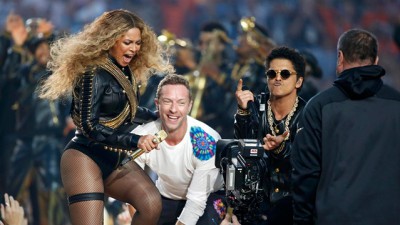
Super Bowl halftime show finale. Photo courtesy The Guardian.
Because the Super Bowl halftime show is all that counts. It’s amazing how much can be packed into 12 minutes of prime time. Most musicians play a set of their greatest hits (yes, you, Mr Springsteen, in 2009). The Stones in 2006 were memorable and so were the Who in 2010. The Black-Eyed Peas and Usher in 2011 put on a visually stunning show. But the 2016 halftime show was 12 minutes of satisfying drama. Chris Martin started with the 2008 Coldplay hit, “Viva La Vida,” and then segued into “Paradise” and “Adventure of a Lifetime.” The visual effects and background performers were colorful and hundreds of fans in black were packed into the sections around the stage as if they were in the pit at a rock concert. Bruno Mars did a snappy version of “Uptown Funk,” choreographed with his slick and fancy footwork.
And then Beyoncé arrived to steal the show. In black leather, surrounded by her troupe of beautiful African-American dancers. They put on a superb and powerful performance, dressed in black leather shorts and jackets. boots and black berets, paying homage to the 50th anniversary of the Black Panthers, to Black Lives Matter and to black womanhood. Their dance routine at one point formed an X in honor of Malcolm X. It was a highly charged political and sexual performance of Beyoncé’s new song, “Formation.” And it’s probably a good thing that most of the audience couldn’t understand all the lyrics.
The music video of the song was released Saturday and adds even more political context with images of the Katrina flood that drowned New Orleans, Mardi Gras scenes and celebrations of hot sauce, entrepreneurship (“I just might be a Bill Gates in the making”), black beauty and black womanhood.
I’m not going to pretend that I can appreciate all the lyrics and messages because I’m a white female, privileged at that. But I cheer for Beyoncé’s action in putting her fame, power, wealth and glamour behind these messages. She could just sit back and increase her wealth with music and concert revenue, but she puts her image and reputation on the line.
Her video of “Formation” comes in two versions: “Dirty” and “Clean.” I’ll leave you with the best one.
My theater report from Third Coast Review
Posted: January 25, 2016 Filed under: Digital life, Theater 2 Comments Our new website, thirdcoastreview.com, has been launched by a bunch of refugees from Gapers Block, our dear, archived Chicago website. I wrote about that here a few weeks ago, but we weren’t quite ready for prime time until January 8, our official launch date. I’m editor and publisher of Third Coast Review and lead theater critic. I’m also serving as editor of the Screens page until I find someone else to take that over. We have a cadre of almost 30 writers and editors and I think we’re off to a great start. (Our logo was designed by my friend and former colleague, Linda Pompeii.)
I’ve reviewed four plays in the last week and most of them are recommended, if not must-sees. Here are the mini-reviews with links to the full reviews on 3CR.
The Mutilated at A Red Orchid Theatre
You’ve probably never heard of this Tennessee Williams play, but it’s a bizarre delight and I highly recommend it. My review says it’s a “joyous goofy Christmas” and it is, complete with bleak holiday songs written by the playwright. The acting, directing, design and sound elements are all terrific. This is an excerpt from the song that opens the play, performed by a dozen motley carolers.
I think the strange, the crazed, the queer
Will have their holiday this year
And for a while, a little while,
There will be pity for the wild
A miracle, a miracle!
A sanctuary for the wild.
The Mutilated runs through February 28 at A Red Orchid Theatre, 1531 N. Wells.
London Wall by Griffin Theatre Company at the Den Theatre
John Van Druten’s London Wall is another rarely performed play that warrants more affection. It’s the story of the steno-typists at a London law firm in the 1930s, the era when marriage was the only escape for a working girl in a low-wage job. Robin Witt’s direction and a fine cast result in excellent performances; the script is witty and the set a beautifully done office setting. My review notes that London Wall creates “a perfect microcosm of the pre-feminist age” and has some messages for the present as well. The Griffin Theatre production continues thru Feb. 14 at the Den Theatre, upstairs at 1333 N. Milwaukee. (And yes, an elevator is in their renovation plans for 2017, as well as a sprinkler system and a new marquee, according to owner Ryan Martin.)
Sunset Baby at Timeline Theatre
Sunset Baby by Dominique Morisseau is a family story, but a tough one, about a young woman (AnJi White as Nina) who doesn’t want to make peace with her father’s Black revolutionary past and its impact on her mother and her own childhood. She and her boyfriend are trying to save money for a new life by dealing drugs and sex. The 110-minute play (no intermission) is infused with music by Nina Simone throughout. The three-member cast is strong with a soulful performance by Edward Van Lear as Kenyatta, the father. My review. Sunset Baby runs thru April 10 at Timeline Theatre, 615 W. Wellington.
Bruise Easy at American Theater Company
This is a play with interesting ingredients, including two reunited siblings and a Greek chorus of neighborhood kids. Somehow all the pieces don’t come together in this script by Dan LeFranc. Joanie Schultz’ usually sure direction doesn’t save it, although the play has interesting moments and it’s short–about 80 minutes. Bruise Easy continues thru Feb. 14 at ATC, 1909 W. Byron. Check out my review.
David Bowie Isn’t: My homage to Ziggy Stardust
Posted: January 11, 2016 Filed under: Music, Uncategorized | Tags: David Bowie 1 CommentToday is a sad day. On Friday I listened most of the day to WXRT playing David Bowie’s new album, Blackstar, released on his 69th birthday. Today I was thinking about getting up when the radio went on with the news that the Thin White Duke died last night. I was stunned.
I put on my Aladdin Sane earrings and got out my David Bowie albums. And I remembered the fabulous exhibit of Bowie’s life and work at the Museum of Contemporary Art in September 2014. The title was “David Bowie Is.”

My headline was “David Bowie Is” Is Fabulous. My full review of the exhibit appeared in Gapers Block.
I wrote about how Bowie was a master of design and identity and controlled every aspect of his preparation and performance. And I noted that “David Bowie Is is not just an exhibit for fans of his music or for fans of rock and roll. It’s an exploration of history and popular culture transmuted through the vision of one artist, who probably deserves to be called a genius.”
What I didn’t mention is a key point about Bowie’s persona that is getting a lot of attention today (at least among those I hang around with on social media). He was a man of shifting identities and personas who made it possible for young people to recognize and come to terms with their roles as outsiders, others, maybe even freaks.
Ann Powers of NPR Music wrote this in her appreciation of her pop hero: “His fans were the strange, and Bowie had finally given them a way to show it. The press called them Bowie boys and Bowie girls because there was no other name for them yet: no pansexual, no bi-curious; yes freak, but that felt like a hippie term and this wasn’t a hippie thing.”
My friend June Skinner Sawyers wrote a lovely poem this morning and we’ve posted it on Third Coast Review, the new Chicago arts and culture website, as our homage to Bowie. You can read it here.
2015: Not Quite a Year in Review
Posted: January 3, 2016 Filed under: Digital life, Movies, Music, Theater | Tags: Chicago Architecture Biennial, Gapers Block, Third Coast Review Leave a commentThe last year had many exciting and interesting moments for me, but the last month has been challenging. I spent most of it mourning about and planning how to recover from the demise of Gapers Block, the website for which I’ve written for almost three years. The site is now “on hiatus.” Andrew Huff, the editor and publisher of the 12-year-old website, posted a letter to readers explaining the change. And this is how the site looks now.

Many articles, comments and personal memories have come in to praise Gapers Block but no one has stepped in with the offer of the needed money to update the infrastructure and pay a full-time editor/publisher at least a pittance of a salary. So the site will live on as an archive, with all the existing content live, but nothing new. I couldn’t resist adding my own personal thoughts to the site, which I did late on New Year’s Eve, while waiting for the #ChicagoRising star to rise. (I can’t bring myself to call it “Chi-Town.” No real Chicagoan would use that term.)
GB staff members had known about this for several weeks and after we got over our initial distress, some of us began planning a new website to cover the Gapers Block arts and culture content. The result will be our new website, Third Coast Review, which is online now in an unofficial or “beta” way. We expect it to be official in a week or 10 days once we add more content.
What else was new and important in 2015?

Havana cityscape. Photo by Nancy Bishop.
My week in Cuba was memorable and I wrote about it at length here and here.
On another shorter trip, I spent time in New York and was lucky to get a ticket to see the smash Broadway hiphopera (as one of my fellow theater critics calls it), Hamilton, about our first treasury secretary. I wrote about that here and probably will keep writing about it. I intended to see it again later in the year but by then tickets were really impossible to get without paying a couple of months’ salary. And now Hamilton is coming to Chicago in September and will be here (at the dreadful Shubert Theatre on Monroe Street, renamed after yet another bank), so I will be able to see it a few more times.
In the meantime, I’m finally reading the insightful biography that inspired Lin-Manuel Miranda to write the show about our “ten-dollar founding father.” Ron Chernow’s Alexander Hamilton is a fascinating, meticulously detailed and readable biography. I just wish it wasn’t 800 pages long.
The Phantom Collective, the pub theater group formed by my friend June Skinner Sawyers, staged several interesting literary events in 2015, including Black Dogs and Melancholy, a reading of Samuel Johnson writings. The most recent pub event was Beowulf & Grendel, which combined Beowulf, the Old English epic poem, with Grendel, one of Beowulf’s antagonists (dramatized in John Gardner’s 1971 novel,Grendel, in which that character tells his side of the story).
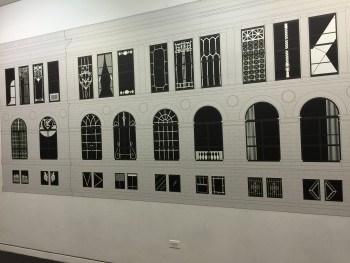
Chicago Architecture Biennial. Norman Kelley, survey of Chicago windows.
Architecture: We love our buildings. The Chicago Architecture Biennial was a series of exhibits and events from October through today. The most comprehensive was the takeover of the Chicago Cultural Center by about 80 exhibits on four floors by firms and designers that asked questions about and predicted the future of architecture. I particularly liked the architectonic window treatments on the Michigan Avenue facade of the building by Norman Kelley. He clad each window in white vinyl cutouts representing Chicago window styles, mullions and dressings. The biennial as a whole was less than impressive but it was an excellent start and a learning experience for the next biennial in 2017.
Getting ready for Springsteen
Yes, I have the hardly-waits already for the January 19 concert at the United Center featuring my favorite rocker, Bruce Springsteen and the E Street Band. And for the concert February 21 in Louisville, an excuse to visit with my friends Jeannie and John. There will be more. Springsteen is touring on the re-release of his 1980 album, The River, in the form of a large boxed set titled The Ties That Bind. No, I haven’t bought it yet.
The year in review? Not yet.
I usually begin the new year with a list of my favorite events in pop culture for the previous year. I may still do that. For now, WordPress has created my year in review:
The WordPress.com stats helper monkeys prepared a 2015 annual report for this blog.

Here’s an excerpt:
A New York City subway train holds 1,200 people. This blog was viewed about 4,700 times in 2015. If it were a NYC subway train, it would take about 4 trips to carry that many people.
Click here to see the complete report.
December reviews: Stage and screen
Posted: December 11, 2015 Filed under: Movies, Theater, Uncategorized | Tags: Court Theatre, Mary Arrchie Theatre, Remy Bumppo Theatre, Victory Gardens Theatre 1 CommentDecember is always a busy month but this one is busier than usual for me because I’m working on an exciting new venture. I’ll tell you about it in a few weeks. For now, I want to give you my theater and movie favorites for the month.
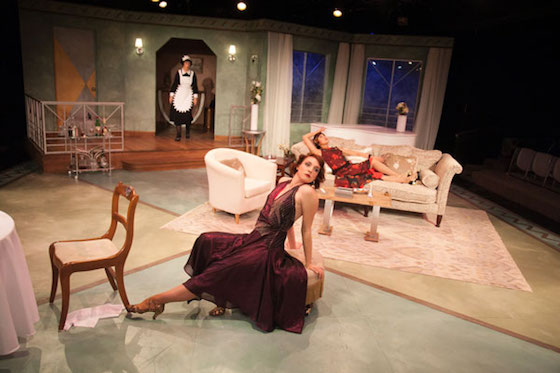
Photo by Johnny Knight
Fallen Angels at Remy Bumppo Theatre
This 1923 Noel Coward play is smart and funny, very funny, and slickly staged on Remy Bumppo’s space on the second floor at the Greenhouse Theater Center. The play and performance are delightful, partly because Coward does an interesting gender switch, unusual for the 1920s, with three outstanding female roles. My Gapers Block review tells all about it. Angels runs until January 10.
Ibsen’s Ghosts at Mary Arrchie Theatre
This very fine staging of the Ibsen play is a bit meta-theatrical and regularly breaks that famous fourth wall to interact with the audience. It’s hard for the audience not to feel that they’re interacting with the performers in this tiny space on second floor at Angel Island. (This is Mary Arrchie’s final season so do try to see one of their shows this year.) Ibsen’s Ghosts runs through December 20. My review begins this way:
“Mary-Arrchie Theatre’s new production of Ibsen’s Ghosts takes the great Norwegian playwright’s scandalous 1881 play, shakes it up and spits it out in a witty contemporary form. And then punches you in the gut with its ending.”
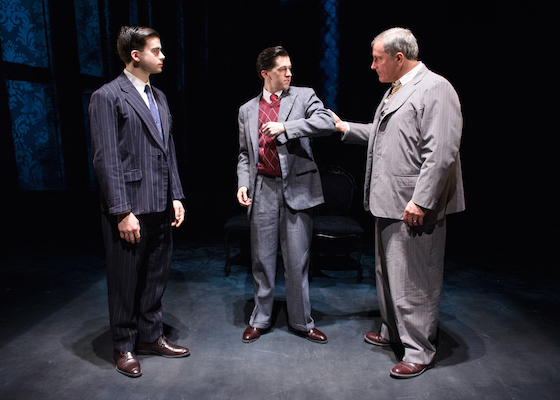
Photo by Michael Courier
Never the Sinner at Victory Gardens Theater at the Biograph
Every Chicagoan knows the story of the thrill murder of young Bobby Franks by two University of Chicago students, Richard Leopold and Nathan Loeb. Victory Gardens retells the crime, its aftermath and the Leopold-Loeb trial in John Logan’s 1986 script, written while he was a Northwestern University student. (Logan is known for his scripts for Hauptmann and Red, but has since become more famous as a screenwriter.) The two actors who play the criminals give excellent performances and veteran Chicago actor Keith Kupferer plays their attorney, Clarence Darrow, who saved them from execution. Never the Sinner closed this week. Here’s my review.
Agamemnon at Court Theatre
I liked last year’s Iphigenia in Aulis at Court Theatre, but this year’s segment in the trilogy is a little flat and disappointing. The rhythm and performances in general are not as riveting. The actors performing as the chorus, however, are excellent, but they take up too much stage time and detract from the central plot. Agamemnon has now closed.
Some quick movie reviews
Chi-Raq is Spike Lee’s Greek satire (his adaptation of Aristophanes’ Lysistrata) designed to send a strong message about Chicago’s gun culture and gang warfare. It succeeds in dramatizing the Chicago murder crisis — more dead bodies than the deaths of special forces in Iraq. I found the two-hour film hugely entertaining, funny and wise — but messy and incoherent. It’s wildly uneven. I loved the Greek references and the dialogue in rhyming couplets. Although I liked it and will see it again, I could only gave it three stars out of five on my Letterboxd review. Chi-Raq has received some good and bad reviews, but see if for yourself. Unless you can’t handle vulgarity. Here’s the famous trailer.
Phoenix is a 98-minute film released in 2014 by German director Christian Petzold, starring Nina Hoss (the same pair responsible for the outstanding film Barbara). In Phoenix, Hoss stars as a woman disfigured in a Nazi concentration camp; she undergoes plastic surgery but looks quite different than her original self. When she finds her husband, he doesn’t recognize her but decides she looks enough like his dead wife that she can help him carry out a fraud scheme. The Kurt Weill song, “Speak Low,” is used hauntingly throughout the film and provides a stunningly perfect surprise ending. Phoenix is streaming on many services.
Inside Out, a Pixar film, is said to be suitable for children and it’s certainly not unsuitable, but it is very much a nuanced film that adults will like too. The story, briefly, is about Riley, an 11-year-old girl whose parents move from Minnesota to San Francisco. Riley’s head and heart suffer from all the pangs and pains you can think of, missing her friends, her old house and her hockey team. The emotions that fight it out are embodied as Joy, Fear, Anger, Sadness and Disgust and are voiced by a fine set of actors.
My little grandsons were mesmerized by this 100-minute film (of course, they will watch anything on a screen, as their mother says) but my son and I thought everything but the basic story probably slipped by them. Still, it’s a good family film with beautiful animation.
Suffragette, a film about the fight for women’s voting rights in early 20th century England, was rather a disappointment. Too much attention paid to the individual angst suffered by the Carrie Mulligan character and others; not enough devoted to the suffrage question. (Or maybe I wanted to see a documentary.) Mulligan’s performance is good and Helena Bonham Carter is excellent as the chemist-activist. Meryl Streep does a cameo as Emmeline Pankhurst, overshadowed by her huge hat.
Celebrating the life and music of Joe Hill, executed 100 years ago
Posted: December 2, 2015 Filed under: Chicago, Music, Politics | Tags: Big Shoulders Brass Band, Bucky Halker, Filament Theatre, Jon Langford, Pocket Guide to Hell, Sally Timms, The HIdeout Leave a commentSongwriter and labor activist Joe Hill was executed in Salt Lake City on November 19, 1915, framed for a crime he didn’t commit. Because he didn’t “want to be found dead in Utah,” his body was transported to Chicago by the IWW (the Industrial Workers of the World or Wobblies). His last will included the famous entreaty, “Don’t Mourn But Organize.”
Some 30,000 people viewed the funeral procession and attended the lively funeral service at the West Side auditorium (Racine and Harrison) on that November 25 (Thanksgiving Day) and his body was cremated at Graceland Cemetery. What happened to his ashes? That’s another whole story.
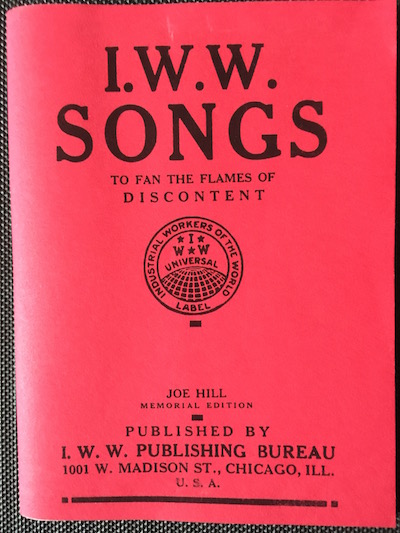 Chicago fans of Joe Hill, a Swedish-born itinerant laborer, celebrated the anniversary of his life and music on several occasions in November. I attended two excellent events, highlighted by great performances of Joe’s music. He wrote dozens of songs that lambasted capitalism and bosses, but his most famous lyric was “You’ll get pie in the sky when you die.”
The Hideout, a 19th century working men’s saloon on Wabansia, was standing room only the night of the main Joe Hill celebration. My Gapers Block story describes the agenda and list of speakers, which included a funeral oration by Larry Spivack of the Illinois Labor History Society and a rousing description of today’s IWW by Alison Olhava and Randall Jamrok. (The IWW is organizing successfully today, with branches at companies like Jimmy John’s, Starbucks and Pizza Hut. See their website for other industries and companies where the union is active.)
The evening started with a rousing set including “The Preacher and the Slave” by Bucky Halker and his amazing guitar, and closed with songs by a group including Jon Langford and Sally Timms of the Mekons and Martin Billheimer on accordion. Their closing number was “Workers of the World Awaken,” in which the crowd joined in. Psalm One and Fluffy performed a terrific hiphop version of Hill’s “Rebel Girl.”
A funeral march and procession closed the evening and Joe Hill’s coffin was carried outside by pallbearers and burned over a bonfire. The ashes were our burned notes describing why we believe Joe Hill lives today. Anyone who wanted to replicate the 1915 distribution of ashes had only to leave a self-addressed envelope. (In 1915, Joe’s ashes were divided up into a bunch of small envelopes with his picture on the front with the caption, “Murdered by the capitalist class.” The envelopes were given to IWW delegates and guests so Joe’s ashes could be scattered in every state except Utah and in other countries too.)
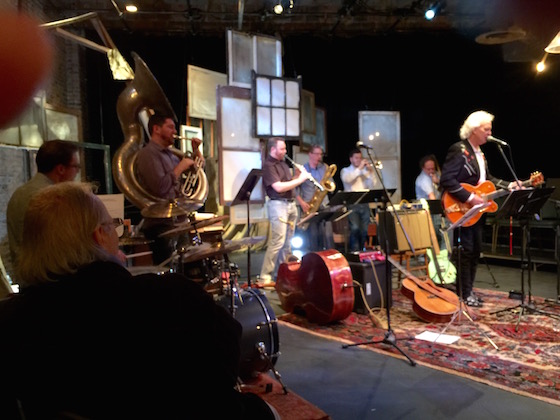
Bucky and the Big Shoulders Brass Band
Bucky Halker, a singer-songwriter and PhD in labor history from the University of Minnesota, just released his new album, Anywhere But Utah: The Songs of Joe Hill, at an album release party at the Filament Theatre in the Six Corners neighborhood. Bucky played with the Big Shoulders Brass Band, featuring two saxophones, trumpet, tuba, trombone and drums. John Abbey sat in on upright bass on several numbers. Bucky and the band played two sets, including “Scissor Bill,” and concluded with a procession around the theater.
Here’s Bucky performing the Joe Hill song from the Little Red Song Book of IWW Songs.
 nancy bishop's journal