Theater treats in Chicago: Six mini-reviews
Posted: May 8, 2015 Filed under: Theater | Tags: American Blues Theater, Chicago Dramatists, Signal Ensemble Theatre, Steppenwolf Theatre, Teatro Vista, The Hypocrites Leave a commentGoing to the theater is a treat that never grows old for me. Here are some of the plays I’ve seen recently, most of which were excellent.
The Drowning Girls at Signal Ensemble Theatre
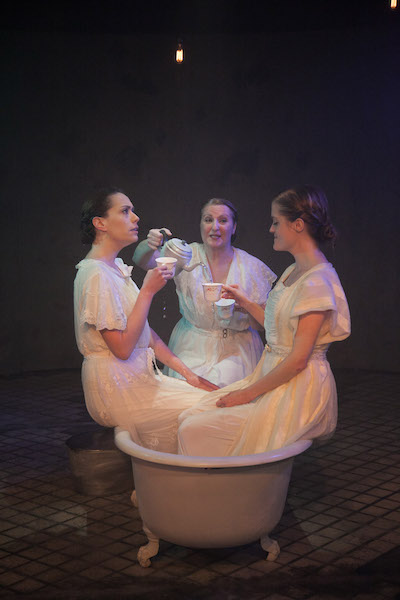 This is a captivating production and a perfect example of the rich quality of Chicago storefront theater. Great direction, great acting, great staging. It’s a 70-minute play and you will enjoy every minute. Here’s how my review begins:
“The stage is set. Three claw-footed bathtubs. The kind your grandmother had. Props: Three scrub buckets, newspapers and a tea set. Costumes: Bridal gowns and veils, usually sopping wet.
“If this doesn’t sound like a promising start for a night at the theater, The Drowning Girls at Signal Ensemble Theatre will quickly change your mind. The play is a beautifully performed, balletic story of an English serial killer in the 19th century, who swindled from and then drowned his three wives. Actually, it’s the entrancing story of the three wives, who perform all the parts in the play from the brides submerged in their tubs to the husband(s), parents, lawyers, judge, reporters and scrubwomen.”
You can see The Drowning Girls through June 6. Signal is at 1802 W. Berenice, near the intersection of Irving Park and Ravenswood. See my review for details.
Three Sisters at The Hypocrites
Anton Chekhov’s Three Sisters gets an excellent production from the always-interesting Hypocrites. It’s a fairly traditional staging except the color palette is used in a very inventive way. Director Geoff Button adapted the script to use more contemporary language without trivializing it. My review describes the story this way:
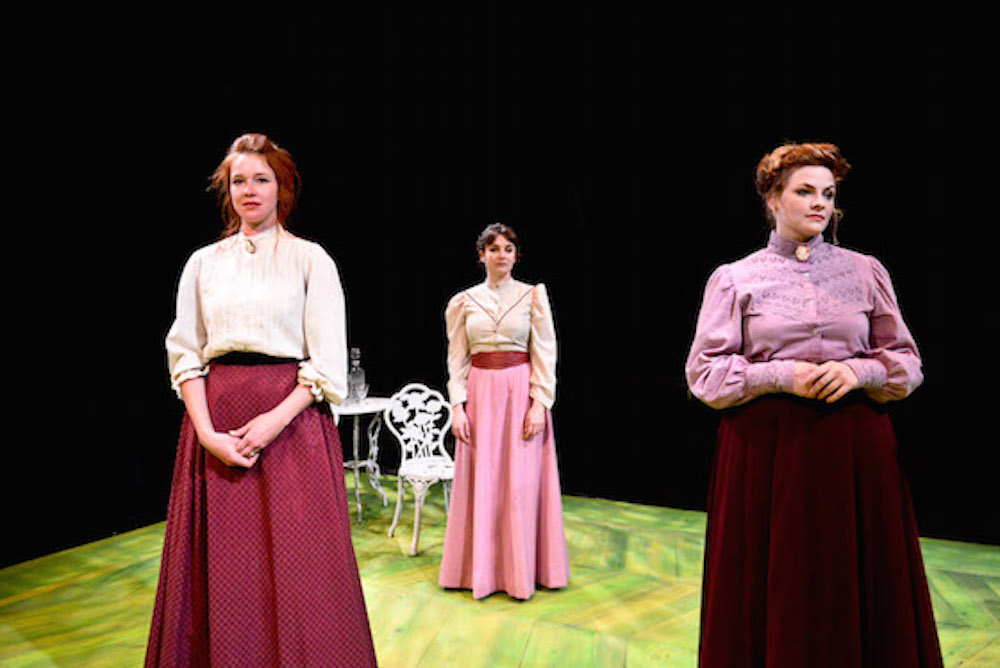 “The eponymous Prosorov sisters lead the excellent 14-person cast in a story that progresses over several years in a provincial Russian town at the turn of the 20th century. The sisters, all in their 20s, yearn to move back to Moscow, which they left 11 years ago when their father assumed the command of a brigade in the rural area. Now their father is dead and the town (and their social life) is dominated by the presence of the military base and its officers.”
The play is 2 hours, 20 minutes, and runs through June 6 in the Hypocrites’ new space at the Den Theatre on Milwaukee Avenue in Wicker Park.
Side Man at American Blues Theater
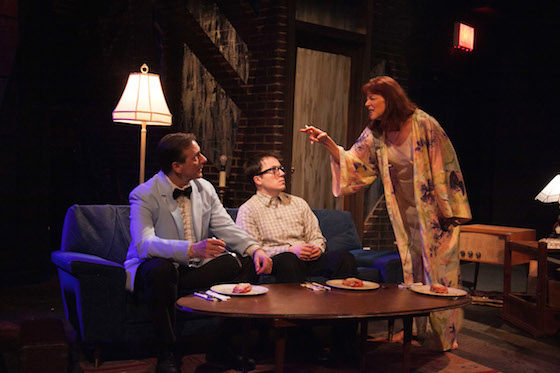 This is a fine production of Warren Leight’s Tony-award winning play, Side Man. It was first produced at Steppenwolf in the 1999-2000 season and I tried to keep that excellent production out of my thoughts and not let it affect my review of this production. This is a memory play about the jazz musicians—trumpet players—who were riding high in the 1940s and ‘50s before the rise of rock and roll. The story focuses on the career and family of one particular side man. His son takes us back and forth in time from the moment his parents met through their present difficult period.
Side Man runs two hours and continues through May 24 at American Blues Theater, staged at the Greenhouse Theater Center on Lincoln Avenue. There’s live jazz played on stage before the performance begins.
Between You, Me and the Lampshade at Teatro Vista
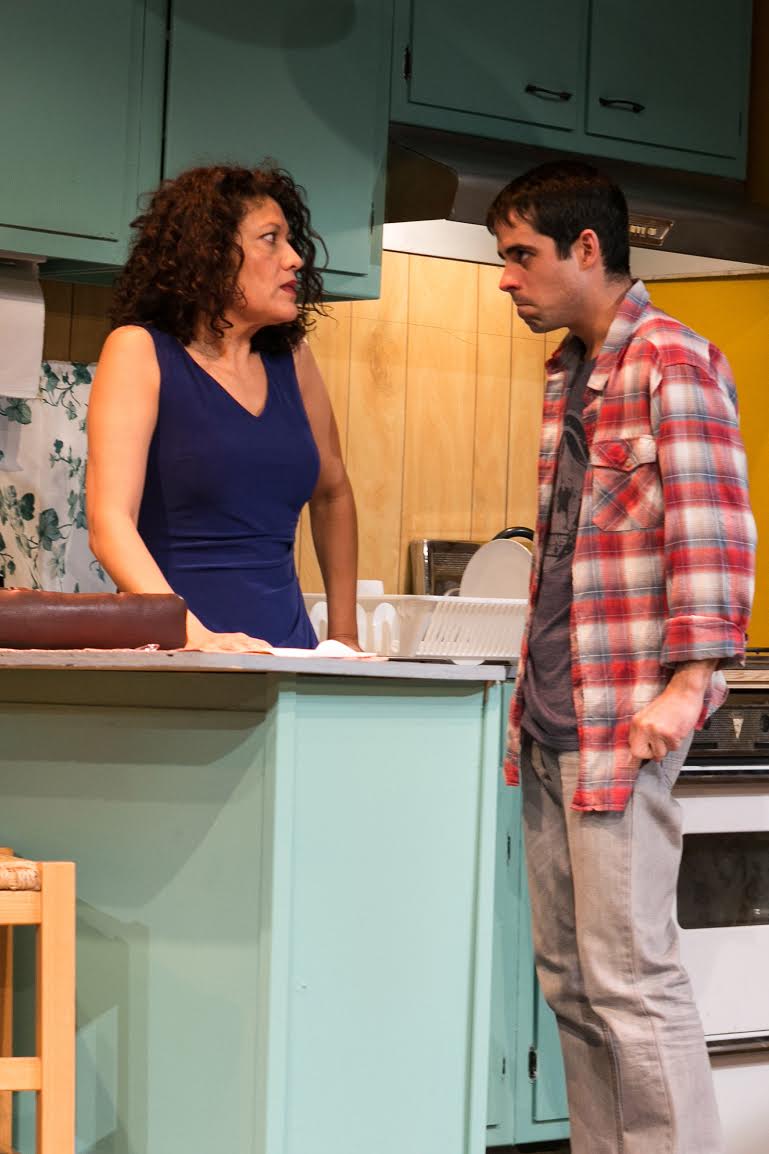 This new play about immigration and family issues by Raul Castillo runs through this Sunday at Victory Gardens/Biograph Richard Christiansen Theater (the upstairs space at VG). The 100-minute play (with one intermission) is well written with lively dialogue. My Gapers Block review says:
“Between You, Me and the Lampshade is an entertaining and poignant story told by an excellent cast under the capable direction of artistic director Ricardo Gutierrez. Original music and sound design by Victoria Deiorio create an authentic sound landscape for the story. Jose Manuel Diaz-Soto’s scene design is very much an aging trailer interior, including the turquoise kitchen.”
I recommend it. Take Mom on Sunday. Or take yourself.
Ghost Gardens at Chicago Dramatists
Ghost Gardens, a new play by Steven Simoncic, explores “how people in a dying community fight to overcome grief, illness, hopelessness, and air poisoned by a giant local corporation.” The play, set in Detroit, has certain charms and a couple of good performances, but it can’t overcome the fact that the script is rambling and disjointed. I wish I could recommend it. My Gapers Block review is here.
Ghost Gardens continues through May 31 at Chicago Dramatists on Chicago Avenue near Milwaukee.
The Herd at Steppenwolf Theatre Company
The Herd by Rory Kinnear is a story about several generations of an English suburban family who have a severely disabled child. The play looks at how different generations deal with the issues of parenthood and disability. Frank Galati directs an excellent cast of mostly Steppenwolf ensemble members, including John Mahoney, Lois Smith, Molly Regan and Francis Guinan. The writing is witty and tender and gets to the heart of these family matters. I didn’t review this, but you can check out other reviews here.
Running time for The Herd is 100 minutes. You can see it—and you should—until June 7.
Movie reviews: Two great rock docs (+ two more films)
Posted: April 29, 2015 Filed under: Movies, Music, Rock and roll | Tags: A Girl Walks Home Alone at Night, Goodbye to Language, Muscle Shoals, The Wrecking Crew Leave a commentFirst of all, two music documentaries, The Wrecking Crew and Muscle Shoals, both about the stories behind the music you see on stage or hear on a recording. And both great movies. (But then, you know I love rock docs.)
The Wrecking Crew, 2015, 100 minutes
The Wrecking Crew, directed by Denny Tedesco, is the glorious story of the session musicians who backed up many of the hits you love from the 1960s, ‘70s and ‘80s (even though you might have come to love that music only recently). The group of 20 or so musicians played in varying combinations behind the hits recorded by the Beach Boys, Herb Alpert, Sam Cooke, the Mamas and the Papas, the Crystals, the Ronettes, the Monkees and many more. They made Phil Spector’s famous Wall of Sound sound like a wall of sound.
The group dubbed The Wrecking Crew played on all these hits: “Be My Baby,” “California Girls,” “Strangers in the Night,” “Mrs. Robinson;” “You’ve Lost that Lovin’ Feelin,’“ “Up, Up and Away;” “Viva Las Vegas” and “Mr. Tambourine Man.” Six years in a row in the late 1960s and early ‘70s, the Grammy for Record of the Year went to Wrecking Crew member recordings.
Some of the musicians, like Glen Campbell, went on to perform in their own names and become famous. But most were talented musicians you never heard of, such as drummer Hall Blaine, tenor player Plas Johnson (you hear his saxophone on the theme song from The Pink Panther); guitarist Barney Kessel; pianist Don Randi; and electric bass player Carol Kaye.
And the late guitarist Tommy Tedesco, father of the director and the inspiration for the film. Tedesco senior was a fabulous musician and the film shows him in many stages of his life, playing many different kinds of music. Seeing how he earned his living (a very good living) as an almost-anonymous but essential musician, inspired his son to record the story of the Wrecking Crew, the name they gave themselves after people said they were wrecking the music business.
It was great to see Carol Kaye, known as one of the greatest bass players in the world at the time, in interviews and performance, both then and now. She said a lot of women were playing in jazz and music clubs in the late ‘50s and ‘60s. Sometimes she would play many gigs in one day. And she proves she still rocks in the solos she plays in the film.
 Many of the musicians came out of jazz and learned to play rock and roll on the job. Rock and roll was a dirty word then, but there was little money to be made playing jazz.
The Wrecking Crew was a Los Angeles-based group. Up until then, the music business was considered to be based in New York in the iconic Brill Building. But the Wrecking Crew pulled the business west.
The film is made up of music clips from the time and interviews with musicians then and now, plus interviews with figures such as the late Dick Clark, Frank Zappa, Cher, Nancy Sinatra and Leon Russell.
The Wrecking Crew was actually finished in 2008 and shown on festival circuits. But it couldn’t be shown commercially until Tedesco raised a pile of money to pay for licensing 100 hit songs used in the film. He finally succeeded with a Kickstarter campaign in which 4,245 backers pledged $313,157.
The film is running at least through next week at Landmark Century Centre. If you’re a music lover get to the theater now because it may not run much longer. There were a lot of musicians in the theater the day I saw it. I could tell by the jokes they laughed at.
Muscle Shoals, 2013, 110 minutes
What is Muscle Shoals? It’s just a little village on the Alabama border. But so much great music came out of it. No one can exactly explain why. Jimmy Cliff said, “At certain points in time on this planet, the are places where there’s a field of energy. At this time, there was Muscle Shoals.” Muscle Shoals is a 2013 documentary about FAME Studios and Muscle Shoals Sound Studio.
There was a certain Muscle Shoals sound. It was its own kind of R&B, different than Detroit, different than Memphis. U2’s Bono gives the river the credit. There’s the Mersey sound in Liverpool, then there’s the Mississippi and the Delta blues. Here it’s the Tennessee River. Bono thinks it must be that the sound comes out of the mud. But there was also something about the sound of the room that made it magical. (Dave Grohl says the same thing about the room they recorded in at Sound City, in his documentary of the same name.)
Director Greg ‘Freddy’ Camalier describes the sound as a “funky, soulful, propulsive kind of groove.” Some of the musicians who recorded there were Bob Dylan, Rod Stewart, Joe Cocker, Simon and Garfunkel, Aretha Franklin, the Rolling Stones, Wilson Pickett, Percy Sledge, Gregg Allman, Alicia Keys and Steve Winwood.
Rick Hall was the founder of FAME Studios who overcame the poverty of the area in the 1970s to establish the recording studio with a house band known as the Swampers. It was the Muscle Shoals rhythm section—guitar, bass guitar, keyboard and drums. In the heart of Alabama during the Jim Crow era, Hall established Muscle Shoals as an integrated musical operation with no color distinctions between black and white musicians.
It’s an inspiring musical story and like The Wrecking Crew, features interviews with musicians as well as a chance to hear the music they made.
The film Muscle Shoals is available on DVD and it’s streaming on Netflix.
And two other films of interest
A Girl Walks Home Alone at Night (99 minutes) is a film that has gotten some buzz as “an Iranian vampire western.” Well, okay, it is about a vampire but she only attacks men who mistreat women. It’s really a very fine film, directed by Ana Lily Amirpour, and set in a fictional Iranian ghost town known as Bad City. (It’s shot in Bakersfield, Calif.) The cast is Iranian-American actors speaking Farsi. There’s a sweet love story about two lonely people, one of whom happens to be the hijab-wearing vampire, beautifully played by Sheila Vand. Her boyfriend is played by Arash Marandi, on whom I developed a crush by the end of the film. The cinematography is high-contrast black-and-white, mostly shot at night in industrial-type settings. The story is engrossing and I will probably watch it again. If I was giving stars, I’d give it 4 out of 5.
Jean-Luc Godard’s Goodbye to Language (70 minutes) is a 3D film that should be seen in 3D. It’s currently streaming on Netflix and I strongly recommend you don’t watch it that way. I missed it when it was showing in 3D at the Gene Siskel Center and I’m sorry I did. I watched it last night on my lovely big TV screen. Don’t repeat my mistake. The film is experimental and kind of nonlinear and just looks strange in 2D. But at least it’s short.
Art you don’t want to miss: Archibald Motley, Jazz Age Modernist
Posted: April 22, 2015 Filed under: Art & architecture | Tags: Archibald Motley, Chicago Cultural Center 2 CommentsThe Chicago Cultural Center at 78 E. Washington St. is an under-appreciated gem of our city. The building is home to many interesting and often spectacular exhibits and events. Like concerts under the beautifully restored dome of Preston Bradley Hall. Art exhibits in the Sidney Yates Gallery and in smaller galleries around the building. There’s a comfortable seating area with tables in case you need a spot to rest or get some work done on the Randolph Street side of the building. Too bad the coffee bar is gone, but you can bring your own coffee in.

Motley, Blues, 1929
Right now the Sidney Yates Gallery is home to a fabulous exhibit of the art of Archibald Motley Jr., an African-American artist who studied painting at the School of the Art Institute from 1914 to 1918, whose work was exhibited all over the world and who won many honors. He lived in Paris for a time and traveled widely but he always called Chicago home.
The exhibit–Archibald Motley, Jazz Age Modernist—is here through August 31, then it moves to the Whitney Museum of American Art in New York, opening October 2. That will be the new Whitney, which opens next month. (The new building in the meatpacking district at 99 Gansevoort St. replaces the Marcel Breuer-designed building on the Upper East Side at 75th and Madison. (The Metropolitan Museum will take over the old Whitney, which is good news for preservationists. Some people don’t like the Brutalist-style Breuer building, but I do.)
The exhibit at the Cultural Center is informative and well-organized and includes a substantial section on Motley’s early work. He’s best known for colorful urban scenes but his early portraits (like the one titled Mulatress with Figurine) are insightful glimpses into African-American life of the time. You’ll see portraits of his grandmother and of his wife, Edith Granzo. Motley was born in New Orleans in 1891 and his family moved to Chicago in 1894. He grew up in Englewood, then a German/Irish/Swedish neighborhood, but his social life and artistic inspiration was in Bronzeville. You’ll find exhibits on Motley, his life, thoughts and art in the corridor leading into the Yates gallery.
See my review in Gapers Block for more descriptions of the exhibit and of Motley’s work.
Reviews from the Chicago theater scene: The good and not so good
Posted: April 11, 2015 Filed under: Theater | Tags: Court Theatre, End Days, Goodman Theatre, La Bete, Remy Bumppo Theatre, The Good Book, The Upstairs Concierge, Trap Door Theatre, Travesties, Windy City Playhouse 1 CommentIt’s been a busy theater week for me. I’ve seen two excellent plays, one very good one and two others that need work.
Tom Stoppard’s Travesties at Remy Bumppo Theatre
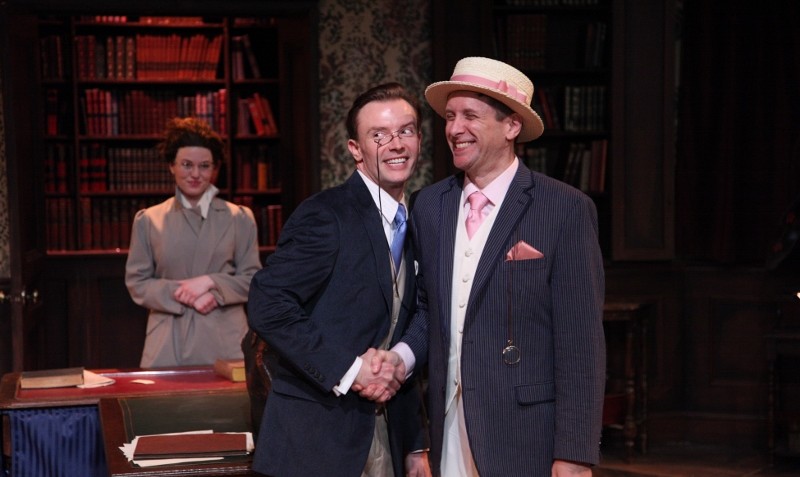 Remy Bumppo performs excellent work on its second floor mainstage at the Greenhouse Theater Center. Their production of Stoppard’s Travesties is simply brilliant and I recommend it strongly. The premise is that there is a moment in time when James Joyce, Tristan Tzara and Vladimir Lenin were all in Zurich, Switzerland. It’s also a moment when the world is on the brink of change. Europe is at war, revolutions loom, and decades of other wars are ahead. The era of modernism in art and culture is emerging, represented by the novels of Joyce (especially Ulysses) and the deconstructionist poetry of Tzara, the founder of the Dadaist movement. Lenin sits in the Zurich Public Library, writing and waiting.
These three geniuses may or may not have met and conversed or debated in Zurich at that time, but no matter, Stoppard makes the premise work. The character who holds the plot together is Henry Carr, an English diplomat with a substantial ego and insubstantial intellect.
Nick Sandys’ direction is spot on. The dialogue is dazzling, the entire cast is excellent, and the costuming is ravishing. Travesties runs until May 2; don’t miss it. You may see me there again.
My review in Gapers Block has also been posted on culturevulture.net and on berkshirefinearts.com.
End Days by Deborah Zoe Laufer at the Windy City Playhouse
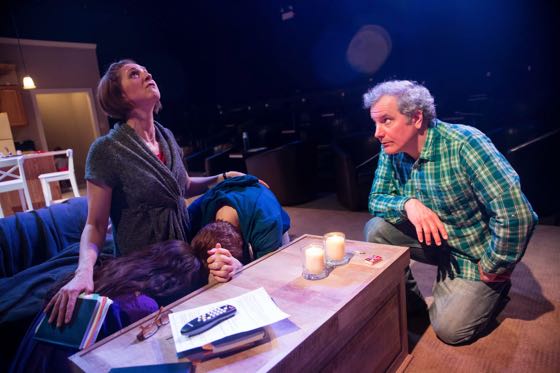 Yes, End Days is about the biblical belief in the end of days, but don’t worry, it doesn’t happen. And the story is much broader than the one character who thinks the world will end on Wednesday. (Yes, she is followed around by Jesus, but . . . no, never mind.) The script is well written and the cast is very good. The production is entertaining and thought-provoking. Direction by Henry Godinez makes all the parts gel.
The best reason to see this play is to visit this new theater venue in the Irving Park neighborhood (3014 W Irving Park Rd). End Days is the first production for the Windy City Playhouse, a theater space with an excellent bar and lobby, and best of all, super-comfy seating. Really, seating is not the only reason to go but it certainly adds to the theater experience.
See my Gapers Block review of End Days and read more about the theater itself. End Days runs through Apr 26. I’m looking forward to their next production.
La Bête by David Hirson at Trap Door Theatre
 The talented Trap Door troupe does a fabulous job with this witty satire of theater, commerce and mediocrity. La Bête was first produced on Broadway in 1991—running 25 performances before closing. It was revived successfully in 2010 and then transferred to London.
The scene is 17th century Paris and involves the competition at court between the playwright Elomire (an anagram for Moliere) and a verbose newcomer actor/playwright named Valere. The script is written in rhyming couplets and the cast knows how to deliver the lines, thanks to superb direction by Kay Martinovich. Kevin Cox as Valere is simply outstanding. His electrifying act-one monologue is one of the treats of this theater season.
Some of Trap Door’s productions are minimal in design but the costuming and makeup in La Bête is lavish.
La Bête runs two hours, including one intermission, and you will enjoy every minute of the wordplay. It has just been extended to May 2. The tickets are cheap ($10 plus a small fee). Trap Door is located on Cortland and Paulina in Bucktown, at what was the very northern edge of the city at the time of the Great Fire of 1871. Just walk down that narrow gangway to a great theater experience. And put a few bucks in the actors’ box because these performers work for nothing. And that’s a travesty.
The Upstairs Concierge by Kristoffer Diaz at Goodman Theatre
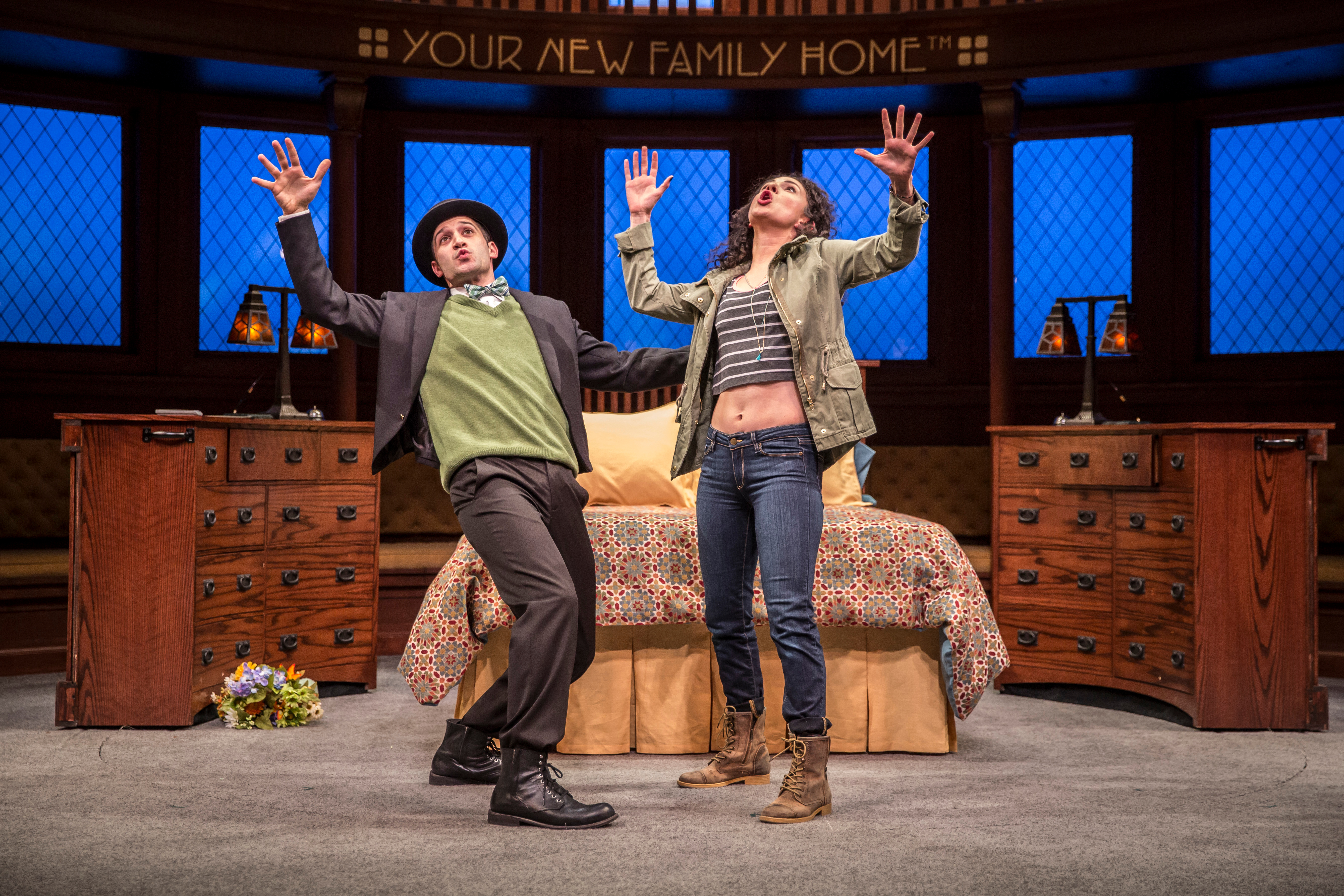 After describing a theater company that does brilliant work on pennies, we come to a well-funded theater company that puts on lavish productions that are turkeys. That would be Goodman Theatre and although Goodman’s productions often are excellent, they are capable of wasting a lot of money that would have funded several storefront theaters.
The Upstairs Concierge is a perfect example. The set is beautiful. The production has been workshopped and fussed over for several years, but the script is dreadful. As I said in my Gapers Block review, “The Upstairs Concierge is a farce but the witty part is missing.” My review generously gave it two stars* (Somewhat Recommended) but other reviewers gave it one star (Not Recommended). See it at your peril.
* The websites I write for don’t use stars, although the two Chicago dailies do. Theatreinchicago.com, a website that compiles reviews and information for Chicago-area productions, uses a rating system, so my reviews appear there with a rating based on a one-to-four star system or Not Recommended to Highly Recommended.
The Good Book by Denis O’Hare and Lisa Peterson at Court Theatre
This is the same playwriting team that created the masterful An Iliad, which Court mounted twice and I found epic and moving both times. This play is an ambitious attempt to explore the roots of the Bible, its authors, sources and gender issues. It also threads two contemporary stories through the overly long performance.
The production has received mixed reviews, from somewhat to highly recommended. The friends I attended with liked the play better than I did. I felt the parts did not hold together well and one of the modern threads would have been better eliminated. One story is that of a nonbeliever, a biblical scholar and professor played by Hollis Resnik. The other is about a teenager played by Alex Weisman, committed to becoming a priest, who over time discovers that he’s gay and comes to grips with both his faith and his sexuality. The two stories don’t mesh and the latter story, in particular, doesn’t relate to the overall ambition of exploring the roots of the bible.
The Good Book runs through April 19 at Court Theatre. I didn’t review it, but check out the reviews here and decide for yourself if you want to see it.
And also….
In March, I saw The Apple Family Plays: Sorry and The Hopey Changey Thing by Richard Nelson. These two plays are running in repertory at Timeline Theatre through April 19. They’re both well written and performed. The plays are about politics and family but the underlying theme in both is deciding how to deal with an aging relative who may not be able to live at home much longer. The second play is particularly sad as they come to grips with the issue. It is a chance to see Chicago’s fine actor, Mike Nussbaum, on stage. At 91, he’s a dynamic performer.
All photos courtesy of the theater companies.
Feasting on drama & lit in Tennessee Williams’ New Orleans
Posted: March 31, 2015 Filed under: Theater, Writers & writing | Tags: American Theatre Critics Association, ATCA2015, Tennessee Williams, Tennessee Williams New Orleans Literary Festival Leave a commentTennessee Williams, one of our greatest 20th century playwrights*, moved to New Orleans in 1939 and spent time there off and on for much of his life. The funky, colorful, bohemian spirit of NOLA suited Williams’ lifestyle, once he overcame the rigidity and religious upbringing of his family. John Lahr details Williams’ life and work in his biography, Tennessee Williams: Mad Pilgrimage of the Flesh, which I wrote about last fall.
*I would have said “the greatest,” but Eugene O’Neill and Arthur Miller also belong in the greatest category.
Last week the American Theatre Critics Association met in New Orleans and our five-day agenda included many forays into the New Orleans that Williams loved. The 29th annual Tennessee Williams New Orleans Literary Festival was being held at the same time, so we participated in some of the many events. Our hotel was conveniently located at the edge of the French Quarter, so we walked to many venues.
Williams, of course, in known for such iconic plays as The Glass Menagerie, A Streetcar Named Desire, Cat on a Hot Tin Roof, Sweet Bird of Youth, The Rose Tattoo, Night of the Iguana, Summer and Smoke, Camino Real, and Vieux Carré. But you may not know that he wrote dozens of other plays, both long and short, teleplays and screenplays, novels, poems, and letters. Hundreds of letters. Lahr says Williams was a compulsive writer. He stayed sane by writing.
One rainy afternoon, we walked through the French Quarter to the historic Hermann-Grima house to see four of Williams’ “hotel plays.” He often set plays in hotel rooms and boarding houses, which he considered “way stations between life and death.” Each play took place in a single room, with 25 or 30 of us gathered around—and sometimes on the “set.” I asked one of the actors later if he found it distracting to have to walk over an audience member during a monologue but he said, “no, I’m used to it and it doesn’t bother me.” The plays performed were:
- The Last of My Solid Gold Watches, about Mr. Charlie, an aging traveling shoe salesman, “the last of the Delta drummers.”
- Lord Byron’s Love Letter, in which two midwestern tourists visit a spinster’s historic southern home. It seems she has inherited a love letter written by Lord Byron to her grandmother and she finally agrees to read it. Actor Christine McMurdo-Wallis handles this reading exquisitely (as she does several other roles during the festival).
- Lady of Larkspur Lotion and Mister Paradise, two short plays performed back to back in a larger room. The first play features Mrs. Wire, the boarding house landlady who appears later in Vieux Carré. Mister Paradise, a poet who appears in both plays, prefers to avoid the limelight despite the protestations of an admiring young woman.
There were dramatic and musical intervals between the plays, as audience groups moved up and down stairs, from space to space. Clyde Shelby, a talented pianist, played for us in the first floor corridor and the Lagniappe Brass Band also performed.
A Friday night treat was Blue Devils and Better Angels, Tennessee Williams Tribute Reading held in a tented space at the old Ursulines convent in the French Quarter. It was a perfect space for this series of readings from and about Williams by actors and writers including director John Waters, playwright John Patrick Shanley (who read from his upcoming play, Prodigal Son), British thriller writer Rebecca Chance, and “Ask Amy” columnist Amy Dickinson.
Southern Rep Theatre, one of the few Equity companies in New Orleans, is staging Williams’ Suddenly Last Summer at the Ashé Powerhouse, a renovated venue in the old Jewish neighborhood. We saw the production Saturday afternoon. The performance was marred by poor sound quality (abetted by the constant hum of the AC system) but it was staged beautifully. The dramatic monologue by Catherine (played by Beth Bartley) about her cousin Sebastian’s shockingly bloody death was very well done.
That evening, we walked over to the Monteleone Hotel, just around the corner from our hotel, to see a reading of I Never Get Dressed Till After Dark on Sundays, part of the TWNOLF schedule. This Williams one-act contains fragments that evolved into Vieux Carré, a 1973 play that Raven Theatre produced so memorably last year. This short play involves two ongoing arguments. Jane, a former Yankee society girl, and her boyfriend Tye, a stripjoint barker with an easy manner that attracts ladies, argue about their life together and apart. And the director, writer and stage manager bicker comically about the development of the script. The play is a bit disjointed but it helped to have seen Vieux Carré. You can appreciate how the relationship between Jane and Tye evolves.
Vieux Carré, by the way, is set in the house at 722 Toulouse Street, between Royal and Bourbon streets, where Williams lived. An historic plaque now commemorates that. Williams also famously spent time in Key West, which I wrote about in 2013.
The ATCA conference closed with two excellent discussions on our final morning, also part of the literary festival.
 The first featured John Lahr, author of the recent Williams biography, noted above, and Robert Bray, editor of the Tennessee Williams Review and an English professor at Middle Tennessee State University. I had seen Lahr before when he and Martha Lavey discussed his book at Steppenwolf Theatre. This was a much more intense discussion on the writing of the book itself and generated many memorable quotes. Lahr described how his narrative challenge was to cover the public man, the private man and the plays and illustrate how those elements were woven together. Since Williams’ death in 1983, more than 40 books have been published about him. (Most theatrical biographies, Lahr said, involve “a lot of typing and very little writing.”)
The plays were “the interior landscape of my soul,” Williams said. His plays are all ghost stories: spectral and haunted. In his final play, A House Not Meant to Stand, Williams says goodbye to his “repertory company,” made up of his family, his friends and lovers, and himself. The play was produced in 1981-82 at the Goodman Theatre, directed by Gregory Mosher, who tried unsuccessfully to move it to Lincoln Center.
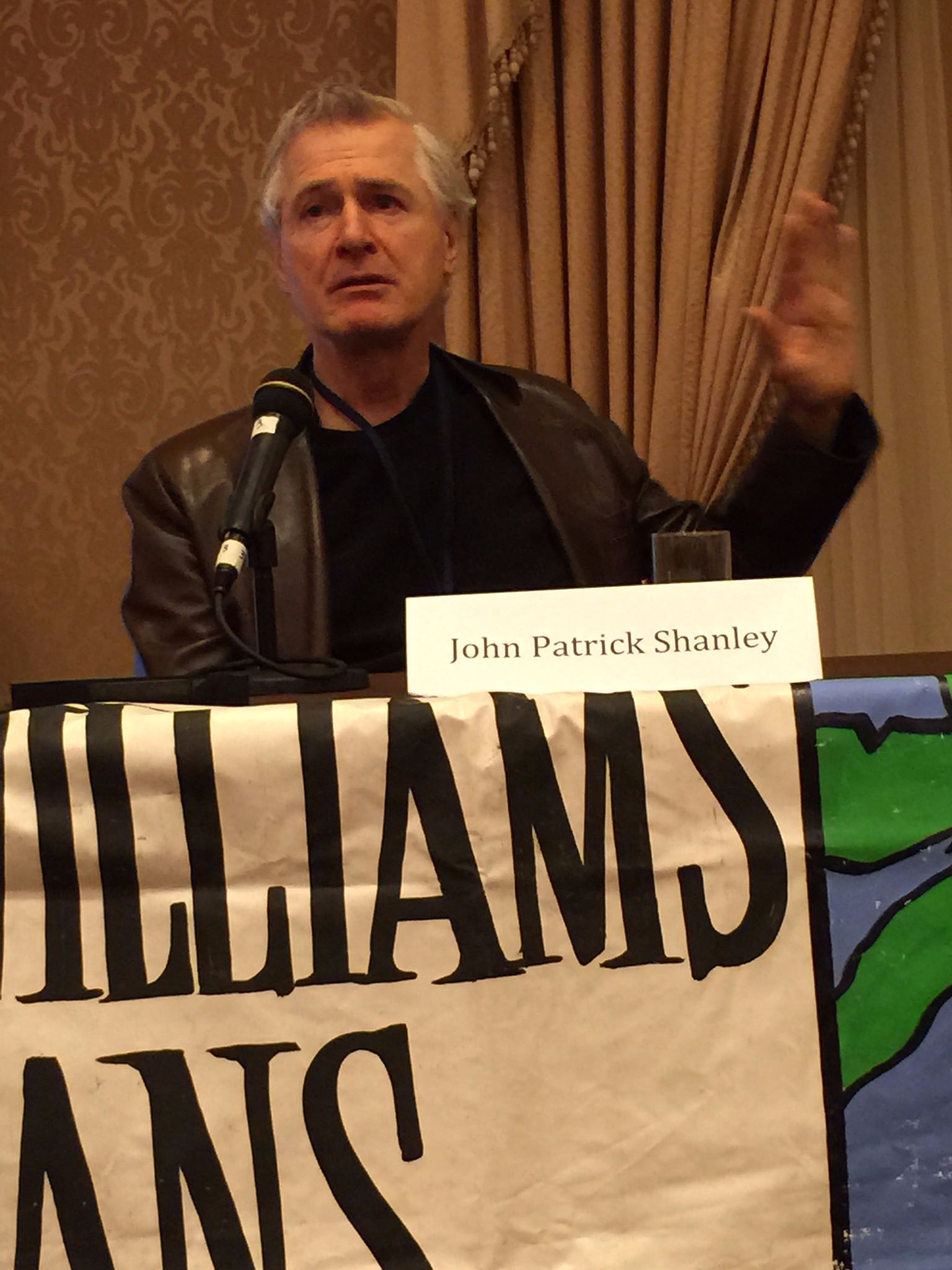 The second Sunday morning discussion was Playwrights from Page to Stage featuring New Orleans native John Biguenet; Dr. Femi Euba, a native of Nigeria whose recent plays have addressed issues related to Hurricane Katrina; and playwright John Patrick Shanley. Moderator Thomas Keith asked each playwright to talk about how his works took shape on paper and then were transformed to the stage. The comments were wide-ranging, humorous and fascinating. Shanley, in particular, is an articulate and charming commentator on his own work and the act and art of writing.
We saw two other plays (neither memorable for different reasons) and some interesting conference sessions. Bryan Batt, New Orleans native, Broadway actor, and formerly Sal Romano in AMC’s Mad Men, talked one day about his life and theater. He now lives and owns a business in New Orleans. Hedy Weiss, theater and dance critic for the Chicago Sun-Times, gave an insightful and well-received keynote address on “Perspectives in Criticism.”
And there was outstanding music, food (including that NOLA special, cold-brewed iced coffee), scenery and people-watching. New Orleans is an amazing city. I’ve been there half a dozen times over the last 25 years for business, vacation and the Jazz and Heritage Festival. I always fall in love with its color and charm all over again.
Photos by Nancy Bishop except where noted.
The Power of Music: John Hammond, Robert Johnson and Bruce Springsteen
Posted: March 22, 2015 Filed under: Movies, Music, Rock and roll | Tags: Blood Brothers, Bruce Springsteen, John Hammond II, Radiolab, Robert Johnson Leave a commentYou may never have heard of John Hammond. But if you’re a music fan or a civil rights supporter, you know he’s a major figure of the 20th century. Radiolab, the WNYC program, did a show this week titled “The Power of Music” and almost half of it was devoted to the work of Hammond, the civil rights activist and A&R executive (artists and repertoire or talent scout) for Columbia Records. During the course of his long career, Hammond, who came from a wealthy family (he had a Vanderbilt in his past), discovered and launched the careers of musicians like Count Basie, Benny Goodman, Aretha Franklin, Bob Dylan and Bruce Springsteen. And dozens more.
Hammond was instrumental in bringing the music of African-American performers out of the “race music” ghetto they languished in for decades. Early in his career, he organized the first Carnegie Hall concert to feature black musicians—in December 1938. One of the musicians he wanted to feature was Robert Johnson, the legendary backwoods Mississippi blues master. When he learned that Johnson had died recently, he played some of his music by hooking up a turntable to the Carnegie Hall sound system. The Radiolab segment titled “Letting the Devil Tune Your Guitar” explores the legend about Hammond and Robert Johnson and the story that Johnson sold his soul to the devil to become a great guitarist. Radiolab comes to the spooky conclusion that there might have been more than one Robert Johnson. It’s a compelling piece of radio.
Robert Johnson died at 27 in about 1938 (or 1939 or 1941). His music inspired musicians like Eric Clapton, Keith Richards, Robert Plant, Jimi Hendrix and Bob Dylan. Johnson was inducted into the Rock and Roll Hall of Fame as an influencer at its first induction in 1986. He’s often credited as the songwriter of “Sweet Home Chicago.”
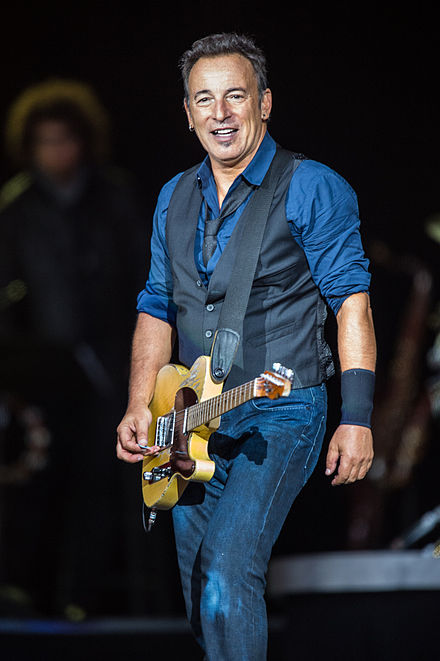 This weekend I watched an old documentary about that New Jersey musician who Hammond signed to Columbia in 1972. Blood Brothers: Bruce Springsteen and the E Street Band was made in 1995 when the band got together in a studio in New York to record a Greatest Hits album. Seeing the band 20 years younger was a visual shock. Their current personas are indelibly imprinted on my brain because I saw them so many times during recent tours. Today, yes, they’re older, grayer, balder, but they seem to be more fit and energized. Many of the band members in ’95 look a little pudgy and scruffy. Even Bruce, who today looks trim, even skinny, in tight black jeans, was a bit fleshy. And the beards make a huge difference. At first I didn’t recognize some of the band members under their hirsuteness. Garry Tallent, the bass player, and Roy Bittan, the pianist, looked very different. And so did Bruce.
The reunion was the first time the band had played together in 11 years and you could see how happy and excited they were to be together again. The power of music took them to great heights in recording the 18 songs for the album. The film shows the effort and creativity involved in getting the album made. Producer Chuck Plotkin and manager Jon Landau work closely together. Bruce is rewriting lyrics on a yellow pad and taking votes for the photo on the CD cover. Nils Lofgren and Max Weinberg are writing lyrics or notations or arrangements, as they’re getting ready to record.
The songs “Blood Brothers,” “Secret Garden,” “Murder Incorporated” and “This Hard Land” are some of the new tracks on that album. The film shows each of them being worked out with instrumentation changing until Bruce, the perfectionist, is satisfied. The final section shows the music video of “Murder” (directed by Jonathan Demme) being filmed in front of an audience of fans at Tramps in New York.
If you’re interested in learning more about John Hammond, there are several biographies. This book by Dunstan Prial looks like a good choice and I’m going to read it soon. For more info on Robert Johnson, I recommend Elijah Wald’s Escaping the Delta: Robert Johnson and the Invention of the Blues.
Three reviews: Classic (or neo) works on stage and screen
Posted: March 13, 2015 Filed under: Movies, Theater | Tags: Antigonick, Endgame, Sideshow Theatre Company, The Hypocrites, The Third Man Leave a comment It’s spring! I knew that for sure today when I decided to get the salt washed off the Beetle and had to wait in line around the block from Bert’s Car Wash on Grand Avenue. It’s a beautiful day and I didn’t mind sitting in the car, listening to a Springsteen album. And now the Beetle is clean. (Of course, to be realistic, it could snow again. And again.)
Despite the weather, I’ve reviewed some excellent plays recently, two of them of classic origin. And I’ve spent time mulling over a remarkable 1949 film, The Third Man. Here’s a recap.
Endgame at The Hypocrites
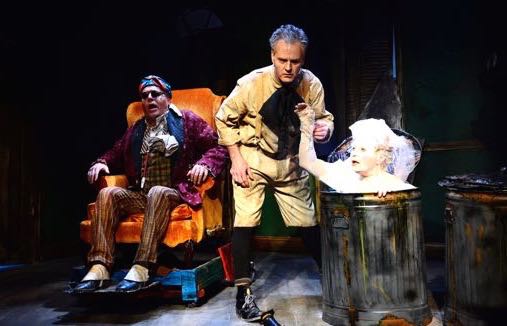 Samuel Beckett’s midcentury play, Endgame, is said to represent the theater of the absurd. And it is absurd. Non-linear, plotless. Very funny in a black humor sort of way. The Hypocrites do a great job of staging it so that the dialog gains meaning and connects to our circumstances today. Here’s how I ended my Gapers Block review:
The 90-minute play is skillfully directed by Halena Kays, carefully following Beckett’s stage directions–to which the playwright demanded full compliance. The performances by all four actors are superb. The festive cabaret atmosphere of the venue makes the black absurdity of the play more profound.
You can see Endgame at The Hypocrites’ new space at the Den Theatre on Milwaukee Avenue through April 4.
Antigonick at Sideshow Theatre Company
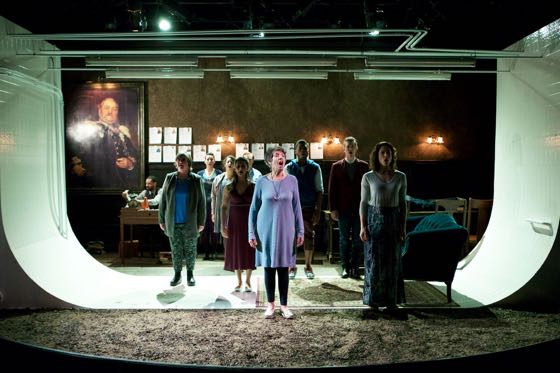 Non-classic or neo-classic? Anne Carson’s contemporary translation or reimagining of Sophocles’ Antigone is witty and the casting is gender-bending. The way double casting is used brings fresh insights to the age-old story of Antigone, her two slain brothers, and King Kreon’s refusal to allow proper burial rites for one of them. Antigone’s opposition to that ruling is dramatized by the words of the Chorus and of Teiresias, the blind prophet. When she tries to get her sister Ismene to help, Ismene reminds her of the tragic family history.
“Wherever we are, think, Sister — father’s daughter. Daughter’s brother. Sister’s mother. Mother’s son. His mother and his wife were one. Our family is double, triple degraded and dirty in every direction. Moreover, we two are alone and we are girls. Girls cannot force their way against men.” And Antigone responds, “Yet I will.”
And the 75-minute production is timed and measured by Nick, a servant who is busy on stage—but wordless—throughout the play.
Staging and performances are excellent in Sideshow’s interpretation of a classic story. You can see it at the Victory Gardens’ upstairs studio theater through April 5. See my review for details.
The Third Man, preferably on a big screen
Carol Reed’s The Third Man is set in Vienna just after the end of World War II. Many critics have called it one of the greatest films ever made and, after watching it half a dozen times recently, and considering all the ingredients that make up a masterpiece, I agree.
The film is noteworthy for its stars—Joseph Cotten, Orson Welles, Alida Valli and Trevor Howard. The plot and characterizations are fascinating but the element that makes it a masterpiece, in my mind, is the black-and-white cinematography and the night-time exteriors of war-torn Vienna. The film is simply gorgeous and I urge you to see it on the biggest screen possible. Do not watch it on your phone! I have a friend who has an eight-foot screen in his living room and that was the best screening I can imagine, short of seeing it on a big screen at an arthouse.
The theme of Chicago Literati‘s current issue is “Cinematique: The Movie Issue.” I submitted an essay on The Third Man, which you can now see on the magazine’s site. I’ll bet that even if you don’t remember the film, you’ll remember the zither music.
Related posts
It’s Oscar time. Love the art, if not the artist. The best films of 2014, according to me, and why it doesn’t matter if you like the character or not.
Foreign films including one featuring The Talking Heads. (Yes, one of my favorite bands.)
A classic play on screen: Ibsen’s The Master Builder translated brilliantly.
Big art questions: What is art and who gets to make it?
Posted: March 4, 2015 Filed under: Art & architecture, Theater | Tags: "This Is Modern Art", Idris Goodwin, Kevin Coval, Steppenwolf for Young Adults, Steppenwolf Theatre 1 Comment My review of This Is Modern Art, the new Steppenwolf for Young Adults play, went live on Gapers Block Monday night, soon after the scathing reviews by the two daily newspaper critics had been posted or published. I was surprised at the level of criticism in the two reviews—not criticism of the play itself, but of the theater for producing it at all.
This Is Modern Art (based on true events) is the story of the crew of young graffiti writers who decide they need to define “modern art” on their own terms and so they paint a “piece” (short for masterpiece) on the east wall of the new Modern Wing of the Art Institute. The event actually took place five years ago. In the play, the artists are shown at a party where an art student brags about attending the opening of the Modern Wing and seeing all the masterpieces plus “everybody in the art world.” Clearly Seven (the leader of the crew) knows his art history, but he says “We only paint everywhere else, because they won’t let us paint inside.”
The play acknowledges the illegality of graffiti writing—and also distinguishes between gang graffiti (usually tags) and the street art created by the graffiti writers. Among the criticisms of the play is that it sends the wrong messages to young people. This is a really offensive argument for young people, who do not see themselves as naïve and malleable to suggestion. As my grandson said, “Yeah, I liked the play a lot but that doesn’t mean I’m going to go out and buy spray paint and write on walls.”
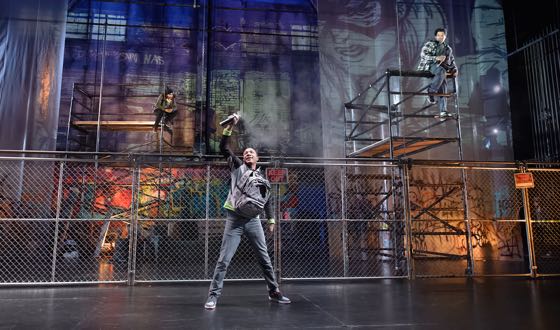 In my review, I commented, “Was what happened an act of vandalism or important artistic commentary? The question deserves to be addressed. The script and the characters acknowledge that they are committing an illegal act. But the important message the play articulates is that art shouldn’t be confined to elite galleries and museums with $18 admission tickets. The graffiti writers are artists shouting to be seen and heard. They demand visibility in a society that decrees them invisible–as artists and as individuals.
Twitter commenters noted, “If you see a Shakespeare or McDonagh drama, do you criticize the artists for glorifying/condoning murder?” And “Does anyone try to ban the Netflix series ‘House of Cards’ because Francis Underwood commits murder to get ahead?” The reviews by the Tribune and Sun-Times critics received their share of Twitter snark. Trust me. It wasn’t pretty.
I have written frequently about street art and post-street art (see Related Posts below) and I find the genre fascinating and vibrant. I wouldn’t want to shut it down. But I agree that I wouldn’t want to wake up one morning and find my house (if I had a house) covered with graffiti. The play also differentiates between “permission walls,” where an owner or a community invites artists to write on or paint walls. This would cover some of the paintings in highway and railroad underpasses that have been sponsored by local communities. Some graffers are happy to be able to show their art on permission walls, while to others, the risk is the drug that fuels their creativity. In any case, I believe they ought to be able to paint public walls and abandoned spaces.
And the Art Institute should have left the “modern art” masterpiece on its east wall for a few days instead of immediately calling in the graffiti blasting crew. And most importantly, Steppenwolf should have commissioned a “piece” for the south wall of their building, to be displayed at least during the run of this thought-provoking play. That would have been a meaningful way for the theater to make a statement supporting their production.
See my review of This Is Modern Art and go to Twitter and search #thisismodernart or @kevincoval to see the commentary about the play.
Let me know what you think about this issue. Who gets to make art and where should it be shown? Please comment below.
Related posts
Art in the gallery and out in the street.
Out in the street: street art and post-street art
New wall mural in Old Irving Park
February reviews: Everything has a music theme
Posted: February 24, 2015 Filed under: Music, Rock and roll, Theater | Tags: Orchard Theatre, Red Orchid Theatre, Redtwist Theatre, Steppenwolf Theatre, Tuta Theatre, Warren Zevon 1 CommentDavid Carr: His caper ended way too soon
Posted: February 13, 2015 Filed under: Digital life, People, Writers & writing | Tags: A.O. Scott, Chicago Humanities Festival, David Carr, Night of the Gun, The New York Times 2 CommentsThis has been a tough week for journalism. Jon Stewart is leaving The Daily Show. Brian Williams’ whole career is under investigation. CBS correspondent Bob Simon is killed in a Manhattan car crash, after surviving dozens of combat assignments. And now, David Carr has died, for no discernible medical reason, other than his checkered health past. It makes you ask, WTF anyway?
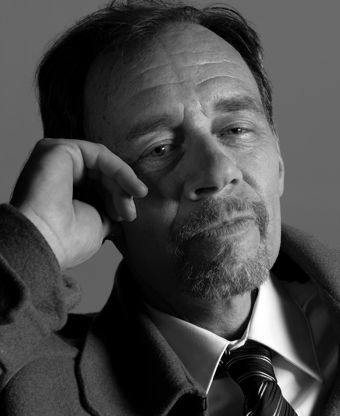
Photo courtesy sxsw.com.
As I was coming home from the theater last night, I realized I hadn’t turned my phone on. A shocking headline popped up on the screen: David Carr, New York Times media columnist, is dead at 58.
What? How could this be? I just read his article on Jon Stewart and Brian Williams today. I started looking for information and there wasn’t much available yet. The Times had a brief obituary, which was expanded over the next couple of hours to become a meaningful overview of Carr’s career.
However, Twitter was on fire with news about Carr’s death and comments about his life and work. I tweeted and retweeted about a dozen times last night alone.
- Someone tweeted a link to the Carr archive on nytimes.com: a total of 1,776 articles.
- I tweeted a link to his last column about Stewart and Williams, both of whom grew up in New Jersey (and are both Springsteen fans):
@nsbishop: Last column by @carr2n. He was a Jersey boy too (but first a Minnesota boy). http://www.nytimes.com/2015/02/12/business/media/brian-williamss-and-jon-stewarts-common-ground.html?ref=topics …
- Several people reminded us of his advice for writers:
“Keep typing until it turns into writing.”
Last night Carr had just moderated a panel discussion about the film Citizenfour with its principal subject, Edward J. Snowden; the film’s director, Laura Poitras; and journalist Glenn Greenwald. Just before 9pmET, he collapsed in his office and was taken to the hospital, where he died. That headline about him flashed on my phone at 9:30pmCT.
When I decided to write my own appreciation of Carr today, I started making notes and realized how much I had bonded with his writing over the years. First, I want to summarize David Carr’s odyssey. (He would hate seeing that word applied to his life.)
Midwesterner to Jersey boy
Carr grew up in a Minneapolis suburb, graduated from the University of Minnesota and worked as editor of the Twin Cities Reader, an alternative paper. During this time, he became an alcoholic, began using cocaine and became a crack addict. He and his girlfriend had twin girls and Carr raised them alone on welfare. A single dad crack addict. He kicked the crack habit and later suffered from cancer (Hodgkin’s lymphoma), which required a lot of radiation to his mouth and throat. He said in a radio interview: “I’ve had a very medicalized life. I have no spleen. I have one kidney. I have no gallbladder. I have half a pancreas.” He said his notably raspy voice was the result of many factors, including smoking tobacco and crack, radiation, and working on the pile covering firemen at the 9/11 site. It was during that time, he said, that he noticed his voice changing.
He left Minnesota for DC to become editor of the Washington City Paper, later moving to New York, where he wrote as a freelancer for publications including The Atlantic Monthly and New York magazine. He joined the Times in 2002 as a business reporter covering magazine publishing. He expanded that beat to include new media, and generally, the web and all media. He remarried and he and his wife have three children and a home in New Jersey.
Carr wrote a memoir of his life as a crack addict, Night of the Gun, published in 2008. He didn’t just write it as others write memoirs—from memory. He decided he had forgotten too much and attacked the project like a reporter, gathering documents and interviewing about 60 people.
“Me and My Girls,” a long excerpt from that memoir, was published in July 2008 in the NY Times Magazine. You can read it here.
My favorite quote of Carr’s, from the conclusion of his memoir, has been cited often today.
“I now inhabit a life I don’t deserve, but we all walk this earth
feeling we are frauds. The trick is to be grateful and hope
the caper doesn’t end any time soon.”
Carr was my favorite journalist. He was voracious in his interests, which ranged all over the media and pop culture spectrum from ownership and management to the way new media affect the artists and their livelihoods. He was interested in music, pop and otherwise, movies, books, magazines and web culture. He wrote long features on artists such as Neil Young and Woody Harrelson, on South Park, and on Murdoch vs. Bloomberg.
Carr Live
The one time I saw Carr live was during the 2011 Chicago Humanities Festival, when he and Clara Jeffrey, coeditor of Mother Jones magazine, discussed “New Frontiers in Journalism.” It was Wednesday, November 9, 2011, on the stage at Francis Parker School. I was excited to be able to see him and listen to him talk in an informal format. I didn’t take notes that evening, for some reason. However, there’s this video ….
Page One documentary
Carr also is the star of an excellent documentary about modern journalism: Page One: A Year Inside the New York Times. In the 2011 film, Carr is shown working on one of his best stories, his takedown of Sam Zell’s Chicago Tribune and its frat house culture.
The Sweet Spot
Carr and A.O. Scott, the Times’ film critic, had a web series for a while titled “The Sweet Spot.” The two writers would sit in what looks like the Times employee cafeteria in their shirtsleeves talking about some cultural phenomenon that interests them. These 5-6 minutes videos are always fun. You can see a bunch of them here on the Times video channel. The series ended in 2013.
Monday mornings
Every Monday, Carr had a Media Equation column in the Times business section. Every Monday morning, I would first read Paul Krugman on the economy and then Carr, filling myself full of juicy news concepts.
Mondays are not going to be the same.
But in the meantime, I’ll keep typing until it turns into writing.
Postscript on 02/15/15: The medical examiner’s autopsy showed Carr died of metastatic lung cancer, with heart disease a contributing factor.
 nancy bishop's journal