Wrigley Field: Memories, behind the scenes
Posted: May 23, 2014 Filed under: Chicago | Tags: Baseball, bleedcubbieblue.com, Bruce Springsteen at Wrigley Field, Wrigley Field 4 CommentsIt’s always fun to go behind the scenes at a favorite venue. I did that recently at the grand old Auditorium Theatre and yesterday I had a “backstage” tour of grand old Wrigley Field, now celebrating its 100th anniversary.
SCORE, a business nonprofit for which I volunteer, had its monthly meeting in the United Club at Wrigley. We heard from Cubs’ owner Tom Ricketts on the day his new plan for renovating Wrigley was announced. His talk was about business, but mostly the business was baseball.
He made a good case for his renovation plan. The rooftop owners are not happy with it, of course, but I have trouble being sympathetic with them. For years, people dragged lawnchairs and coolers up to their roofs to sit and watch the game. That was fun and cool. But when they started selling tickets, building “bleachers” on their roofs, and forming corporate entities, they lost my sympathy. Some even tore down old three-flats and built faux old buildings that are just an excuse for a huge seating area on the roof. Yes, they have a 2005 revenue-sharing contract with the Cubs, but it still amounts to selling a service owned by another entity. The Cubs’ position is that the contract legally permits them to make any renovations, including adding large signage, etc., as long as the city approves.
“Hey, Rooftop Owners! Shut Up, Already,” is what Al Yellon has to say about this at his website, bleedcubbieblue.com.
David, our tour guide, walked us up to the bleachers for a little history of the park and a great view of the scoreboard, one of only two manual scoreboards in the majors. (The other one is at Fenway Park, which celebrated its 100th in 2012.)
Then we walked down to the visitors’ locker room (tiny and in its original 1914 size and shape), up to the press boxes, and then back down to the stairs and corridors, lined with portraits of famous Cubs and Wrigley scenes, to the Cubs’ locker room. David provided anecdotes and history tidbits all along the way. Finally, we went out to the visitors’ dugout on the first base line and found out what it felt like to sit on that dugout bench.
The last time I was at Wrigley Field was for the Bruce Springsteen concerts in September 2012. As I stood in the lower boxes, about where I sat for the second concert, I looked out toward center field, wishing there was a concert stage there.
My first visits to Wrigley Field were when I was 7 or 8 with my mother and neighborhood moms and kids. We would go to Wrigley on Ladies’ Day, when tickets were 25 cents for “ladies” and kids were free. We rode the streetcar from our far northwest side Montclare neighborhood and took a picnic lunch. I loved the excitement of being in the ballpark and the fun of the long streetcar ride with my friends.
When I was 12, my father bought tickets for us to go to Opening Day at Wrigley Field. But it turned out he wasn’t able to take the day off after all, so Mom and I went. It was cool and drizzly but it was the first time I had a box seat and it was great. Mrs. Shannon, my seventh grade teacher, didn’t think opening day was a good excuse for my parents taking me out of school. She was snippy with me for weeks. I guess it would have been better if my mother had just sent a note saying I was sick.
I have lots of other Wrigley memories, including taking German colleagues to a game in 1988 when I was working at A.T. Kearney, the management consulting firm. They thought baseball was a very odd, slow game. Before we went to the game, I wrote an essay to orient them titled “Baseball in Chicago.” I’ve revised it over the years, and since it’s now more than 2000 words, I’ll spare you. This is part of the introduction; remember it was written in 1988.
Baseball fans in Chicago are divided geographically. The White Sox play in Comiskey Park on the south side; the Cubs play in Wrigley Field on the north side. If you live on the south side, you grow up a Sox fan; if you live on the north side, you are a Cubs fan. Any deviation is considered treasonous.
Sox fans tend to be vicious, however, while Cubs fans are generous and benevolent. A Sox fan will cheer when the Cubs lose. A Cubs fan will only cheer a Sox loss if they lose to the Cubs.
All Chicago baseball fans dream of a “subway series,” a World Series between the two Chicago teams. At any time during any season when both teams are in first place in their divisions, even if it’s only for one day, Chicago fans and sports columnists will say wistfully “this may be the year.” The two teams now play each other every season in the Crosstown Series.
Chicago storefronts: Great new theater
Posted: May 17, 2014 Filed under: Chicago, Theater | Tags: Interrobang Theatre Project, Profiles Theatre, Steppenwolf Theatre, The Den Theatre, The Hypocrites, Trap Door Theatre 1 CommentI’ve seen five plays in the last two weeks. Most of them are provocative and well-produced gems from small theater companies, generically called storefronts, although they may well be in warehouses, church basements, behind restaurants or in old neighborhood centers. They’re by far the best theater bargains in Chicago and often demonstrate quality superior to the more high-profile theaters. Here are my theater picks for today.
Vatzlav at Trap Door Theatre
 Yes, I’m always raving about this company, which produces plays mostly by eastern European dramatists. I like the bitter edge of these plays, their black humor and their historical references and precedents. Their current show, Vatzlav by Slawomire Mrozek, pokes fun both at capitalism and authoritarian governments. Vatzlav, a former slave, is saved from an ocean disaster when he lands on a magical island where inexplicable things happen. The inhabitants include a blind old man named Oedipus, a youth who turns into a bear, a roving ukulele player, and the rich couple who own the island. Don’t try to make sense out of it; just enjoy it. The set is simple and the costumes as usual are brilliant and colorful.
Playwright Mrozek died last August in France. He was often referred to as the Polish Ionesco and his work is compared to that of Czech playwright Vaclav Havel. Vatzlav runs thru May 24 at the Trap Door Theatre, 1655 W Cortland.
Director Beata Pilch, whose bio says she was born in the Polish district of Chicago, is founder and artistic director of Trap Door. The company has been invited to Poland to work with Teatr Witkacy and they’re raising funds for the trip. You can donate here.
The Doll’s House Project: Ibsen Is Dead at Interrobang Theatre Project
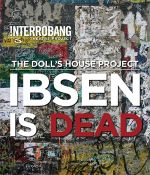 Henrik Ibsen’s The Doll’s House, published in 1879 and premiered in English in 1889, is now considered a groundbreaking piece of modern drama. It explores gender politics, scandals and marital relationships, and it brought realism to theater, when most were staging traditional costume drama. Calamity West’s new play is inspired by Ibsen’s but it’s not an adaptation. Nora in the original is the first dissatisfied housewife—84 years before Bette Friedan’s book explained the problem to us.
In the new version, Nora is a stay-at-home housewife, dominated by her successful husband Torvald, who doles out her allowance sparingly and monitors her activities. Her main job is recreational shopping. So far, like Ibsen. The new play is set in Manhattan in 1989 on the day the Berlin Wall fell. An old friend of Nora’s arrives to visit and the play veers away from the Ibsen version. The memories and tensions between Nora and Christine are the highlight of the play, while Torvald and the neighbor doctor circle around them and spar over Nora’s affections. The performers are excellent and director Jim Yost keeps the 90-minute play snapping along. The script still needs some work; there are parts that are slow and some of the dialogue seems dated.
The idea of Nora as a rich stay-at-home wife was dated in 1989, unless you moved in the circles of high-powered lawyers, financiers and consultants. In those worlds (where I worked as a marketing minion in those years), the rich stay-at-home dabbler wife was the standard. I met dozens of them at partner meetings. I couldn’t figure out how they spent their time. Recreational shopping, most likely.
The Doll’s House Project runs thru June 8 at the Athenaeum Theatre.
Cock at Profiles Theatre
 Cock is a play title you very rarely find in a review headline. I’m hoping that’s because of fear over internet anti-obscenity filters, rather than puritanism on the part of copy editors. The play by Mike Bartlett is a love triangle and a power play among three characters: John, a bisexual who is fighting to discover his identity; M and W, his lovers, who battle each other and John himself to determine the course of their lives.
The setting is London in the present but the set mimics a small arena where cock-fighting might take place. The floor is covered with fake gravel; the arena is surrounded by a low iron wall. The characters frequently take positions at opposite sides, as if about to face off. In the first half, new scenes are signaled with a bell like the start of a new boxing round; after blackouts, the characters open new scenes in attack pose. The set design and the production vigorously directed by Darrell Cox make clear that the title refers to several meanings of the word, including adult male chickens and gunlocks, in addition to the male anatomy.
The actors create an intense atmosphere, which is enhanced by the intimate space. (The audience sits in tiered wooden stalls with cushions provided at the door.) The semi-comfortable seats and the tension among characters mean that 80 minutes is about the most one can tolerate of this drama that forces John to, finally, make a choice.
Cock runs thru June 29 at Profiles Theatre, 4139 N Broadway.
The Way West at Steppenwolf Theatre
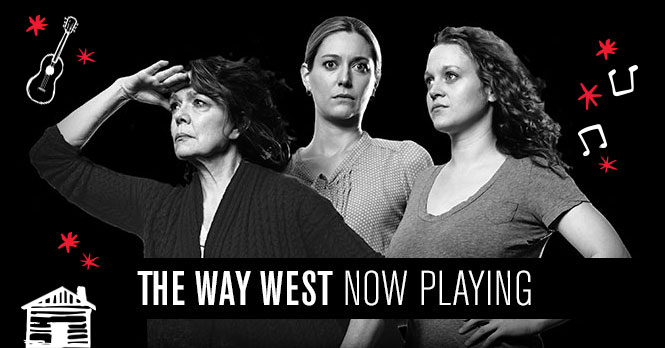 Mona Mansour’s play seems to celebrate America’s pioneer spirit and our western expansion, but ends up in personal bankruptcies in 21st century Los Angeles. The family members—a mother and two daughters—have each in her own way found a way to financial ruin. Mom just quit paying her bills, is ignoring her illness, and believes everything will be ok. The older daughter has taken time off from her job in Chicago to help her mom sort thru her records and file bankruptcy. Her younger sister cares for her mother and has gone from job to job; she is in much the same financial shape as her mother. The older sister at first seems like the responsible one, but after she loses her job (learning about it by voice mail), everything falls apart for her too.
The story line is right out of 2008 and could be stronger with a more tightly edited script. The unfortunate musical interludes with western songs by the mother, accompanied by her daughters on guitars, are strange breaks in the action that just don’t work. (The wagon train and campfire projections behind the performers only increase the silliness.)
The Way West runs two hours plus intermission and can be seen thru June 8 in Steppenwolf’s downstairs theater. It’s one of the few times in my 20+ years as a Steppenwolf subscriber that I’ve been disappointed by a production.
More theater news: Expansion project for The Den Theatre and The Hypocrites
The Hypocrites, one of my favorite small theaters, will be leaving their claustrophobic basement space at Chopin Theatre and moving into a new space nearby on Milwaukee avenue that’s being taken over by The Den Theatre. The Den, another of my faves, currently has several performance spaces at 1333 N Milwaukee over a large empty retail space. They’re taking over that space and it will be the new home of The Hypocrites. It’s a great story for Chicago theater and for the Wicker Park neighborhood. You can read more about it in my article at Gapers Block.
The joy of talking: Conversations short and long
Posted: May 10, 2014 Filed under: Digital life, Movies | Tags: CFLX312 meetup, Gene Siskel Film Center, WordPress meetups 3 CommentsI was thinking the other day how much I enjoy the various meetups and discussion groups I belong to. Most weeks I have one or two get-togethers with friends and acquaintances who share some of my diverse interests. It’s a real joy of city life.
The news media confirm that more and more of us are getting tangled up in our technology. We’re not having as much human interaction as we used to—or as much as we should have for our mental and emotional health.

My iPhone–the source of tech addiction
Serious highway accidents are caused by texting while driving, pedestrian tumbles are caused by texting while walking. Actually, while I’m a major tech geek, I don’t understand either of those phenomena. When I’m sedentary or at least stationary, I’ll use whatever device I have in hand for most any purpose. Reading, listening, talking, texting, getting directions, taking photos, finding a coffee shop. When I’m walking (or driving), I want to know that I’m not going to crash or tumble. In motion, I’m paying attention to where I’m going. (This is only partly because, with age, you’re more likely to fall, and some of your senses are in decline. Or so I’m told.)
Casual chat. I read a New York Times article recently in which social scientists studied the value of casual conversations. A chat with the coffee barista, the store cashier, the pharmacist, the doorman, the person sitting next to you on the bus. These interactions make us more cheerful, the social scientists found, and may ease the anomie of living in a modern metropolis.
I enjoy those interactions. And I especially enjoy long conversations on interesting and sometimes provocative topics—with friends, relatives, members of my discussion groups. Right now, I belong to four discussion groups. I really value them as ways to expand my circle of friends and acquaintances, and to keep my brain in constant activity, mulling over new ideas and churning out concepts for discussion and writing.
Two of my groups are fairly traditional discussion groups—one political, one focused on books. They were formed by friends inviting friends inviting friends. Each meeting is at someone’s home and focuses on one topic.
Book group
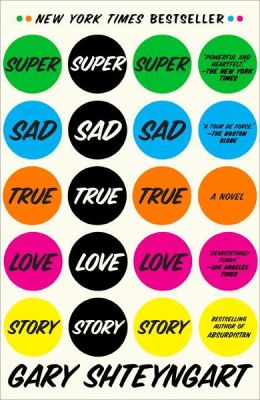
Next up for my book group.
We discuss one book, either fiction or nonfiction, at each meeting, agreed on by members in advance. It’s very rare that a member doesn’t finish a book. Everyone really takes the reading seriously. (There was one occasion when the book choice—Henry James’ The Ambassadors—brought about a near-unanimous revolt. We changed books midstream.) Sometimes we have a professional moderator but usually one of our members leads the discussion. And if we spend a little time chatting about family, work and travel, that tends to knit the group more firmly together.
Political group
The political/policy group discusses one topic, usually chosen from articles in The Nation, a political magazine we all value. Yes, we too often agree on everything but we really do try to bring in topics and members that will generate disagreement.
Meetups are a newer kind of group. They bridge the technological and the personal relationship world by bringing together total strangers who have common interests for in-person meetings.
Film meetup
I belong to an excellent film meetup. It has hundreds of members, but the meetups at a local tea shop, bar or cinema are rarely more than 12 or 15 people. The cast shifts for each meetup, but there’s a core group of about 30. Very diverse group. All ages, races, genders, film interests, areas of expertise. I have never had such good discussions at which I also learned so much about a topic. This group has an excellent and creative organizer, which is the basis for its success.
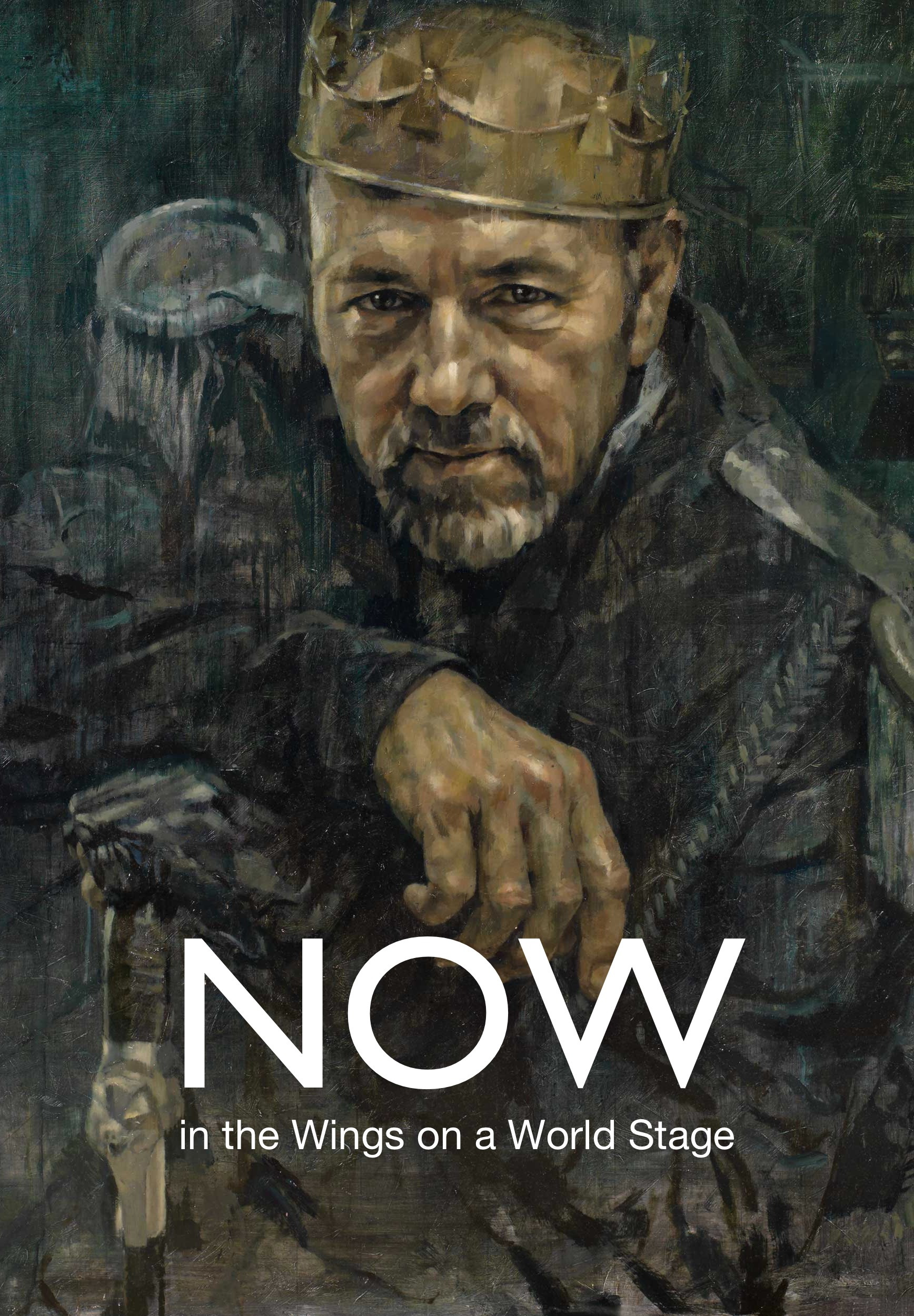 Our regular film discussions are planned to discuss one or two (related) films that we all see in advance. Other events are held to view a film together and then discuss it afterwards. In the last week, I hosted two such meetups at the Gene Siskel Film Center. We saw Orson Welles’ Othello and a few nights later, a different group joined me for the new Sam Mendes/Kevin Spacey documentary about their Richard III production—NOW in the Wings on a World Stage. After both films, we stayed at the Siskel Center or found a cafe nearby to talk about the films. Both discussions lasted more than an hour.
Tech meetups
I also belong to a couple of WordPress meetups, which focus on WordPress usage questions and practices. (WordPress is the tech platform on which this blog is built; it’s a user-friendly and widely used platform.) I always meet new people and get answers to my questions and new ideas at these meetups. You can probably find a meetup for virtually any techy project you’re working on.
A sidebar on Meetups
 Meetups run on a social networking portal that facilitates offline, in-person local meetings. Meetup was founded after the 2001 attack showed the founders how the internet could help connect people in a crisis. Today, Meetup says it has almost 16 million members in 196 countries. Meetup organizers pay a small fee each month to meeetup.com and members are usually asked to chip in.
If you want to try out Meetup, go to meetup.com and put in your zip code. Check the topics you’re interested in and you’ll be offered a menu of meetups in your categories. You create an account to join and then you’ll receive email announcements about coming meetups on your topics.
Yes, some meetups are lame and never do much while others are vibrant and active. If you find one of the former, just try out another. You’ll meet new people and learn new things. And most important, you’ll find you are creating new human interactions (i.e., friendships) in this complex and tendentious technological age.
Follow this blog
If you’d like to receive an email when I post a new article on nancybishopsjournal.com, just put in your email address on the upper right side of this page. I promise no spam and you don’t need a password!
May Playbill: Fighters, painters, mammoths and more
Posted: May 2, 2014 Filed under: Movies, Theater | Tags: @CFLX312, A Red Orchid Theatre, Gene Siskel Film Center, Remy Bumppo Theatre, Saint Sebastian Players, Seanachai Theatre, The House Theatre, Theater Wit 1 CommentI’ve seen lots of plays lately, as usual, and wanted to give you a little recap of a few to see, or not.
Lay Me Down Softly at Seanachai Theatre
Seanachai does an excellent job with this terrific Irish script by Billy Roche. It’s a tough story about a traveling roadshow that includes a fake bearded lady, carnival booths and fake boxing ring challenges. Every day is the same; only the towns change. The main story thread is about Dean, a boxer who can’t seem to win, and Junior, a once-champion who was forced to retire because of an injury. The bullying roadshow owner Theo and the cut man and boxers’ mentor Peadar are the other two male characters. Two women create really strong performances to anchor the play. The boxing ring set is handled with great care and almost seems to create a play within a play.
My Gapers Block colleague, Alice Singleton, reviewed it and adds some interesting insights.
Lay Me Down Softly runs until May 25 at the Den Theatre, 1333 N Milwaukee Ave. Like Seanachai’s recent production of The Seafarer, which I reviewed in December, it’s a must-see. Oh, how I love those Irish playwrights.
Dorian at The House Theatre
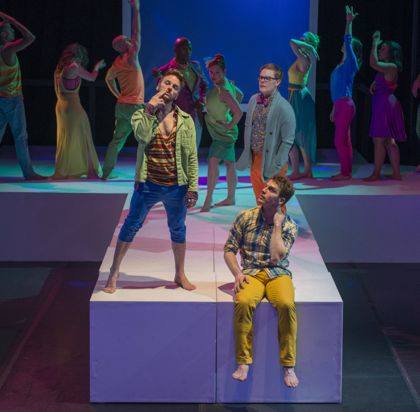
Photo by Michael Brosilow.
Dorian is an adaptation of the great Oscar Wilde novel, A Picture of Dorian Gray. It’s a visually interesting production that stresses the personal relationships among Dorian, his portraitist and friends and party people of today’s London. It’s the well-known story of Dorian–the man who didn’t age while his portrait did. House stages it in “promenade” style, which means most of the audience is mingling with the actors during the action, which can take place in the artist’s studio, at parties, galleries or performance spaces. I recommended it with a three-star review, and added this:
“This is not a play to attend because you love the writing of Oscar Wilde, notably in his fabulous plays like Lady Windermere’s Fan, A Woman of No Importance, Salomé, An Ideal Husband, and The Importance of Being Earnest, all written in the 1890s. The Picture of Dorian Gray, his only novel, is complex and challenging–and filled with smart, witty dialogue, but you won’t find much of that complexity or dialogue in Dorian.”
Dorian runs until May 18 at the Chopin Theatre on Milwaukee Avenue. My review here.
Seven Homeless Mammoths Wander New England
at Theater Wit
This play has received excellent reviews, every one of them richly deserved. It’s smart and well written, warmly acted by a fine cast, and directed by Jeremy Wechsler. The script is by Madeleine George, a writer with Massachusetts and Brooklyn connections. It’s about relationships between friends and lovers and the financially stressed closing of the museum at a small northeastern college, which will leave the mammoths homeless.
Every cast member is excellent. The day I saw it, one of the major roles was played by a superb substitute, Penelope Walker. Laura Fisher, an old friend from Famous Door Theatre days, is outstanding in one of the other lead roles. A special treat is the performance by Steve Herson, who plays various characters including the museum caretaker, a reporter, citizens at a town hall meeting, and a board member reading the hilarious minutes of the meeting. In each case, his accent is different and perfect. Also the museum exhibits include prehistoric people in diorama exhibits who voice the concerns of museum visitors.
Seven Homeless Mammoths is a great treat and you shouldn’t miss it. It runs until May 17 at Theater Wit on Belmont.
Mud Blue Sky at A Red Orchid Theatre
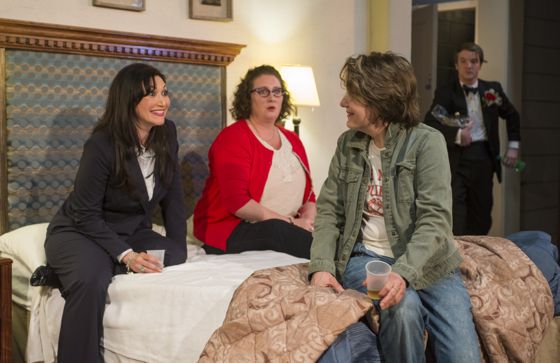
Photo by Michael Brosilow.
This is a terrific show at Red Orchid, with great humor, warm relationships, and things you didn’t want to know about airplanes. Here’s how my Gapers Block review begins:
“Loneliness, regrets, friendship, humor, and a little maternal instinct season A Red Orchid Theatre’s new play, Mud Blue Sky. Director Shade Murray gets the most out of Marisa Wegrzyn’s fine script, which revolves around airport life. The tiny Red Orchid space on Wells Street is perfect for the claustrophobic story of three very mature flight attendant friends on a layover at a hotel near O’Hare.” Beth and Sam are still flying. Angie lost her job recently and now lives in a Chicago suburb. Angie misses flying and the others can’t wait to get away from it. That’s the story until they get acquainted with a young man named Jonathan, who helps them find some relaxation and entertainment.
My review is highly recommended at theatreinchicago.com. Mud Blue Sky has been playing to sold-out houses and it’s now extended until June 29.
Our Class at Remy Bumppo
Our Class by Tadeusz Slobodzianek is a play about the Holocaust—set in the small Polish town of Jedwabne in the years leading up to World War II. The play was troubling and thought-provoking and my friends debated and disagreed about it afterwards.
The story begins in the schoolroom where members of “our class” study and play together. They are all friends, whether Jewish or gentile. Hints of anti-Semitism creep in to their school and their play from time to time and gradually increase. The key event is the 1941 massacre of virtually all the Jewish citizens—1,600 men, women and children–by their neighbors. The perpetrators are never accused, never held accountable. In the years that follow, various survivors lie about their role in the event, including one who hid and one who had converted to Christianity.
Despite the power of the first act, most of the second act is bogged down in excessive exposition. Too much detail kills the power of the first act. The play runs nearly three hours, with one intermission.
This is a risky sort of play for Remy Bumppo, which tends to produce superb quality Anglophile theater by great writers. Their regular ensemble is made up of talented and experienced Chicago actors. Our Class takes Remy Bumppo in a totally different, riskier direction and brings in some younger actors new to the company.
Reviews are virtually all “highly recommended” or four star. Our Class runs until May 11 at the Greenhouse Theatre Center.
Death Defying Acts at Saint Sebastian Players
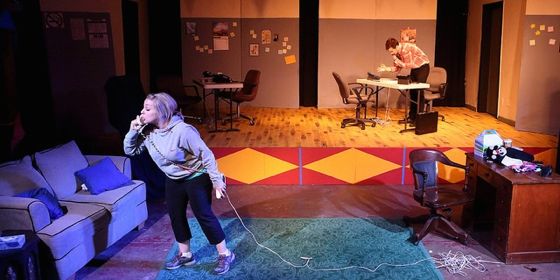
Photo by John C Oster.
Three short plays by three brilliant writers: David Mamet, Elaine May and Woody Allen. Unfortunately, they were all writing on their off days because the scripts in Death Defying Acts aren’t very good. The production is medium, with a few good performances. I really wanted to give this play a better review but I just couldn’t. The theater company decided to create a circusy atmosphere in the lobby and around the production, which was not a great idea. Here’s what I said about that in my Gapers Block review.
“One problem with the whole production is the overworked circus atmosphere. Yes, death-defying acts suggest a carnival with risky high-wire acts. Old circus posters decorate the lobby of the church-basement theater. Before the show opens, an old circus film, Here Comes the Circus, is projected across the stage floor. The crew is dressed in circus clown and aerialist costumes while making stage changes. But it’s a bit over the top, especially considering the lack of death-defying acts on stage.”
Death Defying Acts runs until May 18 at St Bonaventure Church, 1641 W Diversey. The theater space is in the basement; entry door on the west side of the church. Good news is that there’s free parking in the church lot.
And on screen, not stage
The Wind Rises returns. This wonderful Japanese animated film by the master filmmaker Hayao Miyazaki is scheduled for a two-week run at the Gene Siskel Center, May 16-29. I wrote about this film when it opened recently. It’s beautiful, hand-drawn throughout, rich and complex in its use of Japanese history and mythology. If you didn’t see it before, you have another chance.
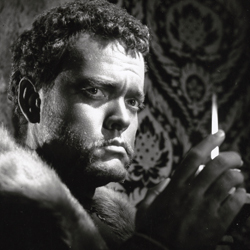
Photo courtesy Siskel Film Center.
Othello at Siskel. The great and greatly flawed Orson Welles 1952 production of Shakespeare’s Othello has been running at the Gene Siskel Film Center. I saw it for the third time last night (the first time was when I was in college at the old Fine Arts cinema, the second a few years ago at the Music Box). The 1992 restoration made a lot of improvements in visual and sound quality. It’s a powerful film, with Welles starring as the Moor. It’s clear why his film presence was so huge; he dominates every scene with his size, voice and expression.
The play is really Iago’s, as Harold Bloom insists in his essay on Othello in his book, Shakespeare: Invention of the Human. The actor who plays Iago in the film (Micheal Mac Liammoir, an Irish actor who founded the Gate Theatre),does a creditable job but can’t stand up to the Welles persona. Because he is Orson Welles, no matter what role he is playing.
Road trip: Bruce, BBQ and E Street Radio
Posted: April 23, 2014 Filed under: Food, Music, Rock and roll | Tags: Bridgestone Arena, Bruce Springsteen, Feast BBQ, John Mellencamp, Nashville music 2 CommentsIt’s 470 miles from Chicago to Nashville, down I-65, the spine of Indiana, around Louisville and then on to Nashville. That was our road trip last week to see Bruce Springsteen at the Bridgestone Arena. It was a sold-out show with 18,000 ecstatic fans welcoming Bruce home after his years in the European and Asia Pacific wilderness.
The concert was fabulous—a 3.25 hour E Street Band performance with classics like “I’m on Fire” and “Downbound Train” and beautifully sorrowful songs like “The Wall” from the new High Hopes album. The whole horn section was up front for “Johnny 99.” I thought he was through after rousing encore versions of “Tenth Avenue Freezeout” and “Shout” and final band thanks. I was hoping for a live version of “Dream Baby Dream,” but he waved away the pump organ and played a solo acoustic “Thunder Road,” letting the crowd lead him in a singalong. A great ending.
You can read a report on the concert and see the full setlist on my favorite Springsteen site, backstreets.com. Scroll down to the Nashville report.
Update: I have to add this comment by Mosley Turner, who reviewed the April 26 Atlanta concert for Backstreets. “Bruce has received — and earned — virtually every honor and accolade there is, in addition to the unswerving loyalty of the E Street fans. This is a man with not a thing left to prove, yet he delivered a performance tonight as though everything was at stake, fully invested in every lyric and every note. While there will always be those who will say ‘you shoulda been there’ for a particular tour or some special moment, no one who sees Bruce Springsteen and the E Street Band right now could come away feeling that they did not see them at a peak in their long and storied career.”
In our 18 hours on the road, food and music were the main topics. We had live downloads of concerts from Cape Town, South Africa, and Hunter Valley, Australia, to listen to, plus E Street Radio on Sirius all the way.
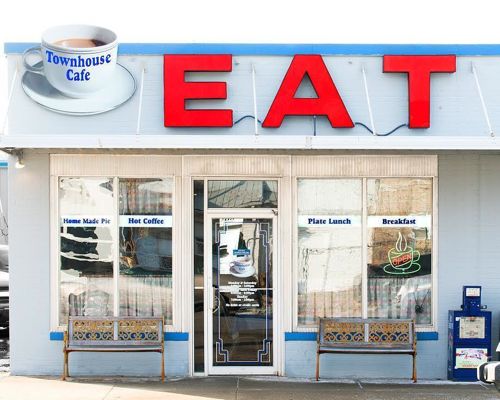
Townhouse Cafe, Seymour, Indiana
On the way south, we picked Seymour, Indiana, as our lunch stopping point as a hat-tip to John Mellencamp, who was born there. I remembered breaded pork tenderloin sandwiches from a college year in Iowa; I had recently learned they’re an Indiana favorite too. So we found the Townhouse Cafe in Seymour, a homey place said to serve the best tenderloin sandwich in Indiana. Well, it was delicious and huge and since I don’t engage in food porn, I didn’t take a photo. Our server had worked there for 20 years and I quizzed her about Mellencamp, whose framed album cover of Scarecrow was hanging over the counter. Yes, she remembered one time when he came in alone and she didn’t recognize him at first; he was a gentleman to serve and talk to.
The morning after the concert with both of us sleep-deprived, we headed north and picked up I-65. Wanting to get around Louisville before lunch, I picked New Albany, Indiana, as a lunch stop. (I lived in Louisville in the ‘80s working for KFC so the territory was familiar.)
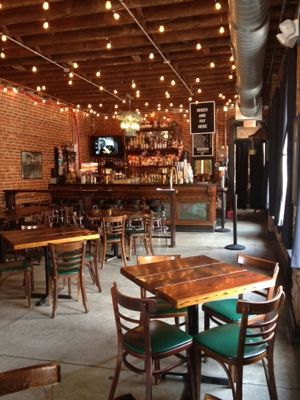
Feast BBQ, New Albany, Indiana
This time we were yearning for barbecue and found Feast BBQ in New Albany not too far off the highway. We skipped the bourbon and beer, their other specialties, and had amazing brisket sandwiches. Truly, it was the best smoked brisket I’ve ever had and I would go back tonight if it wasn’t a five hour drive. We talked to the owner and he divulged some secrets about how they smoke their meat. Since I’m not planning on smoking meat in my highrise apartment, I didn’t take notes.
Yes, a road trip in a fast car with great music and food stops is a good thing now and then. When I had small children, I dreaded road trips. But they’re an occasional pleasure now. I’m not ready to get back in the car yet, but I’m sure I will be, further on up the road….
Follow this blog
If you’d like to receive an email when I post a new article on nancybishopsjournal.com, just put in your email address on the upper right side of this page. I promise no spam and you don’t need a password!
The Mecca: Where modernism began (and memories of Mies)
Posted: April 16, 2014 Filed under: Art & architecture | Tags: Chicago Cultural Center, IIT Crown Hall, Mecca Flat Blues, Mies van der Rohe, the Bauhaus, Thomas Dyja 1 CommentThe first time I heard of the Mecca, the grand old apartment building in Bronzeville, was when I read Thomas Dyja’s colorful cultural history, The Third Coast: When Chicago Built the American Dream. (The book won the 2013 Heartland Prize for nonfiction.) The current exhibit at the Chicago Cultural Center—Mecca Flat Blues—tells the story of the Mecca and how that very site became the location of the campus of Illinois Institute of Technology and of Ludwig Mies van der Rohe’s masterpiece, S R Crown Hall. I just reviewed the exhibit for Gapers Block. You can read my article here.
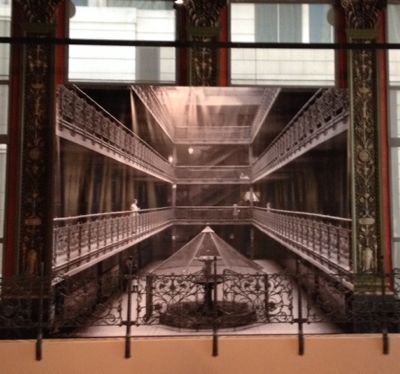
Photo by Nancy Bishop.
The Mecca was located on 34th and State streets. Amazing stories swirled around the Mecca itself from its opening in 1892 until its demolition in 1952. Dyja gave a lecture last week on “The Battle for the Mecca” and described how that one square block on 34th Street between State and Dearborn streets inspired so much. Gwendolyn Brooks’ great poem “In the Mecca,” was about the time she spent working there. A blues song from the 1920s, “Mecca Flat Blues,” commemorated the building, which was part of an entertainment district where jazz and blues flourished. When you check out my review, be sure to play the video of the blues song with audio from the original vinyl recording, played on a very old turntable. The Mecca was demolished and the site scraped clean to provide the site for the new IIT building. Dyja called it a palimpsest: a writing surface scraped clean for new writing on which traces of past writing remain.
The exhibit continues in the Sidney Yates Gallery at the Cultural Center until May 25. See details at the end of my review.
A note about my Gapers Block article: Chicago Magazine named it one of the “must-read articles of the week.” I was kinda pleased.
Memories of Mies
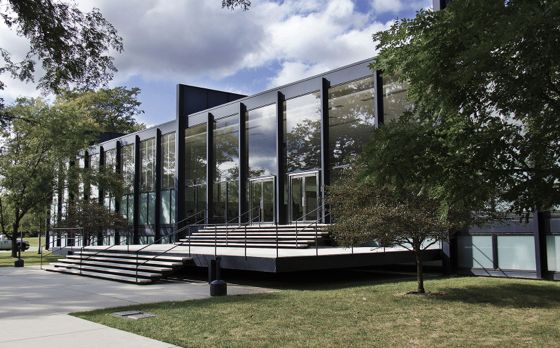
S R Crown Hall. Photo courtesy Wikimedia Commons
My first visit to Crown Hall was an unforgettable experience for a longtime devotee of architecture and design. It was September 1969 and a major retrospective celebrating 50 years of Bauhaus art and design was on display at Crown Hall. Mies van der Rohe, its architect, was one of the many alumni of the Bauhaus who came to Chicago in the 1930s. Mies had died just the month before—in August 1969. I was living in DeKalb at the time and had never been to the IIT campus, even though I had grown up in Chicago—on the far northwest side. But I was a lover of Bauhaus design and the exhibit was something I could not miss. I started early, so I could spend a whole long day at the exhibit. I had seen small photos of Crown Hall so I knew the building I was looking for on the unfamiliar campus. But as I walked toward it, it took my breath away. The expanse of glass gleaming in the sun and the precision of the steel i-beams were simply stunning. Even though other Mies high-rise buildings are also considered masterpieces, this four-story academic building is much more elegant, because its entirety can be appreciated in one view.
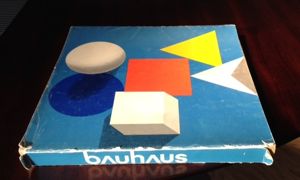
Original catalog from 1969. Photo by Nancy Bishop.
The Bauhaus exhibit was very comprehensive and thrilling to see. Paintings, photography, architectural renderings and photographs, furniture, sculpture, pottery, typography by dozens of famous artists and designers. I was on sensory overload by the end of the day. I still have the square 365-page catalog, which I count among my treasures.
See the Farnsworth House
Another beautiful example of Mies’ low-rise designs is his Farnsworth House in Plano, Illinois—a museum house that’s open for tours April through November.
Related posts
Walking the Mies staircase at the Arts Club. Scroll down in my October post.
Chicago’s Bauhaus legacy. See my comments on the great 2013 exhibit at the Ukrainian Institute of Modern Art.
Speaking of art: The work is what it is
Posted: April 11, 2014 Filed under: Art & architecture | Tags: Art Institute of Chicago, Chicago Cultural Center, Christopher Wool, Finding Vivian Maier 3 CommentsSome musings on the nature of art and the artist…and letting the artist’s work stand on its own.
Finding Vivian Maier—and viewing her work
Yesterday I saw the new documentary about photographer Vivian Maier: Finding Vivian Maier, directed by John Maloof and Charlie Siskel. Maloof is one of the three major owners of Maier’s work and probably holds the greatest number of images (negatives and undeveloped film) and her ephemera. I’ve written about Maier before and her work has had lots of attention in the last two years.
The new film was interesting and well done (although Maloof, who is not a film director, inserted way too much of himself in the film). In deciphering the mystery of Vivian Maier, the filmmakers did some good research, including going to Europe, where she had traveled. They also sought out the now-adult children for whom she cared as a nanny in the Chicago suburbs 50 or 60 years ago. Some of them discussed “Vivian” at length and told stories of her cruelty; others talked about her strange habits and her hoarding.
You know what? I didn’t want to know those things about Vivian Maier because I want to appreciate her work for what it is. Brilliant, engaging images of humanity. The fact that her work was never shown when she was alive is a sad story and in fact, she might not even approve of the current Maier-mania.

A Rolleicord: My first real camera
But the work is there and it’s magnificent. If you haven’t seen it, get to the Chicago History Museum or check it out online. The work stands on its own.
A technology aside
Maier shot with a Rolleiflex, a twin-lens reflex camera (my first camera, a college graduation present from my parents, was a Rolleicord, the amateur-photographer model) and that meant she could be more discreet in photographing subjects. With a twin-lens, you hold the camera at chest-level and frame the image by looking down into the viewfinder; you don’t hold the camera up to your face, which may seem more intrusive to the subject.
The art is what it is
Today I went to the Art Institute because I didn’t want to miss the retrospective of Christopher Wool’s work. (More below.) It is fascinating, beautiful and interesting as it has changed over time. I don’t want to know if the artist was going through a bad divorce or drinking too much or living in exile. The work is the work. It stands on its own.
You may be thinking of Woody Allen about now. Some of you may believe that he is a perverted, child-abusing horrible person. And he may be. The evidence about that is confusing and contradictory.
But even if he is all those things, his work is still outstanding. He’s one of the finest American film creators of our time. His work deserves to be viewed on its own merits. His art is what it is.
The abstract expressionism of Christopher Wool
The retrospective of Christopher Wool’s work is on display at the Art Institute of Chicago until May 11. It’s in Regenstein Hall in the American modern art wing (not in the new Modern Wing). His early work is probably best known. He used letterforms to create word paintings, using language as image. (All photos by Nancy Bishop.)
One of the best-known works of this period is Apocalypse Now, which Christie’s sold at auction in November for many millions. See an interesting discussion of this sale here. My favorite wall in the current exhibit is Untitled (Black Book Drawings), a series of 22 pieces in which negative character types of eight or nine letters are primly stacked.
In the 21st century, his paintings take on a new expressionistic look in abstract forms of tangles of black lines, shadows, dots and swashes of paint and ink.
His gray paintings in the last rooms of the exhibit are large-scale works in enamel on linen.
Finally or firstly, the bronze Wool sculpture at the entry to the exhibit transforms his two-dimensional creativity into three dimensions. My photo shows the sculpture with the works of Ellsworth Kelly peeping out behind the tangle of metal.
On the horizon
The exhibit titled Mecca Flat Blues at the Cultural Center is not to be missed. I’m writing a feature about it for Gapers Block and will post a link here soon.
Also at the Cultural Center, the exhibit 35 Years of Public Art is just one of many reasons to stop by the building that used to be the Chicago Public Library. It’s a city treasure for many reasons.
Lotsa theater in Chicago: Part 2
Posted: April 4, 2014 Filed under: Theater | Tags: About Face Theatre, Arguendo, Court Theatre, Elevator Repair Service, European Repertory Theatre, Silk Road Rising, Steppenwolf Theatre, The Gift Theatre Leave a commentA few days ago, I posted an article compiling several plays I’ve seen recently. However, I’ve been busy lately, so here’s another bunch. Don’t miss the trailer below for Arguendo, the March production by Elevator Repair Service at the MCA Stage. It’s gone, but still being staged in other cities. You might want to chase it down after you see this.
Water by the Spoonful at Court Theatre
 Quiara Alegría Hudes’ play tells several stories of lost souls seeking to find themselves, find redemption or simply a cure for a crack habit. Three of the characters are family members: Elliott, an Iraq war veteran; his cousin, Yazmin, who has an adjunct academic job and seems to speak with the author’s voice; and Odessa, his estranged mother. Odessa moderates a global chat room for recovering addicts.
The chat room concept made the play seem very ‘90s although I know chat rooms still exist. When I tried to find some, they all seemed to be about sex, so the chat room vehicle seemed a little weak. But those scenes demonstrate the value for troubled souls being able to reach out and talk to others without recriminations.
Water is directed by Henry Godinez. Scene and projection design is by the very talented John Boesche, whose projections have embellished Chicago productions for many years. But the jagged hole in the front center of the stage was a little too literal in creating the abyss into which characters might fall.
Water by the Spoonful is touching, thought-provoking and beautifully staged. Its run ends April 6.
Russian Transport at Steppenwolf Theatre
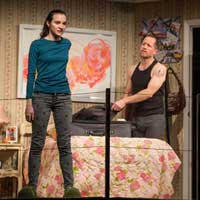 The tough comedy/drama Russian Transport is directed by Yasen Peyankov, who has been one of my favorite Chicago theater artists since I first saw him in shows at the late great European Repertory Company in the 1980s and ’90s. I still get chills thinking about their production of Steven Berkoff’s Agamemnon.
Russian Transport is the story of a Russian immigrant family in Brooklyn who work hard to get along and are joined by Boris, a relative who arrives from Russia. Misha, the father, runs a fairly successful car service out of his home office. His wife Diana (Boris’ sister) keeps tight control on the family cash. Alex and Mira are their children; Mira is still in high school; Alex goes to college part-time, and works a couple of part-time jobs, including driving for his father. They think Boris will need help finding a job and getting set up in America, but it turns out Boris already has a thriving business—which involves young women arriving from eastern Europe. He is by turns friendly, charming and menacing to his niece and nephew. Steppenwolf ensemble members Tim Hopper as Boris and Mariann Mayberry as Diana play roles quite different from their usual style. Both are excellent as are the other three actors.
The play has had mixed reviews but my friends and I thought it was excellent and worth your time and thought. It runs through May 11 in Steppenwolf’s upstairs theater.
More on European Rep. As an aside, this 1987 article from the Chicago Reader is a good overview of European Rep as well as an indictment for the lack of funding for theater in Chicago and the US.
Thinner Than Water at The Gift Theatre
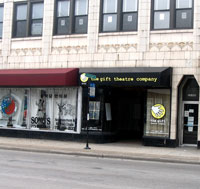 The headline for my Gapers Block review of this fine play is “not just another dysfunctional family.” Here’s an excerpt from the opening of my review:
“Is blood thinner than water, rather than, as the proverb would have it, thicker? Gift Theatre’s new play Thinner Than Water by Melissa Ross makes us ponder this question as water washes over the family members metaphorically as well as realistically…. So many opportunities for family dissension. But the recipe for a hyper-dysfunctional family might start like this: Take one distant and unloving father and three mothers–and add one child from each. As Thinner Than Water opens, the three half-siblings are arguing about who will handle details of their father’s terminal illness.”
Thinner Than Water has strong performances from all its cast members and John Gawlik’s direction makes it the high-quality production we have come to expect from Gift Theatre. You can catch it at this Jefferson Park storefront until May 25. See my complete review here.
Brahman/i at Silk Road Rising + About Face Theatre
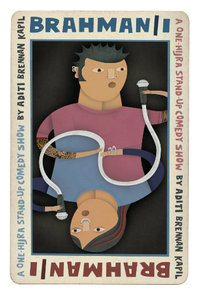 Brahman/i is an unusual production—part standup comedy, part lesson in the history (and mystery) of sexual ambiguity. Its subtitle is “A One- Hijra Stand-Up Comedy Show.” As a co-production of Silk Road and About Face, it involves both storytelling from South Asia and questions of sexual identity. Brahman/i, the sole character, is played by Fawzia Mirza, who has performed at many other Chicago theaters. Brahman/i is an hijra or intersex person, who is considered to be both male and female. (I’m working very hard not to use personal pronouns here.) During the performance, the actor changes from male garb to female with sari and jewelry. A guitarist provides occasional accompaniment and comments.
The story told is interesting and complex and tells us bits and pieces of history and mythology as well as stories of Brahman/i’s middle school and her opinionated auntie. We learn lessons from Odysseus and Galileo and see erotic Tantric images from the temples at Khajuraho. The almost-two-hour show is truly a stand-up comedy performance, not a play, although the stories are engaging and humorous; Mirza’s performance is charismatic and energetic. Brahman/i runs until April 27 at Silk Road Rising’s theater in the Chicago Temple on Washington Street.
Arguendo by Elevator Repair Service
This play was staged at the MCA Stage for just one weekend in March, but the Elevator Repair Service production of Arguendo was one of the best things I’ve seen lately. I suppose not everyone would be attracted by a theatrical performance of a Supreme Court case, but this New York theater company is smart and innovative and made the lines sing. Barnes vs Glen Theatre Inc. was a 1991 Indiana case questioning the constitutionality of the Indiana law requiring performers to wear something—pasties and a g string, shall we say—rather than performing nude. The suit was brought by the Kitty Kat Lounge and Glen Theatre, Inc., of South Bend, Indiana. The Barnes in the case title was Michael Barnes, then St. Joseph County Prosecuting Attorney.
The show begins with a reporter scrum outside the SCOTUS building as exotic dancer arrives to observe the trial. Then we move to the courtroom where three justices are seated on a raised area above the stage. Proceedings begin in a dignified manner with opening arguments by petitioner and respondent. Shortly, we realize the justices’ chairs are on casters as they come careening down the ramps on either side of the stage. From then on, the scene changes moment by moment as justices and attorneys wheel around the stage to face each other or the audience. The three actors portraying the justices change voice and physical style to mimic the various justices.
The actor portraying Bruce Ennis, the ACLU attorney for the respondents (the dancers et al) argued on First Amendment grounds that the right to nude dancing was an element of free expression. His energetic arguments began to result in his gradual disrobing—first jacket, then trousers, then shirt, then undershirt and shorts—until he was down to a thong. And soon the thong came off too. He completed his arguments as naked as the day he was born.
Unfortunately, the SCOTUS decision, delivered by Chief Justice William Rehnquist, didn’t agree with the First Amendment arguments—and the exotic dancers lost their case.
The 80-minute play was followed by a fascinating discussion and Q&A by director John Collins with Nancy Marder of the Jury Center at IIT Chicago-Kent College of Law. Other experts joined Collins at other performances.
I first saw the great work of Elevator Repair Service in 2008, when they performed a full staged reading of Gatz, F Scott Fitzgerald’s novel The Great Gatsby. The 8.5-hour production, with meal breaks, was also held at the MCA theater. It was one of those incredible arts experiences that can’t be matched. Except maybe by a terrific rock and roll concert.
Coming up tonight: Bruce Springsteen on HBO
For fans of Bruce Springsteen and rock and roll: The 30-minute documentary, Bruce Springsteen’s High Hopes, will premier on HBO at 8:30pm tonight (my DVR is set). The making-of film was edited and directed by Thom Zimny, so it will be well done. The new album, High Hopes, was released in January.
Follow this blog
If you’d like to receive an email when I post a new article on nancybishopsjournal.com, just put in your email address on the upper right side of this page. I promise no spam and you don’t need a password!
Quick takes: Local theater + one great movie
Posted: March 30, 2014 Filed under: Movies, Theater | Tags: Step Up Productions, The Grand Budapest Hotel, The Hypocrites, the Musical, Urinetown Leave a commentSpring is the season when a lot goes on in Chicago theater and other performing arts. (It’s still not as stuffed with events as October, however.) This is part 1 of two posts this week.
Theater
Urinetown
Certainly my favorite theater experience was seeing my 16-year-old grandson perform in his high school’s production of Urinetown yesterday. I’ve seen that play so many times I could recite parts of it by heart. But it’s a smart play and the production was really good. The kid did an excellent job, playing three different parts and successfully mastering the quick offstage costume changes required. The last performance was Saturday night, so I won’t recommend you check it out.
Urinetown was written by Greg Kotis (of Chicago’s Neo-Futurists) and Mark Hollmann and opened on Broadway in September 2001; I saw it there a couple of months later. The premise of Urinetown does make you think. It’s set in a period of economic decline and extreme water shortage. If we can privatize highways, bus shelters and parking meters, can “public amenities” be far off? I hope Mayor Emanuel has not seen this play.
Darlin’ at Step Up Productions
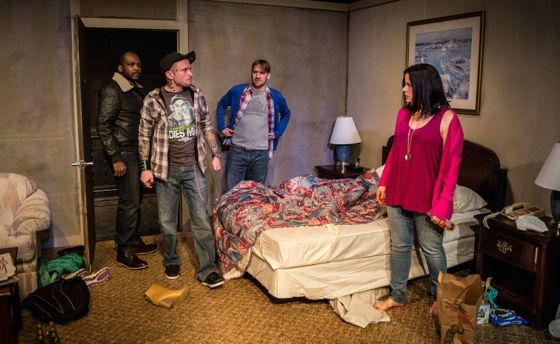 Step Up Productions is staging this brave play that treats domestic abuse as part of its mission to benefit a local nonprofit for each production. Darlin’ deals with Clementine, a woman who leaves husband, home and children and moves into an anonymous motel room, where she meets an assortment of down-on-their-luck souls. One of them is a motel maid who blames her injuries on a box of Brillo pads falling on her from a high shelf. She and Clementine share some strong scenes.
The theater will donate a portion of its proceeds to the House of the Good Shepherd, which serves women and children survivors of domestic violence. Last fall’s production, The Benchmark, benefited the Chicago Alliance to End Homelessness.
Darlin’ runs until April 13 at the Athenaeum Theatre. See my Gapers Block review. (By the way, you’ll notice that I got in a Bruce Springsteen lyric into my review. Just goes to show that there’s a Springsteen lyric for every occasion–and his fans are obsessively vigilant about using them.)
Into the Woods at The Hypocrites
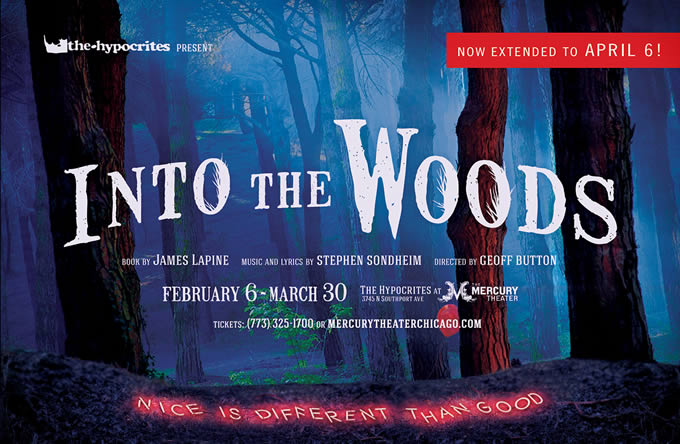 The Hypocrites move to the Mercury Theatre on Southport to stage their version of the Sondheim musical, based on classic fairy tale characters. The play is a 1987 show by Stephen Sondheim and James Lapine. Since I have often admitted I hate musicals, you know I’m going into this one with my cynic’s pen in hand. But I do like Sondheim’s music and the lyrics are often thought-provoking.
This show is performed by 10 talented actors and singers and it has received mixed reviews. The setting is designed like a children’s park, suggesting “the playground of a top-notch arts magnet school,” as one reviewer commented. To me, the “into the woods” theme has a dark overtone, and some of the lyrics portend danger. But when the trees are represented by balloons, it’s a clever touch but loses the darkness. I kept wondering if they were going to pop all the balloons to mimic leaves falling off trees. It would be a Hypocrites kind of symbolism.
The Hypocrites do a decent job of this, although I would argue with some of their costume and stage setting choices. The show runs through next weekend, so if you’re a Sondheim fan, you will want to see it.
And one fine movie
Grand Budapest Hotel
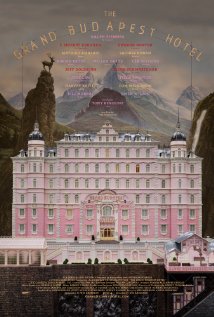 If you’re going to see one film this week, make it this new Wes Anderson charmer. On the surface, it’s the reminiscences of the owner of the now somewhat rundown hotel in the fictional central European country of Dubrowka. He tells of his adventures as a lobby boy for Gustave H, a concierge of multifarious talents, played by Ralph Fiennes. I think of Fiennes as a serious actor and I have admired his work in many classic roles, on stage and film. But here he shows he can be a comic actor of the highest caliber.
The film has an amazing cast including short but inspired performances by Adrien Brody, Bill Murray, Willem Dafoe, Jeff Goldblum, Owen Wilson, Jude Law and many others. There are too many convolutions, escapes and chase scenes to describe here. And pastry. Lots of pastry.
The brilliant thing about this film is that it is a panoply of film history and film techniques. Not only is there beautiful cinematography, there are models and stop-motion animation. And to show time changes, the color palette and aspect ratio of the film changes from widescreen to traditional boxy shape and back again. Whimsical? Quirky? Idiosyncratic? Nostalgic? Yes, it’s all of those. And on top of the humor and whimsy, there’s a hint of the World War II tragedy to come as German military officers accost Gustave and the lobby boy on a train.
This phrase appears twice in the film: “a glimmer of civilization in the barbaric slaughterhouse we know as humanity.” I think Anderson wants us to remember it.
Follow my blog, please
If you’d like to receive an email when I post a new article on nancybishopsjournal.com, just put in your email address on the upper right side of this page. I promise no spam and you don’t need a password!
Women of Letters: Letter-writing as performance art
Posted: March 22, 2014 Filed under: Uncategorized | Tags: Mayne Stage, Women of Letters 1 CommentIf you weren’t at the Mayne Stage in Rogers Park last night for an evening with Women of Letters, you missed a profound and theatrically moving event—for writers, performers and for women. Seven Chicago female artists sat at a table and in turn came to the mic to read the letters they had written addressed “to the moment the lights came on.”
 The letter-writers were:
— Wendy McClure, author, columnist and children’s book editor
— Kate Harding, author of Asking for It: The Alarming Rise of Rape Culture
— Kyra Morris, actor, physical theater artist and director
— Claire Zulkey, author and blogger
— Arlene Malinowski, solo artist, writer and instructor
— Kristen Toomey, comedian and actress
— Tavi Gevinson, writer, actress and founder of Rookie Magazine
Women of Letters started as an Australian literary salon focused on celebrating the lost art of letter-writing. This is their second US tour and first appearance in Chicago. The large and enthusiastic audience at the Mayne Stage should ensure a return visit in 2014.
One of the guidelines for Women of Letters is that events are not recorded, so that participants can feel free to write about very personal subjects. Therefore, even though I took notes, I won’t use any quotations. But I will tell you a little about the letter-writers and the event.
The moderator was Marieke Hardy, an Australian writer and co-curator of Women of Letters. She introduced each writer and later conducted a Q&A with the panel on letter-writing.
The letters verged on storytelling; they often had a confessional nature. They were in turn funny, poignant, sad—and always moving. One of the performers wrote about her disastrously disorganized life, while another wrote about disappearing into the dark as a high school drama prop master, and another speculated that people treat each other horribly because they fear scarcity. The readings lasted from a few minutes to more than 10 minutes each.
Tavi Gevinson, a teenaged celebrity who will celebrate her 18th birthday next month, has achieved renown for her blog, which focuses on issues affecting teenage girls and is written mainly by teenage girls. She has appeared on TV, acted in short films and had a role in the 2013 Nicole Holofcener film, Enough Said, starring Julia Louis-Dreyfus and the late James Gandolfini.
After the readings, Hardy asked each performer to talk about how letters may have been important in her life. They also discussed how the WOL letter-writing process had worked for them. Audience members had a chance to ask questions of the performers.
Each audience member received a stamped WOL postcard and a stamped “aerogramme” to encourage us to do our part in restoring the art of letter-writing.
Women of Letters started with events in Melbourne, co-curated by writer/journalists Hardy and Michaela McGuire. Monthly events brought together five of Melbourne’s “best and brightest writers, musicians, politicians and comedians.” For each event, the participants were asked (in advance) to write a letter on a specific topic. The series has been so successful in Australia that three books of letters have been published as a result.
Women of Letters raises funds for the animal rescue shelter, Edgar’s Mission, a sanctuary for rescued farmed animals set on 60 peaceable acres in the foothills of the Great Dividing Range at Willowmavin, Kilmore, in the state of Victoria, Australia.
The 2014 US tour included performances in Los Angeles, San Francisco and Austin (during SXSW). Two performances are scheduled for next week in New York, one of which is titled People of Letters and features male and female letter-writers, including Michael Cunningham, Pulitzer-Prize winning author of The Hours. The New York topics are “a letter to the thing I wish I’d written” and “a letter to the night I’d rather forget.”
What would you write about?
The letter topics make me think about the letter I might write.
I’d love to know what you would write about ….
♥ The moment the lights came on
♥ The thing I wish I’d written
♥ The night I’d rather forget
——————————————–
Follow my blog, please
If you’d like to receive an email when I post a new article on nancybishopsjournal.com, just put in your email address on the upper right side of this page. I promise no spam and you don’t need a password!
 nancy bishop's journal