Beauties and beasts: A mixed bag of culture
Posted: March 7, 2014 Filed under: Chicago, Movies, Music, Theater | Tags: Aliota-Haynes-Jeremiah, Chicagoland, Hayao Miyazaki, Women of Letters 6 CommentsKind of a Chinese menu of a post today. A little theater, a little film, a little TV and some fine music.
Jean Cocteau on stage
The Artistic Home has mounted a riproaring family sex story at its venue on Grand Avenue. This Jean Cocteau farce is Les Parents Terribles—it’s two hours-plus of high-speed theater. Very funny, very well acted. My Gapers Block review is here. The play runs until April 13.
In the course of writing the review, I thought about Cocteau’s other work. His 1946 film, La Belle et La Bête, is unforgettable and visually arresting. Here’s the trailer so you can check it out. It happens that the lobby of my apartment building has a giant framed poster of Cocteau’s La Belle et La Bête, so I am reminded of it every day.
Wondrous Japanese animation
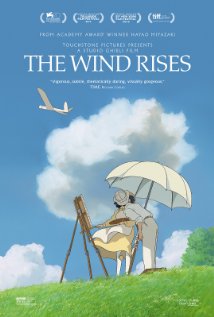 Animated film has not been one of my interests, since I always connected it with dreadful cute animals. But recently I’ve been educated in the beauty and sophistication of animated film and I’ve seen three films lately by the Japanese master, Hayao Miyazaki.
My film group had a discussion on Miyazaki this week and it was fascinating because several of the members are anime, animation and Miyazaki experts. His current (and final, he says) film is The Wind Rises, which just opened in local cinemas. His work is always beautiful, rich in hand-drawn detail, and sophisticated in its use of Japanese history and mythology (most of which I probably miss because of my own education gap).
His other films are mostly works that would be of family interest, but The Wind Rises is quite adult in plot and character. The leading character is Jiro, who is enchanted with flight and idolizes an Italian aviation engineer. He grows up wanting to design beautiful airplanes that carry people—but he ultimately designs the planes that are used in World War II, specifically to bomb Pearl Harbor. (There’s kind of an Oppenheimer effect at work here. Oppenhemer and the other Manhattan Project physicists designed the atomic bomb and then were chagrined at the results.)
War is an underlying theme in the film but not the main topic. In addition to Jiro’s engineering work, there’s a love story; his fiancée suffers from tuberculosis. The film is beautiful and gets many four-star reviews. (Seeing the “rising sun” logo on the airplanes was slightly unsettling for me, a child of that wartime period.)
I recommend this film highly and would also recommend Spirited Away (2001) and Princess Mononoke (1997) as two of his more typical films. He uses strong female characters and in each case blends in Japanese history and mythological symbols. His films are enchanting and I have a list of four or five more on my list to see.
Women of Letters
The Australian literary salon known as Women of Letters is bringing its project to revive the lost art of letter-writing to Chicago. Women of Letters will be performed with local writers and artists on Friday, March 21, at the Mayne Stage. Here’s my Gapers Block preview. Sounds like good literary fun and I’ll report on it back here.
Chicagoland: My favorite city on TV
CNN, apparently trying to become something more than just another cable news outlet, has just started an eight-part series called Chicagoland (Thursdays at 9pm CT, with several reruns). The first episode ran last night and so far Mayor Emanuel looks good—perhaps a little too good. However, given the principals involved, I believe the series will be fair and well done—and I hope I’m not wrong. The production has the Sundance/Robert Redford imprint so I’m expecting quality.
The first episode had some great footage of Chicago but the story was depressing. The reporting focused on murders and gang activity (with an emphasis on Fenger High School) and the city’s closing of 50 public grammar schools, almost all of them in African-American and Latino neighborhoods. We saw parents and teachers protesting the closings and CTU president Karen Lewis telling us what she thinks of Rahm Emanuel.
Of course, I’ll watch the other episodes, even though I know the story probably doesn’t have a happy ending. But to make up for that, I have a special Chicago musical treat for you, even though someone who shall be nameless remembers it as a song “I used to listen to in college while stoned.”
The song is “Lake Shore Drive” by Aliota-Haynes-Jeremiah. It was a big hit in 1975 and rereleased on CD in 1998. If you love the song, you can download it on iTunes and put it on your iPod, so it’s always with you, despite what the person quoted above calls “a jarring piano line.” If you’re not a Chicagoan, you may think that the LSD mentioned in the lyrics and shown in the visuals refers to a drug …. but to Chicagoans it refers to the drive that runs along the lakefront from Hollywood Avenue to 66th Street. The Lake Shore Drive Wikipedia page is a nice history of its construction, use and appearances in popular culture.
And now for some related posts….
On the subject of animation: One of the five sort of obscure movies I recommend is Richard Linklater’s 2001 Waking Life, an amazing approach to animation–and philosophy.
For some thoughts on J. Robert Oppenheimer, see my review of the current play being mounted by Saint Sebastian Players.
Arts & culture heat up Chiberia: 4 plays to see
Posted: February 25, 2014 Filed under: Movies, Theater | Tags: Ann K Powers, Mary Arrchie Theatre, Porchlight Music Theatre, Saint Sebastian Players, St. Louis Blues, The Monuments Men, Trap Door Theatre 1 CommentChicago had two days of almost-spring with temps above 40 last week but now winter is back in force. I just spent a few days in North Carolina, where their eight inches of snow melted very quickly. While I was there, we had three 60-degree/no-jacket days. Meanwhile, there have been lots of theater openings recently. Here are a few plays I’ve seen that you might enjoy too
In the Matter of J Robert Oppenheimer at Saint Sebastian Players
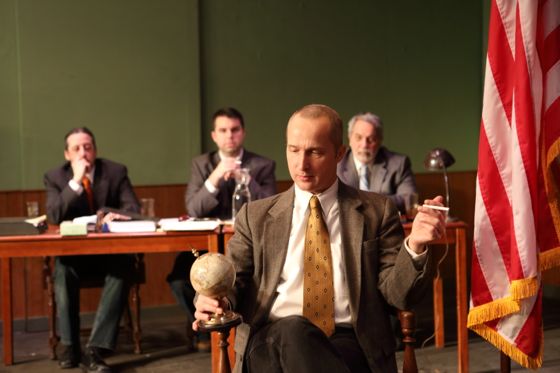 Yes, it’s talky and intellectual and it makes you think. Thinking might warm up your head. This three-hour play by the German writer Heinar Kipphardt leads us thru the Atomic Energy Commission hearing that resulted in Oppenheimer, the “father of the atomic bomb,” being stripped of his security clearance. This production by the Saint Sebastian Players is very good, despite some actorly flaws. The main characters are portrayed very well and the pace is engrossing. The play runs until March 9. See my Gapers Block review here, along with ticket and location details.
Ain’t Misbehavin’ at Porchlight Music Theatre
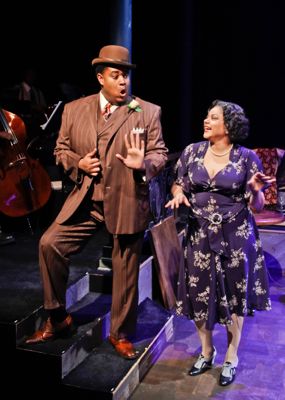 In the mood for some stride piano playing, lively singing and dancing by five charismatic performers to the music of Thomas “Fats” Waller? Ain’t Misbehavin’, a musical revue by Porchlight Music Theatre, is terrific and I don’t even like musicals. It’s sure to win plenty of Jeff awards.
My Gapers Block review noted that this is Porchlight’s contribution to Black History Month: a musical revue and tribute to the music of Thomas “Fats” Waller and the Harlem Renaissance. “Fats himself would be proud of this production, performed at Stage 773 with an excellent live band led by über-pianist Austin Cook.” See my review for all the logistics and production details.
Crime and Punishment at Mary-Arrchie Theatre
If you never managed to finish the Dostoyevsky book in high school or college, here’s your chance to gain a new appreciation for the character Raskolnikov and the theme of crime and guilt. Here’s how my Gapers Block review started: “Mary-Arrchie Theatre takes on a difficult task in staging this 2003 adaptation of the Fyodor Dostoyevsky novel, Crime and Punishment. But with intelligent direction by Richard Cotovsky, this talented and respected off-Loop theater gives the audience a gripping 90 minutes. We meet Raskolnikov (a strong performance by Ed Porter), the poor, sickly, arrogant former law student who commits the crime, suffers guilt and psychological trauma and, finally, punishment.”
The script is the same one presented in 2003 by Writers Theatre in Glencoe on their tiny back-of-the-bookstore stage, with Scott Parkinson doing a superb job playing Raskolnikov. The novel was adapted into a play by two Chicago playwrights–Marilyn Campbell and Curt Columbus. The Mary-Arrchie play runs until March 16.
Judith: A Parting of the Body at Trap Door Theatre
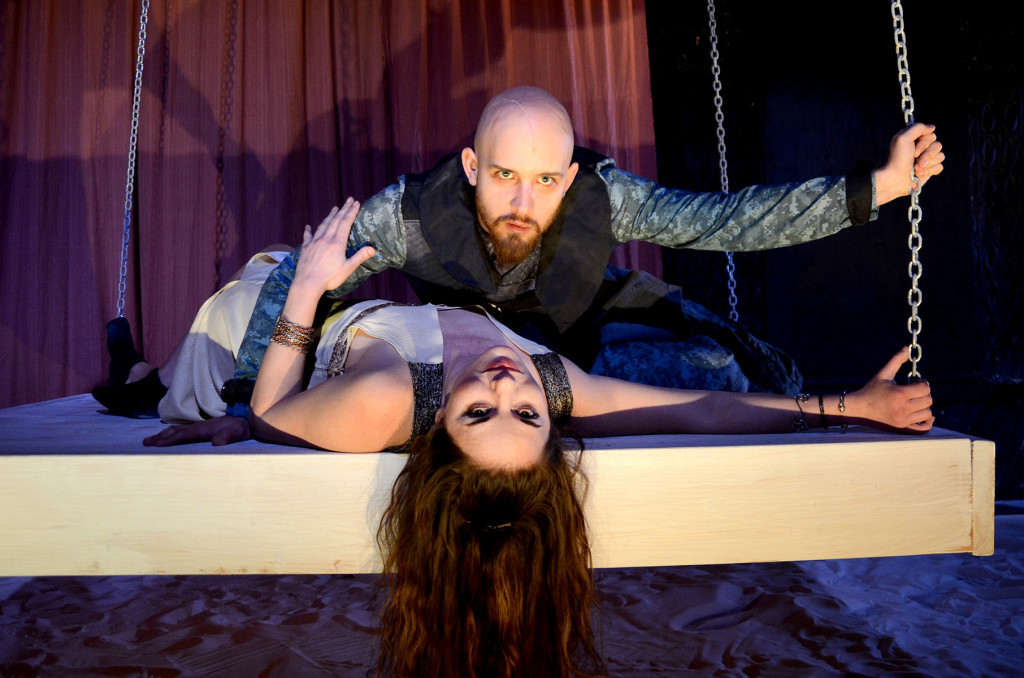 Trap Door’s excellent production of Judith: A Parting of the Body by Howard Barker is a revisionist take on the biblical story of the Israelite widow who goes to the enemy camp to seduce General Holofernes. The language is poetic and sometimes vulgar. The three actors each play out their stories in an engrossing way.
You’ll remember the image, even if the story is not familiar. There are many famous versions of the painting often titled “Judith with the Head of Holofernes”; the one by Artemisia Gentileschi may be best known. But I have always liked the Caravaggio version best. You can see it on this Wikipedia page.
Judith has been extended so you can see it at Trap Door, the little theater space at the end of a gangway at 1650 W Cortland, until March 8.
Tribes at Steppenwolf Theatre
Tribes by Nina Raine recently ended its run at Steppenwolf. We saw it near the end of the run since we had to change our tickets from one of the deep-freeze days. The reviews of this play were mixed, varying from “somewhat ” to “highly recommended.” The story is about a family with one deaf son, who leaves the family cocoon and discovers the outside world and the deaf community. The theme isn’t new—the controversy over the benefits of sign language vs. lip-reading for the deaf–and it still demands our attention. I really wanted to like the play, but I found most of the characters unlikable and the play failed to keep me from checking my watch to see when I could leave.
And also . . . .
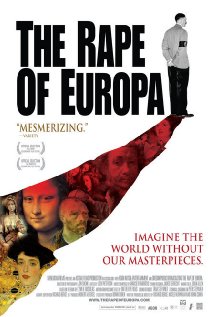 A film recommendation. In case you, like me, were disappointed in the reviews for The Monuments Men and decided not to see it, I’d like to recommend a good documentary that tells the story and even includes some of the real Monuments Men. The Rape of Europa, 2006, was written and directed by Richard Berge, Bonni Cohen and Nicole Newnham, with narration by Joan Allen. 117 minutes. Streaming on Netflix.
The film is drawn from the book of the same title by Lynn H Nicholas, who appears in the film; her book won the National Book Critics Circle Award in 1994. One of the co-producers is Robert M Edsel, the author of the book The Monuments Men, from which the current film is adapted.
An example of transitivity. Did you know that the song, “The St Louis Blues” got its name from a street, not from the Missouri city? Ann K Powers, the NPR music critic, posted a photo on her Facebook page of a memorial plaque in Bessemer, Alabama. The W C Handy song, “Pipeshop Blues” was also known as the “St Louis Blues” for St Louis Avenue, the street that ran through the Howard-Harrison Steel Company of Bessemer.
When I shared the image on my Facebook timeline, my economist son observed that this is an example of the mathematical concept of transitivity, which is
A relation among three elements. If it holds between the first and second elements and it also holds between the second and third, it must necessarily hold between the first and third.
Could this be four-part transitivity? The song was named after a street, which was named after a city, which was named after a French king and saint, Saint Louis himself, King Louis IX of France. So song, street, city, saint.
* * *
Follow my blog, please. If you’d like to receive an email when I post a new article on nancybishopsjournal.com, just put in your email address on the upper right side of this page. I promise no spam and you don’t need a password!
Lives, finished and unfinished + my 100th post
Posted: February 7, 2014 Filed under: Movies, Music, Theater | Tags: Pete Seeger, Philip Seymour Hoffman 6 CommentsPhilip Seymour Hoffman’s private funeral is being held today at a church in Manhattan. There will be a memorial service later. Hoffman died February 2 of a drug overdose at the age of 46.
Pete Seeger’s memorial service was held in Beacon, NY, where he lived—on the day Hoffman died. The service was a moment of quiet reflection about Seeger’s life along with plenty of his songs. He died at 94 on January 27 after being hospitalized for a few days.
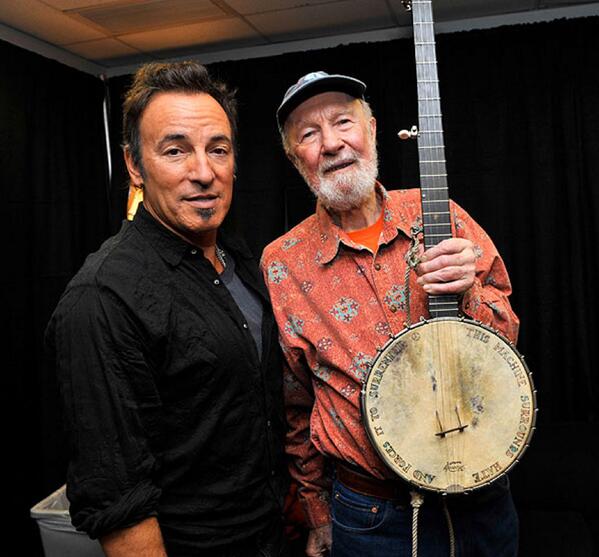
Springsteen and Seeger at Pete’s birthday party in 2009. Copyright Kevin Mazur/WireImage.
I can’t help but think of the contrast between the two lives. Seeger was a singer, songwriter, political and environmental activist for more than 70 years. At 17, he joined the Young Communist League and later the Communist Party; he severed his CP ties in 1949. He started singing with the Almanac Singers in 1941; their work included antiwar and other leftwing political songs. Over the years, he was investigated by HUAC and blacklisted; sang on public television and on college campuses and coffeehouses when he couldn’t get more commercial gigs because of the blacklist. But he never quit songwriting, performing and political activism. He has a huge repertoire of songs and recordings and is considered a national treasure by the public and a role model by many current musicians, including Bruce Springsteen and Tom Morello.
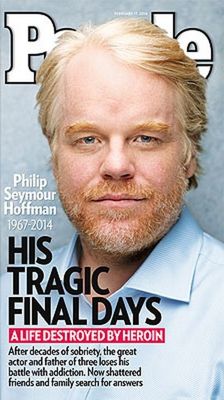
People Magazine cover, 2//12/2014, cropped.
Hoffman was a brilliant, prolific actor with some 50 movies plus TV shows and stage performances on his resume. Recently he played Willy Loman in Arthur Miller’s Death of a Salesman. In 2000 he and John C Reilly performed Sam Shepard’s ultimate sibling-rivalry play, True West, switching roles occasionally thru the run. My favorite Hoffman films are probably Synecdoche, New York, and Capote.
Many writers have commented in the last week about his talent and how he fully inhabited every role. A.O. Scott said he “made unhappiness a joy to watch.” He lived only half the life that Pete Seeger lived. Think how many amazing movie experiences we are going to miss because of the drug habit he kicked and then kicked him back.
We can’t possibly know what demons tortured Hoffman and made him rely on prescription drugs and heroin. But the loss of his life is a loss to us as well as to his family and friends.
There are many unfinished lives in the literary, music and entertainment businesses, and in everyday life. This is a topic that interests me, as I’ll explain below.
Buddy Holly, the early rock and roll musician, died at 23 in a wintry plane crash 55 years ago last week.
John Kennedy Toole, the bizarrely comic novelist and author of The Confederacy of Dunces, died at 32 in 1969.
Janis Joplin, the great blues and rock singer/songwriter, died at 27 in 1970.
Jimi Hendrix, perhaps the world’s best guitarist (and left-handed too) died at 27 in 1970.
John Millington Synge, the Irish playwright and author of Playboy of the Western World, died at 37 in 1909.
John Wellborn Root, the Chicago architect and design partner of Daniel Burnham’s firm, Burnham & Root, died at 41 in 1891. The house where he lived is a block away on my street.
And my sister Lynda died at 27 in 1970 when a drunken driver crashed into the passenger side of the family car, killing her and her 3-month-old baby. Even after four decades, I find it difficult to talk about her death, so few of my friends know the details. Some day I’ll dedicate stories of unfinished lives to Lynda.
* * *
Nancy Bishop’s Journal: My 100th post
This is my 100th post. When I started this blog in July 2012, I wasn’t even sure what I was doing or where I was going. Since then, I’ve become much more focused on writing about the things I love—movies, theater, music, books, art and Chicago stories. It’s been more fun than I thought possible. I feel as if after all those decades of business writing, I’ve finally become a writer.
Those 100 posts average 800-900 words each, so in the last 18 months, I’ve written about 85,000 words, the equivalent of a book, a substantial book at that. In addition, since May 2013, I’ve written 80 stories—mostly theater and art reviews—for Gapers Block, the Chicago-centric website. That’s another ~40,000 words, in case we’re counting. So in ~20 months, I’ve written the equivalent of two books. That’s not bad productivity.
Pop culture pool: Drowning in TV, music, theater
Posted: January 31, 2014 Filed under: Music, Theater, TV, radio | Tags: Grammys, Lookingglass Theatre, Pete Seeger, Rosanne Cash, Sideshow Theatre, The Hypocrites, True Detective 6 CommentsA little of this. A little of that. It’s January. It’s cold and snowy. Have fun while you’re hibernating but don’t stay inside and mope.
True Detective on HBO
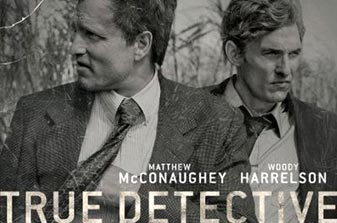 This new HBO series has a dark, ominous atmosphere, clued by the opening theme music and visuals. Woody Harrelson and Matthew McConaughey are detectives with the state CID in rural Louisiana near the town of Erath. Harrelson plays Martin Hart, the senior guy, and McConaughey plays his partner Rustin Cohle, a moody, sometimes poetic detective. (This is another step in the McConaissance, as Tribune writer Christopher Borrelli termed it. McConaughey, who spent years playing in romantic comedies, has now turned into a serious actor. I personally think the change started with his 2011 performance in Killer Joe, the Tracy Letts script that started as a stage play.)
True Detective (in the Sunday night quality TV ghetto) starts out in 1995 like a police procedural when they find the first evidence of a serial killer who performs ritual murders. It’s also a character study of the two detectives, who are seen in 2012, testifying in separate internal investigations about the case.
The show is intense and the plot will keep your attention. But the best thing about the program is the writing. I’ve watched the first three shows and each time I hear several lines I want to write down, usually spoken by McConaughey’s character, who has been through a failed marriage and lost a child in an accident. He’s cynical, brooding and critical of religion. He often offends his partner, who represents the traditional small-town milieu in which they operate.
“Time is a flat circle. Everything we ever done or will do we’ll do over and over and over again.”
“This place is like someone’s faded memory of a town, and the memory’s fading…like there was never anything here but jungle.”
“I think human consciousness was a tragic misstep in evolution. We’ve become too self-aware.”
The screenwriter is Nic Pizzolatto, a former lit and writing teacher at the UofC and DePauw University in Indiana. He left teaching for Hollywood and worked on the AMC show, The Killing, before this. The Tribune article I noted above is a good overview and interview with Pizzolatto. (Registration required to access article.)
GRAMMYs mashups
The Grammys have become more of a variety show than an awards program since most awards are presented off-camera. But the musical performances are often absorbing collaborations between performers you would not often see together on a stage. The most publicized teamups this year were Daft Punk with Pharrell Williams and Stevie Wonder and the super-hot opener by Beyonce and Jay Z. But my favorite was the classical pianist Lang Lang with Metallica. They performed the Metallica song “One,” which was inspired by the Dalton Trumbo book and film, Johnny Got His Gun, a horrifying war story. Footage from the 1971 film formed the backdrop for the Grammys performance. It was a song you had to pay attention to.
Pete Seeger, “a heart of gold and a spine of steel”
Bruce and Pete, 2009
You have to love a radical folk singer who never gives up his activist ideas and activities into his 90s. Pete Seeger was a national treasure and role model and leaves us with so many memories. Like his performance with Bruce Springsteen at the 2009 inaugural concert. (The description of Seeger above is from Springsteen’s New York Times comments on January 29.) And his performances of children’s programs on educational TV when he was banned from the commercial networks. After Pete’s death on Tuesday, a testament to his grittiness surfaced: the transcript of his testimony before the House UnAmerican Activities Committee in 1955. He never took the Fifth Amendment; he persisted in saying the committee had no right to ask him questions about what he belonged to or for whom he played and so he wasn’t answering. He would talk about his songs and that was it. Great reading.
Rosanne Cash’s new album, The River and the Thread
I’ve had Rosanne Cash’s album The List on my iPod for a long time—and full confession: I bought it because she does a duet with Bruce Springsteen on “Sea of Heartbreak.” It’s a fine album and now I have her newest as well. It’s The River and the Thread, an excellent album of original songs by Cash and a few collaborators including her producer husband John Leventhal. The thread follows the towns along highway 61, the main highway from Memphis to New Orleans, also famous as a musical route because of the many songs written about it, including Bob Dylan’s “Highway 61 Revisited.” Most of the songs have road references and a strong sense of place. So far, my favorites are “Modern Blue” and “World of Strange Design.” There are many layers of culture and memory in these songs, plus the sound and the beat are more vibrant than her previous work. Rosanne Cash is worth a listen.
ON STAGE: The Golden Dragon by Sideshow Theatre
This is a short, fast-moving, sometimes puzzling play that I called a dark fairy tale. Here’s how my Gapers Block review begins:
“The Golden Dragon by German playwright Roland Schimmelpfennig is a fanciful story presented by Sideshow Theatre Company. It’s a sort of dark fairy tale about the workers, residents and guests at a Thai/Chinese/Vietnamese fast food restaurant in a warehouse building in a certain global city. We are not sure where, but it doesn’t matter. The play is made up of the intertwined stories of 15 or 20 characters, played by five actors who quickly move from role to role without regard to gender, nationality or costume.“
I puzzled over it before writing my review, but it is really a fun and adventurous outing by Sideshow and displays the versatile acting chops of the five performers. The Golden Dragon runs until February 23 at Victory Gardens’ Richard Christiansen Theater.
The Little Prince by Lookingglass Theatre
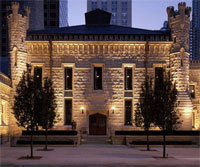
Lookingglass’ home
The Little Prince is adapted from the beloved story by Antoine de Saint-Exupery and Lookingglass gives the wonderful story its due with a terrific production. I’ve loved this story forever and enjoyed reading it with my children as well as reading it in Spanish and French when I was studying those languages.
The play is produced by Lookingglass with the Actors Gymnasium, so there is plenty of flying, zooming and energetic action on the deceptively simple set. The play is poetic, visually beautiful and emotionally satisfying. It’s extended until March 16 at Lookingglass’ Old Water Tower space.
Tennessee Williams Project by The Hypocrites
The Hypocrites is doing a trilogy of mostly unproduced Tennessee Williams plays at their space in the Chopin Theatre. The first—Tell Sad Stories of the Deaths of Queens—is set in the rather baroque lobby area in the downstairs space. For the second—The Remarkable Rooming House of Madame Le Monde—the audience moves into a creepy London boarding house set—and finally to a St. Louis hospital ward for The Big Game.
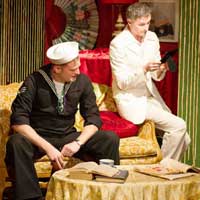 Director Matt Hawkins takes the same cast thru each transformation. The first play is the longest and the most successful. Patrick Gannon plays a wealthy transvestite who brings home a sailor, played by Joseph Wiens. The drinking, seduction and interaction is quite intense and well performed by the two actors. The second play seemed most unlike any Tennessee Williams play I have ever seen and had a strong Brechtian flavor—and for a moment, took a Sweeney Todd turn. It was, I can only say, odd. The third play is about a young man with congenital heart disease and his two roommates, one a football player on his way to the titular game, the other with a severe brain disease. The play is fraught with disease and death, as are many of Williams’ plays.
The trilogy is an interesting, if uneven, evening of theater. The Tennessee Williams Project runs until March 2.
And et cetera….
I’ve seen a bunch of movies lately too, but I wrote about Movies, Movies, Movies last week, so I’ll save these for my next film fix: The Wolf of Wall Street, Princess Mononoke, Captain Phillips and Like Father, Like Son. And probably more.
Theater reviews and reveries
Posted: January 18, 2014 Filed under: Theater | Tags: Court Theatre, Shattered Globe Theatre, Theater Wit, Theatre in Chicago, Trap Door Theatre 2 CommentsChicago theaters are opening new shows in January and February, so after a slow December, I’ll be reviewing lots of theater again. Here are a few current highlights.
Our Country’s Good
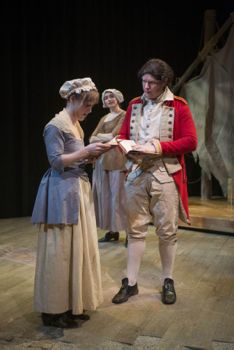 This play by Shattered Globe Theatre is being presented at Theater Wit on Belmont. The historical subject matter of the play—prisoners and their English soldier-captors in the new Australian penal colony in 1788—is fascinating. The play by British playwright Timberlake Wertenbaker also involves a play within a play performed by the convicts. Many interesting possibilities, but the play ultimately is a bit flat. I was disappointed because Shattered Globe usually does sterling work. My Gapers Block review notes some of the problems.
It’s possible that the director could take notes from some of the reviews and snap up the production, however. The show runs thru February 22, so if the subject matter interests you, check it out. (Image courtesy Shattered Globe Theatre.)
Mr Shaw Goes to Hollywood
This is a smart, funny play with lots of celebrity name-dropping and appearances by GBS and Clark Gable. I haven’t posted my Gapers Block review yet, so I won’t go into more reviewer details here. But I will tell you it’s by MadKap Productions at the second floor studio at the Greenhouse Theater Center thru February 16.
Update: here’s my Gapers Block review. I gave it a Recommended rating for theatreinchicago.com.
Blood on the Cat’s Neck
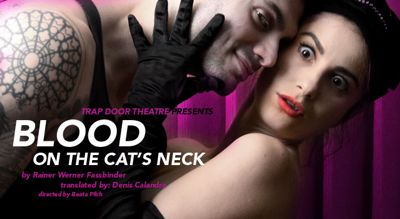 This was another sparkling production by Trap Door Theatre, pulling out crazy visual magic on their tiny stage. The play is closed now, but I will only say: Watch for the next Trap Door production. They do plays mainly by European playwrights and they always have a political/social edge reminiscent of Bertolt Brecht and Max Frisch.
Blood on the Cat’s Neck is by Rainer Werner Fassbinder, a German film innovator who died of a drug overdose at 36 in 1982, ten years after writing this play. Blood plays out in three parts; it’s part monologue, part short scenes, and it ends with a mad party scene. The character we follow with most interest is Phoebe Zeitgeist (played by Simina Contras), a vampire from another planet. She’s completely naked throughout, except for a hat, gloves, heels and glittery red lipstick. She has a fixed smile and repeats the other characters’ slogans and complaints, without seeming to know what they mean. The party scene ends with Phoebe doing what vampires do – to each character in turn. (Image courtesy Trap Door Theatre.)
Invisible Man at Court Theatre and on the page
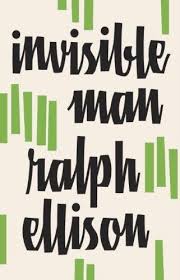 Court Theatre presented Ralph Ellison’s 1952 novel Invisible Man two years ago. The play was marvelous, compelling but confusing. I left feeling dissatisfied, wishing I had read the book before seeing the play. Now I’ve read the book (my book group had an excellent discussion on it) and I would love to see the play again. I think it would be more dramatic and meaningful.
Ellison is a lyrical writer, influenced by jazz as a musical form. He tells the story of a nameless young man who leaves a Southern black college to go to New York where he experiences northern racism and bigotry in the course of making a living and making human contact. He is a talented, even charismatic, speaker and becomes a spokesman for a white-led political organization called the Brotherhood where he is tasked to recruit in Harlem. Ellison was a Marxist for a while so the Brotherhood is probably patterned after the Communist party. The character makes us understand why he is invisible and how social and political racism affect him. The book is structured episodically and sometimes requires flipping back to reread an earlier section. Ellison’s writing is rewarding, however, and the book is a wonderful read.
Theatre in Chicago website
I want to recommend this website as a resource for Chicago theater-goers. It’s a very good way to find out what plays are showing now and what reviewers are saying. To see the compilations of reviews, go to the home page and select Review Round-Up in the left-hand column. My Gapers Block reviews are now appearing there.
There are sister sites in other cities: Minneapolis, Boston, DC, Seattle, LA, Atlanta and San Francisco. You can find links to those pages in the footer at theatreinchicago.com.
Related posts
Read about the two plays I recommend here: The Seafarer runs until February 1. An Inspector Calls just closed.
The Best Things About 2013
Posted: January 2, 2014 Filed under: Art & architecture, Movies, Music, Theater, TV, radio | Tags: Bruce Springsteen, Chicago Dramatists, Gapers Block, Interrobang Theatre Project 2 CommentsYes, there were some horrible things about 2013, mostly political, Congressional, in fact. But there were some great things about the year. Here’s are some of the things I want to remember about the last 12 months.

I’ve written about most of these things here, but I decided not to provide links because then the whole post would be links. If you want to follow up on a topic, check the Categories selections on the right. (Image courtesy PSD Graphics.)
Personally….
- Retirement means I’m finally able to be a writer. Writing about the things I love. I was a business writer for 35 years, but it was never this much fun.
- Being “hired” to write for Gapers Block has been terrific. Thank you, Andrew and LaShawn. In just seven months, I’ve posted 71 articles, mostly theater and art reviews. All Gapers Block writers work as volunteers, but I do get free theater tickets and personal previews of art exhibits.
- Nancy Bishop’s Journal has been in business for 18 months and this year I wrote 65 new posts, as my WordPress Annual Report announced yesterday.
Theater bests
- An Iliad at Court Theatre was absolutely the best play of my year.
- The Seafarer at Seanachai Theatre, performed at The Den Theatre, was a close second. It’s been extended, so you can still see it until February 1.
- Homeland 1972 at Chicago Dramatists. How could I not love a play based on a Bruce Springsteen song? (“Highway Patrolman” from the 1982 album Nebraska.)
- Terminus performed by Interrobang Theatre Project at the Athenaeum.
- The Half-Brothers Mendelssohn by Strange Tree Theatre at Signal Ensemble Theatre. The time machine was worth the ticket price but the whole show was smart and funny.
- Remy Bumppo seems to do no wrong, at least this year. Both Northanger Abbey and An Inspector Calls were outstanding productions.
- Hypocrites is another company that does great work. Their production of the Chicago story titled Ivywild was wondrous.
- Trap Door Theatre’s production of The Balcony was outstanding, and so is most of this group’s work.
- There were many more excellent shows, many that I reviewed for Gapers Block. But I’ll stop at nine.
Music
- Leonard Cohen at the Chicago Theatre. Leonard was his usual charming, sprightly self and left me cheering for a performer who knows how to present a great show. Both Leonard and I are approaching the age at which we might be called “super-agers” and I look forward to seeing how both of us do in our 80s.
- The farewell to Lou Reed, who died in October at 71, was a musical tribute played outside in a grove of trees near Lincoln Center. Watch this video to see friends and fans rocking out to his “Walk on the Wild Side.”
- The soundtrack from the film Inside Llewyn Davis, taking us back 50 years to relive the ‘60s in Greenwich Village, in the pre-Dylan era. The songs are all new arrangements of traditional folk songs, except for “Please Mr. Kennedy,” done in a hilarious performance by Oscar Isaac, Justin Timberlake and Adam Driver (providing the bass notes).
- “Dream Baby Dream,” the Springsteen song I couldn’t stop listening to
- Anticipation: A new Springsteen record, High Hopes, will be released January 14. We’re hoping that Bruce will finally come home to tour but so far the 2014 dates are only in South Africa and Australia.
Films (a few of my favorites, in random order)
- Inside Llewyn Davis, which I’ve seen twice and reviewed here last week.
- Russian Ark, a 2002 film by Aleksandr Sokurov, a technological and artistic masterpiece, despite being plotless. It’s a tour thru the Hermitage with a cast of thousands.
- Sound City, a documentary made by Dave Grohl about one of the last analog music production studios in Los Angeles.
- Anna Karenina, a gorgeous film innovatively staged—literally on a theater stage—with beautiful costumes, settings, cinematography and acting.
- Holy Motors, a bizarre masterwork directed by Leos Carax, starring Denis Lavant.
- Springsteen and I, in which his fans talk about how they came to be Springsteen fans and what his music means to them.
- 20 Feet from Stardom, a film about the background singers, mostly black and female, who make rock sound like the music we love.
- I didn’t see Spike Jonze’s Her until January 3, but it’s one of the top films of 2013. My review is coming up.
- The Story of Film: An Odyssey, written and produced by Mark Cousins, an Irish film critic. The fascinating 15-part series starts with the first barely moving pictures in the 19th century and ends with today’s filmmakers. TCM ran it on 15 consecutive Monday nights this fall and Netflix is streaming it.
- As always, a bow to the Gene Siskel Film Center and its dedication to excellent, rarely seen films
Television
- House of Cards, the Netflix political drama available for binge-watching
- Treme, a somewhat flawed HBO series, centered on the eponymous New Orleans neighborhood, with great music; it ended this week after four seasons.
- Breaking Bad on AMC; it’s all over for Walter White. Looking forward to the final season of Mad Men, also to be shown in two parts. Will Don Draper finally become Dick Whitman?
- Stand Up for Heroes, the annual benefit concert for wounded warriors, on which Mr. Springsteen did a 20-minute set and told bad jokes.
- Palladia, the 24/7 rock music channel. What would I do without it?
Art and art venues
- The Art of Fashion X 3. The most underrated of the three exhibits–Inspiring Beauty: 50 Years of the Ebony Fashion Fair—is at the Chicago History Museum until May 11. It’s a fabulous show; don’t miss it. The other two were Punk: Chaos to Couture at the Metropolitan Museum of Art in New York; and the Art Institute of Chicago’s Impressionism, Fashion and Modernity exhibit.
- Shutter to Think: The Rock & Roll Lens of Paul Natkin. This exhibit of the Chicago rock and roll photographer’s work for magazines, album covers and posters is excellent. It’s at the Chicago Cultural Center thru January 4, so you still have a minute to see it.
- Chicago’s Bauhaus Legacy, a superb exhibit at the Ukrainian Institute of Modern Art on West Grand Avenue. I wrote a feature about this excellent small museum for Gapers Block.
- The Work at Play exhibit of graphic design at the Chicago Design Museum in the Block 37 building, part of the Pop-Up Art Loop project. The exhibit honored the work of John Massey, a famous Chicago designer, and other important graphic designers
Books and book events
- I’ve written about short stories, my book group, ebooks on the CTA, and musical author book events: Richard Hell at the BookCellar and Peter Hook at the MCA
- Emile Zola, whose novels I binged on this year. Nana, The Ladies’ Paradise, The Joy of Life and Germinal are just the beginning.
- The 50th anniversary of the release of Betty Friedan’s The Feminine Mystique.
Miscellaneous but important
- The death of Roger Ebert left a huge gap in film criticism and the movie biz.
- Edward Snowden and the NSA. Snowden’s release of NSA files, whether legal or not, made us aware of how much the government is invading our privacy. My view is that Snowden is a patriot and should be given amnesty so he can come home. He should not be imprisoned and tortured as Bradley/Chelsea Manning was for similar acts. Today the New York Times published a powerful editorial agreeing with me.
- Oscar Libre. After 32 years, it’s time to release Oscar Lopez Rivera, the Puerto Rican independence activist. I wrote about him a few weeks ago.
- And now, it’s time for ….

December Diary: My reviews of theater, art, movies
Posted: December 18, 2013 Filed under: Movies, Music, Theater | Tags: @CFLX312, Den Theatre, Gapers Block, Inside Llewyn Davis, Irish writers, Remy Bumppo, theater vs. theatre, Theater Wit 1 CommentTwo theater recommendations
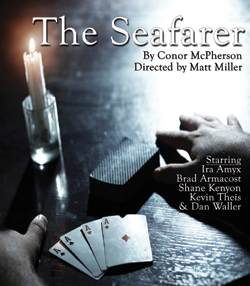 The Seafarer is a Christmas play by an Irish playwright. Given that, you know that there may not be a happy ending or a lot of tra-la-la. And there most likely will be consumption of alcohol. I hate stereotypes, but there you are. The Seafarer, by Conor McPherson, is a terrific production by Seanachai Theatre Company at The Den Theatre on Milwaukee Avenue. My Gapers Block review gives all the details. The play is running until January 5. I gave it a “highly recommended” for theatreinchicago.com, as did all the other reviewers.
That website, theatreinchicago.com, is a great resource for theatergoers. It compiles reviews of all current plays on Chicago, along with their ratings. Go to the website and click on Review Roundup in the left-hand column.
An Inspector Calls at Remy Bumppo Theatre seems at first like a smart drawing-room comedy. But J.B. Priestley’s play, written in 1945 for an English audience, soon turns into a tale about the 99 percent vs. the 1 percent. The 1 percent is the Birling family, wealthy through their manufacturing business. The 99 percent is represented by a young working woman who comes to a sad ending through actions, ultimately, taken by all the family members. (That’s a bit of a spoiler, so forget I said it.)
The Remy Bumppo cast is excellent and the production very gripping. Nick Sandys, as the mysterious inspector, plays the role very coolly. Calmly and without bluster, he terrorizes the Birlings in their dining room. Priestley was raised in a socialist family and was a writer of social conscience. As David Darlow says in his director’s note, Priestley “calls out to us to be accountable and responsible for our behavior and actions.” The play runs through January 12 in the upstairs mainstage at the Greenhouse Theater Center on Lincoln Ave.
Linguistic whine. Why can’t theater/theatre companies settle on one spelling, preferably the standard American spelling of theater, rather than the pretentious Anglified theatre. When I’m writing reviews for Gapers Block, it makes me crazy, going back and forth between the spellings, depending on whether I’m naming a theater company that persists in using that spelling (see above) or using the word generically as part of a sentence. Grrrrr.
Art with a message
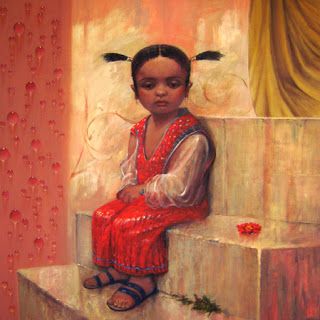
Small Change by Richard Laurent; image courtesy of the curator.
The Art of Influence: Breaking Criminal Traditions. There’s a very interesting exhibit of art with a message at the IIT Chicago-Kent College of law, 565 W Adams St. I know, that’s an unusual place for an art exhibit, but it works. The exhibit is made up of 38 works in various media by 13 local and regional artists and represents metaphorically — in ways both beautiful and horrifying — the crimes perpetrated on women and girls in countries where those actions are considered part of the culture, rather than crimes. The purpose of the exhibit is to make an impact on those who may be influential in the future to help change the legal processes in those countries. My review for Gapers Block gives all the details and shows four images that illustrate the range of the work.
Films, live and DVDd
Blue Is the Warmest Color, directed by Abdellatif Kechiche. This controversial film about a young woman and her older woman lover in Lille, France, is beautifully filmed and to my mind, too long at 3 hours plus. The much-discussed sex scenes are quite beautiful and almost painterly in their composition. Most importantly, the film raises issues of male viewpoint, social class and life choice between the two lovers and their friends and families; those issues are fruitful discussion topics. The film is currently on view at local theaters.
A Constant Forge: The Life and Art of John Cassavetes (DVD). This very thorough documentary of Cassavetes’ work is well worth your time as an illustration of the auteur approach to independent filmmaking. It’s almost 3.5 hours long and no, this film wasn’t too long, although I did watch it in two sittings. It was made in 2000, about 11 years after his death at 59. The doc includes interviews with many of the actors he worked with: his wife Gena Rowland, Peter Falk, Ben Gazzara, Jon Voight and Seymour Cassel. The actors and others talked about his creativity, his honesty, and his lack of concern about making money. Many long film clips and film of scenes during the shooting process really bring Cassavetes’ approach to life.
My favorite Cassavetes quote: A reporter asks him if he’ll ever make a musical. He says he really wants to make only one musical, Dostoyevsky’s Crime and Punishment. My kind of guy.
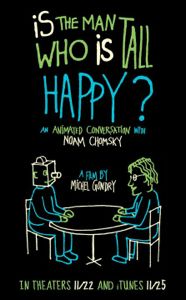 Is the Man Who Is Tall Happy? An Animated Conversation with Noam Chomsky. Yes, I said Noam Chomsky. But this is the avuncular linguistics professor, not the radical political activist (though just a hint of that Chomsky shows occasionally). French director Michel Gondry (Eternal Sunshine of the Spotless Mind) created this animated documentary from interviews with Chomsky. He animates and illustrates Chomsky’s ideas by scrawling clever cartoons and charts.
The film title is taken from a sentence that Chomsky diagrams near the end of the film to show how children learn to use language.
The film runs at the Gene Siskel Film Center through tomorrow. I’ll watch it again on DVD when it’s available. There are places where I wanted to say, “Wait, let me replay that last bit because I didn’t quite get it.”
My coming attractions for this week
Inside Llewyn Davis. This is the Coen brothers film about the early years of the folk movement in Greenwich Village in the 1950s. It opens here Friday and I’ll be there. In addition to the film, Showtime network has been running a concert with a setlist of some of the music from the film, performed by other musicians. There’s also a Showtime making-of film called Inside Inside Llewyn Davis. And there’s the soundtrack on CD or download. I’ll review this film here soon.
Blood on the Cat’s Neck by Rainer Werner Fassbinder at Trap Door Theatre on Cortland. The always provocative and entertaining Trap Door group has been getting mixed reviews for this play; it’s Jeff recommended, however.
Burning Bluebeard by Jay Torrence presented by The Ruffians at Theater Wit. The play is about the tragic 1903 Iroquois Theatre fire in Chicago. This is a theater company I have not seen before and I’m looking forward to it.
And finally, I’ve gone another whole week without writing about Bruce Springsteen. But he has a new album coming out in January. You can be sure I’ll make up for my apparent neglect.
A/C report: An Iliad, some Tiffany + goodbye Lou
Posted: November 22, 2013 Filed under: Art & architecture, Music, Theater | Tags: An Iliad, Court Theatre, Driehaus Museum, Lou Reed, Tiffany 1 CommentA/C. That’s art and culture in Chicago. Your intrepid blogger is here to report on two items that you should consider adding to your calendar. Plus: what a way to say goodbye! To Lou Reed, the legendary punk rock musician who died last month.
An Iliad at Court Theatre: The poet reports
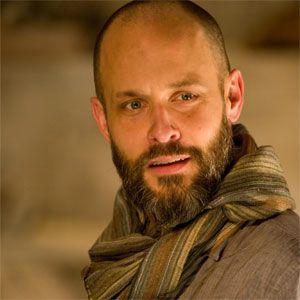
Photo courtesy Court Theatre
Court Theatre has remounted An Iliad two years after it was first produced. I was blown away the first time by the power of the story, the language and the acting. Timothy Peter Kane, a very talented Chicago actor, performs a tour de force one-man show as the poet or observer of this classic blood and glory story set at the end of the Trojan War.
The remounting, which runs until December 14, is perhaps even more powerful than the original. Is it because we all, including Kane, have seen two more years of the endless US war in the Middle East? He seems to be sadder, more traumatized and distraught by the many deaths around him. The single most gripping scene is his three-minute soliloquy of wars through history, beginning with the conquest of Sumer and ending, this year, with Libya and Syria. I was in tears at the end of it. Here’s a clip of that speech from the 2011 play.
The play, adapted from the Robert Fagles translation of Homer’s long poem, was written by Denis O’Hare, another masterful Chicago actor, and Lisa Peterson, a director at the New York Theatre Workshop.
An extravaganza of Tiffany at the Driehaus Museum

Photo by Nancy Bishop
Richard Driehaus, a successful investment banker, is an important supporter of the arts and historic preservation in Chicago. He purchased the Samuel Nickerson mansion (1883, Burling & Whitehouse, architects) at 40 E Erie St and restored it to its ornately decorated, Gilded Age form. In 2007, it was opened as the Richard H Driehaus Museum of Decorative Arts and it’s worth visiting on its own, but even more so now. Sixty pieces from Driehaus’ large collection of works by Louis Comfort Tiffany are on exhibit on the second floor of the museum until June 29, 2014. The museum is open Tuesday through Sunday until 5pm and you can take a docent-led tour or meander through on your own.
I went with three of my ex-CAF docent friends and, as always, we create our own tour. The four of us have a combined treasure of knowledge on architecture, art and design and we love doing these tours collaboratively.
The photo at left is one of the Tiffany windows, beautifully displayed, in the exhibit.
Goodbye Lou
What a great way to say farewell to an iconic musician like Lou Reed. Just his music, played 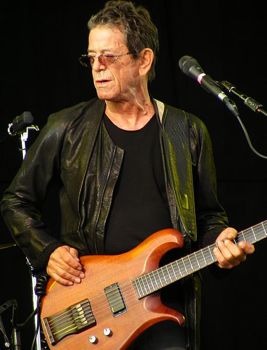 at the appropriate volume (that is, loud) in a grove of trees near Lincoln Center. It was one of those days I wish I lived in New York…or at least had the wherewithal to fly there on a whim for a landmark event.
Lou Reed, known as a solo musician, guitarist, songwriter and founder of the Velvet Underground, the preeminent punk rock group, died at 71 on October 27.
See Greg Mitchell’s site here for three videos from the event. My favorite is “Walk on the Wild Side.” It’s wonderful to see people communing over music, many singing along, others dancing, all paying tribute to Reed’s music.
The photo is Lou Reed performing at the Hop Farm Music Festival on Saturday, July 2, 2011, courtesy of Wikimedia Commons.
Theater feast: Four plays in four days and more
Posted: October 26, 2013 Filed under: Theater | Tags: Remy Bumppo Theatre, Steppenwolf Theatre, The Artistic Home, The Hypocrites, Trap Door Theatre Leave a commentWhether I’m reviewing for Gapers Block or not, I revel in seeing a lot of plays. On one recent weekend, I went to the theater four nights in a row. And then more the next week. Here’s a recap of my recent theater feast. Most of these plays are still showing, so get thee to a theater!
Northanger Abbey
Jane Austen’s Northanger Abbey at Remy Bumppo Theatre at Greenhouse Theatre Center; through November 10.
The Jane Austen play gets a delightful, charming and funny presentation by the reliably solid Remy Bumppo. The set is used wisely; costumes are simple and elegant. Outstanding performances by Sarah Price as Catherine Morland and Greg Mathew Anderson double cast as Valancourt and Henry Tilney are supported by a uniformly excellent cast. It’s particularly fun to see Catherine’s love of books and her reader’s imagination translated into stage action. Thoroughly enjoyable.
The Wheel
Zinnie Harris’ The Wheel at Steppenwolf Theatre; through November 10.
The reviews of this play are mixed to say the least. Of nine reviews, only one is highly recommended; the others are somewhat recommended or recommended. One of my neighbors warned me it was “dreadful.” So of course I went to the theater with low expectations … and was wowed.
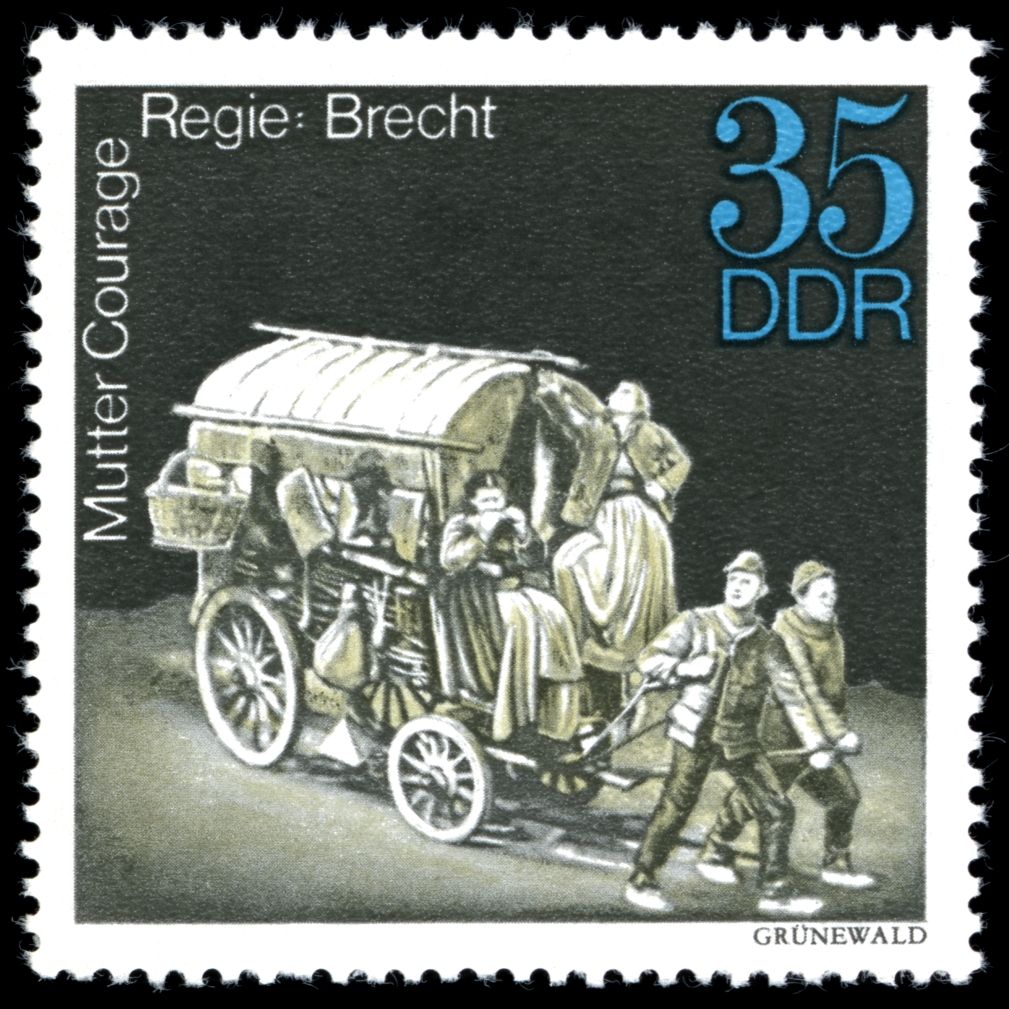
1973 German stamp commemorating Berliner Ensemble production; Wikimedia Commons
The play is directed by Tina Landau and stars Joan Allen, an original Steppenwolf ensemble member. And yes, it’s a sprawling mess as Beatriz (Allen) leaves northern Spain to wander the world from war to war, from century to century, with two children in tow, trying to find their parents. Sound a little familiar? Yes, it’s Brechtian and a little reminiscent of his masterpiece, Mother Courage and Her Children, written about the Thirty Years War.
There’s some magical realism, of course, and the events of the play make us ask moral and ethical questions of ourselves. The dialog is clever and evocative and the occasional music by the actors themselves adds a great deal. Plus it’s always a pleasure to see Yasen Peyankov on stage. Tim Hopper and LaShawn Banks also do excellent jobs, as do the two children. At the end, Beatriz is back in Spain, but the wheel keeps turning and she finds herself facing the same problems. It’s a fascinating and thought-provoking play.
The Goddess
Paddy Chayefsky’s The Goddess at The Artistic Home; through November 17
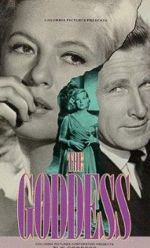
1958 movie poster
My Gapers Block review of The Goddess was just posted. The play concerns the childhood, dramatic rise and fall of a doomed blonde movie star. Chayefsky says he wasn’t writing it about Marilyn Monroe but it might have been Kim Stanley. The play is a bit choppy but the performances are excellent. The costumes are gorgeous and worth the price of the ticket alone. Artistic Home, at 1376 W. Grand Ave., helps Chicago deserve its rep as the home of great storefront theater. The 1958 movie starred Kim Stanley and Lloyd Bridges.
The Balcony and 12 Nights
Jean Genet’s The Balcony at Trap Door Theatre; closed October 12. Not Exactly Shakespeare’s 12 Nights at The Hypocrites; closed October 6.
These are two of my very favorite small theaters. Both are amazingly inventive. I always look forward to their productions.
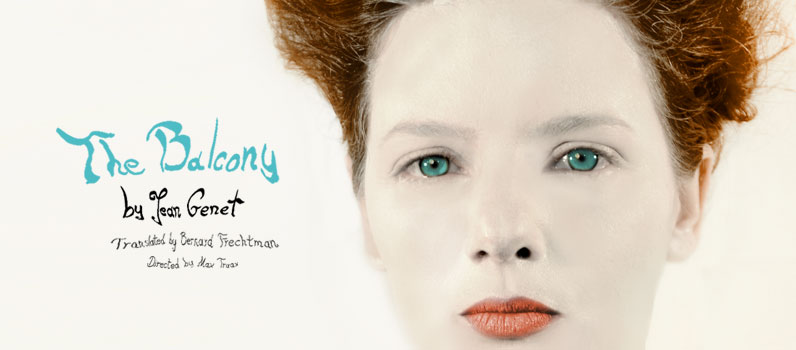
The Balcony cover design
Trap Door comes out of the legacy of European Repertory Theatre, the late lamented theater of the 1990s. For both ensembles, many of its members are or were European born or trained. I still remember how the ERC production of Steven Berkoff’s Agamemnon sent shivers up my spine. Trap Door chooses European classic and contemporary scripts and performs them with great wit and panache in a tiny space. The Balcony, set in a brothel and making fun of politics and society, is a great example of their work.
The Hypocrites is reliably crazy, quirky and never boring. Sean Graney, the former artistic director, created and directed 12 Nights out of Shakespeare and a few other sources. His work is literate, witty and imaginative. The new artistic director, Halena Kays, is a worthy successor. Her production of Pirandello’s Six Characters in Search of Author was imaginative and riveting.
What’s up next
Next week I’m reviewing two openings:
- Arthur Miller’s All My Sons at Eclectic Theatre
- Good Thing by Jessica Goldberg at Poor Theatre
I’m taking my grandson James to see William Golding’s Lord of the Flies, part of Steppenwolf’s young adult series, this weekend. More on that later.
I want to see Killer Angels, a Civil War play by Michael Shaara, at Lifeline Theater through November 24.
And Trevor by Nick Jones is a dark comedy about a chimp. It’s at A Red Orchid Theatre through December 1.
Six things you didn’t know you missed in Gapers Block
Posted: October 11, 2013 Filed under: Art & architecture, Theater | Tags: Gapers Block, Hebru Brantley, Interrobang Theatre Project, Six Corners Association, Ted Sitting Crow Garner, Ukrainian Institute of Modern Art, Unity Temple 1 CommentI love writing for Gapers Block. It gives me an excuse to view, think and write about some of the things I love—like theater, art, architecture and design. So here are some things I’ve been writing about recently. You can still catch some of them.
Six Corners dedication of Portage sculpture
The Six Corners Association partnered with the American Indian Center to create a piece of art to celebrate the contributions of Native Americans to the history of the community, which is part of the larger area known as Portage Park. The sculpture titled Portage by artist Ted Sitting Crow Garner is being dedicated at 12 noon Saturday, October 12, at the Six Corners Sears store at the intersection of Cicero, Irving Park and Milwaukee.

Here’s a photo from a slideshow charting the progress of the sculpture. Garner is shown putting it into position on the west side of the Sears store. Image courtesy Six Corners Association.
See my preview here, which includes some of the history of the neighborhood.
In my high school years, I worked at a chain woman’s clothing store on Cicero Avenue across from the Sears store, so I feel a pride of ownership in my old neighborhood.
Even if you miss the dedication, you can drive by and check out the sculpture later.
Hebru Brantley’s The Watch at Pioneer Court
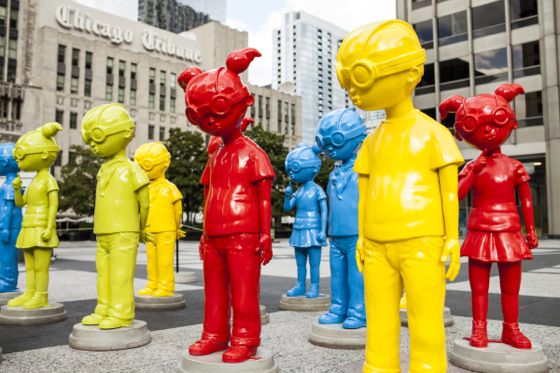 A collection of brightly colored figures has taken up residence at Pioneer Court Plaza, formerly the site of the Marilyn Monroe figure. They’re part of Chicago Ideas Week and created by Chicago artist Hebru Brantley, who is the Chicago Ideas Week 2013 Artist in Residence. Read about them here. They’ll be in place at least until October 20.
Photo by Kristie Kahns, courtesy Chicago Ideas Week.
Ukrainian Institute Artists Respond to Genocide exhibit
I wrote recently about the excellent Bauhaus exhibit at the Ukrainian Institute of Modern Art. The institute recently unveiled its new exhibit, Artists Respond to Genocide, which enables artists to take a broad look at genocide over the last century. The exhibit is made up of paintings, drawings, photography, sculpture and assemblages by 20 local and international artists. Many of them are really gripping, such as the large brightly colored painting by Mary Porterfield titled Engraved, or the woodcut and intaglio prints by Harold Cohen titled Auschwitz, Baba Yar and Genocide. The exhibit recognizes the Holodomor or secret holocaust in the Ukraine in 1932-33 as well as the appalling list of genocides over time. A chilling list in the back of the exhibit program enumerates 13 of them, with the number of fatalities in each.
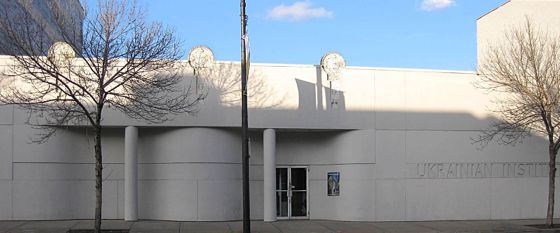
I wrote a preview of this exhibit for Gapers Block. You can see the exhibit until December 1 at this excellent small museum at 2320 W Chicago Ave.
The image is the Stanley Tigerman-designed facade of the building.
Image courtesy Ukrainian Institute of Modern Art.
You can tour Wright’s Unity Temple
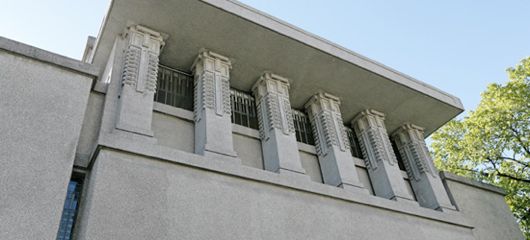 It’s been some time since formal tours of the landmark Frank Lloyd Wright structure, Unity Temple in Oak Park, have been available. Up until now, the only way to see the interior of this innovative building was if you knew someone or by chance went to a program there. (I’ve done both and even happily went to several services with friends. Even an avowed atheist will do anything to see the interior of a famous religious structure.)
But now the FLW Preservation Trust is offering docent-led tours again. Get more information here.
Image courtesy Frank Lloyd Wright Preservation Trust.
Terminus at Interrobang Theatre Project
I’ve seen and reviewed many plays in the last month, but one of the very best was this amazing three-actor blend of monologues produced by Interrobang Theatre Project at the Athenaeum. Here’s how my Gapers Block review started:
“Mark O’Rowe is one of the new generation of Irish playwrights whose work was first seen in the 1990s. In Terminus, being presented by Interrobang Theatre Project, he displays his fascination with language and his passion for words. Terminus isn’t so much a play as a series of stories, intertwined in monologues by three characters, known only as A, B and C. Their stories, set in the streets of Dublin, begin separately, and gradually become more connected, until they are finally merged in a glorious fantasy of blood, sweat, tears and sex.”
Truly, this was one of the finest nights of theater I’ve seen lately. Unfortunately, the play closed last week.
The Benchmark at Step Up Productions
I also reviewed this play about a well-read homeless man and although the lead actor’s performance is excellent, the play as a whole was somewhat flat. I wanted desperately to love it, but couldn’t. But tastes vary and other viewers might well enjoy it. Read my review here and then check out other reviews here.
 nancy bishop's journal
