It’s Oscar time: Love the art, if not the artist
Posted: February 6, 2015 Filed under: Movies | Tags: Birdman, Boyhood, Bruce Springsteen, Mr Turner, The Third Man, Vivian Maier, Whiplash 1 CommentI’ve seen most of the Academy Award nominee films this year and talked to friends about them often. My friends know I’m a movie geek and that I occasionally write about films so they like to know what I think or tell me why they disagree with my opinions. (I’m not naming my Oscar winners here, but I may let something slip in this essay.)
Most of these films I’ve seen with friends and their reactions are often quite interesting. If they find the major characters unappealing or boring, they decide they don’t like the film, no matter how excellent it is in every way (including the performance of the disliked character). This puzzles me.
Mr. Turner
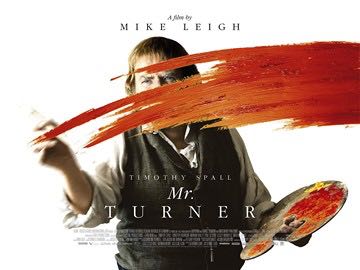 For instance, in the late 2014 film Mr. Turner, JMW Turner is depicted from mid-career on as he becomes recognized for his magical, almost mystical, seascapes and landscapes. He’s not upper class, he’s a man of the middle class at best. His father, a former barber, acts as his assistant in the studio. Timothy Spall portrays Turner as crude and rough, both in speech and actions. He’s unkind to his employees and probably not pleasant company. But his paintings are gorgeous and the Mike Leigh film is insightful and beautifully made. It received outstanding reviews and a Metascore of 94 out of 100 on metacritic.com.
The friend I saw the film with hated the Turner character and didn’t care for the film much either.
Boyhood
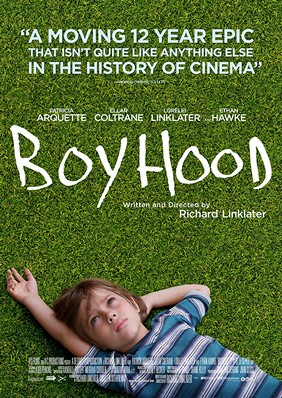 Another film I loved (and have seen twice) is Richard Linklater’s Boyhood. After I first saw it in July, I wrote that it’s “a beautifully edited story of a boy growing into a young man. That’s all. Just life, compressed into 164 minutes. The transitions of age and family change are done so smoothly that sometimes you miss them. The film is rich in conversation (that often seems improvised, although it isn’t) about life, its meaning and potential.”
A friend who also saw the movie thought it was boring. She found the boy unappealing and none of the characters interesting.
In the first place, I don’t agree with that view of Boyhood. And I don’t think whether you happen to “like” the characters has anything to do with the nature, quality and excellence of the film.
Whiplash
In Whiplash, directed by Damien Chazelle, JK Simmons plays a jazz band coach, who is blunt, unkind, even physically brutal to the teenaged musicians. A despicable character, surely? But that doesn’t mean the film and Simmons’ performance aren’t Oscar-worthy. (Whiplash received an 88 Metascore.) Take a look at Simmons with the teenaged drummer played by Miles Teller.
Birdman
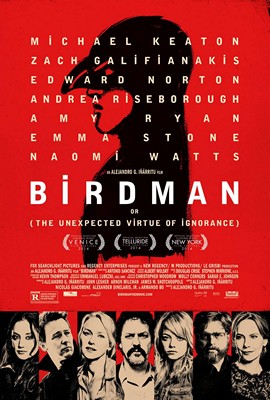 Birdman was another brilliant film, directed by Alejandro Iñárritu. Although it’s nominated (and may well win) best film and has received excellent reviews (88 on Metacritic), it seems to really divide viewers. Many people I talked to about Birdman said they hated it and hated Michael Keaton and his character. I just don’t understand what that has to do with your opinion of a film. The premise and plot of Birdman is brilliantly creative, the acting is superb and it’s astute about ego and aging—plus the cinematography is outstanding. (Yes, I would be happy if it wins best film.)
The Third Man. I just watched The Third Man, the 1949 Carol Reed film starring Orson Welles and Joseph Cotton, for the fifth or sixth time. (I’ll write about this gorgeous early noir film in a later post.) Harry Lime (Welles) is a thoroughly despicable character and Holly Martin (Cotton) is an ineffectual American writer in Vienna just after World War II. Neither of them is likable or admirable. But how could that possibly change your view of this epic film?
The art is what it is
I’ve written about this topic before: Love the art even if you don’t love the artist. My point is that the work of art deserves to be viewed on its own, separately from the artist. In April, I wrote about the documentary on photographer Vivian Maier, which depicts her (through interviews) as controlling and mean to the children she cared for. I said that I don’t care about that. I appreciate her work for what it is. Brilliant, engaging images of humanity.
And I added a comment about Woody Allen, who some believe is a horrible, perverted, child-abuser. And he may be that. Or not. Either way, that doesn’t affect the nature of his films or whether I want to see them or appreciate them. The art is what it is.
And finally, there’s Bruce
Of course, there’s a Bruce Springsteen corollary. (Isn’t there always?) Springsteen does not hide his political views; he’s a committed blue-collar liberal. He expresses his views in his songs (especially in his recent albums, Magic and Wrecking Ball). In every concert he takes a few minutes for what he calls his PSA, where he criticizes the current administration (especially under Bush 43), demands punishment for those who caused the financial crisis and help for those who are in need. This drives his conservative fans crazy. (I know because I’ve gone to plenty of concerts with some of them. And I love them anyway.) But those fans love his music—his stories, his lyrics, his melodies, his performance, his band. They appreciate his art for what it is.
Here’s Bruce singing about “Death to My Hometown,” brought about by the banksters. “Send the robber barons straight to hell,” he sings, to the cheers of this huge crowd at the Isle of Wight festival in 2012.
Reviews: Theater for thought and laughter
Posted: January 29, 2015 Filed under: Theater | Tags: Court Theatre, Mr Burns: A Post-Electric Play, Shattered Globe Theatre, The Rose Tattoo, The Simpsons, Theater Wit, Waiting for Godot 1 CommentI always say I prefer my theater (and films) to be grim and depressing. No happy-go-lucky musicals with egregious singing and dancing for me. But this week I’ve seen three marvelous plays that made me laugh and made me think. And what could be a better combination for an evening of theater with thoughtful friends?
The Rose Tattoo by Shattered Globe at Theater Wit
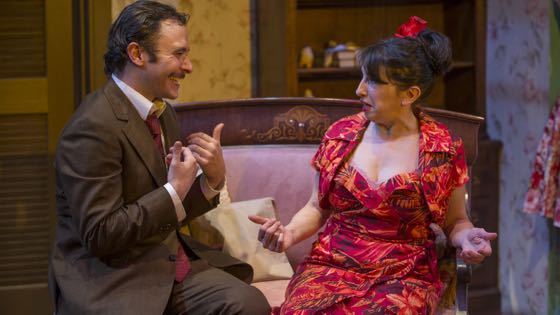 Tennessee Williams’ play about an insular Sicilian-American community on the Gulf Coast is melodramatic, tragic and funny. The rose tattoo of the title is an actual tattoo on the chest of Rosario, the husband of seamstress Serafina. We never meet Rosario because Serafina is widowed early in the play. She mourns him and prays to a statue of Mary and his ashes while trying to keep her teenaged daughter from growing up too fast. Shattered Globe’s production is performed in a small space at Theater Wit, but director Greg Vinkler and his actors make the most of the space and of Williams’ passionate plot and language.
My review for Gapers Block gave it four stars or “highly recommended” for the Theatre in Chicago site. The production runs until Feb. 28.
Mr. Burns: A Post-Electric Play at Theater Wit
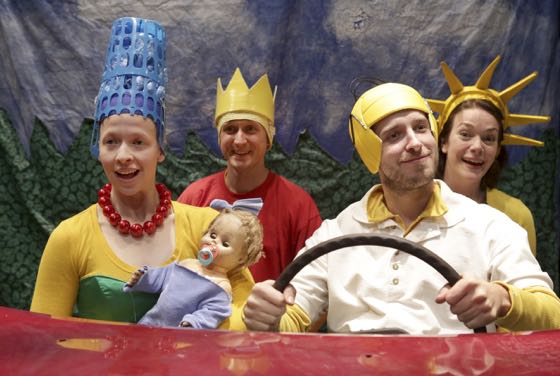 This could be described as a play about The Simpsons, now in its 26th TV season. But it’s really about the world we may have to look forward to, if we don’t rebuild our infrastructure to protect the electric grid. Yes, it’s a post-electric play, taking place in a world of the future that you don’t even want to think about. The three acts show us a vision of the near future, seven years later and 75 years after that. My review appears in Gapers Block and also on Culture Vulture.
Yes, The Simpsons’ plots and characters tie the dystopian epic together. The clever storyline follows the episode from season 5, “Cape Feare,” which satirized the two film versions of Cape Fear in 1962 (Robert Mitchum) and 1991 (Robert De Niro).
The acting, scene design and costuming are all well done, with great creativity in the use of materials and funky lighting when there is no electricity. Jeremy Wechsler’s direction is spot on and the eight actors move from character to character with ease. The production is funny and thought-provoking. However, if you’re not at least a casual Simpsons viewer, you may be in the dark. You can see this until March 1.
Waiting for Godot at Court Theatre
This Samuel Beckett play is one of my very favorites and I never grow tired of seeing it reinterpreted by a new director and cast. Court Theatre’s production, directed by Ron OJ Parsons, is one of the best I’ve seen. One interesting aspect is that it’s performed by an all-African-American cast.
You remember the story. Two tramps, Vladimir and Estragon (Didi and Gogo), a bleak landscape, a leafless tree. They’re hanging out, waiting, of course, for Godot, who never appears and is never explained. In mid-first-act, along comes Pozzo, the plutocrat, and his silent slave Lucky, who is roped by the neck and occasionally whipped by Pozzo.
All four actors are outstanding and among Chicago’s finest. But Allen Gilmore, who plays Vladimir, is so graceful, verbally and physically, that he simply outshines the others. Also Anthony Lee Irons, who plays Lucky, is a joy to see perform his “thinking” monologue. He is brilliantly agile as the philosophical gibberish rolls off his tongue.
Here’s a video clip from the current Court production.
This production is perhaps a bit more physical than some I have seen. It’s a lively performance (lively isn’t usually a word I’d apply to Beckett). The play is about the significance and insignificance of life, about tomorrow and about hope. But it is also a music hall piece with a great deal of humor. And Beckett fully intended it to be funny. He loved vaudeville and silent film comedy and supposedly considered casting Buster Keaton as Gogo and Charlie Chaplin as Didi.
Brian Dennehy was once quoted as saying: “Godot is the greatest thing you can do in theater. It’s incredibly philosophical and deep and significant—and very, very funny.”
Some of the acting pairs who have played Didi and Gogo in the past make me yearn to see their performances. Robin Williams and Steve Martin. Bill Irwin and Nathan Lane. Patrick Stewart and Ian McKellen (with Billy Crudup as Lucky!).
Here’s a wonderful video that shows clips of Stewart and McKellen’s 2013 performance plus the two of them speaking about the play in an interview.
And one more thing: The Humans at American Theater Co.
I saw this play a month ago but haven’t had a chance to write about it here. The Humans by Stephen Karam is a world premiere and another excellent ATC production that lets us observe a family Thanksgiving dinner in real time, including crudités from Costco. The characters—adult children, parents, grandmother—all have a story. Love and lost love, laughter, illness, disability and aging issues. The production received almost unanimous four-star reviews, although I would have given it three stars if I had reviewed it. It runs through Sunday, Feb. 1, with two performances on each weekend day—so it would be a good alternative to that football thing on Sunday.
Follow this blog, please
You can sign up to follow me at Nancy Bishop’s Journal by putting your email address in at the top of the right hand column. You’ll get an email when I post a new article, usually about once a week. No spam, no passwords.
Visions of music: Steve Schapiro and Richard Powers
Posted: January 20, 2015 Filed under: Books, Music | Tags: Ed Paschke Art Center, Orfeo, Richard Powers, Steve Schapiro 1 CommentMusic is a subject I love to burrow into, visually as well as aurally. Two recent cultural experiences enhanced my appreciation for the medium and its messages.
Steve Schapiro: Warhol, Reed and Bowie
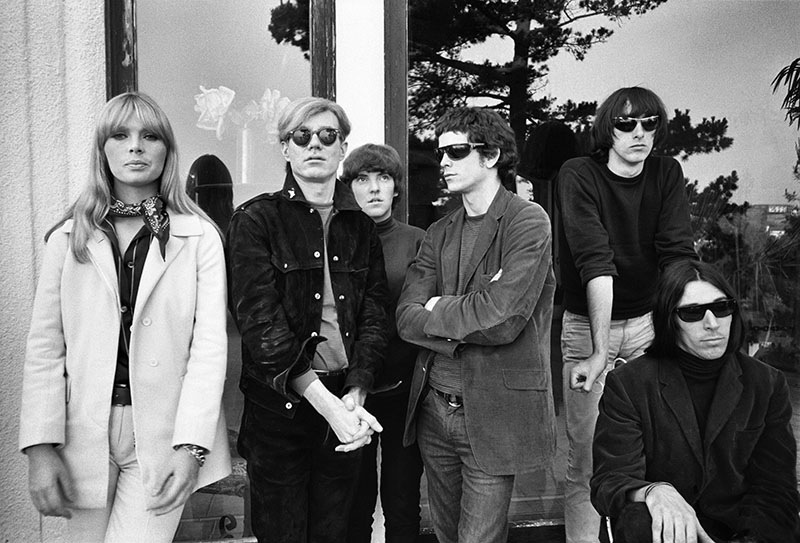
Andy Warhol, the Velvet Underground and Nico. Photo by Steve Schapiro.
Steve Schapiro is a photographer whose masterful work over almost five decades has spanned punk rock and movie masterpieces. His exhibit of photos of Andy Warhol, Lou Reed and the Velvet Underground, and David Bowie closed last weekend at the Ed Paschke Art Center. The exhibit featured a couple of dozen iconic black and white photos of these music legends.
The art center also showed a 30-minute video about Schapiro with many examples of his earlier work, shooting movie set photos during films such as Midnight Cowboy, The Godfather, Taxi Driver and Chinatown. There also are scenes from a recent conversation between Schapiro and Dustin Hoffman as the actor reminisced about photos Schapiro took during those movie set years.
Schapiro, now 80, lives and works in Chicago. He began taking photos when he was 9 and discovered the magic of the darkroom at summer camp. He’s currently shooting photos for several books and other projects, which you can read about in this interview.
Richard Powers: Orfeo, and a dog named Fidelio
I’ve written about Richard Powers before, most notably in my review of the 2013 Spike Jonze film, Her, which I compared to Powers’ 1995 novel, Galatea 2.2. (It drew about 200 readers to my blog last year, more than any other post; it still continues to draw).
Powers can be an acquired taste. I’ve read all his work and I acknowledge this fondness is something like my affinity for the late Portuguese writer, Jose Saramago. Powers is cerebral, mixes science and technology subjects with the arts, and his characters do not always come across as living, breathing humans.
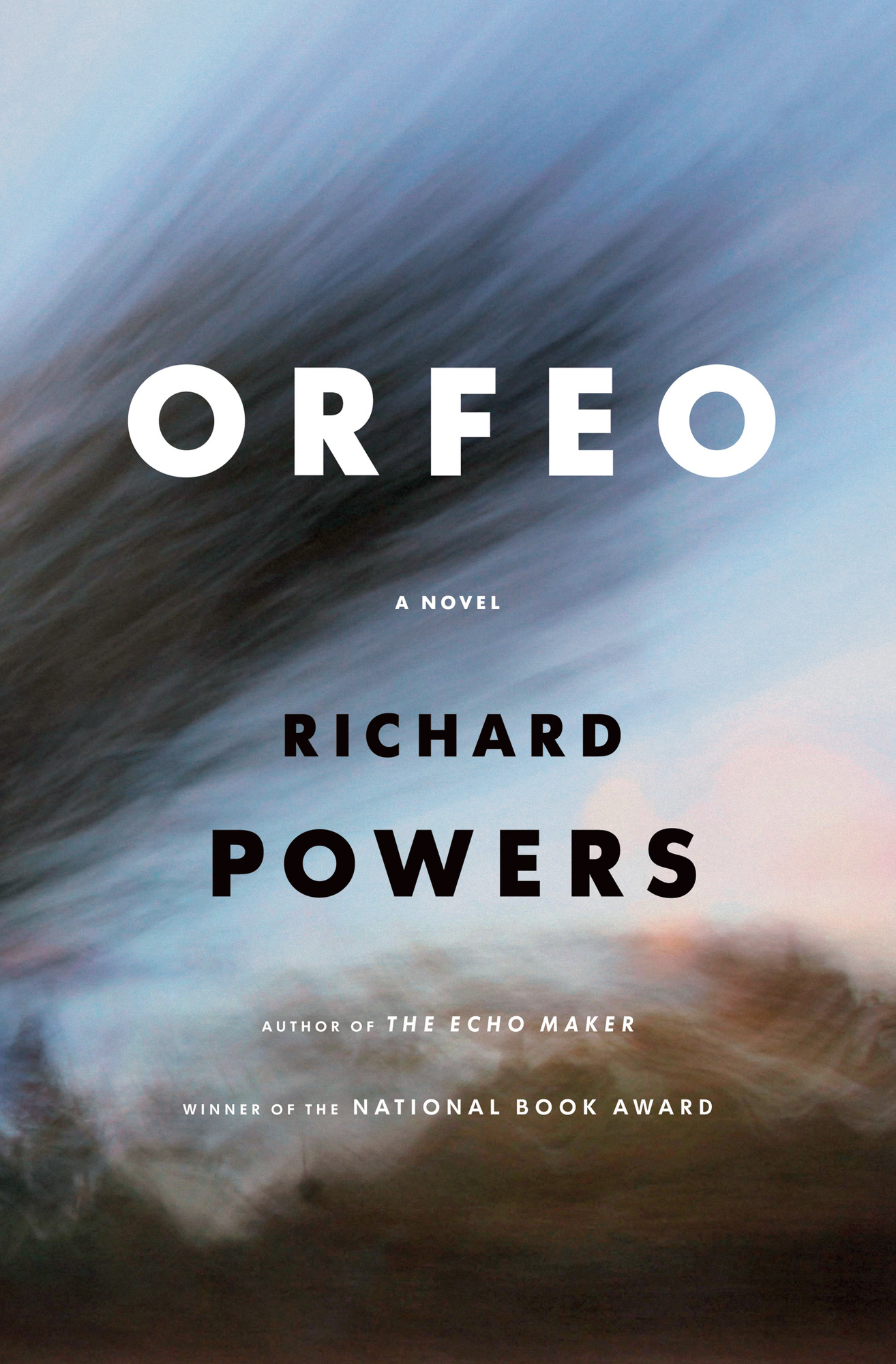 Orfeo is his latest novel and I think his best. You grow to care about his leading character and his quests in music and science. Powers displays breathtaking knowledge of ancient music, experimental music and composition. One long section of the book is about the composition of Quartet for the End of Time, composed in 1941 in a German prison camp by French composer Olivier Messiaen.
Yesterday I had the luxury of a really immersive reading experience. About four hours of sitting around the Greensboro airport and the plane ride home. I realized that too often my reading is episodic—an hour in the afternoon when I finish work or a short session of reading in bed. I don’t know if it was the immersive reading or the nature of Powers’ book, but I found myself really caring about the people in Orfeo.
Peter Els, the leading character, is a 70-year-old retired professor, whose passions are avant-garde music and home genetic experiments. The novel opens with the death of his dog Fidelio, a 14-year-old golden retriever who loved music. “Music launched her into ecstasies. She loved long, held intervals, preferably seconds, major or minor. When any human sustained a pitch for more than a heartbeat, she couldn’t help joining in.”
The novel is about Els’ long history as an avant-garde composer and the lovers and friends he connects with in that passion. In retirement, he offers classes in music at a retirement center and is working with a bacterial human pathogen in his tricked-out home laboratory, where he’s trying to record his own compositions in bacterial DNA.
This unfortunately attracts the attention of the Department of Homeland Security and people in hazmat suits arrive. Els flees and the story threads back and forth through his musical and romantic life to his current period of flight.
A good portion of Orfeo is set in Champaign/Urbana, where Powers was an undergraduate and now is professor of English. (Powers went to DeKalb High School and one of his early books is set in DeKalb.)
Els is inspired by John Cage and participates in “Musicircus,” an exuberant 1968 extravaganza in Champaign, where Cage was in residence from 1967 to 1969.
Powers’ Wikipedia page lists and describes his novels. I recommend dipping a toe into the Powers oeuvre. You might start with The Time of Our Singing (2003), which combines music and physics. And then move on to Orfeo and its musical magic.
Follow this blog, please
You can sign up to follow Nancy Bishop’s Journal and get an email whenever I post a new article, usually about once a week. Just type in your email address at the top of the righthand column and you’ll get an email asking you to verify your address. That’s it. No spam, no password.
Literary lions: Chicago authors celebrate their own hall of fame
Posted: January 6, 2015 Filed under: Art & architecture, Chicago | Tags: Chicago Literary Hall of Fame, Ganz Hall, Louis Sullivan Leave a commentYou’ll be pardoned if you didn’t know there was a Chicago Literary Hall of Fame. It’s been pretty low key during its short life, and so I excused myself for just discovering it in time for its fifth annual induction ceremony.
The ceremony, presided over by journalist/author Rick Kogan, brought six Chicago authors into the Literary Hall of Fame. I wrote a preview of the event for Gapers Block and decided to attend, even though it was a Saturday night in December with three other events trying to grab my attention. But I was happy I decided to be literary.
The event was held in the richly ornamented Ganz Hall at Roosevelt University. Ganz Hall, originally designed as a banquet hall, was built suspended over the Auditorium Theater space in another example of the engineering genius of Dankmar Adler and Louis Sullivan. (All photos by Nancy S Bishop.)
The authors inducted are all dead, have a strong Chicago connection, and are considered writers of literary works. In other words, they are poets, novelists, playwrights, and occasionally one whose work extends beyond those boundaries. (Donald Evans, CLHOF founder and executive director, outlines the guidelines and history in an essay in the event program.) This year’s six honored authors were:
Margaret Anderson, who founded and edited the literary magazine, The Little Review, in 1914
David Hernandez, a street poet and unofficial poet laureate of Chicago
Edgar Lee Masters, author of The Spoon River Anthology
Willard Motley, Englewood native and author of Knock on Any Door and originator of the Bud Billiken columns in the Chicago Defender
Shel Silverstein, author of iconic books for children including The Giving Tree and Where the Sidewalk Ends
Margaret Walker, whose first book of poems, For My People (1942), made her one of the youngest published black poets of the 20th century
This wasn’t one of your dry awards ceremonies with envelope openings and honorees fumbling for their speeches. (For one thing, they are all dead.) Each honoree was introduced with a remembrance about the author by a relative or literary connection, followed by a reading from the author’s work, and an acceptance speech by another relative or literary connection. Some of the readings were quite dramatic. Sandra Seaton performed an emotional reading from Margaret Walker’s For My People. Leslie Holland Pryor read a passage about the character Nick Romano from her great-grand-uncle’s novel, Knock on Any Door. Cynthia Judge performed a reading from Life Without Roses, June Sawyer’s play about Margaret Anderson.
These presentations, interspersed with comments from Kogan, made an entertaining evening that revealed Chicago literary secrets and history that should not be forgotten.
The evening also included the Rutledge Writing Awards to 13 Chicago high school student writers.
The sponsors of the CLHOF event include the Chicago Writers Association and the new American Writers Museum, which will open its new museum in 2016 on Michigan Avenue near the Art Institute of Chicago.
2014: My pop culture memories
Posted: January 2, 2015 Filed under: Art & architecture, Books, Movies, Music, Theater Leave a commentIt’s the beginning of a new year and time to reflect on the pop culture year just ended. Critics did their top 10 lists of everything, but I’m going to do my list of 2014 favorites. Some of these are clearly eccentric choices–not necessarily “the best.” I’ve written about most of them during the year – either here or at Gapers Block or Culture Vulture.
Professionally….
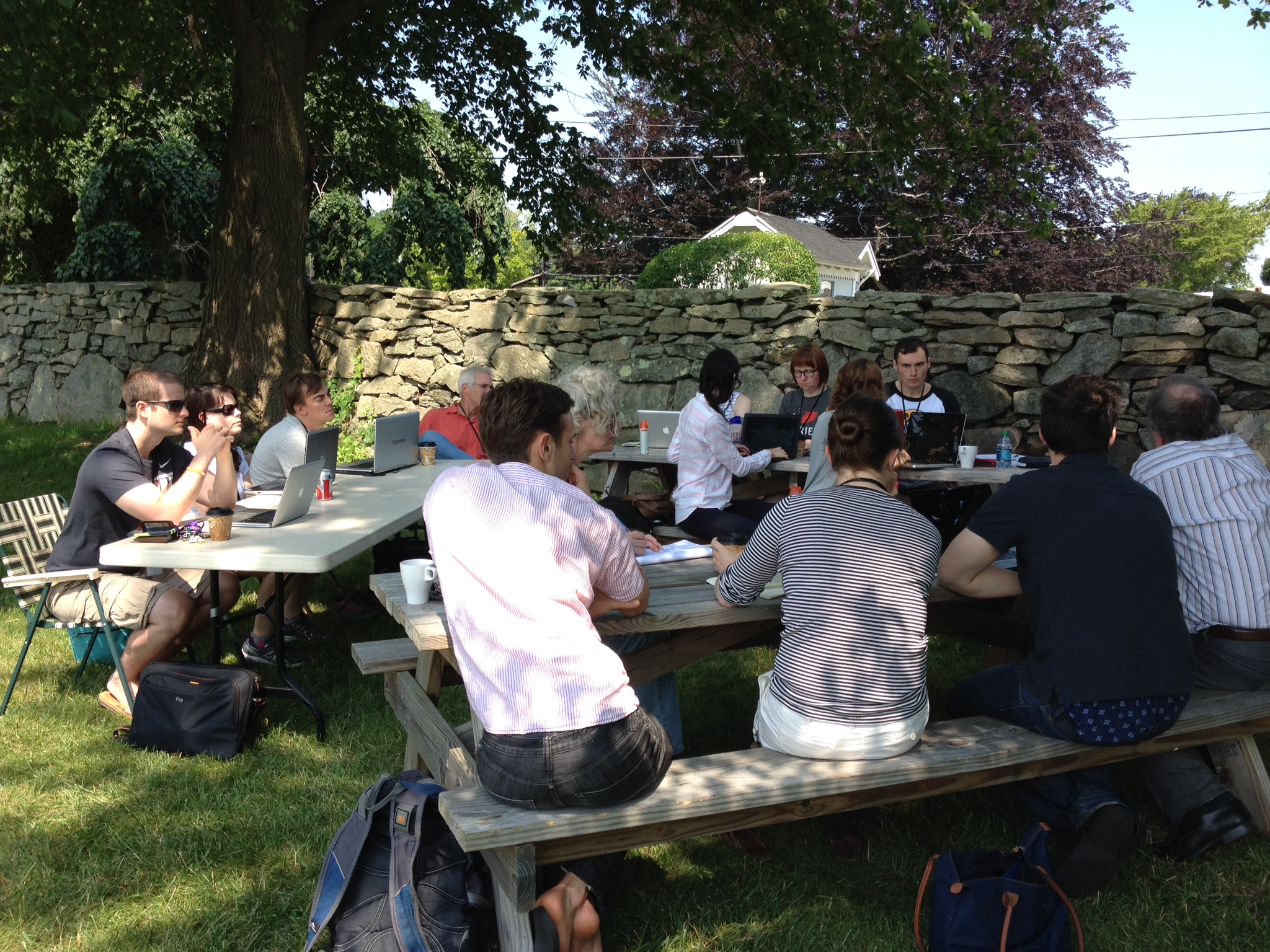
Critics at work in the Sunken Garden
My favorite professional experience – my two weeks at the National Critics Institute at the Eugene O’Neill Theater Center. It was a fabulous and enriching two weeks, complete with inspiration from colleagues and visiting experts, lots of plays to review, and sleep deprivation.
The institute strengthened my ability to write theater criticism and I did a lot of it this year. I wrote about 60 reviews—mostly theater but also reviews of art exhibits—for gapersblock.com and about 20 for culturevulture.net, a national arts website.
For Nancy Bishop’s Journal, I wrote 46 essays, which drew 4500 visitors from 86 countries—mostly the US, UK and Brazil. The two essays that drew the most visitors were:
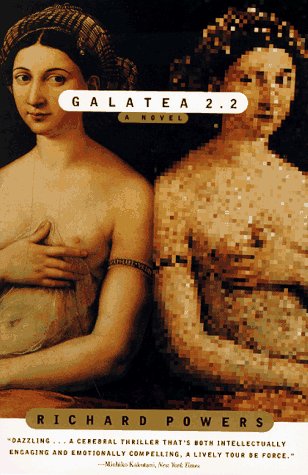 — My review of Spike Jonze’s film Her, which I compared to Richard Powers’ novel Galatea 2.2.
— An article demanding freedom for Oscar Lopez Rivera, a political prisoner in the US for 33 years.
Theater
My favorite experiences as a theater critic and theatergoer aren’t necessarily the plays on other top 10 lists, but they are shows that I found thrilling.
The Hypocrites’ All Our Tragic. This play was a masterful combination of all 32 extant Greek plays by Aeschylus, Euripides and Sophocles, written by Sean Graney. The 12 hours flew by, with plenty of breaks for food and conversation.
Oracle’s The jungle was a searing theater experience; a big story in the smallest space imaginable. My review commented, “Your Chicago ancestors may have greeted the Pilgrims, arrived on the Mayflower or a slave ship, or come in through Ellis Island. Whatever their origin, they’re part of our history. You can relive it in this stirring drama.”
A fabulous visiting production of Arguendo, a dramatization of a Supreme Court First Amendment case, directly from the transcript, by the Elevator Repair Service, the inventive New York theater company. Scroll down in this long post to see my review of Arguendo. The choreography of the justices on office chairs was priceless. Here’s the trailer:
Elevator Repair Service presented Gatz, a word-for-word reading of The Great Gatsby, at the MCA theater in 2006. Here’s a video sample of Gatz.
Also among my 2014 favorites: Seven Homeless Mammoths Wander New England at Theater Wit; a fine production of Martin McDonagh’s The Lieutenant of Inishmore at Aston Rep; and Chicago Shakes’ King Lear highlighted by Larry Yando’s moving performance in the title role. My reviews of The Lieutenant and Lear.
Films
Picking my favorite films of 2014 was really difficult, but here’s my try:
— Birdman, because it’s wildly inventive, sadly realistic, and beautiful to behold—especially if you love the backstage areas of old New York theaters. I’ve seen it twice and loved it both times.
— Boyhood, because Richard Linklater, who is obviously fascinated with the concept of time (re his “Before” film trilogy), took the time to see a boy and his family grow and change over 12 years.
— The Imitation Game. I could nitpick at plot points but the story is fascinating and Benedict Cumberbatch’s performance is award-worthy.
— The Grand Budapest Hotel. Yes, I know this is kind of sweet and quirky or “twee” as Greg Mitchell tweeted. I just saw it for the second time and still enjoyed Wes Anderson’s visual fun and games.
Favorite movie viewing experience: The Cabinet of Dr Caligari with a live organ performance at the Symphony Center on Halloween night.
Plus two exceptional art documentaries:
— National Gallery, a Frederick Wiseman documentary profile of London’s National Gallery, done in his fly-on-the-wall style with no narration or background music.
— The Hairy Who and the Chicago Imagists, about which I wrote two different pieces—first when it was shown here briefly in June and then when the Gene Siskel Film Center showed it in the fall.
Television
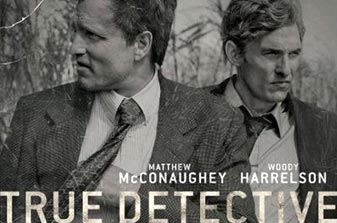 — True Detective, the weird, creepy, gothic HBO series starring Woody Harrelson and Matthew McConnaughey. True Detective will come again this year with a different cast and story line, but I doubt it will compare to year 1.
— The 2013 MusiCares Tribute to Bruce Springsteen, which was finally televised by PBS this fall. Many great performers cover his songs, finding new ways to interpret them, while Springsteen sat in the audience and watched. But he finally got to the stage to give his acceptance speech and play a few of his own songs.
— Sonic Highways, Dave Grohl’s tribute to American music, illustrated with the music and musicians of eight cities on HBO. The Chicago segment was episode 1. You can still view it on demand, if you subscribe to HBO.
Music

Bridgestone Arena, waiting for The Boss. Brad Paulsen photo.
— Bruce Springsteen and the E Street Band in Nashville. No, he didn’t come to Chicago, so we took a road trip.
— The Bruce Springsteen 65th birthday bash at Fitzgerald’s in Berwyn, organized by my friend, June Sawyers. In addition to the music, June and I read literary and not-so-literary commentary on Mr Springsteen.
Biggest musical disappointment: The October concert at the Symphony Center by Chris Thile and Edgar Meyer. The music and the performances were quiet, indistinguishable and without passion. I knew they weren’t going to rock out, but I did expect some enthusiasm.
Favorite album release: Leonard Cohen’s Popular Problems. The opening track, “Almost Like the Blues,” is especially fine. As the Pitchfork reviewer said, his music “sounds slick, but slightly off-kilter.” Springsteen’s High Hopes was also released in 2014, and of course I’ve listened to it many times.
Visual art
My favorite art and museum exhibits:
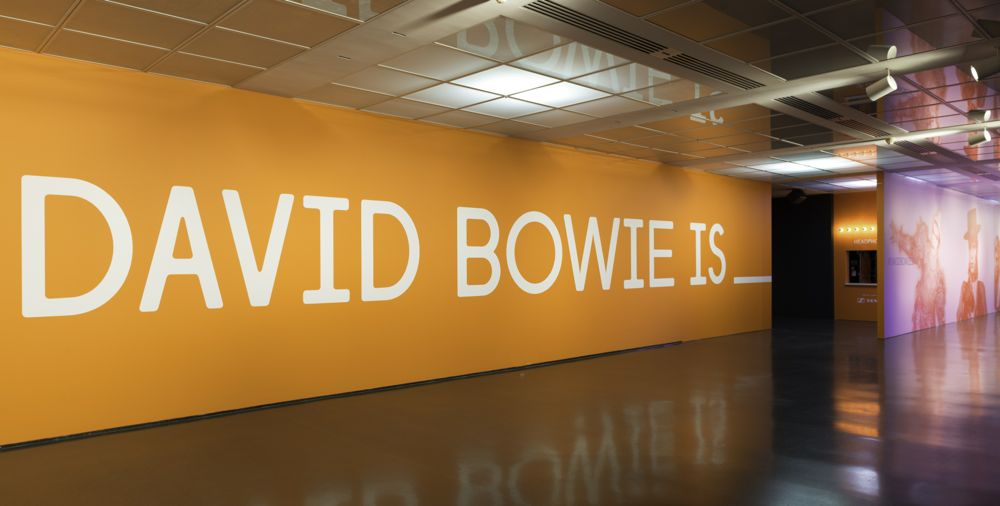 — David Bowie Is, which closes this weekend at the MCA. It’s an excellent exhibit and illuminates the genius of a musician who is ever conscious of his identity. My review.
— Magritte: The Mystery of the Ordinary, 1926-1938, at the Art Institute. My comments.
— The new Ed Paschke Art Center in Jefferson Park opened this summer and I was there.
Mecca Flat Blues, an amazing exhibit of one of the many places where Chicago’s architecture and civic life collide, at the Chicago Cultural Center. This was my personal favorite article of the year. Chicago Magazine named it one of the must-reads of the week in April. I reprised it on my blog with added memories of Mies.
Books and authors
— Hilary Mantel’s short stories, The Assassination of Margaret Thatcher. I had only read Mantel’s first book about Thomas Cromwell, Wolf Hall, which won the Man Booker Award. Her short stories are wildly different.
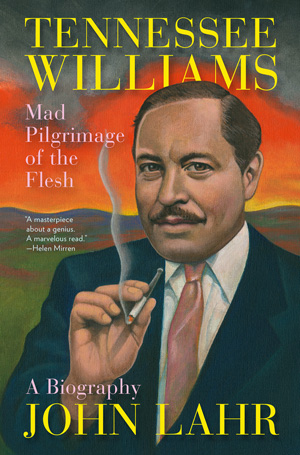 — John Lahr’s biography, Tennessee Williams: Mad Pilgrimage of the Flesh, is one of the best biographies I’ve ever read. I reviewed it and his appearance onstage at Steppenwolf.
— Stoner, the 1965 novel by John Edward Williams that was recently rediscovered. Julian Barnes declared it the must-read novel of 2013. Stoner was a farm boy who went to college to study agriculture and discovered the world of literature. One reason I loved its quiet prose about a life of disappointments is that it’s mostly set on the campus of the University of Missouri; it was lovely to read Williams’ descriptions of the place where I spent two years.
Holiday reviews: A play or three to end your year
Posted: December 19, 2014 Filed under: Movies, Theater | Tags: Chicago Shakespeare, Gene Siskel Film Center, Irish Theatre Company, Pericles, Remy Bumppo Theatre, Sarah Ruhl, Shining City, Tale of the Princess Kaguya, The Clean House Leave a commentIt’s almost the end of the year and I don’t want you to miss these three plays now on stage in Chicago. Plus notes on a fourth play and a film recommendation.
The Clean House by Remy Bumppo Theatre
 You may have seen Sarah Ruhl’s smart, funny play The Clean House in its first production at the Goodman Theatre in 2006. Even if you did, you might want to see it again by Remy Bumppo, a theater company that always thrills me with its attention to language and diction. In this case, some of the language is Portuguese and Spanish (which I understand un poquito), but the actors always help you along with the sense of what they’re saying in another language.
This play is about cleaning houses, and a lot more than that. It’s a commentary on how we love and care for each other and Ann Filmer’s direction enhances its great humor and charm.
Running time is 100 minutes with one intermission; thru January 11.
Pericles by Chicago Shakespeare
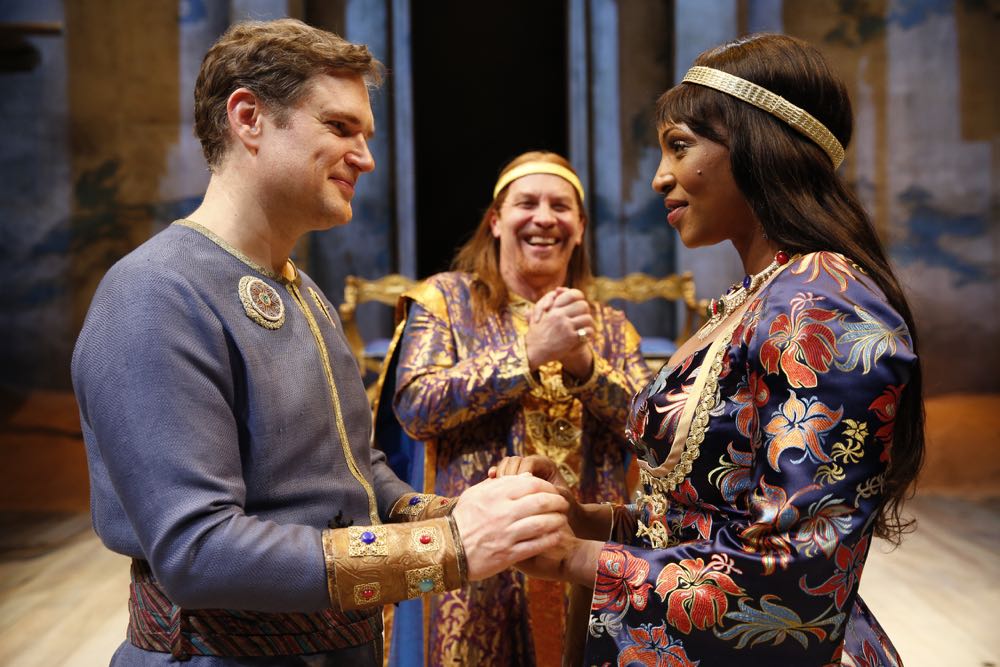 Pericles is one of Shakespeare’s plays that isn’t produced often, but Chicago Shakes has done a great job in staging it to bring out its best parts and subdue its lesser aspects. David Bell’s direction is excellent and the staging, costumes and music are superb. My Gapers Block review calls it a “lush, celebratory production.”
The play has a fine crew of actors, led by Canada’s Ben Carlson in the lead with grand support from Chicago stalwarts Sean Fortunato, Kevin Gudahl, Lisa Berry, Ora Jones and the always delightful Ross Lehman.
It runs 2 hours and 35 minutes with one intermission. My review notes that the first act is too long, but the production is worth your time. You can see it thru January 18.
Shining City by the Irish Theatre Company
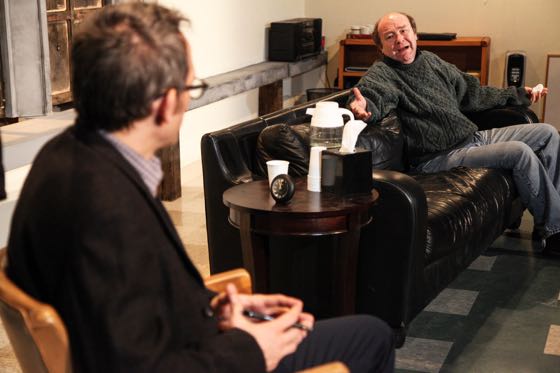 This is one of those minimalist, slightly claustrophobic productions that makes you feel that you’re peering over the shoulders of the characters whose life traumas you’re watching. The staging of this Conor McPherson play in the small Den Theatre space enhances that mood. It’s set in the office of an ex-priest, now-therapist, who is feeling his way through his own life as well as that of his patient.
Beautifully acted, with a special performance by Brad Armacost in the role of John, the patient. In his long monologue, he unburdens his soul and guilt to the therapist. You will be on the edge of your seat, lest you miss a word. Warning: there are ghosts in this play.
This 100-minute, five-scene production runs thru January 4. See my review.
Iphigenia in Aulis at Court Theatre
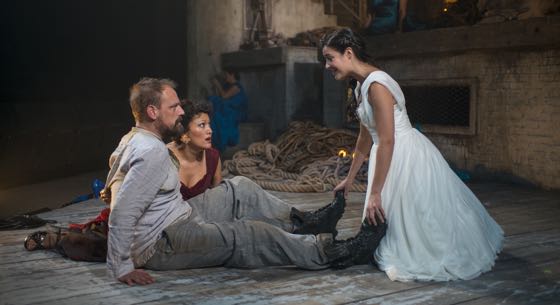 This was a rather low-key production by Court Theatre of the tale of Agamemnon, who sacrificed his daughter Iphigenia so that the winds would blow and send his fleet to attack Troy and bring back “that whore, Helen.” My review of this quote and of the play, which is now closed. Those bloody tales in which human fates rest on the whims of the gods and goddesses never fail to be interesting. However, this play has nowhere near the power of Court’s production, twice mounted, of An Iliad, which I noted in my review.
And on screen: The Tale of the Princess Kaguya at the Gene Siskel Film Center
 This is a new and exquisite entry in the collection of superb work by Japan’s Studio Ghibli, known for its beautiful hand-drawn animated films. I mentioned the work of Studio Ghibli when I reviewed The Wind Rises by Hayao Miyazaki last spring. This new film is by Isao Takahata, drawn in subtle, almost water-color delicacy and black brush-stroke detail. It tells the story of a tiny baby girl adopted by a woodcutter and his wife when he finds her in a bamboo plant. She is an enchanted child and the film, based on a 10th century Japanese folk tale, tells the story of her growth, love and loss.
Runs thru December 30 at the Siskel Film Center–137 minutes. You can see it with Japanese subtitles (my preference) or voiced in English; the Siskel schedule tells which showings are which.
(All photos courtesy of the theater companies.)
Carolina stories: On page, stage and whiteboard
Posted: December 6, 2014 Filed under: Digital life, Theater | Tags: Snow Queen, Triad Stage 2 CommentsI spent Thanksgiving weekend in North Carolina and loved being able to relax and visit with friends and relatives. My older son has lived there for 25 years so I’ve visited dozens of times. We got to meet the new baby cousin in the family; he slept through all the excitement. And I spent time with my two darling and precocious grandsons.
Birthdays and storytelling
The 2-year-old loves to read stories, to which he adds his own interpretations as I’m reading to him. One of our outings was to a birthday party for one of his friends from “school” (day-care). Mom and the two boys and I went to The Little Gym where kid birthday parties are staged. An hour of jumping, bouncing and games, supervised by Mr. DJ and Miss Bethany, then time for cake and birthday treats. If you haven’t been involved with small ones lately, you would be amazed at the birthday party industry that has built up. I’ve been to several play-party venues like this for kid birthday parties, including those for the two grandsons. Birthday parties aren’t held at home any more.
The almost-7-year-old likes to build with Legos and write stories. He has a future as an entrepreneur, I believe. He frequently writes stories, by hand and with colored illustrations. He begged me to “publish” his stories and wanted me to take a photo of a magazine cover so he could put it on his book. I explained copyright infringement. We discussed the nature of e-books and the dilemma of print vs. online. I told him he needs a website, after he asked me how he would get people to buy his book. I can’t wait to see what we’ll discuss next time I see him.
Snow Queen at Triad Stage
The grownups went to the theater one night to see Snow Queen, based on the Hans Christian Anderson story, at Triad Stage in Greensboro. The play, developed for that theater in 2013, was well done with an original folk music score and script. Costuming of the Snow Queen and other fairy tale characters was beautiful and the staging, with large animal puppets, was very creative. This is a professional theater company and most of the actors are Equity. The show featured live musicians on acoustic string instruments. The play is set in Appalachia, which explains the accents of the actors.
Here’s a sneak peek at the play with comments from writer/director Preston Lane. If you’re in the Triad region (Greensboro/Winston Salem/High Point) before December 22, you have a chance to see this production.
Also in performance . . . .
My other treat was watching my son teach a university economics class in time-series analysis—used in statistics and forecasting. (It was the day of my departure and I tagged along with him.) There were six graduate students in the class, so I sat in the last row of the small classroom and tried to be inconspicuous. Of course, my son wasn’t going to let that happen. He introduced me to the class and occasionally asked my opinion.

Image courtesy Wikimedia Creative Commons.
The class was discussing things like ACF (autocorrelation function) and the ARIMA methodology (autoregressive integrated moving average) and my son’s white board formulas included characters that aren’t on my keyboard. This is an image of a time series showing random data points. It’s cool-looking and I like the colors.
With the help of Wikipedia, I followed along superficially and I did perk up when he got to the chi-squared test. I remembered that from my brush with communications research as a grad student. The chi-squared (X²) test is used to determine whether there’s a significant difference between the expected and observed frequencies in categories.
The class also had two interesting stats. Of the six students, three were left handed. And of the eight people in the room, four were left handed, including me, of course. Statistically unlikely since ~10 percent of the population is left handed. And all six students were male, also defying the stats, since 50 percent of the population is female. That may be a comment on the fact that fewer women are involved in STEM courses.
It’s a sad fact that this results in a “yawning imbalance . . . even though they make up 47 percent of the total U.S. workforce, women hold only 24 percent of STEM jobs, according to a 2011 U.S. Department of Commerce study.” Those STEM jobs typically offer higher salaries and better career prospects.
I realize the irony of this comment coming from me. I took only the required STEM courses in college and I spent my career in decidedly non-STEM jobs. I’ve had a successful and happy life and I wouldn’t have changed it. But I would advise young women to consider all their career options and not let themselves be pushed into non-STEM courses and careers.
Anyway, it was fun to watch my son teach and then we had a late lunch. Then to the airport and home.
PTI (the Piedmont-Triad International Airport) has free wifi, as do many other airports. Why don’t O’Hare and Midway have free wifi? OK, they do have those rotating toilet seat covers that make you think you’re sitting on a clean surface. But no free wifi? It’s a tossup as to which is more important.
Art in the gallery and out in the street
Posted: November 26, 2014 Filed under: Art & architecture, Movies | Tags: Banksy Does New York, Smart Museum of Art 1 CommentSculpture: Carved, Cast, Crumpled at the Smart Museum
The Smart Museum of Art in Hyde Park has dedicated its entire space to a sculpture exhibit that spans the eras from ancient to contemporary. Carved, Cast, Crumpled: Sculpture All Ways is well displayed and organized by historical era. There are works by modern masters like August Rodin, Jacques Lipschitz and Henry Moore, Asian religious figures, classic European bronzes, and neon, metal and fabric sculptures from the modern era. My slideshow will give you a quick overview of the diversity of the exhibit, which is open through December 21.
The Smart Museum is small and a two-hour visit will give you plenty of time to appreciate the entire exhibit plus have a snack in the café, which serves coffee, pastries and light lunch items. It’s popular with students so tables are scarce during the lunch hour. The museum is nestled behind Court Theatre at 5550 S. Greenwood on the University of Chicago campus. (All photos by Nancy Bishop.)
Out in the street: Banksy Does New York
Why do I love street art? I’m particularly fond of it because it takes art out of the elite realm and puts it out for everyone to enjoy. No admission fee, no checking your bag, no waiting in line. I also like it because it is part of the cycle of people’s art that encompasses comic books and graphic novels, pop art, the Chicago Imagists and the Hairy Who, and today’s post-street art.
Banksy is the famous and elusive British street artist who produced the delightful 2010 documentary, Exit Through the Gift Shop. In October 2013, Banksy took up a “residency” in New York. Every day of the month, he installed a piece of street art somewhere in New York and started a frenzy of art lovers and hipsters seeking out each day’s work. Banksy would post a tease on his website each morning, suggesting something about the art, but not identifying the location.

Copyright Daily Mail Online.
HBO Documentaries has produced a 90-minute film, directed by Chris Moukarbel, about this month of street art adventures, titled Banksy Does New York. It’s been running on HBO channels and it’s available on HBO on demand as well.
The installations are varied in form, materials and message. They range from stenciled figures and balloons to a crumbling sphinx to a slaughterhouse truck filled with squealing animal puppets that parked in front of various meat markets throughout the day.
Art on screen: National Gallery
National Gallery is a Frederick Wiseman documentary profile of London’s National Gallery. It’s running through December 4 at the Gene Siskel Film Center and although it’s almost three hours long, I highly recommend it. It’s a magnificent look at this immense art museum and its visitors, staff members and, most of all, its collection. There’s no narrative voiceover, no background music, just the museum and its denizens—and sometimes silence. The trailer will give you an idea of its charm.
As I said in my Gapers Block review, my favorite aspect of the film is the faces. Faces looking at faces. All manner of expression in the visitors and all manner of people portrayed on the walls.
Related posts:
More on street art. https://nancybishopsjournal.com/2014/02/12/out-in-the-street-street-art-and-post-street-art/
The Chicago Imagists and the Hairy Who as influencers. http://gapersblock.com/ac/2014/10/01/the-hairy-who-returns–to-the-siskel-film-center/
Ed Paschke et al. https://nancybishopsjournal.com/2014/08/02/art-that-mystifies-and-moves-magritte-koudelka-and-paschke/
On stage in Chicago: Dead cats and Irish playwrights
Posted: November 14, 2014 Filed under: Theater | Tags: Aston Rep, Irish Theatre Company, Shaw Chicago, Spartan Theatre Company, Steppenwolf Theatre Company 1 CommentI’ve written about films and filmmakers a lot lately but I have seen a few interesting plays as well. Here are some quick reviews and links to my Gapers Block reviews.
The Lieutenant of Inishmore by Aston Rep
You can see this Martin McDonagh play through November 23. And it’s worth your time to head  north on Clark Street to Raven Theatre’s venue just north of Peterson. The setting is the island of Inishmore in Galway in 1993 and a little background in Irish history helps. I included some background in my review, in which I gave the play four stars—a highly recommended rating.
Here’s how my Gapers Block review begins:
“Four dead fellas, two dead cats … me hairstyle ruined! Did I miss anything?”
That’s the culmination of Martin McDonagh’s grisly black comedy, The Lieutenant of Inishmore, now being crisply staged by Aston Rep at the Raven Theatre.
A Bright Room Called Day by Spartan Theatre Company
 This early Tony Kushner play also runs through November 23 at CIC Theatre on Irving Park Road. I was eager to see this because I admire Kushner’s writing. And poetic language and intriguing political comments do illuminate this story, set in 1932-33 Berlin. It was the end of the Weimar Republic and the beginning of Hitler’s National Socialism. Unfortunately, Kushner inserts 1982 interludes in which a contemporary woman castigates the Reagan administration and compares it to the Hitler era. I’m no fan of Ronald Reagan but this was more than a little overwrought. I also thought the two-act play ran too long at 2.5 hours. All in all, I couldn’t give this production more than two stars—somewhat recommended.
Nevertheless, you may find it interesting. The Berlin scenes and the developing political awareness of the artists who populate those scenes are compelling. The devil and the ghost character plus the strident 1982 commenter…not so much.
In my review, I commented, “there are usually reasons why a rarely performed play is rarely performed. A Bright Room Called Day is such an example. Even Shakespeare wrote a few turkeys.”
The Night Alive at Steppenwolf Theatre
This Conor McPherson play runs thru this weekend at Steppenwolf. You can see it through Sunday, November 16. I’ve rhapsodized before here and here about how much I like Irish playwrights and writers. Martin McDonagh and Conor McPherson are two of my favorites. The Night Alive is a shining example.
The Night Alive is a lovely play about caring for others, about both good and bad people. There’s poetic language that would seem inappropriate if it wasn’t coming from Irish characters. The play is beautifully acted and sharply directed. If you’re looking for something to do this weekend, I can recommend this highly.
I didn’t write a formal review of this, but I will be reviewing McPherson’s Shining City in early December at the Irish Theatre of Chicago (formerly Seanachai Theatre).
Don Juan in Hell at Shaw Chicago
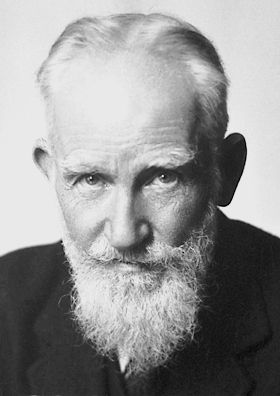 Shaw Chicago produces “reader theater” versions of plays by another great Irish playwright, George Bernard Shaw, and occasionally his compatriots. Some of the productions utilize costumes and makeup but the staging is always actors with their scripts on music stands. They produced an excellent version of Don Juan in Hell, a ~90-minute excerpt from Shaw’s Man and Superman. You can check out my review here: The Devil Wore Red Sneakers.
Watch for their future productions of Wilde’s The Importance of Being Earnest and Shaw’s Major Barbara.
Films and filmmakers: Surrealism and horror stories
Posted: November 7, 2014 Filed under: Movies, Music | Tags: CSO, Gapers Block, Guy Maddin, Halloween, MCA Chicago Leave a commentThis week this cineaste* had two outstanding film experiences. One was with one of my favorite filmmakers and the other was a Halloween horror story.
* Michael Phillips called himself a cineaste in the Tribune today, so I can too. That’s a little more pretentious that calling yourself a cinephile or movie nut, but I like it.
Guy Maddin, madman filmmaker
Wednesday night Canadian filmmaker Guy Maddin was at the MCA theater in a Chicago Humanities Festival event. The packed house of film students and film fans hung on his every word and appreciated his frankness and engaging humor. I have loved his bizarre films since I first saw The Saddest Music in the World. The chance to see him in person was impossible to resist.
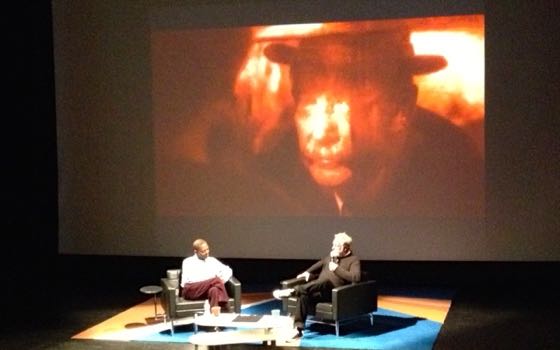
Coleman and Maddin at the MCA. Photo by Nancy Bishop.
Maddin is probably best known for two films, The Saddest Music in the World (2003), a Depression-era story about a beer baroness with glass legs played by Isabella Rossellini, and My Winnipeg (2009), an homage and “surrealist mockumentary” to his hometown. He also has made many short films and creates film installations.
As I said in my Gapers Block article, Maddin looked like a perfectly normal and sane person, but I hoped that didn’t mean we were in for a quiet evening of intelligent discussion. Then Maddin said his major film influences were David Lynch and Luis Bunuel and my brain exploded. Bunuel, the Spanish surrealist, is one of my favorite filmmakers. In fact, I’m going to lead a discussion on his work for my film group next month. I have recently rewatched a lot of David Lynch films, including Eraserhead and Blue Velvet. The Bunuel/Lynch combination is mind-bending.
Maddin talked nonstop and was sort of interviewed by Charles Coleman from Facets. The conversation veered all over Maddin’s personal bio and film viewing and film making habits. He’s a great fan of silent films and is committed to saving or recreating lost films. Coleman showed two of Maddin’s short films, including The Heart of the World. See my Gapers Block article for more about Maddin and his work.
Maddin said he’s now reading Greek tragedies, which he thought would be boring … “but they’re like Mexican comic books!” He also lately has become obsessed with Herman Melville’s Moby Dick. (Aren’t we all?)
Confession of a diarist
I went to see Guy Maddin because I like his work. I had no intention of writing about it. (Except when you’re a diarist or blogger, all of life is raw material.) I’ve been to a couple of author events lately that I fully intended to write about and the authors said nothing of interest. (I’m talking to you, Junot Diaz. And you, Thomas Dyja and Neil Steinberg.) But Maddin started strong and never stopped. I have 12 pages of scribbled notes in my notebook and I could hardly keep up with him. The evening was exhilarating.
Halloween horror story
It was Halloween night at the Symphony Center. The audience was a little different than the everyday CSO audience. Many were in costumes and weird makeup. Many were not. I wore my everyday costume of jeans and a Springsteen shirt.
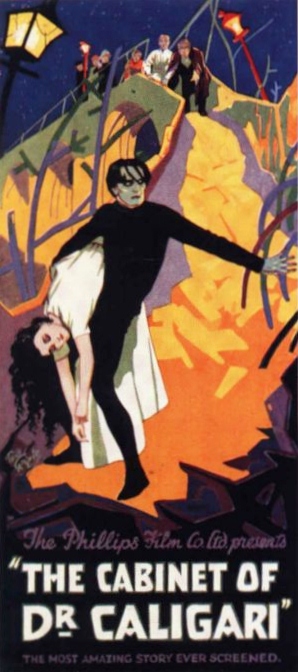 The CSO was hosting one of its special movie night concerts. The film was Robert Wiene’s 1920 film, The Cabinet of Dr Caligari, with site-specific music performed by the punky organist Cameron Carpenter. He played a stirring score on a massive digital organ set center stage under the giant movie screen. Carpenter says he is the first concert organist to prefer the digital organ to the pipe organ. His touring instrument is a “monumental cross-genre organ” built to his own design specs.
The film, which I’ve seen several times in the past, was a marvel to see on the big screen. It’s dazzlingly expressionistic with jagged lines, angled shapes, trees with spiky leaves, tilted walls and windows. It’s black and white, of course, but tints suggest daytime or night. The distorted sets are obviously two-dimensional, rather than real sets, but the effects are remarkable for the time.
The Dr Caligari story is about madmen and murder, delusions and deception. The expressionistic visual style surely paved the way for films like Metropolis, Nosferatu and M and inspired filmmakers like Fritz Lang and F W Murnau.
There must be different cuts of the film because its length is variously listed from 50 to 67 minutes. The CSO version was about 65 minutes. This version of the film on YouTube is 51 minutes.
In researching this, I also found a valuable archive of silent films in the public domain. Check out some you’re familiar with and find new ones, maybe even some of Guy Maddin’s lost films.
Follow this blog, please
You can sign up to follow Nancy Bishop’s Journal by putting your email address in at the top of the right hand column. You’ll get an email when I post a new article, usually about once a week. No spam, no passwords.
 nancy bishop's journal