Films and filmmakers: Surrealism and horror stories
Posted: November 7, 2014 Filed under: Movies, Music | Tags: CSO, Gapers Block, Guy Maddin, Halloween, MCA Chicago Leave a commentThis week this cineaste* had two outstanding film experiences. One was with one of my favorite filmmakers and the other was a Halloween horror story.
* Michael Phillips called himself a cineaste in the Tribune today, so I can too. That’s a little more pretentious that calling yourself a cinephile or movie nut, but I like it.
Guy Maddin, madman filmmaker
Wednesday night Canadian filmmaker Guy Maddin was at the MCA theater in a Chicago Humanities Festival event. The packed house of film students and film fans hung on his every word and appreciated his frankness and engaging humor. I have loved his bizarre films since I first saw The Saddest Music in the World. The chance to see him in person was impossible to resist.
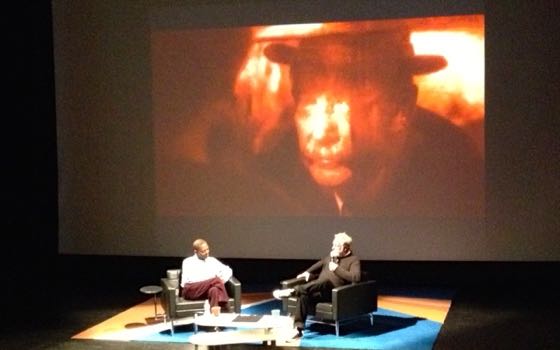
Coleman and Maddin at the MCA. Photo by Nancy Bishop.
Maddin is probably best known for two films, The Saddest Music in the World (2003), a Depression-era story about a beer baroness with glass legs played by Isabella Rossellini, and My Winnipeg (2009), an homage and “surrealist mockumentary” to his hometown. He also has made many short films and creates film installations.
As I said in my Gapers Block article, Maddin looked like a perfectly normal and sane person, but I hoped that didn’t mean we were in for a quiet evening of intelligent discussion. Then Maddin said his major film influences were David Lynch and Luis Bunuel and my brain exploded. Bunuel, the Spanish surrealist, is one of my favorite filmmakers. In fact, I’m going to lead a discussion on his work for my film group next month. I have recently rewatched a lot of David Lynch films, including Eraserhead and Blue Velvet. The Bunuel/Lynch combination is mind-bending.
Maddin talked nonstop and was sort of interviewed by Charles Coleman from Facets. The conversation veered all over Maddin’s personal bio and film viewing and film making habits. He’s a great fan of silent films and is committed to saving or recreating lost films. Coleman showed two of Maddin’s short films, including The Heart of the World. See my Gapers Block article for more about Maddin and his work.
Maddin said he’s now reading Greek tragedies, which he thought would be boring … “but they’re like Mexican comic books!” He also lately has become obsessed with Herman Melville’s Moby Dick. (Aren’t we all?)
Confession of a diarist
I went to see Guy Maddin because I like his work. I had no intention of writing about it. (Except when you’re a diarist or blogger, all of life is raw material.) I’ve been to a couple of author events lately that I fully intended to write about and the authors said nothing of interest. (I’m talking to you, Junot Diaz. And you, Thomas Dyja and Neil Steinberg.) But Maddin started strong and never stopped. I have 12 pages of scribbled notes in my notebook and I could hardly keep up with him. The evening was exhilarating.
Halloween horror story
It was Halloween night at the Symphony Center. The audience was a little different than the everyday CSO audience. Many were in costumes and weird makeup. Many were not. I wore my everyday costume of jeans and a Springsteen shirt.
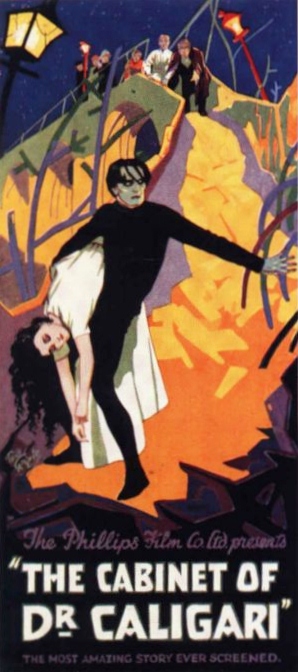 The CSO was hosting one of its special movie night concerts. The film was Robert Wiene’s 1920 film, The Cabinet of Dr Caligari, with site-specific music performed by the punky organist Cameron Carpenter. He played a stirring score on a massive digital organ set center stage under the giant movie screen. Carpenter says he is the first concert organist to prefer the digital organ to the pipe organ. His touring instrument is a “monumental cross-genre organ” built to his own design specs.
The film, which I’ve seen several times in the past, was a marvel to see on the big screen. It’s dazzlingly expressionistic with jagged lines, angled shapes, trees with spiky leaves, tilted walls and windows. It’s black and white, of course, but tints suggest daytime or night. The distorted sets are obviously two-dimensional, rather than real sets, but the effects are remarkable for the time.
The Dr Caligari story is about madmen and murder, delusions and deception. The expressionistic visual style surely paved the way for films like Metropolis, Nosferatu and M and inspired filmmakers like Fritz Lang and F W Murnau.
There must be different cuts of the film because its length is variously listed from 50 to 67 minutes. The CSO version was about 65 minutes. This version of the film on YouTube is 51 minutes.
In researching this, I also found a valuable archive of silent films in the public domain. Check out some you’re familiar with and find new ones, maybe even some of Guy Maddin’s lost films.
Follow this blog, please
You can sign up to follow Nancy Bishop’s Journal by putting your email address in at the top of the right hand column. You’ll get an email when I post a new article, usually about once a week. No spam, no passwords.
Celebrating a Springsteen Birthday: How Can This Man Be 65?
Posted: October 9, 2014 Filed under: Music, Rock and roll | Tags: Bruce Springsteen, Bucky Halker, Fitzgerald's, June Sawyers Leave a commentYes, my favorite rocker has turned 65 and his Chicago-area fans celebrated with words and music last weekend at Fitzgerald’s, the blues/jazz/rock club in Berwyn. A soldout crowd of 100 filled the comfy Sidecar music room. Musicians led by guitarist Bucky Halker played solos, duets and other configurations of Springsteen music, including some rarities. But they weren’t playing covers; they were reinterpreting Springsteen’s music in interesting ways. June Sawyers and I contributed “literary” readings about Springsteen.
Other musicians were Don Stiernberg on mandolin, Al Rose on guitar, Andrea Bunch on keyboards and guitar, John Mead on guitar, and John Abbey on upright bass. Rose did a fiery version of “Spirit in the Night” and Halker’s “Racing in the Street” and “State Trooper” were other highlights.
June read historical and profile pieces about the birthday honoree. I read* an excerpt from his SXSW keynote speech and suggested to Bruce “10 Reasons Why You Shouldn’t Retire.” The group played “John Henry” as the closer.
Photos by Kaitlynn Stanger.
* If you’re interested in receiving my readings, please leave a comment on this site with your email. Let me know which reading you want, and I’ll be happy to send it along.
Birthday tribute setlist:
State Trooper
Ghost of Tom Joad
None But the Brave
This Hard Land
Stolen Car
Growin’ Up
For You
Fire
Racing in the Street
Factory
Born to Run
Youngstown
Hard Times
Spirit in the Night
She’s the One
Thunder Road
Nebraska
Atlantic City
John Henry
“David Bowie Is” is fabulous:
Posted: October 1, 2014 Filed under: Art & architecture, Chicago, Music | Tags: David Bowie Is, MCA Chicago Leave a comment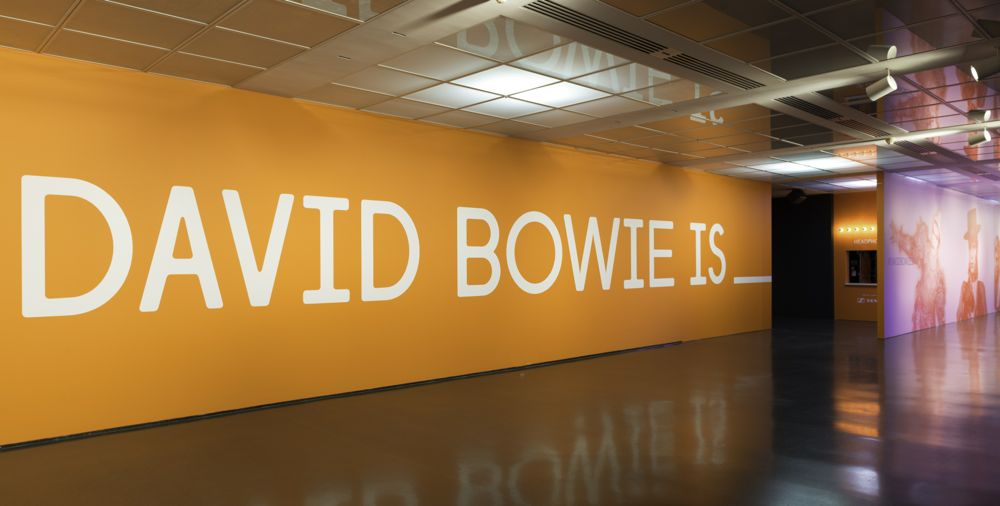
Signage at the MCA gallery entrance. Photo courtesy MCA.
The new David Bowie Is exhibit at the Museum of Contemporary Art deserves its hype. It’s a comprehensive, expansive look at the career of a man who was a singer/songwriter, musician–and far more. David Bowie is a painter, actor, writer, designer, composer–and most important, a man who knows how to develop and maintain a brand.
I reviewed the exhibit last week for Gapers Block, so take a look. My review also appears here on culturevulture.net.
Among the fascinating displays of Bowie’s art, designs, music and costumes is a large video display of his 1972 appearance on the BBC performing “Starman” wearing makeup and a colorful quilted fitted suit. His fans loved it and others were outraged–by his appearance as well as by what was seen as inappropriate behavior with his guitarist Mick Ronson. Here’s the same video. Don’t get excited. It’s not R rated, by any means. Great song, though.
Bowie hasn’t played a full concert since 2004 when he underwent emergency angioplasty after a concert in Germany. He often performed in Chicago during his touring years. One outstanding series of Bowie Chicago performances was the full month of August 1980 when he played the lead in the play, The Elephant Man, at the Blackstone Theatre. You can see a scene from that play in one exhibit area at the MCA.
Patrick Sisson’s article in the Reader tells about that month that Bowie called Chicago home…and describes some of the places he visited and people he spent time with while he was here.
Finally, here’s a video about the Bowie exhibit that’s a good visual intro. It’s an exhibit you should not miss.
Midsummer movies: Foreign films + Talking Heads
Posted: August 17, 2014 Filed under: Movies, Music 2 CommentsEuropeans may consider August a month for a long holiday, but Chicagoans, those American workaholics, are not taking the month off. We’re busy making and consuming art. Mostly consuming.
Foreign films: Brazil and the UK
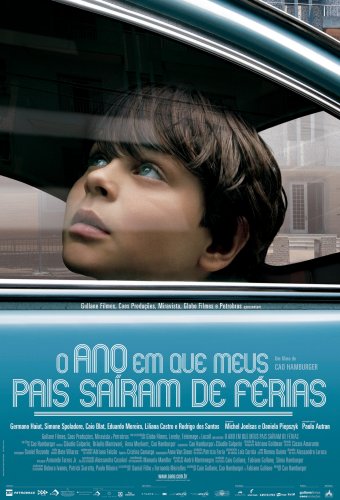 August is foreign film month for the Chicago Film Lovers Exchange. We’re discussing a film from a different country each Wednesday night. Last week we took on Brazil and member Ana led a discussion on The Year My Parents Went on Vacation, a film told from the point of view of Mauro, about the events surrounding the 1970 World Cup and political turmoil in Brazil. Mauro’s parents leave him to live with his grandfather (not knowing that the elderly man just died) because they have to flee the right-wing dictatorship that overthrew the elected left-wing government. (Familiar political story, isn’t it?) How Mauro survives and builds his own community is the crux of the film.
Ana recommended another interesting film also told from a child’s viewpoint. Valentin is an 8-year-old boy whose parents have scattered and left him to live with his grandmother in 1967 Buenos Aires. Valentin is determined to be an astronaut and walks around in heavy boots to prepare for zero gravity. He knows there are problems in his family and decides he’ll solve them himself, since the grownups have failed him.
Both films are charming and troubling. Troubling because both Mauro and Valentin are deserted by their parents.
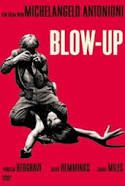 This week the group discussed Blowup, the landmark 1966 film written and directed by Michelangelo Antonioni (his first English-language film). It’s about a successful fashion photographer in mod London, played by David Hemmings, who shoots film in an isolated park to kill time one day. When he processes the film, he sees evidence of a possible murder, and crops and blows up the negative to try to determine what happened. Vanessa Redgrave plays the woman in the park.
Blowup is on many lists of best films of the decade and century and, as a character study, it benefits from multiple viewings. One of the treats of the film is a club scene where the Yardbirds are playing: Jeff Beck and Jimmy Page as young musicians. The cameras and darkroom equipment used by the photographer are fascinating and represent an evolution in the history of photographic technology. In the park scenes, he’s shooting with one of the first Nikon Fs, a 35mm single lens reflex camera that enables him to move agilely, compared to the Hasselblad medium-format camera and the 4×5 sheet-film camera he uses in his studio.
Summer Music Film Festival: Stop Making Sense
The Music Box currently is showing its annual Summer Music Film Festival with great films like Purple Rain, Hard Day’s Night, Good Vibrations and Rubber Soul. The festival benefits Sound Opinions, the rock and roll talk show, and WBEZ.
Best of all, the 30th anniversary version of Stop Making Sense, the concert film by the Talking Heads. It’s 95 minutes of magic, directed by Jonathan Demme. You can see it again Tuesday, August 19, the last night of the festival. I may go again.
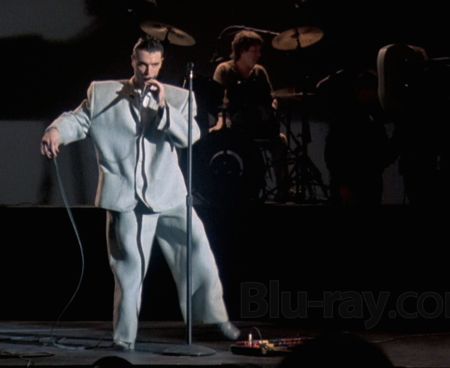
The Big Suit. Photo courtesy http://www.typografiks.wordpress.com
The film is a real treat on the big screen; I was very excited to see it that way because I’ve only seen it on a TV screen. Stop Making Sense opens with David Byrne walking out on an open stage with a boombox and a guitar. He starts off with “Psycho Killer” and near the end of it is joined by bassist Tina Weymouth. One by one, more band members join him as roadies push the drum kit stand on stage, then the keyboard stands. Chris Frantz on the drum kit, Jerry Harrison on guitar, two backup singers, Steve Scales on percussion and Alex Weir on guitar. Finally Bernie Worrell hops up on the keyboard stand and the band is complete. Musicians change off instruments throughout the concert, which was filmed over two days at a theater in Los Angeles.
Demme’s touch is obvious in dramatic performer lighting and visual projections. Byrne’s creative madness is on display throughout, in his dancing, marching, duets with his bandmates, and finally, in the Big Suit. In the second half of the concert, Byrne appears in a giant suit to perform “Girlfriend Is Better.” Gradually over the next few songs, the tall skinny Byrne takes off pieces of the suit. The concert also includes one number by the Tom Tom Club, a group made up of the other band members, sans Byrne.
Just one more: Mood Indigo
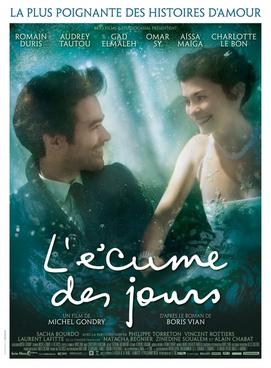 I’ll mention one more film that gave me great pleasure recently. It’s Mood Indigo or L’écume des jours, written and directed by Michel Gondry (who we know for Is the Man Who Is Tall Happy?, Eternal Sunshine of the Spotless Mind and The Science of Sleep).
Mood Indigo is a charming romantic film with some surrealistic features. The film bounces delightfully from one strange situation to another. Colin’s shoes run down the steps in front of him and he slips into them at the bottom. A tray of petit fours is served that actually are tiny ovens. When Colin’s sweetheart Chloe becomes ill, it’s diagnosed as caused by a water lily growing in her lung. There are some magical events and weird gadgets in this film that remind me of the crazy animation of Triplets of Belleville.
Gondry is a former art student and drummer for a pop-rock band. He gained his reputation directing music videos, including five of them for the Icelandic singer, Björk. He then made many award-winning commercials for major corporations, which gained Hollywood attention and smoothed his way into film direction.
Mood Indigo is adapted from a cult novel by Boris Vian. You will either love it or hate it.
Springsteen 65th birthday bash

Bruce at 64 on the beach at Rio
Consider this a save-the-date notice. If you’re a Bruce Springsteen fan, or just a fan of Americana and roots rock and acoustic music, you’ll be interested in the 65th birthday party we’re planning for Mr. Springsteen. No, he won’t be there. But Bucky Halker and friends will be there, to play Springsteen music and read some poems and doggerel.
The date is Saturday, September 27, at Fitzgerald’s in Berwyn. Tickets are $10 and are on sale now.
The event is being planned by the Phantom Collective, a grassroots Chicago group partly inspired by pub theater. The Phantom Collective sponsors programs of music and theater pieces—mostly from the North American and Anglo-Celtic traditions— at various venues around town. Nothing formal or regularly scheduled; that’s why it’s a phantom.
Chicago in Words and Music: Kogan to Springsteen
Posted: June 11, 2014 Filed under: Chicago, Music | Tags: "The Ghost of Tom Joad", "The People Speak", Howard Zinn, Jon Langford, Printers Row Lit Fest, Rick Kogan 2 Comments A sunny Saturday afternoon at the Printers Row Lit Fest, now in its 30th year. At Center Stage on Dearborn Street (mercifully under a tent roof), Rick Kogan told meandering shaggy dog stories about Chicago neighborhoods, such as Uptown and Englewood. His stories were accompanied by Chicagoan (and émigré from Wales) Jon Langford on acoustic guitar. As a bonus, there were harmonica harmonies and more readings by Martin Billheimer, who often performs with Langford.
Kogan told about going to a Bruce Springsteen concert at the Uptown Theatre in 1980 (oh, how I wish I had joined him), which lasted oh, three, four or five hours—and about the 1907 opening of what became the Green Mill nightclub in 1909. He described the movie studios that opened on Argyle Street in 1907.
Kogan told stories about his father Herman (a Chicago newspaperman and city biographer) and Paddy Bauler. 43rd ward alderman and saloon keeper. Bauler is the guy who said, “Chicago ain’t ready for reform” in 1955 after Richard J Daley beat a “goo-goo” candidate (good government in Chicago parlance) to win his first term as mayor.
 I love the fact that Bauler Park at Wisconsin and Cleveland streets in his old ward is named for Matthias “Paddy” Bauler, who served 34 years in the Chicago city council.
Langford and Billheimer played a rousing version of “The Sidewalks of Chicago” and other songs. (“Sidewalks” is a song by Dave Kirby and recorded by Merle Haggard.) Billheimer read an excerpt from an essay by the Uruguayan writer Eduardo Galeano from the compilation Armitage Avenue Fundamentalists.
Kogan also told about visiting a school in Englewood a few years ago with Matt Damon, who was recording speakers for the documentary The People Speak, narrated by the late historian Howard Zinn and based on his book, A People’s History of the United States. Here’s a video of Zinn introducing and Sandra Oh reading from Emma Goldman on patriotism.
And finally, as my special treat for today, here’s a Bruce Springsteen excerpt from The People Speaks. He tells about how he came to write “The Ghost of Tom Joad” and performs the song on guitar and harmonica. (As my friends and Bruce fans say, there’s a Bruce Springsteen lyric or song that enhances any topic or occasion.)
Follow this blog!
If you’d like to receive an email when I post a new article on nancybishopsjournal.com, just put in your email address on the upper right side of this page. I promise no spam and you don’t need a password!
May mashup: My pop culture diary
Posted: May 31, 2014 Filed under: Art & architecture, Movies, Music, Theater | Tags: Court Theatre, E Street Band, Profiles Theatre, theandygram.com 3 CommentsBusy end-of-May at Nancy’s house. House guests, including two perfectly darling grandsons, and a family wedding at a grand venue. So I haven’t seen much theater since the last time we chatted. Still, there were a few great movies, one so-so play, and news about a new website that I’m writing for. You’ll find some TV recs too.
First, some architecture notes
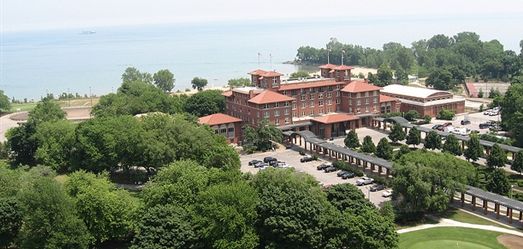
South Shore Cultural Center. Photo courtesy Chicago Park District
A lakefront wedding. The wedding was at the beautiful South Shore Cultural Center, right on the lakefront at 71st Street. It was originally a private country club and it’s now part of the Chicago Park District. If you haven’t been there, it is simply lovely and worth a visit. If you’re planning an event, it should be on your list of venues.
The country club, built in 1906, was designed by Marshall and Fox, who designed the Drake and Blackstone Hotels. It was expanded in 1916, also by Marshall and Fox. (Benjamin Marshall also designed the elegant Beaux Arts apartment building at 1550 N State Parkway.) The wedding ceremony was held in the beautiful solarium, looking out at the lake, and then we moved to a reception hall for champagne and greetings, and finally to the dining room. You can see some CPD photos here.
An architecture scavenger hunt. If you’re a fan of Chicago’s Loop architecture, you should sign up for the Chicago Architecture Foundation’s scavenger hunt next Saturday afternoon, June 7. The game starts and ends at the Railway Exchange Building at 224 S Michigan; there’ll be an awards reception in the grand atrium. You’ll find the details in my story on Gapers Block.
Theater notes
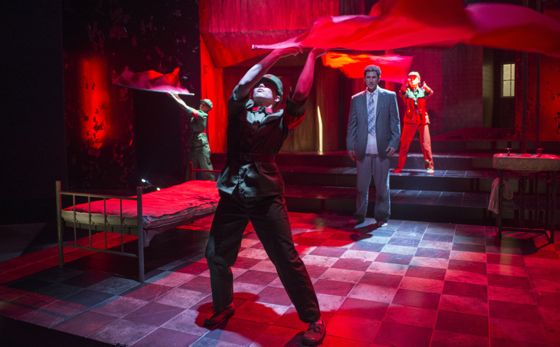
Photo by Michael Brosilow.
M Butterfly at Court Theatre. The script by David Henry Hwang is marvelous, very smart and well-written. I thought the Court production left a little to be desired—it was a bit flat. The reviews were definitely mixed from “not recommended” to “highly recommended.” I imagine director Charles Newell might have taken some notes and spiffed up his production since then. The play tells the amazing story of the French diplomat who was deceived for 20 years by a male opera star posing as a female diva. Despite my review, I do recommend a trip to Hyde Park.
Here’s my review; my rating was “somewhat recommended.”
TheAndyGram.com. This is a New York-based theater website that covers Broadway, off-Broadway, Washington, Connecticut and, now, Chicago. My first review (of Cock at Profiles Theatre) is now up on theandygram.com. See it here. It’s a terrific show and I highly recommend it. It runs until June 29; details are at the end of my review.
My headline is “… A Riveting Play That Explores All the Meanings of Its Title.” Here’s how my review begins:
Cock is a play title you very rarely find in a theater review headline. I’m hoping that’s because of fear of internet anti-obscenity filters, rather than puritanism on the part of copy editors. The play by Mike Bartlett is a comedy about sexual identity, a love triangle and a power play among three characters: John, a bisexual who is fighting to discover his identity; M and W, his lovers, who battle each other and John himself to determine the course of their lives.
Movies I loved…or at least liked
The Normal Heart. HBO’s production of Larry Kramer’s play about the early years of the AIDS epidemic is excellent. I wasn’t sure what to expect but I had read enough about the production, and the playwright’s involvement, to be optimistic that its edges wouldn’t be softened. And they weren’t. We needed to be reminded about the terror of the disease first known as “gay cancer.” And to be reminded that the war is not over. The tagline, “To win a war, you have to start one,” is an ideal descriptor.
The acting is excellent. Mark Ruffalo plays a very believable Ned Weeks (Larry Kramer) and there are terrific performances by Julia Roberts, Jim Parsons and Matt Bomer. I originally saw the play off-Broadway in about 1985 and Timeline Theatre did an excellent production last year. I highly recommend the HBO film. Here’s the trailer.
Stoker and Blue Velvet. My film group discussed Stoker last week and we’re discussing Blue Velvet soon. They are both excellent films and each is weird, creepy and outrageous in its own way.
Stoker (2013, 99 minutes) is the first English-language film by the Korean director, Chan-Wook Park. (He directed the so-called vengeance trilogy, which includes Oldboy.) His title is surely meant to remind us of Bram Stoker, who created Dracula, but Stoker is just a family name. A family whose father is killed in a mysterious auto accident, whose daughter ( Mia Wasikowska) is obsessed with hunting and saddle shoes, and whose mother (Nicole Kidman) can’t get her daughter to love her. But at the funeral, an uncle (Matthew Goode) appears out of nowhere and befriends mother and daughter. The story is a bit of a takeoff on an Alfred Hitchcock film, Shadow of a Doubt, about a young girl’s relationship with her serial-killer uncle. Stoker has lots of strange and beautiful cinematography and features a psychologically steamy piano duet of Philip Glass music.
If you stay up late or get up early or set your DVR, HBO is showing Stoker June 1 at 3:20am CT.
Blue Velvet (1986, 120 minutes) is an early David Lynch film, before Twin Peaks. The weirdness is set off when an earnest young man (Kyle MacLachlan) finds a severed human ear in a field as he’s walking home. The plot revolves around his boy detective attempts to solve a mystery with a very young Laura Dern as his co-star. Isabelle Rossellini is a nightclub singer who performs “Blue Velvet” and Dennis Hopper is her crazed tormentor, who uses a mask to breathe in gas to energize his crimes.
Roger Ebert hated this film so much that he gave it one star in 1986. He and Gene Siskel disagreed on it, however. (When it was revived 20 years later, one reviewer said it was still “a hilarious, red-hot poker to the brain.”) Here’s a clip of the “At the Movies” review from 1986. Go to 2:35 to see Roger and Gene debate the film.
Rock and Roll Hall of Fame Induction
Yes, tonight is the night that we can see the E Street Band inducted into the Rock and Roll Hall of Fame. Their frontman, Bruce Springsteen, was inducted in 1999. The induction ceremony took place in April but tonight is the three-hour-plus event, with all the honorees, along with a bunch of special guests performing. The band is being inducted in a category that used to be known as sidemen and now is called the Award for Musical Excellence.
Other inductees are Peter Gabriel, Nirvana, Hall and Oates, KISS, Linda Ronstadt and Cat Stevens. Artists are eligible for the Rock Hall 25 years after their first recording. Rock Hall members (including me) voted for a list of eligible musicians and then the panel of judges picks the inductees. My DVR is already set.
Road trip: Bruce, BBQ and E Street Radio
Posted: April 23, 2014 Filed under: Food, Music, Rock and roll | Tags: Bridgestone Arena, Bruce Springsteen, Feast BBQ, John Mellencamp, Nashville music 2 CommentsIt’s 470 miles from Chicago to Nashville, down I-65, the spine of Indiana, around Louisville and then on to Nashville. That was our road trip last week to see Bruce Springsteen at the Bridgestone Arena. It was a sold-out show with 18,000 ecstatic fans welcoming Bruce home after his years in the European and Asia Pacific wilderness.
The concert was fabulous—a 3.25 hour E Street Band performance with classics like “I’m on Fire” and “Downbound Train” and beautifully sorrowful songs like “The Wall” from the new High Hopes album. The whole horn section was up front for “Johnny 99.” I thought he was through after rousing encore versions of “Tenth Avenue Freezeout” and “Shout” and final band thanks. I was hoping for a live version of “Dream Baby Dream,” but he waved away the pump organ and played a solo acoustic “Thunder Road,” letting the crowd lead him in a singalong. A great ending.
You can read a report on the concert and see the full setlist on my favorite Springsteen site, backstreets.com. Scroll down to the Nashville report.
Update: I have to add this comment by Mosley Turner, who reviewed the April 26 Atlanta concert for Backstreets. “Bruce has received — and earned — virtually every honor and accolade there is, in addition to the unswerving loyalty of the E Street fans. This is a man with not a thing left to prove, yet he delivered a performance tonight as though everything was at stake, fully invested in every lyric and every note. While there will always be those who will say ‘you shoulda been there’ for a particular tour or some special moment, no one who sees Bruce Springsteen and the E Street Band right now could come away feeling that they did not see them at a peak in their long and storied career.”
In our 18 hours on the road, food and music were the main topics. We had live downloads of concerts from Cape Town, South Africa, and Hunter Valley, Australia, to listen to, plus E Street Radio on Sirius all the way.
Townhouse Cafe, Seymour, Indiana
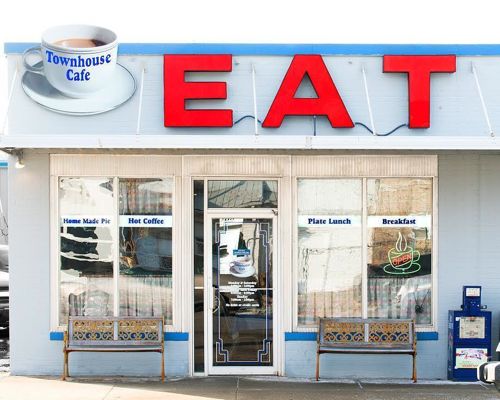
On the way south, we picked Seymour, Indiana, as our lunch stopping point as a hat-tip to John Mellencamp, who was born there. I remembered breaded pork tenderloin sandwiches from a college year in Iowa; I had recently learned they’re an Indiana favorite too. So we found the Townhouse Cafe in Seymour, a homey place said to serve the best tenderloin sandwich in Indiana. Well, it was delicious and huge and since I don’t engage in food porn, I didn’t take a photo. Our server had worked there for 20 years and I quizzed her about Mellencamp, whose framed album cover of Scarecrow was hanging over the counter. Yes, she remembered one time when he came in alone and she didn’t recognize him at first; he was a gentleman to serve and talk to.
The morning after the concert with both of us sleep-deprived, we headed north and picked up I-65. Wanting to get around Louisville before lunch, I picked New Albany, Indiana, as a lunch stop. (I lived in Louisville in the ‘80s working for KFC so the territory was familiar.)

Feast BBQ, New Albany, Indiana
This time we were yearning for barbecue and found Feast BBQ in New Albany not too far off the highway. We skipped the bourbon and beer, their other specialties, and had amazing brisket sandwiches. Truly, it was the best smoked brisket I’ve ever had and I would go back tonight if it wasn’t a five hour drive. We talked to the owner and he divulged some secrets about how they smoke their meat. Since I’m not planning on smoking meat in my highrise apartment, I didn’t take notes.
Yes, a road trip in a fast car with great music and food stops is a good thing now and then. When I had small children, I dreaded road trips. But they’re an occasional pleasure now. I’m not ready to get back in the car yet, but I’m sure I will be, further on up the road….
Follow this blog
If you’d like to receive an email when I post a new article on nancybishopsjournal.com, just put in your email address on the upper right side of this page. I promise no spam and you don’t need a password!
Beauties and beasts: A mixed bag of culture
Posted: March 7, 2014 Filed under: Chicago, Movies, Music, Theater | Tags: Aliota-Haynes-Jeremiah, Chicagoland, Hayao Miyazaki, Women of Letters 6 CommentsKind of a Chinese menu of a post today. A little theater, a little film, a little TV and some fine music.
Jean Cocteau on stage
The Artistic Home has mounted a riproaring family sex story at its venue on Grand Avenue. This Jean Cocteau farce is Les Parents Terribles—it’s two hours-plus of high-speed theater. Very funny, very well acted. My Gapers Block review is here. The play runs until April 13.
In the course of writing the review, I thought about Cocteau’s other work. His 1946 film, La Belle et La Bête, is unforgettable and visually arresting. Here’s the trailer so you can check it out. It happens that the lobby of my apartment building has a giant framed poster of Cocteau’s La Belle et La Bête, so I am reminded of it every day.
Wondrous Japanese animation
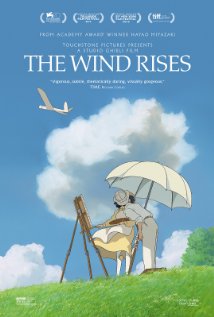 Animated film has not been one of my interests, since I always connected it with dreadful cute animals. But recently I’ve been educated in the beauty and sophistication of animated film and I’ve seen three films lately by the Japanese master, Hayao Miyazaki.
My film group had a discussion on Miyazaki this week and it was fascinating because several of the members are anime, animation and Miyazaki experts. His current (and final, he says) film is The Wind Rises, which just opened in local cinemas. His work is always beautiful, rich in hand-drawn detail, and sophisticated in its use of Japanese history and mythology (most of which I probably miss because of my own education gap).
His other films are mostly works that would be of family interest, but The Wind Rises is quite adult in plot and character. The leading character is Jiro, who is enchanted with flight and idolizes an Italian aviation engineer. He grows up wanting to design beautiful airplanes that carry people—but he ultimately designs the planes that are used in World War II, specifically to bomb Pearl Harbor. (There’s kind of an Oppenheimer effect at work here. Oppenhemer and the other Manhattan Project physicists designed the atomic bomb and then were chagrined at the results.)
War is an underlying theme in the film but not the main topic. In addition to Jiro’s engineering work, there’s a love story; his fiancée suffers from tuberculosis. The film is beautiful and gets many four-star reviews. (Seeing the “rising sun” logo on the airplanes was slightly unsettling for me, a child of that wartime period.)
I recommend this film highly and would also recommend Spirited Away (2001) and Princess Mononoke (1997) as two of his more typical films. He uses strong female characters and in each case blends in Japanese history and mythological symbols. His films are enchanting and I have a list of four or five more on my list to see.
Women of Letters
The Australian literary salon known as Women of Letters is bringing its project to revive the lost art of letter-writing to Chicago. Women of Letters will be performed with local writers and artists on Friday, March 21, at the Mayne Stage. Here’s my Gapers Block preview. Sounds like good literary fun and I’ll report on it back here.
Chicagoland: My favorite city on TV
CNN, apparently trying to become something more than just another cable news outlet, has just started an eight-part series called Chicagoland (Thursdays at 9pm CT, with several reruns). The first episode ran last night and so far Mayor Emanuel looks good—perhaps a little too good. However, given the principals involved, I believe the series will be fair and well done—and I hope I’m not wrong. The production has the Sundance/Robert Redford imprint so I’m expecting quality.
The first episode had some great footage of Chicago but the story was depressing. The reporting focused on murders and gang activity (with an emphasis on Fenger High School) and the city’s closing of 50 public grammar schools, almost all of them in African-American and Latino neighborhoods. We saw parents and teachers protesting the closings and CTU president Karen Lewis telling us what she thinks of Rahm Emanuel.
Of course, I’ll watch the other episodes, even though I know the story probably doesn’t have a happy ending. But to make up for that, I have a special Chicago musical treat for you, even though someone who shall be nameless remembers it as a song “I used to listen to in college while stoned.”
The song is “Lake Shore Drive” by Aliota-Haynes-Jeremiah. It was a big hit in 1975 and rereleased on CD in 1998. If you love the song, you can download it on iTunes and put it on your iPod, so it’s always with you, despite what the person quoted above calls “a jarring piano line.” If you’re not a Chicagoan, you may think that the LSD mentioned in the lyrics and shown in the visuals refers to a drug …. but to Chicagoans it refers to the drive that runs along the lakefront from Hollywood Avenue to 66th Street. The Lake Shore Drive Wikipedia page is a nice history of its construction, use and appearances in popular culture.
And now for some related posts….
On the subject of animation: One of the five sort of obscure movies I recommend is Richard Linklater’s 2001 Waking Life, an amazing approach to animation–and philosophy.
For some thoughts on J. Robert Oppenheimer, see my review of the current play being mounted by Saint Sebastian Players.
Lives, finished and unfinished + my 100th post
Posted: February 7, 2014 Filed under: Movies, Music, Theater | Tags: Pete Seeger, Philip Seymour Hoffman 6 CommentsPhilip Seymour Hoffman’s private funeral is being held today at a church in Manhattan. There will be a memorial service later. Hoffman died February 2 of a drug overdose at the age of 46.
Pete Seeger’s memorial service was held in Beacon, NY, where he lived—on the day Hoffman died. The service was a moment of quiet reflection about Seeger’s life along with plenty of his songs. He died at 94 on January 27 after being hospitalized for a few days.
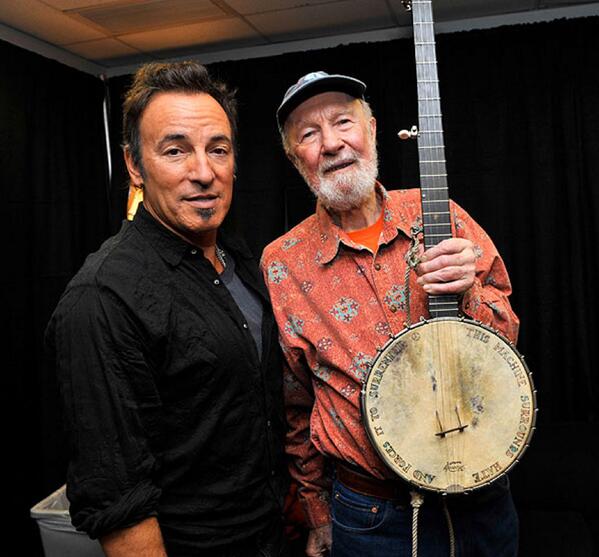
Springsteen and Seeger at Pete’s birthday party in 2009. Copyright Kevin Mazur/WireImage.
I can’t help but think of the contrast between the two lives. Seeger was a singer, songwriter, political and environmental activist for more than 70 years. At 17, he joined the Young Communist League and later the Communist Party; he severed his CP ties in 1949. He started singing with the Almanac Singers in 1941; their work included antiwar and other leftwing political songs. Over the years, he was investigated by HUAC and blacklisted; sang on public television and on college campuses and coffeehouses when he couldn’t get more commercial gigs because of the blacklist. But he never quit songwriting, performing and political activism. He has a huge repertoire of songs and recordings and is considered a national treasure by the public and a role model by many current musicians, including Bruce Springsteen and Tom Morello.
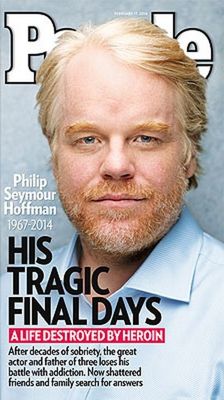
People Magazine cover, 2//12/2014, cropped.
Hoffman was a brilliant, prolific actor with some 50 movies plus TV shows and stage performances on his resume. Recently he played Willy Loman in Arthur Miller’s Death of a Salesman. In 2000 he and John C Reilly performed Sam Shepard’s ultimate sibling-rivalry play, True West, switching roles occasionally thru the run. My favorite Hoffman films are probably Synecdoche, New York, and Capote.
Many writers have commented in the last week about his talent and how he fully inhabited every role. A.O. Scott said he “made unhappiness a joy to watch.” He lived only half the life that Pete Seeger lived. Think how many amazing movie experiences we are going to miss because of the drug habit he kicked and then kicked him back.
We can’t possibly know what demons tortured Hoffman and made him rely on prescription drugs and heroin. But the loss of his life is a loss to us as well as to his family and friends.
There are many unfinished lives in the literary, music and entertainment businesses, and in everyday life. This is a topic that interests me, as I’ll explain below.
Buddy Holly, the early rock and roll musician, died at 23 in a wintry plane crash 55 years ago last week.
John Kennedy Toole, the bizarrely comic novelist and author of The Confederacy of Dunces, died at 32 in 1969.
Janis Joplin, the great blues and rock singer/songwriter, died at 27 in 1970.
Jimi Hendrix, perhaps the world’s best guitarist (and left-handed too) died at 27 in 1970.
John Millington Synge, the Irish playwright and author of Playboy of the Western World, died at 37 in 1909.
John Wellborn Root, the Chicago architect and design partner of Daniel Burnham’s firm, Burnham & Root, died at 41 in 1891. The house where he lived is a block away on my street.
And my sister Lynda died at 27 in 1970 when a drunken driver crashed into the passenger side of the family car, killing her and her 3-month-old baby. Even after four decades, I find it difficult to talk about her death, so few of my friends know the details. Some day I’ll dedicate stories of unfinished lives to Lynda.
* * *
Nancy Bishop’s Journal: My 100th post
This is my 100th post. When I started this blog in July 2012, I wasn’t even sure what I was doing or where I was going. Since then, I’ve become much more focused on writing about the things I love—movies, theater, music, books, art and Chicago stories. It’s been more fun than I thought possible. I feel as if after all those decades of business writing, I’ve finally become a writer.
Those 100 posts average 800-900 words each, so in the last 18 months, I’ve written about 85,000 words, the equivalent of a book, a substantial book at that. In addition, since May 2013, I’ve written 80 stories—mostly theater and art reviews—for Gapers Block, the Chicago-centric website. That’s another ~40,000 words, in case we’re counting. So in ~20 months, I’ve written the equivalent of two books. That’s not bad productivity.
Pop culture pool: Drowning in TV, music, theater
Posted: January 31, 2014 Filed under: Music, Theater, TV, radio | Tags: Grammys, Lookingglass Theatre, Pete Seeger, Rosanne Cash, Sideshow Theatre, The Hypocrites, True Detective 6 CommentsA little of this. A little of that. It’s January. It’s cold and snowy. Have fun while you’re hibernating but don’t stay inside and mope.
True Detective on HBO
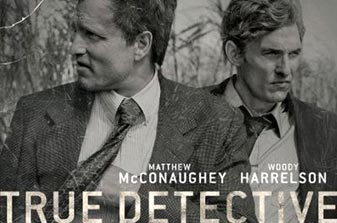 This new HBO series has a dark, ominous atmosphere, clued by the opening theme music and visuals. Woody Harrelson and Matthew McConaughey are detectives with the state CID in rural Louisiana near the town of Erath. Harrelson plays Martin Hart, the senior guy, and McConaughey plays his partner Rustin Cohle, a moody, sometimes poetic detective. (This is another step in the McConaissance, as Tribune writer Christopher Borrelli termed it. McConaughey, who spent years playing in romantic comedies, has now turned into a serious actor. I personally think the change started with his 2011 performance in Killer Joe, the Tracy Letts script that started as a stage play.)
True Detective (in the Sunday night quality TV ghetto) starts out in 1995 like a police procedural when they find the first evidence of a serial killer who performs ritual murders. It’s also a character study of the two detectives, who are seen in 2012, testifying in separate internal investigations about the case.
The show is intense and the plot will keep your attention. But the best thing about the program is the writing. I’ve watched the first three shows and each time I hear several lines I want to write down, usually spoken by McConaughey’s character, who has been through a failed marriage and lost a child in an accident. He’s cynical, brooding and critical of religion. He often offends his partner, who represents the traditional small-town milieu in which they operate.
“Time is a flat circle. Everything we ever done or will do we’ll do over and over and over again.”
“This place is like someone’s faded memory of a town, and the memory’s fading…like there was never anything here but jungle.”
“I think human consciousness was a tragic misstep in evolution. We’ve become too self-aware.”
The screenwriter is Nic Pizzolatto, a former lit and writing teacher at the UofC and DePauw University in Indiana. He left teaching for Hollywood and worked on the AMC show, The Killing, before this. The Tribune article I noted above is a good overview and interview with Pizzolatto. (Registration required to access article.)
GRAMMYs mashups
The Grammys have become more of a variety show than an awards program since most awards are presented off-camera. But the musical performances are often absorbing collaborations between performers you would not often see together on a stage. The most publicized teamups this year were Daft Punk with Pharrell Williams and Stevie Wonder and the super-hot opener by Beyonce and Jay Z. But my favorite was the classical pianist Lang Lang with Metallica. They performed the Metallica song “One,” which was inspired by the Dalton Trumbo book and film, Johnny Got His Gun, a horrifying war story. Footage from the 1971 film formed the backdrop for the Grammys performance. It was a song you had to pay attention to.
Pete Seeger, “a heart of gold and a spine of steel”
Bruce and Pete, 2009
You have to love a radical folk singer who never gives up his activist ideas and activities into his 90s. Pete Seeger was a national treasure and role model and leaves us with so many memories. Like his performance with Bruce Springsteen at the 2009 inaugural concert. (The description of Seeger above is from Springsteen’s New York Times comments on January 29.) And his performances of children’s programs on educational TV when he was banned from the commercial networks. After Pete’s death on Tuesday, a testament to his grittiness surfaced: the transcript of his testimony before the House UnAmerican Activities Committee in 1955. He never took the Fifth Amendment; he persisted in saying the committee had no right to ask him questions about what he belonged to or for whom he played and so he wasn’t answering. He would talk about his songs and that was it. Great reading.
Rosanne Cash’s new album, The River and the Thread
I’ve had Rosanne Cash’s album The List on my iPod for a long time—and full confession: I bought it because she does a duet with Bruce Springsteen on “Sea of Heartbreak.” It’s a fine album and now I have her newest as well. It’s The River and the Thread, an excellent album of original songs by Cash and a few collaborators including her producer husband John Leventhal. The thread follows the towns along highway 61, the main highway from Memphis to New Orleans, also famous as a musical route because of the many songs written about it, including Bob Dylan’s “Highway 61 Revisited.” Most of the songs have road references and a strong sense of place. So far, my favorites are “Modern Blue” and “World of Strange Design.” There are many layers of culture and memory in these songs, plus the sound and the beat are more vibrant than her previous work. Rosanne Cash is worth a listen.
ON STAGE: The Golden Dragon by Sideshow Theatre
This is a short, fast-moving, sometimes puzzling play that I called a dark fairy tale. Here’s how my Gapers Block review begins:
“The Golden Dragon by German playwright Roland Schimmelpfennig is a fanciful story presented by Sideshow Theatre Company. It’s a sort of dark fairy tale about the workers, residents and guests at a Thai/Chinese/Vietnamese fast food restaurant in a warehouse building in a certain global city. We are not sure where, but it doesn’t matter. The play is made up of the intertwined stories of 15 or 20 characters, played by five actors who quickly move from role to role without regard to gender, nationality or costume.“
I puzzled over it before writing my review, but it is really a fun and adventurous outing by Sideshow and displays the versatile acting chops of the five performers. The Golden Dragon runs until February 23 at Victory Gardens’ Richard Christiansen Theater.
The Little Prince by Lookingglass Theatre
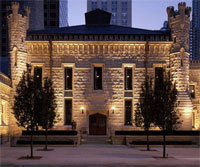
Lookingglass’ home
The Little Prince is adapted from the beloved story by Antoine de Saint-Exupery and Lookingglass gives the wonderful story its due with a terrific production. I’ve loved this story forever and enjoyed reading it with my children as well as reading it in Spanish and French when I was studying those languages.
The play is produced by Lookingglass with the Actors Gymnasium, so there is plenty of flying, zooming and energetic action on the deceptively simple set. The play is poetic, visually beautiful and emotionally satisfying. It’s extended until March 16 at Lookingglass’ Old Water Tower space.
Tennessee Williams Project by The Hypocrites
The Hypocrites is doing a trilogy of mostly unproduced Tennessee Williams plays at their space in the Chopin Theatre. The first—Tell Sad Stories of the Deaths of Queens—is set in the rather baroque lobby area in the downstairs space. For the second—The Remarkable Rooming House of Madame Le Monde—the audience moves into a creepy London boarding house set—and finally to a St. Louis hospital ward for The Big Game.
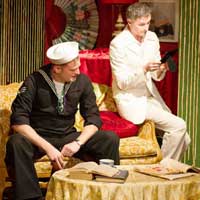 Director Matt Hawkins takes the same cast thru each transformation. The first play is the longest and the most successful. Patrick Gannon plays a wealthy transvestite who brings home a sailor, played by Joseph Wiens. The drinking, seduction and interaction is quite intense and well performed by the two actors. The second play seemed most unlike any Tennessee Williams play I have ever seen and had a strong Brechtian flavor—and for a moment, took a Sweeney Todd turn. It was, I can only say, odd. The third play is about a young man with congenital heart disease and his two roommates, one a football player on his way to the titular game, the other with a severe brain disease. The play is fraught with disease and death, as are many of Williams’ plays.
The trilogy is an interesting, if uneven, evening of theater. The Tennessee Williams Project runs until March 2.
And et cetera….
I’ve seen a bunch of movies lately too, but I wrote about Movies, Movies, Movies last week, so I’ll save these for my next film fix: The Wolf of Wall Street, Princess Mononoke, Captain Phillips and Like Father, Like Son. And probably more.
 nancy bishop's journal