Gapers Block recap: Art and a little more
Posted: August 28, 2013 Filed under: Art & architecture, Movies, Theater | Tags: American Made Movie, Expo Chicago, Gapers Block, Solti Park, Strange Bedfellows Theatre Leave a commentHere are a few events I’ve been writing about recently on Gapers Block to pique your interest in current and future art events in Chicago.
Art Around Town
Borders, 26 Icelandic Sculptures, in Solti Park
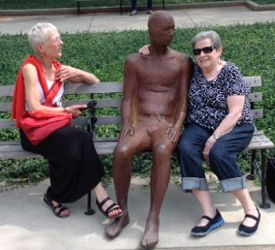
Next time you’re near the Art Institute, meander south to Solti Park at the southeast corner of Jackson and Michigan. You’ll find these pairs of figures – one iron, one steel – that seem to want to talk to you or make you sit down and reflect. And you can sit down next to one of them and look into his eyes. My friend Linnea and I had a conversation with one of them. The Icelandic artist, Steinunn Thórarinsdóttir, modeled the figures after her oldest son. Read my article.
Expo Chicago to Display Art from 120 Galleries
The massive annual art exhibition known as Expo Chicago will return next month with displays from 120 galleries at the Festival Hall at Navy Pier. There will also be contributions from other organizations and a citywide week of arts and culture called Expo Art Week. Included in the week’s activities will be museum and gallery exhibits, music, theater and dance performances. The exhibition is open for public viewing September 20-22. See my Gapers Block story for more info.
Constantly Consuming Culture to Showcase Work of Little-Known Chicago Artists
It may not attract curators and collectors from around the world, but this exhibit September 7-13 at 222 N. DesPlaines St. should be very intriguing. It will show the work of eight local artists, who work in painting, sculpture, found art and video art. Who knows? You may fall in love with a piece of art that you can actually afford to buy. Because the expenses of mounting the show are funded by crowdfunding, the artists will receive 100 percent of any sales at the show. Read about it here.
Theater
Strange Bedfellows Theatre Invents Van Gogh
Strange Bedfellows, another one of our creatively crazy storefront theaters, just finished a run of Inventing Van Gogh, an imperfect but intriguing story about Vincent Van Gogh’s rumored last painting, another of his self-portraits. Strange Bedfellows’ motto is “Redefining mischief,” which makes me want to see what their next play promises. See my Inventing Van Gogh review.
And a movie
American Made Movie Tells Story of Manufacturing Decline, Revival

This 82-minute documentary opens this Friday and runs for a week at AMC Loew’s 600 N Michigan. It repeats the familiar story of US manufacturing’s decline over the last 30-40 years and suggests a rather naïve solution: Buy local, buy American and that will build a new domestic manufacturing base. The story is told with some compelling personal stories and anecdotes about half a dozen businesses, large and small, that changed their practices to survive. Buy local and buy American are practices that some of us can follow. But the big-box stores sell lowest-cost products made overseas and those are the products that many American families can afford. So this film, while well made, is “preaching to the choir.” Read my review.
Image of stars and stripes jewelry by Merrily Made Jewelry, courtesy of the producers; see review for the jewelry story.
This weekend: Chicago
Posted: August 23, 2013 Filed under: Art & architecture, Chicago, Food, Movies, Music | Tags: Bayard Rustin, Bruce Springsteen 1 CommentSummer in Chicago is drawing to an end, but there are great outdoor and indoor activities in my city this weekend.
Festa Italiana
 Summer is the time for street and neighborhood festivals. This is one of my favorites. It’s in little Italy, the old Italian neighborhood near the UIC campus. Festa Italiana runs through Sunday on Taylor Street between Racine and Ashland. There’s food from all the great Taylor Street restaurants and entertainment ranging from Italian-surnamed crooners to new bands such as This Must Be the Band, Acoustic Generation and my favorite band name, Inbound Kennedy.
The highlight of the festival, for some, will be the meatball-eating contest. Personally, I’m grossed out by food-gorging displays. The winner will be the person who eats eight meatball-slider sandwiches in two minutes. (That is disgusting.)
Lill Street Art Festival
The Lill Street Art Center (which started out on Lill Street) is celebrating its 10th year in its Ravenswood location, at the corner of Ravenswood and Montrose. The opening reception tonight will celebrate Best Served Hot: Ceramics for the Coffee Ritual, cosponsored by Intelligentsia Coffee. Saturday will include an open house and block party. Lill Street Art Center offers classes, a gallery and studio space for artists in ceramics, metalsmithing and jewelry, painting and drawing, printmaking, textiles, glass, digital arts and photography. I treasure a few pieces of ceramic jewelry from Lill Street.
Movies
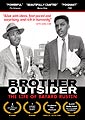 In honor of the 50th anniversary of the 1963 March on Washington and Martin Luther King’s “I have a dream” speech, you should watch the documentary about Bayard Rustin, the strategist and activist who organized the march. He was a key adviser to MLK until he was asked to leave (or was pushed out) because of his political past (socialist) and sexual orientation (gay). The film is Brother Outsider (available on DVD and streaming). It’s an excellent view of Rustin’s background, leadership and his activist life after 1963. President Obama will award a Presidential Medal of Freedom to Rustin posthumously. It’s bloody well time.
The Huffington Post has a good article on Rustin by Peter Dreier, E.P. Clapp Distinguished Professor of Politics at Occidental College.
Anna Karenina, the gorgeous Joe Wright version of Tolstoy’s tragic novel with a script by Tom Stoppard, is showing occasionally on HBO right now. If you haven’t seen it, do. It’s creatively staged–and staged is the right word because much of it is set in an old theater. The railroad scenes, as ice-encased trains arrive in Moscow or St. Petersburg, are not to be missed.
Eats
Have you been to Big & Little’s? It’s a fine place to stop for a fish taco, a fried oyster or shrimp po’ boy (my favorite) and many varieties of burger and sandwich choices. Also foie gras & fries or truffle fries. Yum. Delish. Not fancy. Big & Little’s is at 860 N Orleans, just north of Chicago Avenue. There’s a tiny parking lot and you can sit inside or outside (as I did today) or carry out. Cash only. It’s been featured on the Food Network’s Triple-D (Diners, Drive-Ins and Dives) and on Chicago’s Best on WGN and on Check Please on WTTW.
Wish I was at the Jersey Shore
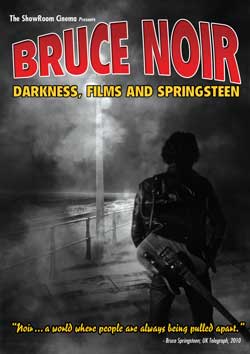 I often wish that and I occasionally go to that neighborhood we call Springsteenville: Freehold, Asbury Park and West Long Branch, New Jersey. This is one of those weekends. There’s a Bruce Noir Film Festival in Asbury Park. The five films being shown are those he’s mentioned in interviews or in songs.
Since I can’t be there, I’ll find another way to watch them. The films are:
- — Gun Crazy (1950; on which Springsteen based his song “Highway 29” from the Nebraska album)
— Badlands (1973; based on the Charles Starkweather murder spree story, which Springsteen tells in the song “Nebraska”)
— Out of the Past (1947; a Robert Mitchum film about a private eye)
— Atlantic City (1980; a Louis Malle film with script by playwright John Guare, starring Burt Lancaster and Susan Sarandon)
— Thunder Road (1958; Robert Mitchum plays a bootlegger trying to save the family moonshine business from big-city gangsters; lots of great road footage as Mitchum drives a “tanker,” a car modified to carry alcohol in the fuel tank)
Weekend focus: Chicago
Posted: August 17, 2013 Filed under: Chicago, Movies, Music, Politics, Theater Leave a commentIt’s Air and Water Show weekend
 I can hear the airplane acrobats flying very very close to my roof. If you come to the lakefront for the show, take public transportation. Traffic will be bad before and horrible after the show each day. And parking is impossible in that neighborhood. Trust me. It’s my neighborhood and I know.
Photo by Runaway Wind from thechicagoist.com. For five reasons to go even without the Blue Angels, see DNAinfo.com.
Movies
The Act of Killing. This is a new documentary about the genocide in Indonesia in the late 1960s. It’s not your standard-issue genocide doc. No blood. But it’s a very surreal, gripping film — I’ll write more about it later. It’s showing at the Music Box for a few days. This film will generate lots of buzz, heated conversation, and certain award nominations
Twenty Feet from Stardom. This great music doc about female backup singers is showing at Landmark Century Centre for at least another week. I wrote about it recently. It’s a grand, joyful story about these terrific performers whose voices made all the difference for many big-name musicians. But they never really got the credit or success they deserved. This film showcases their personalities and their voices.
Picasso Baby. Another plug for this intriguing performance video by Jay Z. It will only take 12 minutes of your time to find it and view it. And it will make you think about performance art and celebrity.
Theater
Invasion is showing at Silk Road Rising in the Methodist Temple building on Washington and Clark. It’s an imperfect but thought-provoking play about Arab-American identity and assimilation.
Reading
Don’t miss the Peter Maass article on Edward Snowden and how documentary filmmaker Laura Poitras “helped Snowden spill his secrets.” As she went about her work, she was subjected to incredible surveillance by the US government. The article is in tomorrow’s New York Times Magazine and has been available online for several days. It’s an excellent article with examples of how journalists are pressured by their own governments. Poitras has been working with Glenn Greenwald, who broke the Snowden story in The Guardian.
Movie Night: Springsteen and I, 20 Feet From Stardom, Picasso Baby
Posted: August 15, 2013 Filed under: Movies, Music, Rock and roll 5 CommentsTwo music documentaries made me very happy lately. Twenty Feet From Stardom will appeal to a broad range of movie and music fans. The Springsteen film is more for music fans. I’ll also add a lagniappe: a 10-minute performance art video from Jay Z.
Springsteen and I
Springsteen and I is a crowdsourced film, composed mostly of home videos contributed by Springsteen fans who describe what the music of Bruce Springsteen has meant to them. The director, Baillie Walsh, a British music video and film director, apparently isn’t a Springsteen fan. These facts promised something less than a satisfying film experience. Ridley Scott was listed as a producer, however, which made me feel a little more confident. I didn’t have high expectations for this film, but as a Springsteen obsessive, I could hardly miss it.
 It turned out to be a fun and interesting film with many delightful film clips, punctuated by concert footage, and finished off with a mini-concert. At the end of the film, we learn that Bruce has seen the film and invited a small group of contributors to meet before a concert. Since he has seen their film statements, he knows who each person is and he comments to each of them about their experiences when they arrive. Springsteen is a performer of magical qualities, but he is not a slick, eloquent speaker. He often stumbles a bit and has a silly giggle. So it’s fun to see him struggle to tell his fans how much their stories mean to him.
The film is full of funny and poignant stories. Like these.
A woman sitting in her car asks, “See all these CDs?” (25 or 30 of them are lined up across visors on both sides of car.) “These are all Bruce Springsteen CDs…. When my three boys are in the car, they know we’re going to listen to Bruce Springsteen and nothing else.… And my proudest moments are when they sing along with me – because they know the words too.”
A couple sitting on a park bench remember when he, an Elvis impersonator, was invited up on stage from the pit section. Elvis takes the microphone for not one, but two, songs and was starting on a third when Bruce gives him the evil eye and he hands the mic back. Bruce thanks him by saying “Philly Elvis! I don’t know where the f**k he came from.”
A woman in Denmark talks about how she was touched by seeing Bruce and his wife Patti perform together. Her favorite song is “Red-Headed Woman,” which Bruce wrote about his wife. I’ve never heard it sung live, but I have it on a bootleg. In this case, the director inserts a music clip where Bruce introduces the song with a little lesson on the performance of a certain sex act. I don’t think that’s what the Danish fan intended, but you can find the lyrics here.
A Londoner who is not a fan accompanies his hardcore fan wife to concerts all over Europe. He pleads with Bruce to play shorter concerts.
John, a groundskeeper at the Copenhagen stadium where the band will play, speaks movingly and in a rough-around-the edges style (and in excellent English) about how important Springsteen’s music has been to his life. He’s one of the fans who meets Bruce at the stadium. Bruce recognizes him when he walks in and he takes a leather cuff off his wrist and puts it on John’s. “This a sign of brotherhood,” he says.
My friends asked why I didn’t submit my own video. I did bare my soul about what his music means to me here and here.
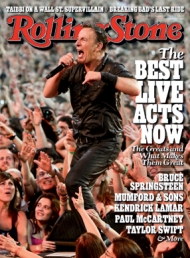
About the time the film was playing in Chicago, Springsteen appeared on the cover of Rolling Stone. He was named first in the 50 Greatest Live Acts in 2013. I could have written that myself, after having seen 30-some live concerts. He is an amazing performer and this film gives you a real sense of how that affects his fans.
Twenty Feet from Stardom
 Bruce Springsteen
  Merry Clayton
  Darlene Love
If you’re having a bad day, this would be a great movie to see. And if you’re having a fine day, this will make it even better. Twenty Feet From Stardom is the story of the backup singers who provided the essential background sound for some of the greatest acts in rock and roll history. The Rolling Stones, Bruce Springsteen, David Bowie, the Talking Heads, Michael Jackson, Elton John. Several of the singers are profiled in the film and there are many interview clips from the stars they worked with. You’ll see Darlene Love, Merry Clayton, Claudia Lennear, Lisa Fischer and Tata Vega, among others. Most of the backup singers did not succeed as solo acts, despite the incredible quality of their singing voices and performance style. One of them, Darlene Love, was inducted into the Rock and Roll Hall of Fame in 2011, probably the highest level of success for any of them.
Despite the disappointments of the “20 feet” distance, this is a joyous film. You see the stars performing in their younger days and today when they still love what they do. Most of them came from families with strong church and gospel singing backgrounds and that celebratory sound comes through in every note.
This 90-minute film is playing right now and continues through next week at the Landmark Century Centre in Chicago and at one cinema in Highland Park. (Screen shots above by Nancy Bishop.)
Picasso Baby
This is my lagniappe. It’s an 11-minute video of a song from Jay Z’s new album, Magna Carta Holy Grail. Don’t tell me you don’t like hip hop or Jay Z. This is a mini concert in which you can see his charm and charisma up close. In the short intro to the film, he talks about a concert being performance art. The smaller the venue, the more the audience affects the performance. This performance was filmed at Pace Gallery in New York’s Chelsea district.

Photo copyright Uptown Magazine.
The video is about five minutes of Jay Z singing and interacting with a few dozen artists, musicians and fans (only cool-looking fans), one at a time. The first part of the song references art, artists, museums and celebrity but the second, angrier, part talks about crime and punishment. The rest of the film features final comments from the participants, who are identified on screen as they speak or move.
Participants include actor Alan Cumming, filmmaker Jim Jarmusch, actor Adam Driver, artist Andres Serrano, performance artist Marina Abramovic, writer Judd Apatow, actors Jemima Kirke and Rosie Perez, and many other familiar faces. Abramovic is the artist who performed “The Artist Is Present” at the Museum of Modern Art. People waited in line for hours to sit in a room with her, while she stared at them. She has an intense, mesmerizing stare, so I can see that this worked.
The song ends with this line: “What’s it gon take for you to see, I’m the modern day Pablo, Picasso, baby.”
Watch Picasso Baby here.
Weekend focus: Chicago
Posted: August 10, 2013 Filed under: Chicago, Movies, Theater | Tags: Chicago Film Lovers Exchange 2 CommentsWhat’s better than a gorgeous summer weekend? Here are some things I’m checking out and you can too.
 Farmers markets on Saturday. Corn, tomatoes and peaches, yes.
Movies. Lots of things in theaters, but if you’re staying home, I strongly recommend two political films that are streaming on Netflix and Amazon. Brother Outsider: The Story of Bayard Rustin, is a biopic about the little-known civil rights and gay activist who was a force in organizing the MLK 1963 March on Washington. Spike Lee’s Do the Right Thing still holds up as a story about race relations and attitudes in Brooklyn. My film group discussed it this week (Hi, CFLXers!) and found it still very potent.
Community events. Ginza Festival at Midwest Buddhist Temple. Japanese food (grilled teriyaki chicken is a specialty), artisans and entertainers (taiko drummers, classical and folk dance). Saturday and Sunday.
Theater. I recommend Slow Girl at Steppenwolf — a thought-provoking, quiet play with terrific performances by William Petersen and Rae Gray. Also Inventing Van Gogh at Strange Bedfellows. Here’s my review of the latter. And I recommend Rooms: A Rock Romance at Broken Nose Theatre. I loved that one.
I don’t recommend Belleville at Steppenwolf. I know it got great reviews, but to me it was tedious. And the knife thing? Really. That was Chekhovian overkill.
Want to argue with me about anything? Come on. You must disagree with some of my opinions. Comments, please!
Molière to Levon on stage & screen
Posted: July 14, 2013 Filed under: Movies, Music, Theater | Tags: Court Theatre, Levon Helm, The Artistic Home, The Band, The Last Waltz 3 CommentsMore theater suggestions, one from a Gapers Block review, plus two music films. My rock and roll and film commentary is coming back. I’m working on something now about rock lyrics — and an essay on art and fashion is on the horizon.
Molière in Hyde Park
Not only is the Court Theatre’s new play showing in Hyde Park, Court’s home territory. Director Charles Newell has set this new production of Molière’s marvelous Tartuffe in modern dress in Hyde Park/Kenwood. (His name was really Jean-Baptiste Poquelin; Molière was his stage name.) The delicious touch is that Newell has cast the same ensemble of actors, mostly African-American, to play Tartuffe as performed The Misanthrope, the first play in the Court Molière Festival. Tartuffe is the religious fanatic hypocrite who almost takes over Orgon’s family and wealth.
The acting is superb and the cast does a splendid job with Moliere’s witty dialogue. The mansion setting and contemporary costuming are beautiful … with the possible exception of Mariane’s and Valère’s outfits. Mariane, Orgon’s daughter, wears some silly-looking pink frocks (to emphasize her youth?) while Valère, her love interest, wears shorts he would never wear on the streets of Hyde Park and a White Sox cap that doesn’t know where to go.
The two-hour-plus-intermission play is immensely entertaining. The translation by poet Richard Wilbur is the gold standard and isn’t hurt by some modern interpolations. The Tartuffe run ends this weekend.
Beaten at The Artistic Home
Beaten is a new play by Scott Woldman at The Artistic Home, a storefront on Grand Avenue. It’s a family drama about three generations of women living in the same home and provides meaty roles for Kathy Scambiatterra, Kristin Collins and Kathryn Acosta as grandmother, mother and daughter.
 My review begins:
“Put three generations of women in a house together and you’re sure to have an eruption of personalities; eventually, long-kept secrets slip out and lies are undone. Beaten, a world premiere drama by Scott Woldman, gives the Artistic Home actors a searing and emotionally charged script, and they all come through with fine performances.”
I also noted that the play “was inspired by a 2009 workshop at Chicago Dramatists where female actors expressed their dissatisfaction with the lack of challenging parts for women; when asked to name their dream roles, all named parts written for men. Playwright Woldman listened.” (Photo courtesy of The Artistic Home; Scambiatterra and Acosta.)
The play runs at The Artistic Home, 1376 W Grand Ave, until August 11.
Read the complete review here.
Two new music documentary films
20 Feet From Stardom is about the mostly anonymous female backup singers behind some of the greatest bands of the 20th century. The 90-minute film directed by Morgan Neville features singers such as Darlene Love, Merry Clayton and Claudia Lennear, plus interviews with some of the musicians they performed with. It’s at the Landmark Century Centre Cinema now but it’s probably one of those films that will disappear from theaters after a short run.
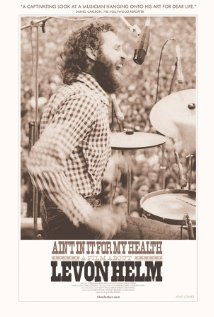 Ain’t In It for My Health is a film about Levon Helm, the late great drummer and singer with The Band. You’ve heard him on songs like “The Weight” and “The Night They Drove Old Dixie Down.” Levon died last year of throat cancer and was a musician until the end although he lost his voice in 1998. His Midnight Rambles at his home and studio in Woodstock, NY, were famous. The Levon film had three showings at the Music Box last month and I missed all of them so now I have to find it elsewhere or wait for the DVD to be released.
You can find Levon’s music on levonhelm.com and if you want to see him in top form, watch the 1978 documentary The Last Waltz, directed by Martin Scorcese.
Czech Dream + Pussy Riot: Political reviews
Posted: June 15, 2013 Filed under: Movies, Politics, Punk rock 3 CommentsCzech Dream – a hoax reviewed
The Czechs got punked in this smart and funny documentary set in 2003 Prague. It was created by two film students, who get government support to create the documentary. Documentary filmmaker Morgan Spurlock (Supersize Me) introduces the film. He says admiringly, “I wish I’d thought of it.”
 The two filmmakers (Vit Klusak and Filip Remunda) go through the elaborate process of launching a new hypermarket for the shopping-crazed Czechs (who still remember waiting in long lines for basic necessities in the Communist era). Vit and Filip, as the store managers, get personal makeovers, pose for corporate portraits, and work with the local office of a well-known global advertising agency (BBDO). The agency (they’re in on the hoax) creates logos, signage, clever anti-consumerist advertising, giant billboards, flyers, even fake product labels for house-branded products. The campaign teases about the nature and location of the hypermarket, named Czech Dream (Cesky Sen) as a result of a focus group process.
The film ties in with the 2003 Czech Republic referendum on the question of joining the EU. The referendum passed with 77 percent of the votes and the country joined the EU in 2004. The political overtones of the film are probably more apparent to Czechs than they may be to viewers today.
On opening day, May 31, 2003, thousands of people gather hours before the store opening. Fencing keeps them a long hike from the colorful and massive storefront, which they can view in the distance. Finally, after long opening ceremonies and a bungled ribbon-cutting, the crowd is allowed to enter. The crowd trudges across the field toward the store, including families with baby carriages, and elderly people using canes and walkers.
When they get there, they find it is a Potemkin village. A storefront with nothing behind it.
The reactions of the prospective customers are most interesting. Some are really angry. Some blame the government. Some get the joke and enjoy it.
Both filmmakers have continued to make films in the Czech Republic since then. They must have learned a lot about audiences from this process – and so will you.
Pussy Riot, A Punk Prayer – an activist’s review
We’ll stay in eastern Europe for this 2013 film: a profile of the feminist performance-art collective known as Pussy Riot, which premiered on HBO this week. Because of their February 2012 performance on the altar of a Moscow church, a protest against Putin’s reelection, they were arrested, tried, found guilty and sentenced to two years in a penal colony.
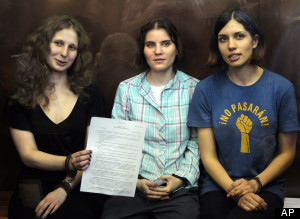
L to R, Masha, Katia, Nadia (Maria Alekhina, Yekaterina Samutsevich, Nadezhda Tolokonnikova)
Nadia and Masha are still serving prison terms; Katia’s sentence was suspended and she was released. They have become poster children for free speech all over the world. They are activists who use art to communicate and bring about political action. They were defiant to the end. “Come and taste freedom with us,” was Nadia’s closing remark at the trial.
In the film, religious people tell the filmmakers how much they were offended, even insulted, by Pussy Riot’s protest on the altar. Russia supposedly is a secular state with a secular constitution, according to one of the defense lawyers. But they were charged with blasphemy. Katia’s sentence was suspended because she had not actually done anything on the altar; she was taken away by police before being able to perform. She continues the Pussy Riot activities while Nadia and Masha serve their terms.
Pussy Riot has many more members who demonstrated in Moscow wearing neon-colored balaclavas and tunics. One of their early protests was “kiss a cop.” The documentary shows video of members attacking Moscow police with kisses. The day of the sentencing, many protestors wearing trademark balaclavas protested around the trial site. Their protests involved climbing on to the court building, shouting and singing their political messages and punk lyrics.
I wrote about Pussy Riot last fall and showed this photo of the three defendants; Nadia is wearing her No Pasaran shirt. @free pussy riot is on Twitter and has a multilingual website http://www.freepussyriot.org To my great joy, #nopasaran is a trending hashtag on Twitter, almost 70 years after the Spanish Civil War.
Yes for “No” + Holy Motors + Goodbye Solo
Posted: April 9, 2013 Filed under: Movies, Politics | Tags: Chile, Gael Garcia Bernal, Goodbye Solo, Holy Motors, No, the film 1 CommentIn my continuing quest to tell you about pop culture that the mainstream media generally ignores, here are three terrific films. One is still in theaters and the other two are available on DVD.
No. 2012. Directed by Pablo Larraín. Spanish with subtitles. Nominee for best foreign film Oscar. Run time 1 hour, 45 minutes. This film will certainly be on a lot of best-of-2013 lists and it’s still in theaters.
September 11 was a day of infamy for Chile long before it was for the US. On that date in 1973, the democratically elected socialist government of Salvador Allende was overthrown in a military coup led by General Augusto Pinochet, who led Chile’s government for the next 15 years. (Allende was either assassinated or committed suicide, depending on whose side you believe.) This historical background is introduced briefly at the beginning of the film, which is fact-based.*
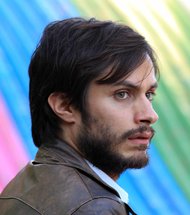 In 1988, Pinochet agrees to international pressure for Chile to have a plebiscite on whether he should govern for another eight years and a Yes/No election is planned. Both sides are to have 15 minutes of national television time each night. (What a brilliant way to solve the campaign finance problem.) The leftists on the No side want to make TV commercials showing the torture, murder and disappearances of the Pinochet regime. But René Saavedra, a clever advertising executive, played by Gael Garcia Bernal, reluctantly agrees to help the left with its No campaign. People either don’t remember or don’t want to remember those days, he tells them. They want to believe they will be happy in the future. So the No campaign mounts a “Happiness Is No” campaign, complete with rainbow logos, theme songs, banners, parades and t-shirts. (Photo by Tomás Dittburn/Sony Pictures Classics)
You could argue this is a putdown of commercial advertising invading political discourse. Or you could just sit back and enjoy this clever satire on politics. The No side wins the plebiscite and the film ends in celebration. In fact, Pinochet had a behind-the-scenes role for years afterward.
The film is shot in smudgy color that feels like you’re watching an old videotape. There are other well-known Latin American actors besides the oh-so-darling Garcia Bernal, whose character is a mix of naïve and radical. You’ve seen him in Y Tu Mamá También, The Motorcycle Diaries, Bad Education, The Crime of Padre Amaro, and many other Pedro Almodovar films.
* The film has generated some controversy in Chile, of course. Described here. http://nyti.ms/12G358m
Holy Motors. 2012. Fantasy drama film written and directed by Leos Carax, starring Denis Lavant. French with subtitles. Get the DVD. Run time just under 2 hours. (July update: Holy Motors is now available streaming on Netflix.)
I hardly know where to start describing this. Lavant is M. Oscar, who lives 10 or 12 parallel lives or stories throughout the day and night of this film. He rides from gig to gig throughout Paris in a white stretch limo, which serves as dressing room, wardrobe and prop closet. His chauffeur Celine, a lovely woman with silver hair, apprises him of his appointments and keeps him on schedule.
He emerges from the limousine once as an old beggar woman, and again as a madman (M. Merde) who eats flowers stolen from a street market, then runs through the famous Paris cemetery, Pere Lachaise, where instead of names of famous people on tombstones, you see “visit my website at xxxxxx.com.” Other incarnations involve murder, simulated lovemaking in spandex, and a father-daughter interlude. You see why I said there’s no way to describe this film. Suffice to say, it’s a mesmerizing and beautiful film and you’ll be rewarded if you have patience. And … the title Holy Motors will make sense at the end. Kinda.
Roger Ebert gave it 3.5 stars in November and ended his review this way. “Here is a film that is exasperating, frustrating, anarchic and in a constant state of renewal. It’s not tame. Some audience members are going to grow very restless. My notion is, few will be bored.”
Goodbye Solo. 2008. Written and directed by Ramin Bahrani. On DVD. 90 minutes.
I’ve spent a lot of time in the Piedmont-Triad area of central North Carolina. So I was interested in this film set in Winston-Salem and Blowing Rock, a beautiful state park where I’ve hiked with my son. Solo is a Senegalese immigrant taxi driver who befriends William, a depressed old man, who hires Solo for a one-way trip to Blowing Rock.
Solo arranges to drive William whenever he calls the taxi company and tries to involve him in life in Winston, including meeting his pregnant wife and her daughter Alex. Solo worries about William’s plan for the trip to Blowing Rock, where it’s so windy “that if you throw a stick, it will fly back to you.” But he and Alex drive William to the park, and the last half hour involves the beautiful drive on the Blue Ridge Parkway and the visit to the park.
This is a small film, a sweet film (despite the ending). In a way, it represents how the area is changing with new immigrants like Solo making a home and a life. It’s not set in a taxi; you get acquainted with a lot of Winston-Salem and the region. This is Bahrani’s third film and I will be interested in seeing his other work.
Oh, Roger. The balcony is closed
Posted: April 5, 2013 Filed under: Digital life, Movies | Tags: Movies, Roger Ebert 2 CommentsI’m a cancer survivor. Twice. 16 years and counting. So I had particular empathy for Roger Ebert’s decade-plus battle with cancer. Despite his pain, many surgeries, and finally his inability to eat, drink or speak, he never flagged in his writing, film reviewing and outrage at political insanity. In 2012, he reviewed 306 films, his record. When he died yesterday, his tweet count was over 31,000.
He didn’t invent it, but he thrived on the internet, tweeting and blogging madly. He was one of the first people I followed on Twitter (just after Bruce Springsteen, who actually doesn’t tweet) and found him endlessly provocative. He didn’t just review and write about films. He also commented upon and provided links to items on important social issues and political controversies. He was an unreconstructed liberal and I valued his comments.
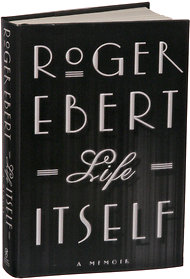 Something Roger said in his memoir helped get me started on this blog. I quote this on my What I Believe page. He said his blog taught him how to organize the accumulation of a lifetime. ”It pushed me into first person confession, it insisted on the personal, it seemed to organize itself into manageable fragments.” For Ebert, his blog was the beginning of writing his memoir, Life Itself (2011, Grand Central Publishing).
I did meet Roger and his wife Chaz once years ago at LAX. I was waiting to get home from a business trip and I knew they had been doing something much more glamorous in Hollywood. I had the opportunity to speak to him and I said something silly about a review he had written about a film I liked. I wished we could have had a longer conversation.
I regret not taking any of his film classes but reading his reviews ultimately was like listening to a film scholar. He was a humanistic reviewer. He wrote thoughtfully about the characters in the films he reviewed and often expressed insights that made a film and its people more meaningful. Recently I wrote here about This Must Be the Place, which is admittedly a rather weird film (just my type). A lot of reviews were negative or neutral at best. But Roger made an effort to help us understand Cheyenne, the aging glam rock star, and his sadness, a part totally inhabited by Sean Penn. https://nancybishopsjournal.com/2013/03/21/whats-showing-not-for-the-faint-of-heart/
Roger introduced me to many types of films, and showed me how to appreciate the skills of directors as well as cinematographers and other production staff. He wrote about the work of Andrew Sarris, whose concept of the director as “auteur,” or the true author of the film, is important in contemporary film viewing and in encouraging us to follow the work of certain directors.
I always loved movies, from the time I was old enough to walk to the Montclare Theater on Grand and Harlem with my friends Carol and Dolores. When we were in high school, we went to the Mercury Theater on North Avenue and Harlem, where we could smoke in the bathroom and flirt with boys from other high schools. Movies were more than entertainment.
After I subscribed to Netflix and had access to its large film archive, I was able to visit or revisit many classic, foreign and indie films that I had either seen in decades past or missed entirely. I started catching up on the great directors I had missed, reading Roger’s reviews as I went along. It was fun to read his early reviews of great directors like Altman, Antonioni, Bergman, Bunuel, Fellini, Kieslowski, Lang, Scorcese and Welles and later reviews of some of my favorite contemporary madmen like Pedro Almodovar, Guy Maddin, Christopher Guest, Jim Jarmusch, Kevin Smith and Quentin Tarantino. (What would I do without imdb.com, the wayback machine for movie junkies?)
Of all the obits and encomiums about him, one of my favorites is the editorial on the back of the special Roger Ebert wraparound section in today’s Chicago Sun-Times. It’s titled “Do you love what you do?” and describes how Roger did. And we all should.
There are many fine film reviewers today, like Tony Scott. Peter Travers, David Edelstein, Dana Stevens and Mick LaSalle. But none of them will replace Roger. Because the balcony is closed.
———————————–
If you’d like behind-the-scenes insights about the Siskel and Ebert TV era, I recommend an ebook titled Enemies, A Love Story: The Oral History of Siskel and Ebert by Josh Schollmeyer. It’s a series of interview quotes about every aspect of their TV history from many of the people they worked with. The ebook is published by Now and Then Reader, which publishes original short-form nonfiction in digital formats. See their site at nowandthenreader.com.
Coriolanus on stage and screen
Posted: April 3, 2013 Filed under: Movies, Theater | Tags: Coriolanus, Ralph Fiennes, Shakespeare, The Hypocrites Theatre Leave a comment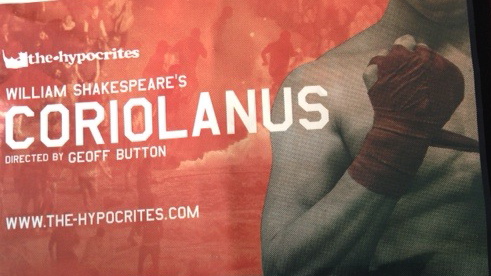 The Hypocrites is presenting an inventive version of a not-often-performed Shakespeare play, Coriolanus, at Chopin Theatre. The audience sits around the small performing space and feels very much involved in the verbal and physical confrontations that occur. (I’d call it theater in the round, but that suggests a stage with people separated from the actors. We were really on stage. I had to keep my feet tucked under my chair to keep them out of the action.)
You get a real sense of the combination of warmth and animosity from the verbal and physical byplay between the Roman warrior Caius Martius (later Coriolanus) and Aufidius, general of the Volscians, enemy of Rome. The cast is uniformly good and the fight choreography is well done, if occasionally threatening to the audience. One aspect of costuming looked strange to me. The Roman elites are wearing suits that made them look like carnival barkers or English skiffles musicians. Plaid trousers, big patterned lapels and even some cummerbunds. Very odd look. Or perhaps I was missing the meaning that the costume designer intended.
The play is trimmed from its Shakespearean length to a tight hour and 45 minutes, with no intermission. Coriolanus runs at The Hypocrites until April 23, so you have no excuse for missing it.
So I went home that day, after a Sunday afternoon performance, thinking of the film version of Coriolanus that I had seen recently. And I found it was streaming on Netflix. So I watched Coriolanus for a second time that day. The film is just over two hours and stars Ralph Fiennes* as Coriolanus, Gerard Butler as Aufidius and Vanessa Redgrave as Volumnia, Caius Martius’ ferocious mother.
The film is terrific and I recommend it highly, either with or without the stage version. The film is set in the current era, with soldiers in camouflage wear and characters viewing battlefield coverage and Roman protestors on Fidelis TV. It was filmed mostly in Serbia and has the film advantage of showing Caius Martius, banished from Rome (yes, I’ve skimped on the plot details here), trudging down highways and fields toward the Volscians.
Coriolanus is one of Shakespeare’s last plays but it is not usually ranked among his best, even though T.S. Eliot famously preferred it to Hamlet. But the film version is gripping and worth watching.
Caius Martius is not a reflective person. He is dominated by his mother, who treats him like a child warrior. Harold Bloom describes him as a “battering ram of a soldier” and does not include him in his description of Shakespearean characters who “invent the human.” Bloom describes Hamlet as the avatar of the man who reflects upon and celebrates his inner self. Caius Martius does none of that.
 Book note for Shakespeare fans. I strongly recommend Harold Bloom’s insightful book Shakespeare: The Invention of the Human (Riverhead Books, 1998), in which he devotes a chapter to each of the Bard’s plays and explores leading characters. It’s a book you will always want to consult after viewing Shakespeare – on stage or screen.
———————————-
* I had seen Fiennes portray Coriolanus before. I quote from my post celebrating the magic of live performance, Live or Memorex, November 2012: “One of my cherished theater memories is seeing Ralph Fiennes play Coriolanus at the Almeida Theatre in London. It was a very warm June and I got a last-minute front-row seat. Fiennes was wearing a heavy wool uniform and dripping sweat. I was mesmerized by the sweat as well as by the performance.” https://nancybishopsjournal.com/2012/11/10/live-or-memorex/#more-236
 nancy bishop's journal