That’s my week: The Jungle + Boyhood
Posted: July 23, 2014 Filed under: Movies, Theater | Tags: Boyhood, Oracle Theatre, public access theatre, The Jungle 2 CommentsOn two consecutive days last weekend, I had the good fortune to be in the right place for amazing dramatic experiences. You’ve probably read a lot about one—Richard Linklater’s film, Boyhood. But probably not much about the other. Both are exceptional works.
The Jungle at Oracle Theatre
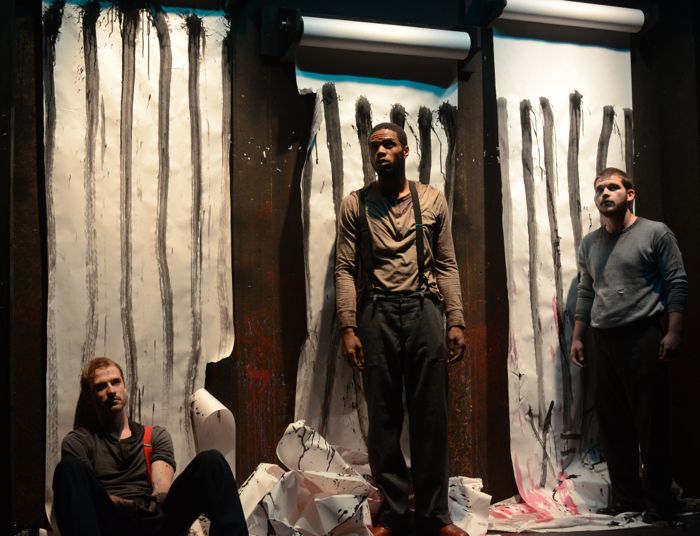
Photo by Jason Fassi.
Matt Foss’ play is adapted from Upton Sinclair’s novel, The Jungle. It’s set in Chicago in 1906 and focuses on the immigrant families who came here to find jobs and a better life than they could hope for in their European homelands. They found work—and a good deal more—in Chicago’s stockyards. Sinclair’s book, while focusing on the grim lives led by these immigrants, also described the conditions of the stockyards in gruesome detail. To his chagrin, it was the stockyard images that people focused on…possibly because they were appalled to think that was where their meat came from. Like other muckrakers of the time, he hoped to focus public attention on the needs of the people and bring about government action for change.
Oracle Theatre is presenting the world premiere of this play, directed by Foss, who also developed the ingenious stage design that I describe in my Gapers Block review. The play is 100 minutes and will remind you why Chicago theater is great. In your face? Yes. Focused on a message? Absolutely. And tragically, exuberantly dramatic.
Oracle Theatre is committed to free art for all and so their tickets are free (but you should reserve a seat). I write a little about their business model at the end of my review. So far, they seem to be operating successfully with no “earned income.” They deserve your support, not because they’re free, but because they tell great stories.
Boyhood, Richard Linklater’s film about growing up
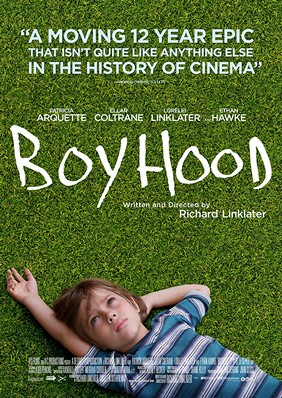 This film is having a gradual nationwide rollout, and Chicago is in the first wave of releases. You can see this beautiful film at River East 21 or Landmark Century Centre right now. Here’s what I said in my brief Letterboxd review:
Boyhood is a beautifully edited story of a boy growing into a young man. That’s all. Just life, compressed into 164 minutes. The transitions of age and family change are done so smoothly that sometimes you miss them. The film is rich in conversation (that often seems improvised, although it isn’t) about life, its meaning and potential. Linklater’s felicitous choice of a 6-year-old boy who would continue to be interesting for the next 12 years is amazing. Patricia Arquette and Ethan Hawke, the boy’s divorced parents, also change over the years; they both give terrific performances.
Two years and counting
Nancy Bishop’s Journal is two years old. It’s amazing to me that I’ve continued to write regularly and at length about the things I love: Theater, film, books, music, art and design, Chicago stuff, and sometimes food. My total is 120 posts since July 2012.
I’m also writing regularly at gapersblock.com/ac/, where I’ve written 113 posts in the last 15 months—reviews of theater, art, architecture and design. You also can find my writing at culturevulture.net, an online arts magazine, where I review theater and other Chicago culture, and at theandygram.com, where I post new Chicago theater reviews.
Nancy Bishop’s Journal is two years old. It’s amazing to me that I’ve continued to write regularly and at length about the things I love: Theater, film, books, music, art and design, and sometimes food. My total is 120 posts since July 2012.
I’m also writing regularly at gapersblock.com/ac/, reviewing theater and art.
Jersey Boys: It could have been a rock and roll joy ride
Posted: July 12, 2014 Filed under: Movies, Rock and roll | Tags: Chess Records, Jersey Boys, Rock and Roll Hall of Fame 7 CommentsAt this moment, I’m sitting in the Providence airport, waiting for my delayed flight home after spending two weeks on the shore in Connecticut. That’s why I haven’t posted anything recently at Nancy’s Journal. While I was there, I saw and reviewed Clint Eastwood’s film Jersey Boys, an adaptation of the smash hit stage musical. The film is showing on some Chicago screens, and here’s my review.
Jersey Boys is a jukebox musical about kids who found a way out of their deadend lives through music: a rock and roll escape route. The 1950s and ‘60s pop music of Frankie Valli and the Four Seasons—with songs like “Sherry” and “Big Girls Don’t Cry”—makes this otherwise mediocre film a pleasurable musical experience.
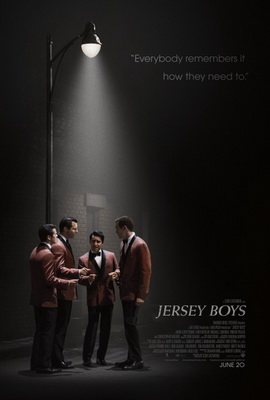
“Jersey Boys” poster courtesy Wikimedia Commons.
Jersey Boys tells the story in semi-documentary style of the kids who grew up on the streets of New Jersey in towns like Newark and Belleville. There was no way out of the deadend lives their parents lived as barbers, laborers or tradesmen—unless you hooked up with the mob or became a superstar. Becoming the next Frank Sinatra was every Jersey boy’s dream in the 1950s.
Tommy DeVito (Vincent Piazza) forms a trio (between prison stints) but the band is going nowhere, playing small clubs and banquet halls. They need a strong lead singer. Tommy finds Frankie Castelluccio (John Lloyd Young), who has a powerful falsetto voice, and asks him to join the band. Nick Massi (Michael Lomenda), the bass player, rounds out the quartet.
The group plays under different names, including The Four Lovers and The Romans, but their career still flounders—until they meet Bob Gaudio (Erich Bergen), the songwriter and keyboard player they need. The boys rename themselves The Four Seasons.
Desperate for a record contract, they meet Bob Crewe (Mike Doyle), a producer at the iconic Brill Building, where so many recording careers start. Tommy, who considers himself the band’s business manager, uses some sketchy connections to borrow the money they need for a recording session. They get help from their consigliore, Gyp DeCarlo (the marvelously eccentric Christopher Walken) and their first records are produced.
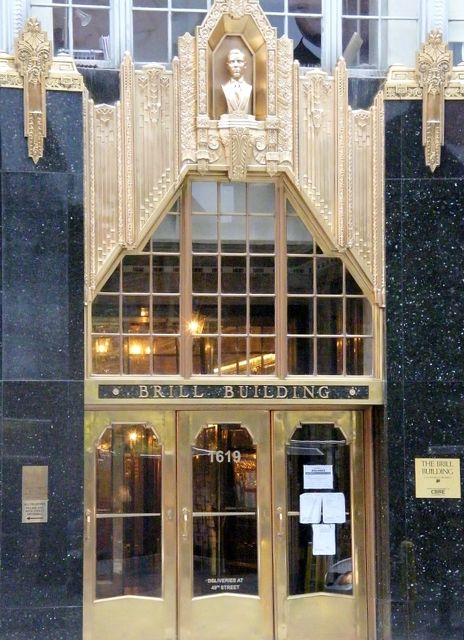
The Brill Building. Photo courtesy Wikimedia Commons.
“Sherry” is their first #1 single, followed by several more million-selling hits. Frankie Valli (who has now changed his name) and the Four Seasons play big-time clubs and venues and appear on the Ed Sullivan Show.
The boys think they are rich, but all is not well on the business front. They’ve made the mistake of letting Tommy manage the band with no advisers paying attention to the contracts they sign. (Or don’t sign. The “New Jersey contract” is a handshake.)
The Four Seasons took the same path followed by many young musicians in the days before they learned they needed lawyers and business managers who worked for them. The Chess brothers in Chicago lured Mississippi bluesmen Muddy Waters and Howlin’ Wolf to sign contracts that gave them fancy cars and minimal royalties. (Hence, the nickname for Chess Records was Cadillac Records.) Young musicians like the Beatles in the 1960s and Bruce Springsteen in the 1970s were taken advantage of by their managers, earned modest record incomes, and lost the publishing rights to their own music for decades.
Despite their recording success, the Four Seasons split up when Gaudio and Valli decide they can make more progress and better creative decisions on their own. (They formed the Four Seasons Partnership, which still controls the assets of the band.)
Family traumas and tragedies fill out the story of the band and its music. In one final scene, we see Frankie Valli and the Four Seasons (aged, in badly done makeup), reunited in 1990 for their induction into the Rock and Roll Hall of Fame.
As the film credits roll, the band members and entire cast engage in a street dancing scene, including faux curtain calls.
Director Clint Eastwood has chosen to give the film a look of faded glitter and glamour and the acting doesn’t add to the luster of the film. John Lloyd Young as Valli is wooden and generally expressionless. Piazza is livelier as Tommy and makes you believe that he might be able to talk himself out of trouble. Bergen’s Gaudio character is at first quiet and serious as a musician and he was probably the most intelligent of the four—and proved it by engineering the split and partnership with Valli.
Valli and Gaudio are among the executive producers of Jersey Boys and are reported to have had total control over the film. But they’re musicians. How could they forget to do a sound check? The sound quality of the film is below average and that spoils its best feature.
Still, the 2.25 hour film is worth seeing if you want to listen to the jukebox of the 1960s. As a rock and roll escape route, Jersey Boys can’t find its way down the New Jersey turnpike.
Theater to feed my obsessions: Bombs, dystopia and technology
Posted: June 20, 2014 Filed under: Art & architecture, Movies, Theater 2 CommentsI have a few obsessions and they’re probably baffling or inscrutable to most of my friends and relatives. If you’re a rock music fan, you’ll understand my Bruce Springsteen obsession. But my obsessions with the Spanish Civil War, technology and dystopian societies, and the genius physicists who created that engine of doom, the first atomic bomb, are a little weird, I admit. I’m not going to try to explain them here. But I don’t miss a chance to read about, or see dramatizations of, those topics. And that explains why I really liked a few of the plays I’ve reviewed and seen lately.
The Half Life of Memory by Cold Basement Dramatics
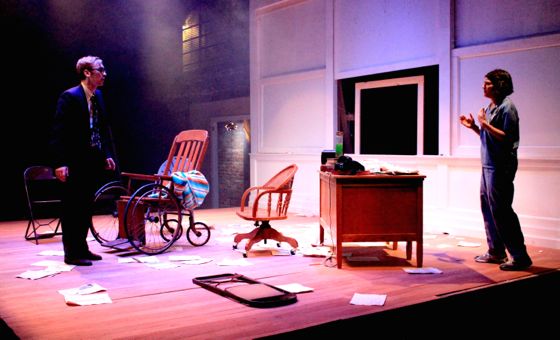 Those genius physicists—Oppenheimer, Fermi, Einstein and Teller—do a song and dance number in this memory play now being performed by a small theater company at the city’s Storefront Theater on Randolph Street. The protagonist is a retired physicist suffering from dementia, who dreams that his memory is radioactive and will allow him to create the next huge weapon of mass destruction. Edward Teller eggs him on, while the other physicists are less sanguine about the idea.
Cold Basement Dramatics does a good job with this difficult topic. Mark Maxwell plays the protagonist in an intelligent and graceful style and the rest of the cast is very good too.
Here’s the opening of my Gapers Block review:
“Our memories can beguile us, deceive us, even betray us. On the other hand, we also create those deceptions by repressing memories and even creating memories that never existed. The Half Life of Memory, Jason Lindner’s fascinating new work produced by Cold Basement Dramatics, is a memory play… with a bang.”
Playwright Lindner created the character based on a relative who was one of the Manhattan Project physicists. The play has some rough edges but is definitely worth your time and interest.
The Half Life of Memory runs thru June 29 at the Storefront Theatre, 66 E Randolph St. Tickets are cheap too!
Tyrant by Sideshow Theatre Company
 Tyrant shows us how a future society has solved the problem of homelessness and unemployment. Sideshow presents a dystopian future in this world premiere play by Kathleen Akerley and they do a decent job with it. The topic and treatment are interesting, and this kind of risk-taking deserves an audience. (My rating was “somewhat recommended.”)
This is how my Gapers Block review starts:
“Here’s a solution for the problem of homelessness. Gather up the homeless and give them the choice of joining the military, leaving the country, or moving to a center for special training. The latter group is assigned to wealthy people to perform household and personal chores. In Sideshow Theatre Company’s Tyrant, Congress does that one year from now with the US Rectification Act, which allows “rectifees” to be “actualized” by the presumably well-intentioned 1 percent (or perhaps 10 percent).”
Tyrant runs through June 29 at Theater Wit, 1229 W Belmont.
Ask Aunt Susan at Goodman Theatre
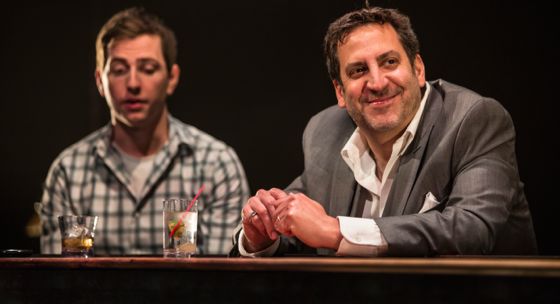
Alex Stage and Marc Grapey at the Hole in the Wall Bar.
The play in Goodman’s smaller theater space is a modernized version of Nathanael West’s novella, Miss Lonelyhearts. Rather than being a 1930s newspaper advice columnist, our protagonist is a young man who creates content and code for an internet company. His boss, the funny, fiendish Steve, asks him to start giving advice online to readers who write in with their problems. This becomes a huge success almost immediately, but Aunt Susan doesn’t know how to handle his fame. Nor does his girlfriend Betty. But Steve and his partner/wife Lydia do and they move Aunt Susan to version 2.0.
Ask Aunt Susan has gotten a few negative reviews but most are in the “recommended” category, as mine was. The 90-minute play has some flaws and needs some work, but it’s great fun and asks us to question how we maintain our lives today. Plus Marc Grapey’s performance as Steve is not to be missed. Grapey is a terrific comic actor and does a four-star job in this play.
My Gapers Block review wonders:
“Ask Aunt Susan… is a smart, funny 90-minute tear through today’s era of digital connections and a cri de coeur for a slower pace and a little more humanity in our personal relationships. Or is it?”
Ask Aunt Susan runs through June 22 at the Goodman Theatre, 170 N Dearborn St.
I also interviewed playwright Seth Bockley about his thinking on internet obsessions, generational differences, and how he visualizes a play while writing it. Read it here.
Vieux Carré at Raven Theatre
 This haunting Tennessee Williams play presents many of the themes of his other works. Loneliness. Failed dreams. Artistic awakening. Poverty. Homosexuality. This is one of Williams’ late plays, written in 1977, and it addresses those themes as he did in better-known works such as The Glass Menagerie and Streetcar Named Desire. This play deserves to be better known. Vieux Carré deals with The Writer (Ty Olwin) as a young man newly arrived in New Orleans and trying to sort out his creative and romantic life, while living in a rooming house in the French Quarter. The denizens of the rooming house suffer poverty, hunger and lost love.
Raven Theatre does reliably high quality work and this play is no exception. The two-act, two-hour play directed by Cody Estle is beautifully handled. Mrs Wire (Joanne Montemurro) owns the boarding house and handles her turn from mean-spirited landlady to grieving her own loss beautifully. She tells The Writer, “There’s so much loneliness in this house that you can hear it.”
Veteran Chicago actor Will Casey plays Nightingale, a gay artist who is dying of tuberculosis and mourning his unsuccessful career. He tries to introduce the younger man to a new love and life style, which The Writer seems to resist. The relationship between the two actors ebbs and flows until its tragic end.
Vieux Carré runs at Raven Theatre Company, 6157 N Clark St, thru June 28.
And a few favorite movies
Hairy Who & the Chicago Imagists
 Do you remember the artists known as the Hairy Who from the ‘60s and ‘70s? They were outrageous and confrontational and their work was vividly colored and luridly graphic. You can relive your past art memories in this outstanding documentary, which I just reviewed. It’s having limited showings but you’ll be able to see it in late September at the Gene Siskel Film Center. I’m going to see it again.
Obvious Child
I saw this excellent indie film last month at the Music Box during the Chicago Critics Film Festival. And now it’s back and showing at several local theaters. It’s directed by Gillian Robespierre and stars Jenny Slate as a young woman standup comic who gets pregnant in a drunken one-night stand (that turns into a tender romance). The performances are excellent, the script is raunchy and fun. Most interesting, the concept of abortion gets rational consideration; it’s not treated as an idea that dare not be mentioned. This is the first film I’ve seen that takes this approach and it’s refreshingly natural and naturalistic. I highly recommend seeing Obvious Child.
NOTE: All photos courtesy of the theater or production companies.
May mashup: My pop culture diary
Posted: May 31, 2014 Filed under: Art & architecture, Movies, Music, Theater | Tags: Court Theatre, E Street Band, Profiles Theatre, theandygram.com 3 CommentsBusy end-of-May at Nancy’s house. House guests, including two perfectly darling grandsons, and a family wedding at a grand venue. So I haven’t seen much theater since the last time we chatted. Still, there were a few great movies, one so-so play, and news about a new website that I’m writing for. You’ll find some TV recs too.
First, some architecture notes
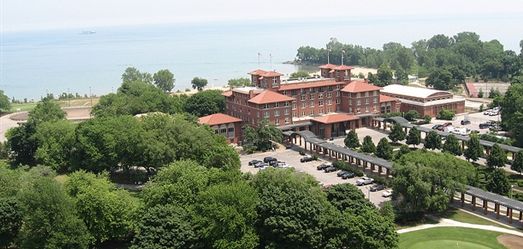
South Shore Cultural Center. Photo courtesy Chicago Park District
A lakefront wedding. The wedding was at the beautiful South Shore Cultural Center, right on the lakefront at 71st Street. It was originally a private country club and it’s now part of the Chicago Park District. If you haven’t been there, it is simply lovely and worth a visit. If you’re planning an event, it should be on your list of venues.
The country club, built in 1906, was designed by Marshall and Fox, who designed the Drake and Blackstone Hotels. It was expanded in 1916, also by Marshall and Fox. (Benjamin Marshall also designed the elegant Beaux Arts apartment building at 1550 N State Parkway.) The wedding ceremony was held in the beautiful solarium, looking out at the lake, and then we moved to a reception hall for champagne and greetings, and finally to the dining room. You can see some CPD photos here.
An architecture scavenger hunt. If you’re a fan of Chicago’s Loop architecture, you should sign up for the Chicago Architecture Foundation’s scavenger hunt next Saturday afternoon, June 7. The game starts and ends at the Railway Exchange Building at 224 S Michigan; there’ll be an awards reception in the grand atrium. You’ll find the details in my story on Gapers Block.
Theater notes
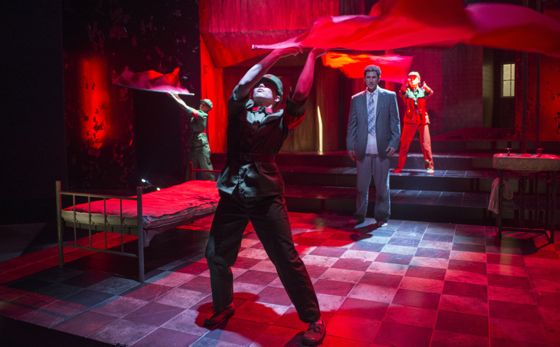
Photo by Michael Brosilow.
M Butterfly at Court Theatre. The script by David Henry Hwang is marvelous, very smart and well-written. I thought the Court production left a little to be desired—it was a bit flat. The reviews were definitely mixed from “not recommended” to “highly recommended.” I imagine director Charles Newell might have taken some notes and spiffed up his production since then. The play tells the amazing story of the French diplomat who was deceived for 20 years by a male opera star posing as a female diva. Despite my review, I do recommend a trip to Hyde Park.
Here’s my review; my rating was “somewhat recommended.”
TheAndyGram.com. This is a New York-based theater website that covers Broadway, off-Broadway, Washington, Connecticut and, now, Chicago. My first review (of Cock at Profiles Theatre) is now up on theandygram.com. See it here. It’s a terrific show and I highly recommend it. It runs until June 29; details are at the end of my review.
My headline is “… A Riveting Play That Explores All the Meanings of Its Title.” Here’s how my review begins:
Cock is a play title you very rarely find in a theater review headline. I’m hoping that’s because of fear of internet anti-obscenity filters, rather than puritanism on the part of copy editors. The play by Mike Bartlett is a comedy about sexual identity, a love triangle and a power play among three characters: John, a bisexual who is fighting to discover his identity; M and W, his lovers, who battle each other and John himself to determine the course of their lives.
Movies I loved…or at least liked
The Normal Heart. HBO’s production of Larry Kramer’s play about the early years of the AIDS epidemic is excellent. I wasn’t sure what to expect but I had read enough about the production, and the playwright’s involvement, to be optimistic that its edges wouldn’t be softened. And they weren’t. We needed to be reminded about the terror of the disease first known as “gay cancer.” And to be reminded that the war is not over. The tagline, “To win a war, you have to start one,” is an ideal descriptor.
The acting is excellent. Mark Ruffalo plays a very believable Ned Weeks (Larry Kramer) and there are terrific performances by Julia Roberts, Jim Parsons and Matt Bomer. I originally saw the play off-Broadway in about 1985 and Timeline Theatre did an excellent production last year. I highly recommend the HBO film. Here’s the trailer.
Stoker and Blue Velvet. My film group discussed Stoker last week and we’re discussing Blue Velvet soon. They are both excellent films and each is weird, creepy and outrageous in its own way.
Stoker (2013, 99 minutes) is the first English-language film by the Korean director, Chan-Wook Park. (He directed the so-called vengeance trilogy, which includes Oldboy.) His title is surely meant to remind us of Bram Stoker, who created Dracula, but Stoker is just a family name. A family whose father is killed in a mysterious auto accident, whose daughter ( Mia Wasikowska) is obsessed with hunting and saddle shoes, and whose mother (Nicole Kidman) can’t get her daughter to love her. But at the funeral, an uncle (Matthew Goode) appears out of nowhere and befriends mother and daughter. The story is a bit of a takeoff on an Alfred Hitchcock film, Shadow of a Doubt, about a young girl’s relationship with her serial-killer uncle. Stoker has lots of strange and beautiful cinematography and features a psychologically steamy piano duet of Philip Glass music.
If you stay up late or get up early or set your DVR, HBO is showing Stoker June 1 at 3:20am CT.
Blue Velvet (1986, 120 minutes) is an early David Lynch film, before Twin Peaks. The weirdness is set off when an earnest young man (Kyle MacLachlan) finds a severed human ear in a field as he’s walking home. The plot revolves around his boy detective attempts to solve a mystery with a very young Laura Dern as his co-star. Isabelle Rossellini is a nightclub singer who performs “Blue Velvet” and Dennis Hopper is her crazed tormentor, who uses a mask to breathe in gas to energize his crimes.
Roger Ebert hated this film so much that he gave it one star in 1986. He and Gene Siskel disagreed on it, however. (When it was revived 20 years later, one reviewer said it was still “a hilarious, red-hot poker to the brain.”) Here’s a clip of the “At the Movies” review from 1986. Go to 2:35 to see Roger and Gene debate the film.
Rock and Roll Hall of Fame Induction
Yes, tonight is the night that we can see the E Street Band inducted into the Rock and Roll Hall of Fame. Their frontman, Bruce Springsteen, was inducted in 1999. The induction ceremony took place in April but tonight is the three-hour-plus event, with all the honorees, along with a bunch of special guests performing. The band is being inducted in a category that used to be known as sidemen and now is called the Award for Musical Excellence.
Other inductees are Peter Gabriel, Nirvana, Hall and Oates, KISS, Linda Ronstadt and Cat Stevens. Artists are eligible for the Rock Hall 25 years after their first recording. Rock Hall members (including me) voted for a list of eligible musicians and then the panel of judges picks the inductees. My DVR is already set.
The joy of talking: Conversations short and long
Posted: May 10, 2014 Filed under: Digital life, Movies | Tags: CFLX312 meetup, Gene Siskel Film Center, WordPress meetups 3 CommentsI was thinking the other day how much I enjoy the various meetups and discussion groups I belong to. Most weeks I have one or two get-togethers with friends and acquaintances who share some of my diverse interests. It’s a real joy of city life.
The news media confirm that more and more of us are getting tangled up in our technology. We’re not having as much human interaction as we used to—or as much as we should have for our mental and emotional health.

My iPhone–the source of tech addiction
Serious highway accidents are caused by texting while driving, pedestrian tumbles are caused by texting while walking. Actually, while I’m a major tech geek, I don’t understand either of those phenomena. When I’m sedentary or at least stationary, I’ll use whatever device I have in hand for most any purpose. Reading, listening, talking, texting, getting directions, taking photos, finding a coffee shop. When I’m walking (or driving), I want to know that I’m not going to crash or tumble. In motion, I’m paying attention to where I’m going. (This is only partly because, with age, you’re more likely to fall, and some of your senses are in decline. Or so I’m told.)
Casual chat. I read a New York Times article recently in which social scientists studied the value of casual conversations. A chat with the coffee barista, the store cashier, the pharmacist, the doorman, the person sitting next to you on the bus. These interactions make us more cheerful, the social scientists found, and may ease the anomie of living in a modern metropolis.
I enjoy those interactions. And I especially enjoy long conversations on interesting and sometimes provocative topics—with friends, relatives, members of my discussion groups. Right now, I belong to four discussion groups. I really value them as ways to expand my circle of friends and acquaintances, and to keep my brain in constant activity, mulling over new ideas and churning out concepts for discussion and writing.
Two of my groups are fairly traditional discussion groups—one political, one focused on books. They were formed by friends inviting friends inviting friends. Each meeting is at someone’s home and focuses on one topic.
Book group
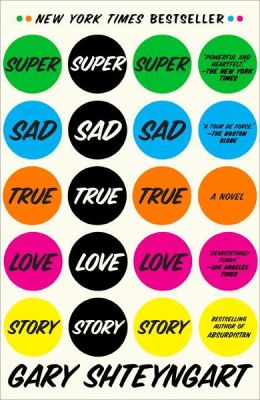
Next up for my book group.
We discuss one book, either fiction or nonfiction, at each meeting, agreed on by members in advance. It’s very rare that a member doesn’t finish a book. Everyone really takes the reading seriously. (There was one occasion when the book choice—Henry James’ The Ambassadors—brought about a near-unanimous revolt. We changed books midstream.) Sometimes we have a professional moderator but usually one of our members leads the discussion. And if we spend a little time chatting about family, work and travel, that tends to knit the group more firmly together.
Political group
The political/policy group discusses one topic, usually chosen from articles in The Nation, a political magazine we all value. Yes, we too often agree on everything but we really do try to bring in topics and members that will generate disagreement.
Meetups are a newer kind of group. They bridge the technological and the personal relationship world by bringing together total strangers who have common interests for in-person meetings.
Film meetup
I belong to an excellent film meetup. It has hundreds of members, but the meetups at a local tea shop, bar or cinema are rarely more than 12 or 15 people. The cast shifts for each meetup, but there’s a core group of about 30. Very diverse group. All ages, races, genders, film interests, areas of expertise. I have never had such good discussions at which I also learned so much about a topic. This group has an excellent and creative organizer, which is the basis for its success.
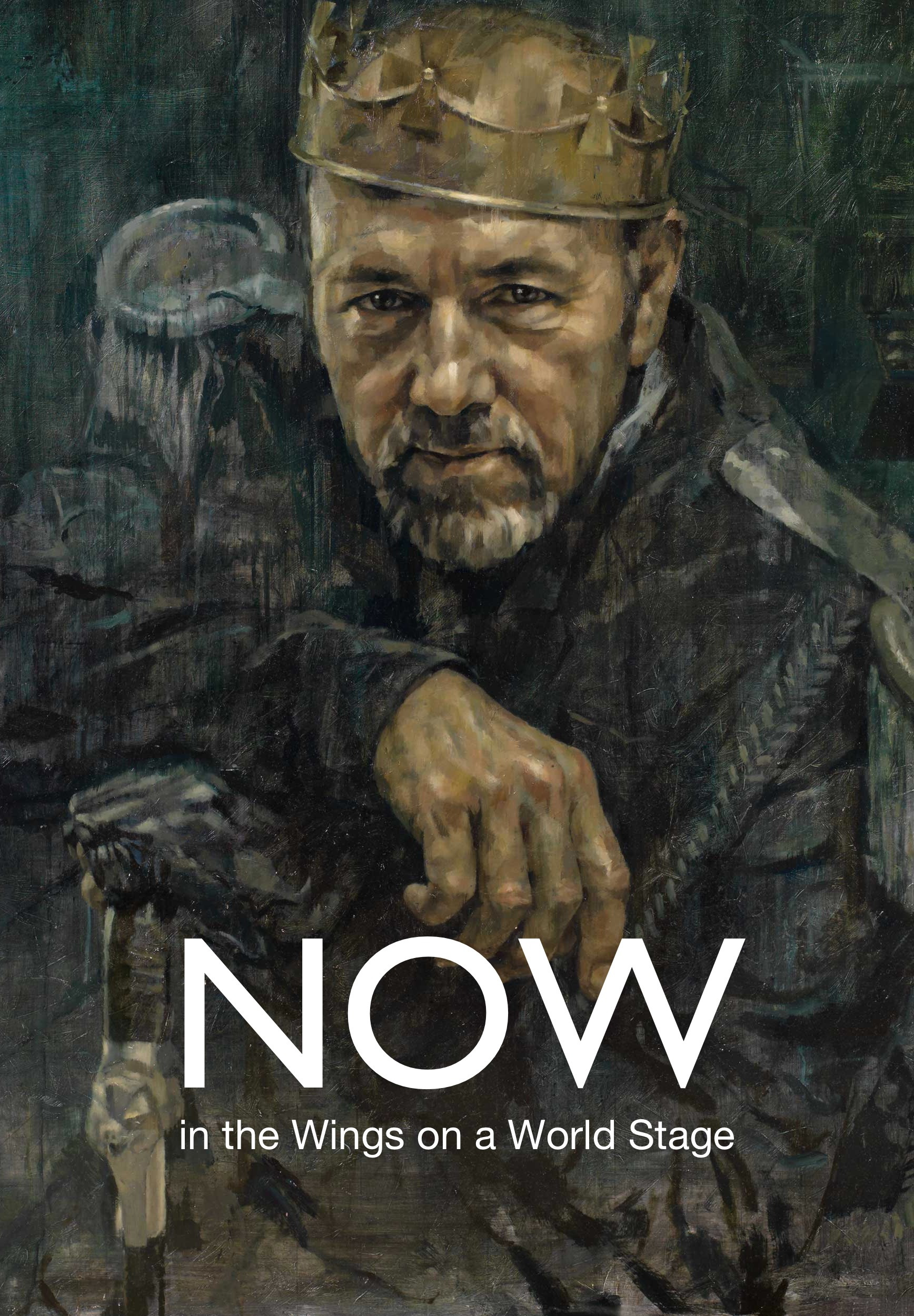 Our regular film discussions are planned to discuss one or two (related) films that we all see in advance. Other events are held to view a film together and then discuss it afterwards. In the last week, I hosted two such meetups at the Gene Siskel Film Center. We saw Orson Welles’ Othello and a few nights later, a different group joined me for the new Sam Mendes/Kevin Spacey documentary about their Richard III production—NOW in the Wings on a World Stage. After both films, we stayed at the Siskel Center or found a cafe nearby to talk about the films. Both discussions lasted more than an hour.
Tech meetups
I also belong to a couple of WordPress meetups, which focus on WordPress usage questions and practices. (WordPress is the tech platform on which this blog is built; it’s a user-friendly and widely used platform.) I always meet new people and get answers to my questions and new ideas at these meetups. You can probably find a meetup for virtually any techy project you’re working on.
A sidebar on Meetups
 Meetups run on a social networking portal that facilitates offline, in-person local meetings. Meetup was founded after the 2001 attack showed the founders how the internet could help connect people in a crisis. Today, Meetup says it has almost 16 million members in 196 countries. Meetup organizers pay a small fee each month to meeetup.com and members are usually asked to chip in.
If you want to try out Meetup, go to meetup.com and put in your zip code. Check the topics you’re interested in and you’ll be offered a menu of meetups in your categories. You create an account to join and then you’ll receive email announcements about coming meetups on your topics.
Yes, some meetups are lame and never do much while others are vibrant and active. If you find one of the former, just try out another. You’ll meet new people and learn new things. And most important, you’ll find you are creating new human interactions (i.e., friendships) in this complex and tendentious technological age.
Follow this blog
If you’d like to receive an email when I post a new article on nancybishopsjournal.com, just put in your email address on the upper right side of this page. I promise no spam and you don’t need a password!
May Playbill: Fighters, painters, mammoths and more
Posted: May 2, 2014 Filed under: Movies, Theater | Tags: @CFLX312, A Red Orchid Theatre, Gene Siskel Film Center, Remy Bumppo Theatre, Saint Sebastian Players, Seanachai Theatre, The House Theatre, Theater Wit 1 CommentI’ve seen lots of plays lately, as usual, and wanted to give you a little recap of a few to see, or not.
Lay Me Down Softly at Seanachai Theatre
Seanachai does an excellent job with this terrific Irish script by Billy Roche. It’s a tough story about a traveling roadshow that includes a fake bearded lady, carnival booths and fake boxing ring challenges. Every day is the same; only the towns change. The main story thread is about Dean, a boxer who can’t seem to win, and Junior, a once-champion who was forced to retire because of an injury. The bullying roadshow owner Theo and the cut man and boxers’ mentor Peadar are the other two male characters. Two women create really strong performances to anchor the play. The boxing ring set is handled with great care and almost seems to create a play within a play.
My Gapers Block colleague, Alice Singleton, reviewed it and adds some interesting insights.
Lay Me Down Softly runs until May 25 at the Den Theatre, 1333 N Milwaukee Ave. Like Seanachai’s recent production of The Seafarer, which I reviewed in December, it’s a must-see. Oh, how I love those Irish playwrights.
Dorian at The House Theatre
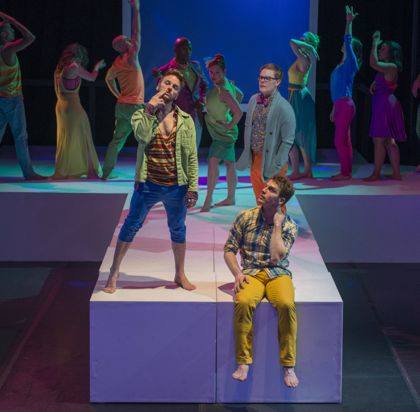
Photo by Michael Brosilow.
Dorian is an adaptation of the great Oscar Wilde novel, A Picture of Dorian Gray. It’s a visually interesting production that stresses the personal relationships among Dorian, his portraitist and friends and party people of today’s London. It’s the well-known story of Dorian–the man who didn’t age while his portrait did. House stages it in “promenade” style, which means most of the audience is mingling with the actors during the action, which can take place in the artist’s studio, at parties, galleries or performance spaces. I recommended it with a three-star review, and added this:
“This is not a play to attend because you love the writing of Oscar Wilde, notably in his fabulous plays like Lady Windermere’s Fan, A Woman of No Importance, Salomé, An Ideal Husband, and The Importance of Being Earnest, all written in the 1890s. The Picture of Dorian Gray, his only novel, is complex and challenging–and filled with smart, witty dialogue, but you won’t find much of that complexity or dialogue in Dorian.”
Dorian runs until May 18 at the Chopin Theatre on Milwaukee Avenue. My review here.
Seven Homeless Mammoths Wander New England
at Theater Wit
This play has received excellent reviews, every one of them richly deserved. It’s smart and well written, warmly acted by a fine cast, and directed by Jeremy Wechsler. The script is by Madeleine George, a writer with Massachusetts and Brooklyn connections. It’s about relationships between friends and lovers and the financially stressed closing of the museum at a small northeastern college, which will leave the mammoths homeless.
Every cast member is excellent. The day I saw it, one of the major roles was played by a superb substitute, Penelope Walker. Laura Fisher, an old friend from Famous Door Theatre days, is outstanding in one of the other lead roles. A special treat is the performance by Steve Herson, who plays various characters including the museum caretaker, a reporter, citizens at a town hall meeting, and a board member reading the hilarious minutes of the meeting. In each case, his accent is different and perfect. Also the museum exhibits include prehistoric people in diorama exhibits who voice the concerns of museum visitors.
Seven Homeless Mammoths is a great treat and you shouldn’t miss it. It runs until May 17 at Theater Wit on Belmont.
Mud Blue Sky at A Red Orchid Theatre
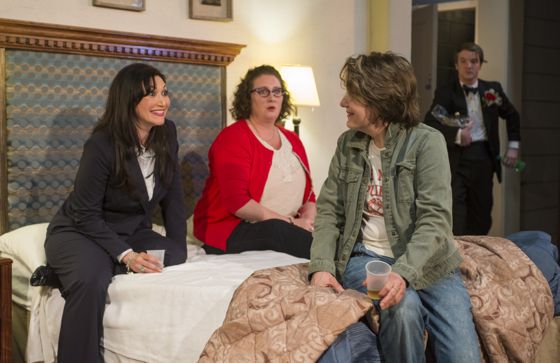
Photo by Michael Brosilow.
This is a terrific show at Red Orchid, with great humor, warm relationships, and things you didn’t want to know about airplanes. Here’s how my Gapers Block review begins:
“Loneliness, regrets, friendship, humor, and a little maternal instinct season A Red Orchid Theatre’s new play, Mud Blue Sky. Director Shade Murray gets the most out of Marisa Wegrzyn’s fine script, which revolves around airport life. The tiny Red Orchid space on Wells Street is perfect for the claustrophobic story of three very mature flight attendant friends on a layover at a hotel near O’Hare.” Beth and Sam are still flying. Angie lost her job recently and now lives in a Chicago suburb. Angie misses flying and the others can’t wait to get away from it. That’s the story until they get acquainted with a young man named Jonathan, who helps them find some relaxation and entertainment.
My review is highly recommended at theatreinchicago.com. Mud Blue Sky has been playing to sold-out houses and it’s now extended until June 29.
Our Class at Remy Bumppo
Our Class by Tadeusz Slobodzianek is a play about the Holocaust—set in the small Polish town of Jedwabne in the years leading up to World War II. The play was troubling and thought-provoking and my friends debated and disagreed about it afterwards.
The story begins in the schoolroom where members of “our class” study and play together. They are all friends, whether Jewish or gentile. Hints of anti-Semitism creep in to their school and their play from time to time and gradually increase. The key event is the 1941 massacre of virtually all the Jewish citizens—1,600 men, women and children–by their neighbors. The perpetrators are never accused, never held accountable. In the years that follow, various survivors lie about their role in the event, including one who hid and one who had converted to Christianity.
Despite the power of the first act, most of the second act is bogged down in excessive exposition. Too much detail kills the power of the first act. The play runs nearly three hours, with one intermission.
This is a risky sort of play for Remy Bumppo, which tends to produce superb quality Anglophile theater by great writers. Their regular ensemble is made up of talented and experienced Chicago actors. Our Class takes Remy Bumppo in a totally different, riskier direction and brings in some younger actors new to the company.
Reviews are virtually all “highly recommended” or four star. Our Class runs until May 11 at the Greenhouse Theatre Center.
Death Defying Acts at Saint Sebastian Players
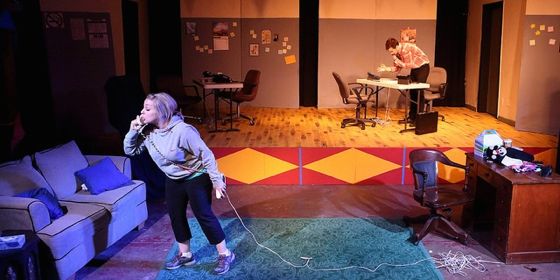
Photo by John C Oster.
Three short plays by three brilliant writers: David Mamet, Elaine May and Woody Allen. Unfortunately, they were all writing on their off days because the scripts in Death Defying Acts aren’t very good. The production is medium, with a few good performances. I really wanted to give this play a better review but I just couldn’t. The theater company decided to create a circusy atmosphere in the lobby and around the production, which was not a great idea. Here’s what I said about that in my Gapers Block review.
“One problem with the whole production is the overworked circus atmosphere. Yes, death-defying acts suggest a carnival with risky high-wire acts. Old circus posters decorate the lobby of the church-basement theater. Before the show opens, an old circus film, Here Comes the Circus, is projected across the stage floor. The crew is dressed in circus clown and aerialist costumes while making stage changes. But it’s a bit over the top, especially considering the lack of death-defying acts on stage.”
Death Defying Acts runs until May 18 at St Bonaventure Church, 1641 W Diversey. The theater space is in the basement; entry door on the west side of the church. Good news is that there’s free parking in the church lot.
And on screen, not stage
The Wind Rises returns. This wonderful Japanese animated film by the master filmmaker Hayao Miyazaki is scheduled for a two-week run at the Gene Siskel Center, May 16-29. I wrote about this film when it opened recently. It’s beautiful, hand-drawn throughout, rich and complex in its use of Japanese history and mythology. If you didn’t see it before, you have another chance.
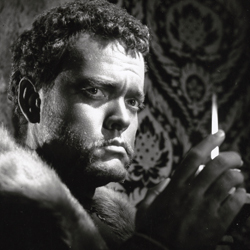
Photo courtesy Siskel Film Center.
Othello at Siskel. The great and greatly flawed Orson Welles 1952 production of Shakespeare’s Othello has been running at the Gene Siskel Film Center. I saw it for the third time last night (the first time was when I was in college at the old Fine Arts cinema, the second a few years ago at the Music Box). The 1992 restoration made a lot of improvements in visual and sound quality. It’s a powerful film, with Welles starring as the Moor. It’s clear why his film presence was so huge; he dominates every scene with his size, voice and expression.
The play is really Iago’s, as Harold Bloom insists in his essay on Othello in his book, Shakespeare: Invention of the Human. The actor who plays Iago in the film (Micheal Mac Liammoir, an Irish actor who founded the Gate Theatre),does a creditable job but can’t stand up to the Welles persona. Because he is Orson Welles, no matter what role he is playing.
Quick takes: Local theater + one great movie
Posted: March 30, 2014 Filed under: Movies, Theater | Tags: Step Up Productions, The Grand Budapest Hotel, The Hypocrites, the Musical, Urinetown Leave a commentSpring is the season when a lot goes on in Chicago theater and other performing arts. (It’s still not as stuffed with events as October, however.) This is part 1 of two posts this week.
Theater
Urinetown
Certainly my favorite theater experience was seeing my 16-year-old grandson perform in his high school’s production of Urinetown yesterday. I’ve seen that play so many times I could recite parts of it by heart. But it’s a smart play and the production was really good. The kid did an excellent job, playing three different parts and successfully mastering the quick offstage costume changes required. The last performance was Saturday night, so I won’t recommend you check it out.
Urinetown was written by Greg Kotis (of Chicago’s Neo-Futurists) and Mark Hollmann and opened on Broadway in September 2001; I saw it there a couple of months later. The premise of Urinetown does make you think. It’s set in a period of economic decline and extreme water shortage. If we can privatize highways, bus shelters and parking meters, can “public amenities” be far off? I hope Mayor Emanuel has not seen this play.
Darlin’ at Step Up Productions
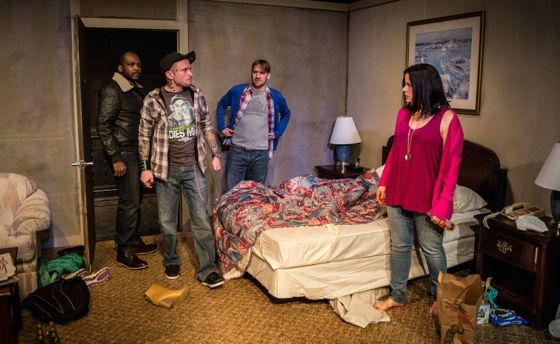 Step Up Productions is staging this brave play that treats domestic abuse as part of its mission to benefit a local nonprofit for each production. Darlin’ deals with Clementine, a woman who leaves husband, home and children and moves into an anonymous motel room, where she meets an assortment of down-on-their-luck souls. One of them is a motel maid who blames her injuries on a box of Brillo pads falling on her from a high shelf. She and Clementine share some strong scenes.
The theater will donate a portion of its proceeds to the House of the Good Shepherd, which serves women and children survivors of domestic violence. Last fall’s production, The Benchmark, benefited the Chicago Alliance to End Homelessness.
Darlin’ runs until April 13 at the Athenaeum Theatre. See my Gapers Block review. (By the way, you’ll notice that I got in a Bruce Springsteen lyric into my review. Just goes to show that there’s a Springsteen lyric for every occasion–and his fans are obsessively vigilant about using them.)
Into the Woods at The Hypocrites
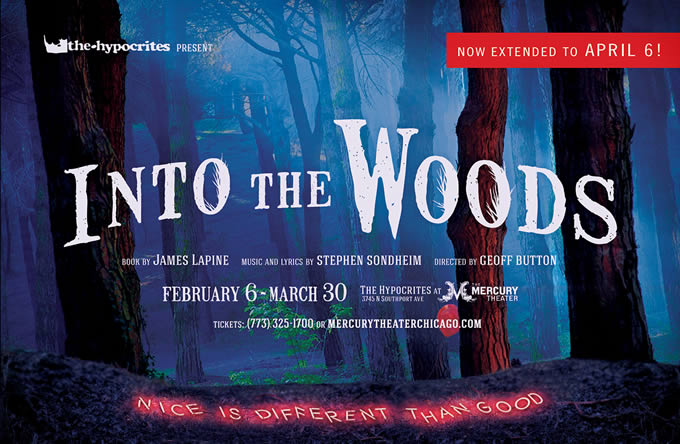 The Hypocrites move to the Mercury Theatre on Southport to stage their version of the Sondheim musical, based on classic fairy tale characters. The play is a 1987 show by Stephen Sondheim and James Lapine. Since I have often admitted I hate musicals, you know I’m going into this one with my cynic’s pen in hand. But I do like Sondheim’s music and the lyrics are often thought-provoking.
This show is performed by 10 talented actors and singers and it has received mixed reviews. The setting is designed like a children’s park, suggesting “the playground of a top-notch arts magnet school,” as one reviewer commented. To me, the “into the woods” theme has a dark overtone, and some of the lyrics portend danger. But when the trees are represented by balloons, it’s a clever touch but loses the darkness. I kept wondering if they were going to pop all the balloons to mimic leaves falling off trees. It would be a Hypocrites kind of symbolism.
The Hypocrites do a decent job of this, although I would argue with some of their costume and stage setting choices. The show runs through next weekend, so if you’re a Sondheim fan, you will want to see it.
And one fine movie
Grand Budapest Hotel
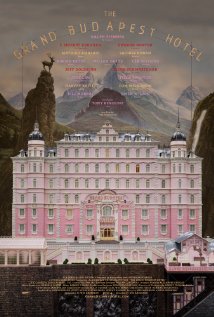 If you’re going to see one film this week, make it this new Wes Anderson charmer. On the surface, it’s the reminiscences of the owner of the now somewhat rundown hotel in the fictional central European country of Dubrowka. He tells of his adventures as a lobby boy for Gustave H, a concierge of multifarious talents, played by Ralph Fiennes. I think of Fiennes as a serious actor and I have admired his work in many classic roles, on stage and film. But here he shows he can be a comic actor of the highest caliber.
The film has an amazing cast including short but inspired performances by Adrien Brody, Bill Murray, Willem Dafoe, Jeff Goldblum, Owen Wilson, Jude Law and many others. There are too many convolutions, escapes and chase scenes to describe here. And pastry. Lots of pastry.
The brilliant thing about this film is that it is a panoply of film history and film techniques. Not only is there beautiful cinematography, there are models and stop-motion animation. And to show time changes, the color palette and aspect ratio of the film changes from widescreen to traditional boxy shape and back again. Whimsical? Quirky? Idiosyncratic? Nostalgic? Yes, it’s all of those. And on top of the humor and whimsy, there’s a hint of the World War II tragedy to come as German military officers accost Gustave and the lobby boy on a train.
This phrase appears twice in the film: “a glimmer of civilization in the barbaric slaughterhouse we know as humanity.” I think Anderson wants us to remember it.
Follow my blog, please
If you’d like to receive an email when I post a new article on nancybishopsjournal.com, just put in your email address on the upper right side of this page. I promise no spam and you don’t need a password!
Beauties and beasts: A mixed bag of culture
Posted: March 7, 2014 Filed under: Chicago, Movies, Music, Theater | Tags: Aliota-Haynes-Jeremiah, Chicagoland, Hayao Miyazaki, Women of Letters 6 CommentsKind of a Chinese menu of a post today. A little theater, a little film, a little TV and some fine music.
Jean Cocteau on stage
The Artistic Home has mounted a riproaring family sex story at its venue on Grand Avenue. This Jean Cocteau farce is Les Parents Terribles—it’s two hours-plus of high-speed theater. Very funny, very well acted. My Gapers Block review is here. The play runs until April 13.
In the course of writing the review, I thought about Cocteau’s other work. His 1946 film, La Belle et La Bête, is unforgettable and visually arresting. Here’s the trailer so you can check it out. It happens that the lobby of my apartment building has a giant framed poster of Cocteau’s La Belle et La Bête, so I am reminded of it every day.
Wondrous Japanese animation
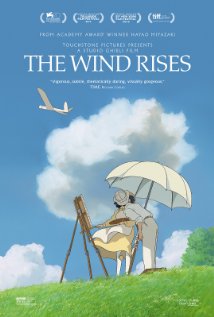 Animated film has not been one of my interests, since I always connected it with dreadful cute animals. But recently I’ve been educated in the beauty and sophistication of animated film and I’ve seen three films lately by the Japanese master, Hayao Miyazaki.
My film group had a discussion on Miyazaki this week and it was fascinating because several of the members are anime, animation and Miyazaki experts. His current (and final, he says) film is The Wind Rises, which just opened in local cinemas. His work is always beautiful, rich in hand-drawn detail, and sophisticated in its use of Japanese history and mythology (most of which I probably miss because of my own education gap).
His other films are mostly works that would be of family interest, but The Wind Rises is quite adult in plot and character. The leading character is Jiro, who is enchanted with flight and idolizes an Italian aviation engineer. He grows up wanting to design beautiful airplanes that carry people—but he ultimately designs the planes that are used in World War II, specifically to bomb Pearl Harbor. (There’s kind of an Oppenheimer effect at work here. Oppenhemer and the other Manhattan Project physicists designed the atomic bomb and then were chagrined at the results.)
War is an underlying theme in the film but not the main topic. In addition to Jiro’s engineering work, there’s a love story; his fiancée suffers from tuberculosis. The film is beautiful and gets many four-star reviews. (Seeing the “rising sun” logo on the airplanes was slightly unsettling for me, a child of that wartime period.)
I recommend this film highly and would also recommend Spirited Away (2001) and Princess Mononoke (1997) as two of his more typical films. He uses strong female characters and in each case blends in Japanese history and mythological symbols. His films are enchanting and I have a list of four or five more on my list to see.
Women of Letters
The Australian literary salon known as Women of Letters is bringing its project to revive the lost art of letter-writing to Chicago. Women of Letters will be performed with local writers and artists on Friday, March 21, at the Mayne Stage. Here’s my Gapers Block preview. Sounds like good literary fun and I’ll report on it back here.
Chicagoland: My favorite city on TV
CNN, apparently trying to become something more than just another cable news outlet, has just started an eight-part series called Chicagoland (Thursdays at 9pm CT, with several reruns). The first episode ran last night and so far Mayor Emanuel looks good—perhaps a little too good. However, given the principals involved, I believe the series will be fair and well done—and I hope I’m not wrong. The production has the Sundance/Robert Redford imprint so I’m expecting quality.
The first episode had some great footage of Chicago but the story was depressing. The reporting focused on murders and gang activity (with an emphasis on Fenger High School) and the city’s closing of 50 public grammar schools, almost all of them in African-American and Latino neighborhoods. We saw parents and teachers protesting the closings and CTU president Karen Lewis telling us what she thinks of Rahm Emanuel.
Of course, I’ll watch the other episodes, even though I know the story probably doesn’t have a happy ending. But to make up for that, I have a special Chicago musical treat for you, even though someone who shall be nameless remembers it as a song “I used to listen to in college while stoned.”
The song is “Lake Shore Drive” by Aliota-Haynes-Jeremiah. It was a big hit in 1975 and rereleased on CD in 1998. If you love the song, you can download it on iTunes and put it on your iPod, so it’s always with you, despite what the person quoted above calls “a jarring piano line.” If you’re not a Chicagoan, you may think that the LSD mentioned in the lyrics and shown in the visuals refers to a drug …. but to Chicagoans it refers to the drive that runs along the lakefront from Hollywood Avenue to 66th Street. The Lake Shore Drive Wikipedia page is a nice history of its construction, use and appearances in popular culture.
And now for some related posts….
On the subject of animation: One of the five sort of obscure movies I recommend is Richard Linklater’s 2001 Waking Life, an amazing approach to animation–and philosophy.
For some thoughts on J. Robert Oppenheimer, see my review of the current play being mounted by Saint Sebastian Players.
Arts & culture heat up Chiberia: 4 plays to see
Posted: February 25, 2014 Filed under: Movies, Theater | Tags: Ann K Powers, Mary Arrchie Theatre, Porchlight Music Theatre, Saint Sebastian Players, St. Louis Blues, The Monuments Men, Trap Door Theatre 1 CommentChicago had two days of almost-spring with temps above 40 last week but now winter is back in force. I just spent a few days in North Carolina, where their eight inches of snow melted very quickly. While I was there, we had three 60-degree/no-jacket days. Meanwhile, there have been lots of theater openings recently. Here are a few plays I’ve seen that you might enjoy too
In the Matter of J Robert Oppenheimer at Saint Sebastian Players
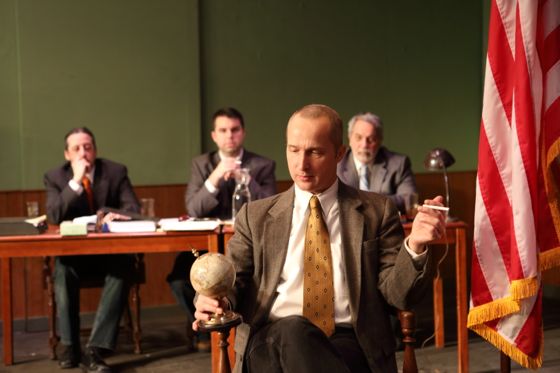 Yes, it’s talky and intellectual and it makes you think. Thinking might warm up your head. This three-hour play by the German writer Heinar Kipphardt leads us thru the Atomic Energy Commission hearing that resulted in Oppenheimer, the “father of the atomic bomb,” being stripped of his security clearance. This production by the Saint Sebastian Players is very good, despite some actorly flaws. The main characters are portrayed very well and the pace is engrossing. The play runs until March 9. See my Gapers Block review here, along with ticket and location details.
Ain’t Misbehavin’ at Porchlight Music Theatre
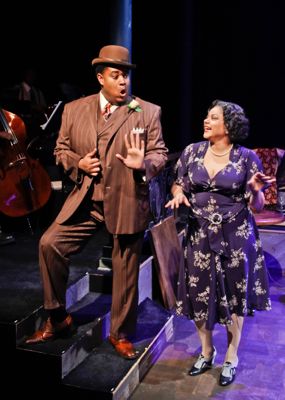 In the mood for some stride piano playing, lively singing and dancing by five charismatic performers to the music of Thomas “Fats” Waller? Ain’t Misbehavin’, a musical revue by Porchlight Music Theatre, is terrific and I don’t even like musicals. It’s sure to win plenty of Jeff awards.
My Gapers Block review noted that this is Porchlight’s contribution to Black History Month: a musical revue and tribute to the music of Thomas “Fats” Waller and the Harlem Renaissance. “Fats himself would be proud of this production, performed at Stage 773 with an excellent live band led by über-pianist Austin Cook.” See my review for all the logistics and production details.
Crime and Punishment at Mary-Arrchie Theatre
If you never managed to finish the Dostoyevsky book in high school or college, here’s your chance to gain a new appreciation for the character Raskolnikov and the theme of crime and guilt. Here’s how my Gapers Block review started: “Mary-Arrchie Theatre takes on a difficult task in staging this 2003 adaptation of the Fyodor Dostoyevsky novel, Crime and Punishment. But with intelligent direction by Richard Cotovsky, this talented and respected off-Loop theater gives the audience a gripping 90 minutes. We meet Raskolnikov (a strong performance by Ed Porter), the poor, sickly, arrogant former law student who commits the crime, suffers guilt and psychological trauma and, finally, punishment.”
The script is the same one presented in 2003 by Writers Theatre in Glencoe on their tiny back-of-the-bookstore stage, with Scott Parkinson doing a superb job playing Raskolnikov. The novel was adapted into a play by two Chicago playwrights–Marilyn Campbell and Curt Columbus. The Mary-Arrchie play runs until March 16.
Judith: A Parting of the Body at Trap Door Theatre
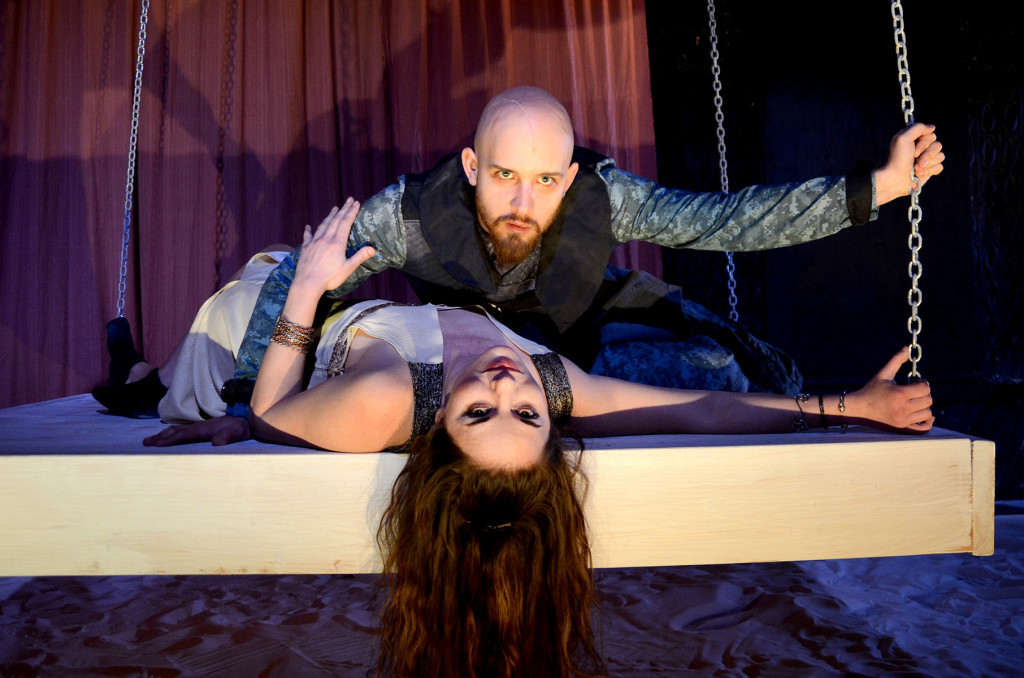 Trap Door’s excellent production of Judith: A Parting of the Body by Howard Barker is a revisionist take on the biblical story of the Israelite widow who goes to the enemy camp to seduce General Holofernes. The language is poetic and sometimes vulgar. The three actors each play out their stories in an engrossing way.
You’ll remember the image, even if the story is not familiar. There are many famous versions of the painting often titled “Judith with the Head of Holofernes”; the one by Artemisia Gentileschi may be best known. But I have always liked the Caravaggio version best. You can see it on this Wikipedia page.
Judith has been extended so you can see it at Trap Door, the little theater space at the end of a gangway at 1650 W Cortland, until March 8.
Tribes at Steppenwolf Theatre
Tribes by Nina Raine recently ended its run at Steppenwolf. We saw it near the end of the run since we had to change our tickets from one of the deep-freeze days. The reviews of this play were mixed, varying from “somewhat ” to “highly recommended.” The story is about a family with one deaf son, who leaves the family cocoon and discovers the outside world and the deaf community. The theme isn’t new—the controversy over the benefits of sign language vs. lip-reading for the deaf–and it still demands our attention. I really wanted to like the play, but I found most of the characters unlikable and the play failed to keep me from checking my watch to see when I could leave.
And also . . . .
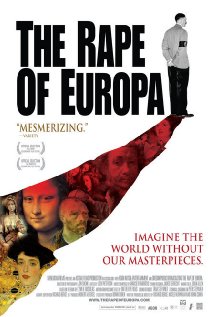 A film recommendation. In case you, like me, were disappointed in the reviews for The Monuments Men and decided not to see it, I’d like to recommend a good documentary that tells the story and even includes some of the real Monuments Men. The Rape of Europa, 2006, was written and directed by Richard Berge, Bonni Cohen and Nicole Newnham, with narration by Joan Allen. 117 minutes. Streaming on Netflix.
The film is drawn from the book of the same title by Lynn H Nicholas, who appears in the film; her book won the National Book Critics Circle Award in 1994. One of the co-producers is Robert M Edsel, the author of the book The Monuments Men, from which the current film is adapted.
An example of transitivity. Did you know that the song, “The St Louis Blues” got its name from a street, not from the Missouri city? Ann K Powers, the NPR music critic, posted a photo on her Facebook page of a memorial plaque in Bessemer, Alabama. The W C Handy song, “Pipeshop Blues” was also known as the “St Louis Blues” for St Louis Avenue, the street that ran through the Howard-Harrison Steel Company of Bessemer.
When I shared the image on my Facebook timeline, my economist son observed that this is an example of the mathematical concept of transitivity, which is
A relation among three elements. If it holds between the first and second elements and it also holds between the second and third, it must necessarily hold between the first and third.
Could this be four-part transitivity? The song was named after a street, which was named after a city, which was named after a French king and saint, Saint Louis himself, King Louis IX of France. So song, street, city, saint.
* * *
Follow my blog, please. If you’d like to receive an email when I post a new article on nancybishopsjournal.com, just put in your email address on the upper right side of this page. I promise no spam and you don’t need a password!
Lives, finished and unfinished + my 100th post
Posted: February 7, 2014 Filed under: Movies, Music, Theater | Tags: Pete Seeger, Philip Seymour Hoffman 6 CommentsPhilip Seymour Hoffman’s private funeral is being held today at a church in Manhattan. There will be a memorial service later. Hoffman died February 2 of a drug overdose at the age of 46.
Pete Seeger’s memorial service was held in Beacon, NY, where he lived—on the day Hoffman died. The service was a moment of quiet reflection about Seeger’s life along with plenty of his songs. He died at 94 on January 27 after being hospitalized for a few days.
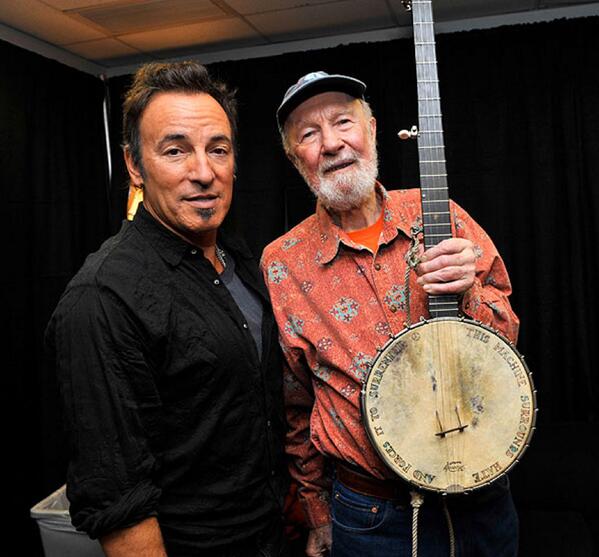
Springsteen and Seeger at Pete’s birthday party in 2009. Copyright Kevin Mazur/WireImage.
I can’t help but think of the contrast between the two lives. Seeger was a singer, songwriter, political and environmental activist for more than 70 years. At 17, he joined the Young Communist League and later the Communist Party; he severed his CP ties in 1949. He started singing with the Almanac Singers in 1941; their work included antiwar and other leftwing political songs. Over the years, he was investigated by HUAC and blacklisted; sang on public television and on college campuses and coffeehouses when he couldn’t get more commercial gigs because of the blacklist. But he never quit songwriting, performing and political activism. He has a huge repertoire of songs and recordings and is considered a national treasure by the public and a role model by many current musicians, including Bruce Springsteen and Tom Morello.
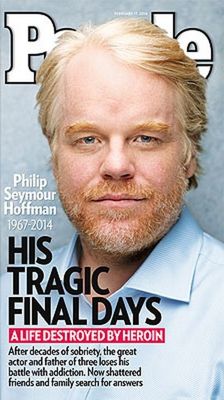
People Magazine cover, 2//12/2014, cropped.
Hoffman was a brilliant, prolific actor with some 50 movies plus TV shows and stage performances on his resume. Recently he played Willy Loman in Arthur Miller’s Death of a Salesman. In 2000 he and John C Reilly performed Sam Shepard’s ultimate sibling-rivalry play, True West, switching roles occasionally thru the run. My favorite Hoffman films are probably Synecdoche, New York, and Capote.
Many writers have commented in the last week about his talent and how he fully inhabited every role. A.O. Scott said he “made unhappiness a joy to watch.” He lived only half the life that Pete Seeger lived. Think how many amazing movie experiences we are going to miss because of the drug habit he kicked and then kicked him back.
We can’t possibly know what demons tortured Hoffman and made him rely on prescription drugs and heroin. But the loss of his life is a loss to us as well as to his family and friends.
There are many unfinished lives in the literary, music and entertainment businesses, and in everyday life. This is a topic that interests me, as I’ll explain below.
Buddy Holly, the early rock and roll musician, died at 23 in a wintry plane crash 55 years ago last week.
John Kennedy Toole, the bizarrely comic novelist and author of The Confederacy of Dunces, died at 32 in 1969.
Janis Joplin, the great blues and rock singer/songwriter, died at 27 in 1970.
Jimi Hendrix, perhaps the world’s best guitarist (and left-handed too) died at 27 in 1970.
John Millington Synge, the Irish playwright and author of Playboy of the Western World, died at 37 in 1909.
John Wellborn Root, the Chicago architect and design partner of Daniel Burnham’s firm, Burnham & Root, died at 41 in 1891. The house where he lived is a block away on my street.
And my sister Lynda died at 27 in 1970 when a drunken driver crashed into the passenger side of the family car, killing her and her 3-month-old baby. Even after four decades, I find it difficult to talk about her death, so few of my friends know the details. Some day I’ll dedicate stories of unfinished lives to Lynda.
* * *
Nancy Bishop’s Journal: My 100th post
This is my 100th post. When I started this blog in July 2012, I wasn’t even sure what I was doing or where I was going. Since then, I’ve become much more focused on writing about the things I love—movies, theater, music, books, art and Chicago stories. It’s been more fun than I thought possible. I feel as if after all those decades of business writing, I’ve finally become a writer.
Those 100 posts average 800-900 words each, so in the last 18 months, I’ve written about 85,000 words, the equivalent of a book, a substantial book at that. In addition, since May 2013, I’ve written 80 stories—mostly theater and art reviews—for Gapers Block, the Chicago-centric website. That’s another ~40,000 words, in case we’re counting. So in ~20 months, I’ve written the equivalent of two books. That’s not bad productivity.
 nancy bishop's journal
