The art of fashion: Punk, Impressionism, Ebony
Posted: August 7, 2013 Filed under: Art & architecture, Chicago, Punk rock | Tags: fashion, Gapers Block Leave a commentThree important exhibits this summer are threading art, fashion and social issues into fascinating museum experiences. I keep trying to decide that one or another is my favorite but each one is equally discerning and compelling in its own way.
Punk rules
I wrote recently about seeing the exhibit Punk: Chaos to Couture at the Metropolitan Museum of Art in New York. Of course, I’m tempted to say this is my favorite of the three because I love punk rock and its alienated, disruptive, DIY and disheveled nature. Punk, especially Brit punk, was critiquing the evils of society in the 1970s—the ones that we see even more vividly today. Poverty, economic and educational inequality, and the evils of the establishment.
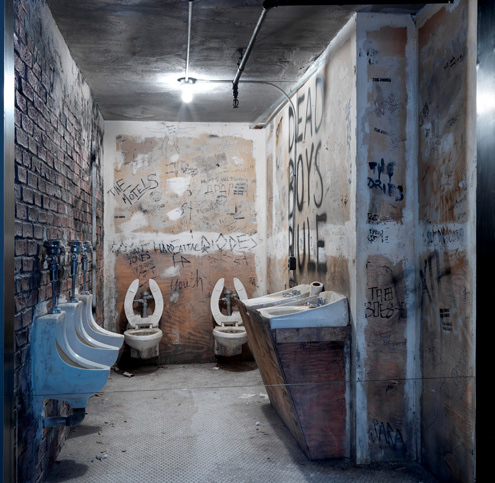 Most especially, one of my favorite bands of all time, The Clash, is represented in the exhibit by a quote from its late lamented frontman Joe Strummer, explaining what the band wore: “We didn’t have the backing of the Sex boutique (like the Sex Pistols) so we rented a warehouse in Camden Town and painted it. We got all covered in paint….”
Some of my favorite things about the exhibit were the facsimile of the bathroom at CBGB, the famous punk club on the Bowery; and the DIY Bricolage section, which used trash materials in costuming. The exhibit was intended as an immersive experience with almost-loud music, music videos and other multimedia examples of the period. (Photo copyright Metropolitan Museum of Art.)
From punk to Paris
Impressionism, Fashion and Modernity at the Art Institute of Chicago is an elegant tour of the fashions and social customs of the late 19th century as displayed in impressionist paintings from the collections of the Art Institute, the Metropolitan Museum and Musée d’Orsay in Paris, the three museums that organized the exhibit. The exhibit is highlighted with gowns similar to those worn in the paintings displayed and properly accessorized with footwear, gloves and chapeaus. The exhibit takes us from the elaborate, fussy, long-trained gowns that required corsets and cautious walking to day gowns and walking ensembles that freed the 19th-century woman from some of the strictures of corset, bustle and fabric. (Photo courtesy Art Institute of Chicago.)
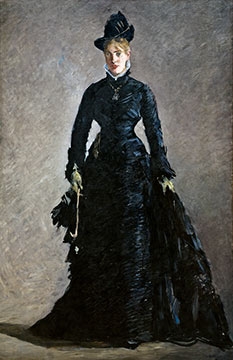 Museum legends and signage describe the changes in styles and social customs that accompanied and, indeed, enabled the fashion changes. Other displays show period examples of accessories such as fans, lorgnettes, jewelry, hats and footwear.
We can also see examples of fashion magazines and catalogs with announcements of the openings of important new fashion emporiums in Paris, including Le Bon Marché, La Samaritaine and Printemps.
The Art Institute has an ongoing series of lectures (some are members-only) about the exhibit and the period. They are free and provide invaluable insights to enhance your enjoyment of the exhibit. See the Art Institute calendar for information.
The world’s largest traveling fashion show
Chicago has another stunning exhibit of art and fashion at the Chicago History Museum. Inspiring Beauty: 50 Years of the Ebony Fashion Fair runs until January 5, 2014.
 I reviewed this exhibit for Gapers Block and you can read my article here. The exhibit is a gorgeous display of almost 70 of the 8,000 gowns and ensembles from the costume collection of the Johnson Publishing Company.
The Ebony Fashion Fair exhibit presents the history and style of the traveling fashion show that began in 1958, brought visibility to African-American designers and models, and helped Chicago-based Johnson Publishing Company reach larger audiences.
It’s a stunning exhibit of fashion and history and shows how the fashion fair recognized and encouraged changes in socioeconomic and elite status for African-American women. The fashion fair was produced and directed by Eunice Johnson, whose husband was John H Johnson, the visionary founder of Johnson Publishing, publisher of Ebony and Jet magazines.
The exhibit shows the original garments by designers such as Yves St. Laurent, Oscar de la Renta, Pierre Cardin, Emanuel Ungaro, Christian Lacroix, and Patrick Kelly, on stunning African-American mannequins. The garments are sleek, dramatic, vibrantly colorful and often exotic. The exhibit also tells the story of Eunice Johnson’s persistence in gaining access to the fashions she wanted to show (cash helps) and how she brought high fashion events to African-American audiences. More than 5,000 fashion shows in 180 cities all over the US were produced as charitable events, raising more than $55 million for civil rights projects and scholarships.
While you’re at the history museum, you can also still see the Vivian Maier exhibit that I wrote about here. It runs through January 5, 2014.
A tale of three cities: Mostly Manhattan
Posted: July 31, 2013 Filed under: Art & architecture, Punk rock, Theater | Tags: Irish Repertory Theatre, Movies, theater 3 CommentsNew York was fascinating as always, despite being beastly hot. My favorite thing about New York is always tramping uptown and downtown, east side and west side. Unfortunately, since temps were in the high 90s, my tramping was focused on finding cool buildings for respite or walk-thrus. In my next tale, I visited friends in Connecticut and I finished up with a family wedding in Brooklyn in the neighborhood known as DUMBO (Down Under the Manhattan Bridge Overpass).
Manhattan
First we’ll take Manhattan, as Leonard Cohen sang (or sort of sang). The highlight was my visit to the Metropolitan Museum of Art and its special exhibit on Punk: Chaos to Couture, which runs until August 14. I also saw two very good plays – one at Irish Repertory in Chelsea, my regular favorite New York theater, and the other a Richard Greenberg drama on Broadway.
 Punk: Chaos to Couture was the Met’s 2013 Costume Institute exhibition and it celebrates both the look that punk musicians adopted in the 1970s in the UK and the US and the impact it had on couture (meaning clothes-not-going-to-be-worn-by-the-average-woman). Original punk clothing was shown, especially that worn by some performers and some designed by Vivienne Westwood for her London punk boutique. Couture by name designers of that period and later decades is also shown. The exhibit was visually and aurally appropriate with period music and videos.
The DIY (do-it-yourself) nature of the punk scene was celebrated in the organization of the exhibit. The section DIY Hardware displayed the use of safety pins and metal ball chains in both punk and couture looks. DIY Bricolage used trash materials in costuming. Here we had the use of bottle tops, plate shards, plastic shopping bags and Tyvek envelopes to create wearable garments. Best of all, black trash bags were shredded or chopped to make glamorous gowns. Really. They were couture and I would wear one of them.
Most of the couture seemed fakey to me, especially that from the last two decades. The use of safety pins or other metal and shredded and torn fabric doesn’t make sense outside of its musical context.
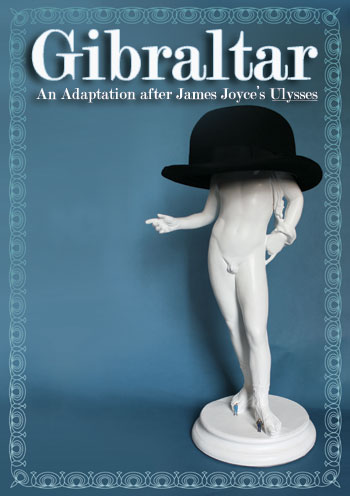 Gibraltar. At Irish Rep, the two-character play Gibraltar, “an adaptation after James Joyce’s Ulysses,” was being presented in its tiny basement studio. I felt like I was at home in a Chicago storefront venue. The play was written and performed by Patrick Fitzgerald, along with Cara Seymour as Molly Bloom, and directed by Terry Kinney, one of the Steppenwolf founders. It’s beautifully done, retaining Joyce’s language, and leading us through many of Leopold Bloom’s errands and encounters on Bloomsday. (I was a month or so late for Bloomsday.) It ends with Molly’s monologue, usually called the Eight Beatitudes. Beautiful lighting and sound design make this scene magical.
The Assembled Parties by Richard Greenberg is a family affair set in a large old Central Park West apartment in two acts on two Christmas Days, 1980 and 2000. Judith Light and Jessica Hecht give fine performances as sisters-in-law in a family in decline. The dialogue is charming, funny and vivid and we glory in their lives in act one and grieve for them in act two. It’s a terrific play. (Greenberg also wrote Take Me Out, The Violet Hour and Three Days of Rain.) The revolving set displays five rooms of the apartment, designed as only Santo LoQuasto can furnish a room.
Stamford
Stamford was a short visit, punctuated by shopping (I learned that Stew Leonard’s is a destination, not a supermarket), eating, visiting, exploring Stamford and Greenwich, and going to a movie. We saw The Way Way Back with Steve Carell and Toni Collette. Carell is Collette’s obnoxious boyfriend, a character you love to hate. The movie is funny and sweet, one of those coming-of-age stories about the Collette character’s 14-year-old son. Sam Rockwell (remember him in Seven Psychopaths?), a very talented actor, manages to give it an edge and keep it from lapsing over into sentimentality. His performance is the treat of the movie.
Brooklyn
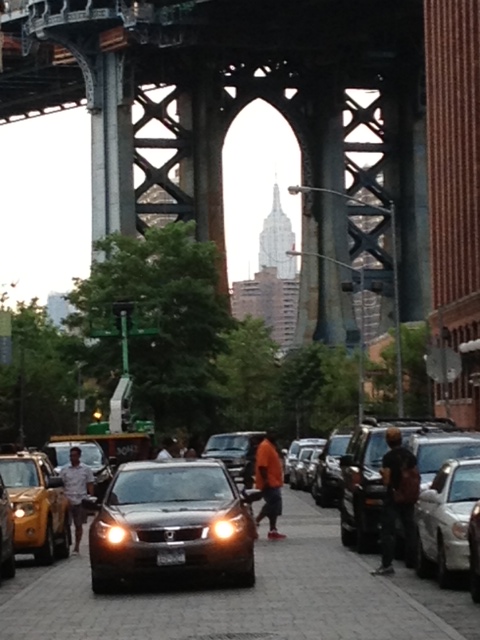 Short story. Family wedding at a lovely old temple with a lively reception in DUMBO. The bride and groom were darling and it was nice to see friends and relatives. Just before we reached the reception, we passed an intersection that offered a fabulous view of the bridges (Brooklyn and Manhattan) and we walked back to take lots of photos. I took this one with the Empire State Building playing a cameo in the distance.
Newest hot spot? Median on State Street
Posted: June 8, 2013 Filed under: Art & architecture, Design | Tags: Chicago Loop, State Street 1 CommentThe city of Chicago opened a new temporary park called Gateway to the Loop right in the middle of State Street yesterday — on the median between Wacker Drive and Lake Street. It’s a great place to savor your Starbucks, meet a friend for a brown bag lunch, or just kill time being an urban person. It’s really quite charming.
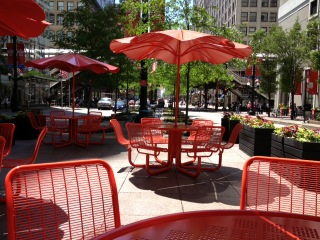

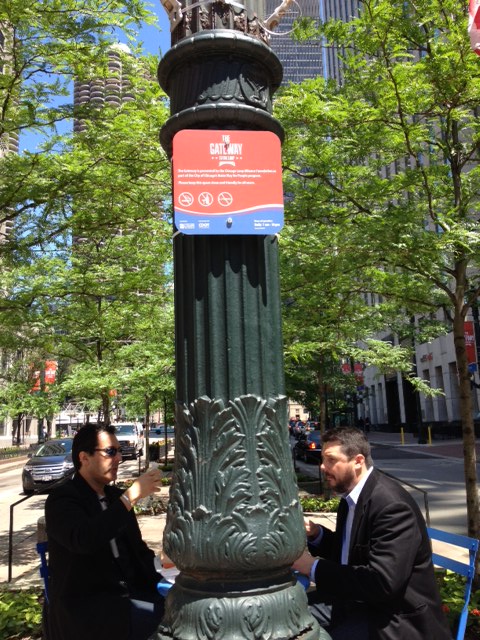
Photo credit: Nancy Bishop
Inspired public art
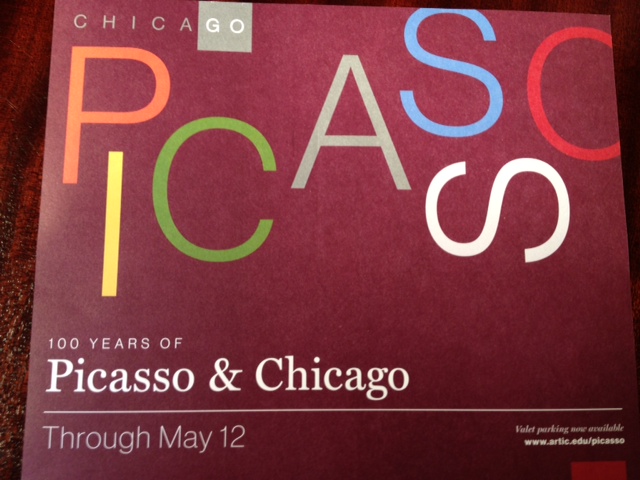
Posted: March 27, 2013 Filed under: Art & architecture | Tags: Art Institute of Chicago, Chicago Picasso 1 CommentYou’ve probably seen the posters and promotion pieces for the Picasso & Chicago exhibit at the Art Institute of Chicago. They’re everywhere and I’ve admired the graphic from the first time I saw it. I admired the exhibit too and I’ll add comments on that and the AIC’s Picasso lectures later. Here’s the graphic.
I was charmed to see the typography in lifesize living color last week on the Daley Plaza. I stopped to watch and take some photos and to see how passersby reacted to it. (Click each photo to enlarge.)
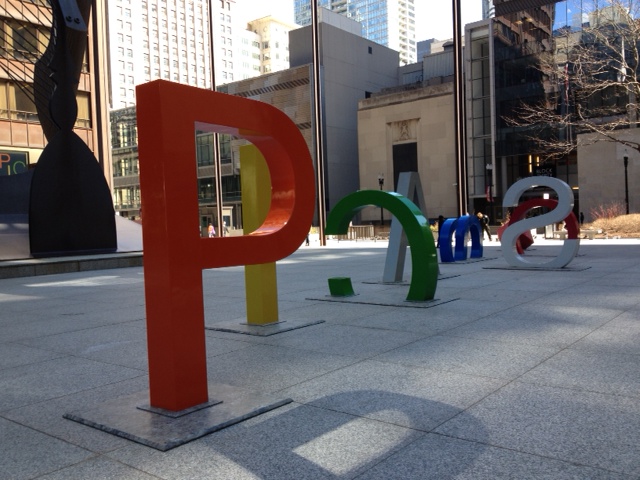
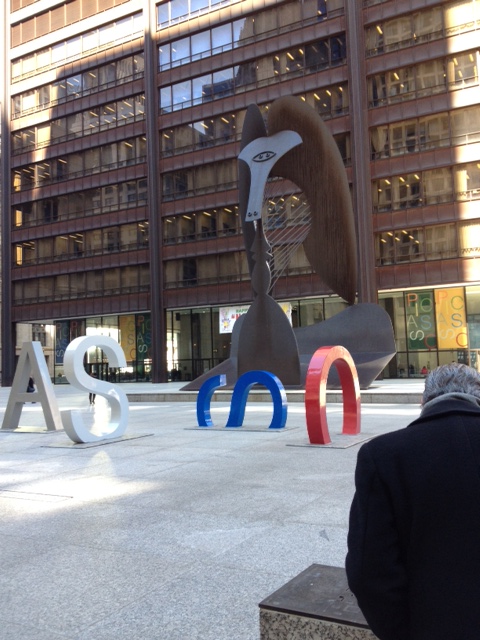
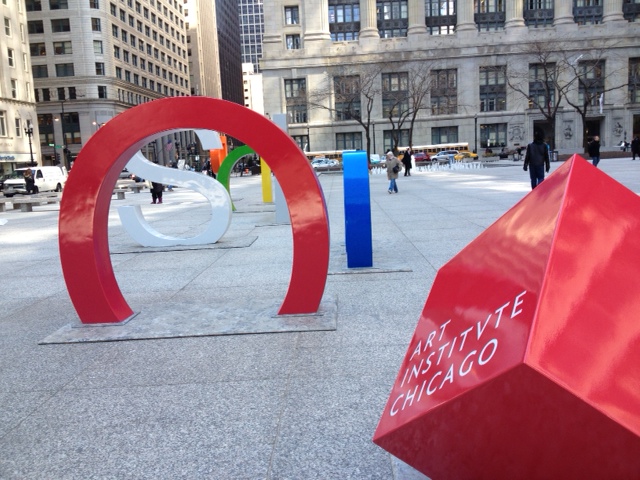
Some people sat on benches in the cold and looked at it. Some climbed on it. And a gaggle of college girls posed for a group photo on the S. It was a perfect example of how public art should be consumed.
Vivian Maier, photographer
Posted: October 9, 2012 Filed under: Art & architecture | Tags: photography Leave a comment“Vivian Maier, nanny photographer.” Maier’s dramatic photographs are everywhere today — on gallery walls, in books, on TV and film. The constant references to her as the nanny photographer cruelly demean her work and talent. She was a street photographer, period. And a very good one, with a remarkable eye for composition, lighting and texture in scenes of everyday urban life. Read the rest of this entry »
 nancy bishop's journal