New York Report #2: Riding with the fishes + the art of history
Posted: September 18, 2015 Filed under: Art & architecture, Politics | Tags: Art as Activisim, Battery Park, Museum of City of New York, New York Historical Society, Paul Rand, Sea Glass Carousel 1 CommentIt was a slightly overcast Friday morning and that didn’t make me unhappy. Down in Battery Park, I could walk along the water without worrying about sunburn. It’s an easy place to reach on the #1 train from midtown. Battery Park is a beautiful place with gardens and monuments and an excellent white tablecloth restaurant as well as snack and drink stands. It’s the place where you can board a boat to take you to Ellis Island or the Statue of Liberty, but I’ve done those things before.
I was interested in the new Sea Glass Carousel, which just opened in August. It’s housed in a circular building like a nautilus shell made of glass and steel that’s near the water and a short walk from the MTA station. The carousel is populated with many different types of fiberglass fish—a 14-foot-tall angelfish, a butterflyfish, yellow lionfish, triggerfish and a Siamese fishing fish, among others. 30 fish in all. For $5, you can sit in a fish of your choice and ride for about four minutes.
On another rainy day, I visited two interesting New York museums that I had missed on all my other trips. The Museum of the City of New York is housed in a grand building at 103rd and Fifth Avenue, built in 1932 as a museum. I was particularly interested in several exhibits there:
Everything Is Design: The Work of Paul Rand, one of American’s pioneer graphic designers. Rand developed dozens of familiar logos and the corporate identity systems that supported them–mainly back in the day when an identity system meant a massive binder of instructions for every conceivable corporate application, from stationery and publications to trucks, signage and uniforms. (Today those guidelines still exist, of course, but not on paper.)
Folk City: New York and the Folk Music Revival. An expansive exhibit of folk music in New York from pioneers such as Ledbetter and Guthrie to Dylan and famous venues such as Gerdes’ Folk City and Greenwich Village “basket clubs.”
Hip-Hop Revolution: Photographs by three photographers. I had seen Hamilton the night before, so of course I had to pay homage to the hip-hop artists who inspired Lin-Manuel Miranda.
Activist New York. The drama of New York activist groups and issues over the years, from abolition (1830-65) and suffrage (1900-20) to civil rights (1945-64), gay rights (1969-2012) and bicycle lane advocacy (1965-2011). And a fascinating corner about the power of the pen: the Proletarian Literary Movement (1929-41).
The exhibits are all well curated and displayed. The three-story building also has a cafe. And there’s a beguiling door that displays this title: “This is New York’s most exciting stairwell.” And indeed the stair is lined with posters and billboards illustrating the city’s history and culture.
Over on Central Park West is the New York Historical Society, where I wanted to see the exhibit, Art as Activism. The exhibit asks the question: “How did political messages go viral before the internet?” and answers it in a mesmerizing way, showing 70 posters from the 1930s to the 1970s. They’re all from the Merrill C. Berman collection at the historical society. The posters are framed and installed like paintings. They tell stories you wouldn’t have learned in your US history classes unless you were using Howard Zinn’s remarkable People’s History of the United States.
All photos by Nancy Bishop except where noted.
Charles Ray sculpture at the Art Institute: Statues that speak to you
Posted: August 22, 2015 Filed under: Art & architecture | Tags: Art Institute of Chicago, Charles Ray 1 CommentThe stunning sculpture exhibit currently on display at the Art Institute of Chicago is one of those quiet landmarks that art critics will talk about for years. The difference between this and some of the mass exhibits like Monet or Van Gogh is that you don’t have to sign up for a time slot, pay an extra fee or wade through masses of humanity to glimpse the work. Charles Ray is a major artist and one of our most important contemporary artists and this is your only opportunity to see this exhibit in the U.S. Charles Ray: Sculpture, 1997-2014 is on display in the Modern Wing through October 4.
The works are all fascinating in their attention to detail (car parts, toes and veins). The figurative ones have an eerie sentience, as I said in my review. They are all modeled on or copied from an actual person and it seems that Ray has captured the essence of the person in each work.
The 19 pieces in the main exhibit (two others are elsewhere in the museum and outside in the South Garden) are simply and elegantly displayed in three galleries. Each figure lives in its own ample space so you can walk around and muse about what it’s saying to you. And I guarantee, some of them will speak to you.
Two of the pieces have controversial backstories. See my review to learn why the Whitney Museum rejected “Huck and Jim” for its new location near the High Line.
(If you think you’ve read about this before, it may be that you saw my Gapers Block review posted on Facebook and Twitter. You can also read my review on berkshirefinearts.com. All photos by Nancy Bishop, except as noted.)
Potpourri, farrago, mishmash & hot dogs–my pop culture week
Posted: August 11, 2015 Filed under: Art & architecture, Food, Theater | Tags: Baby It's You, CBGB, Cirque du Soleil, Gapers Block, Pride Films & Plays, Sideshow Theatre 1 CommentFarrago, potpourri, mishmash. Whatever you call a week of variety, that was my last week. A few tidbits and capsule reviews.
Cirque du Soleil: Kurios — Cabinet of Curiosities
The kid (he’s now 17) and I went to opening night at Cirque du Soleil with some friends. The Big Top (or le grand chapiteau) is set up on the United Center parking lot. Cirque du Soleil hasn’t been in Chicago for a few years and the show has been re-created or reimagined for a new audience, as my friend Kim reported when she interviewed the director, Michel Laprise, for Gapers Block. All the amazing acrobatics and gorgeous pageantry and choreography are still there but it’s done with a “steampunk” theme, suggesting late 19th century industrial machines with a whiff of fantasy. The costuming suits the theme and the period too.

Cirque du Soleil’s Kurios, Grand Chapiteau by A1 Federation – via Wikimedia Commons
We loved the Acro Net, where a giant net stretches across the stage and operates like a trampoline. The performers bounce, dance, jump and leap, sometimes all the way to the tent’s peak. The Rola Bola man balanced on a board, first atop a ball, then several balls and finally a hill of balls and spools–and still he balanced. The Invisible Circus was very clever, with all the lights and contraptions operating as if someone was using them, but not a soul was in sight–except for the circus announcer who described what was taking place. I could go on and on. It’s an amazing show. Whether or not you’ve seen Cirque du Soleil before, try to see this one. And take a kid or a kid at heart.
Hot Dog Festival at the Chicago History Museum
Next day we wandered over to the south end of Lincoln Park for the Chicago History Museum’s Hot Dog Festival. The hot dogs were great; I had a Chicago classic with all the trimmings layered in the proper order*. The kid had a dog plus fries and then went back for a Godzilla dog, which is the equivalent of two or three regular ones. We shared an ice cream because I ran out of dog dollars.

This is a perfect Chicago hot dog. Photo courtesy Vienna Beef.
In addition to great food, there were bands and a speakers stage. We got there early so we could hear Bill Savage, the Northwestern pop culture professor, discourse on “Ketchup: The Condiment of Controversy.” He discussed the nature of hot dogs (“the ultimate democratic street food”) in other locales, concluded that Chicago is rightly considered the hot dog capital of the world, and described how hot dogs and their peculiar Chicago condimentry came to be. He took a poll of his audience. Seventy percent of us agreed that ketchup on a hot dog is an abomination, but ketchup is ok for kids under 10. Bill’s conclusion was Chicago is a great democratic city and Chicagoans are free to do as we please, and if that means ketchup on a hot dog, that’s ok. I respectfully disagree.
* The layers have to be: mustard, neon green relish, chopped onions, tomato wedges, hot sport peppers, dill pickle wedges and finally celery salt.
Two nights at the theater
My two most recent reviews were (1) brilliant satire and (2) a flashy musical. Guess which one I liked best?
The Boy From Oz is the new show by Pride Films & Plays at Stage 773. It’s the story of Australian musician and entertainer Peter Allen, who was married to Liza Minnelli for a while, was a great hit as a cabaret performer, but never was a huge success in the US. At least his music was never a huge success–and since there was nothing melodic or hummable about his music, that made sense. The production is very well done, with some good performances from both the actors and the dance ensemble. Great costumes and choreography. So my review is: It’s a pleasant evening with a lot of talent and energy wasted on boring raw material. See my review here. The play runs through August 30. See it if you like gratuitous singing and dancing.

Katy Carolina Collins as Mash in SFB
Stupid Fucking Bird is Aaron Posner’s play that kinda/sorta deconstructs Chekhov’s The Seagull. Sideshow Theatre is staging it now at Victory Gardens/ Biograph and you can see it through August 30. You need to see it. The script is witty and the characters are sort of based on Chekhov’s except their angst is contemporary rather than 19th century. It’s a case where A loves B who loves C who loves D who flirts with E who is the lover of F. (I’m quoting my review.) Plus there’s a playwright who wants to invent a new kind of theater and when he succeeds in getting a play produced complains that he will now have to put up with being criticized by perfect strangers in addition to family members. Some nice musical interludes throughout the play with Mash (Masha in Chekhov) on the ukulele.
Movies with musical themes

Madame Marie’s booth on the boardwalk, September 2012. Photo by Nancy Bishop.
Baby It’s You is a 1983 film directed by John Sayles. It’s a little indie film about Jill, a Jewish girl with dreams of college and a theater career (played by Rosanna Arquette), and her boyfriend, the Sheik (Vincent Spano), a well-dressed greaser who loves Jill and Sinatra. They are not going to walk off together into the sunset because Jill is not interested in marriage and babies and that’s the only relationship that Sheik can see for them. It’s a good film–I gave it 4 stars out of 5 on letterboxd.com. Two great things about the film are the music (plenty of Springsteen songs) and the trip that Jill and Sheik make to the Jersey shore. We see how Asbury Park looked 30 years ago when the Casino and the Palace were in much better shape; Madame Marie’s was there too and it still is. She died in 2008 but family members still tell fortunes in her booth on the boardwalk.
CBGB is a movie that I really wanted to like. It’s a 2013 docustory about the iconic punk rock club on the Bowery and its owner, Hilly Kristal (played, incongruously, by Alan Rickman). It was fun to see actors play the great bands that started there, like the Dead Boys, Television, Blondie, Talking Heads, Iggy Pop, the Ramones and Patti Smith– but the producers ruined the effect by playing polished studio recordings of those bands while the actors lip-synced. The music totally missed the raw, rough edge that it should have had. It’s not a very good movie–unless, of course, you loved the memory of CBGB.
One more thing ….
An exhibit of photos of rock star legends by Chicago photographer Paul Natkin was on display at the Ed Paschke Art Center in Jefferson Park. One Saturday afternoon, he sat surrounded by his photos and talked about his career, shooting some of the greatest musicians of our time, and how photography has changed with the digital revolution. His talk was fascinating and he was kind enough to talk to me later and answer a question about artists’ rights for one of my SCORE clients. Natkin’s work was shown in a more comprehensive exhibit a few years ago at the Chicago Cultural Center. You can check out his website.
The Freedom Principle: The art of jazz on display at the MCA
Posted: July 23, 2015 Filed under: Art & architecture, Music | Tags: AACM, Museum of Contemporary Art, Nick Cave Leave a commentThe Freedom Principle: Experiments in Art and Music, 1965 to Now. That’s the title of the new exhibit at the Museum of Contemporary Art. It’s a euphonious blend of the visual and the aural. It celebrates 50 years of the Association for the Advancement of Creative Musicians, a group always dedicated to progressive sounds.
I’m glad to see the MCA continuing their exploration of the confluence of art and music, as they did with the exciting David Bowie Is exhibit last fall. This exhibit is a little more low-key but it displays paintings and photographs that represent the visualization of jazz and depictions of AACM from its beginnings to now.
In addition to two-dimensional art, there are exciting sculptural exhibits, such as the stage set showing the huge range of instruments, especially percussion, that the AACM played. Two of the original AACM members collaborated with a sound designer to create “Rio Negro II,” a roomful of bamboo and rain sticks, chimes and robotic instruments. It’s a sight and sound to behold and enjoy.
You’ll also see archival materials such as record jackets, posters and brochures. I especially liked the display, “Speak Louder,” Sound Suits created by Nick Cave (no, not the Australian rocker–this one is the artist and fashion designer). They’re beautiful and functional.
The title of the exhibit is drawn from a book by Chicago music writer John Litweiler. My reviews are here and here. The exhibit price is included with the cost of admission. Musical performances are scheduled for some dates during the exhibit, which runs until Nov. 22. It’s an intriguing and well-curated exhibit, so support your local art museum!
Meandering Montana: Mountains, maps, robots and trains…and bluegrass too
Posted: June 17, 2015 Filed under: Art & architecture | Tags: Bozeman, Daphne Gillam, Livingston, Montana Leave a comment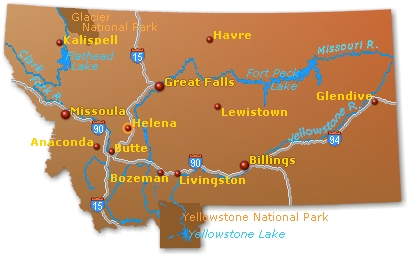
Because I’m a city girl at heart and habit, my visit to Bozeman, Montana, was probably more citified than yours might have been. Yes, there’s lot of great hiking over prairie and peak and we did some moderate walking, but most of our peripatetic adventures were city walking tours and museum treks. It was a great weekend in a university town that’s probably going to be like Boulder or Madison in another five years. The number of quirky coffee shops is a sign of things to come. (They have cold-brewed iced coffee in Bozeman!)
I lived in Colorado many years ago and have often visited Denver and Colorado Springs to visit friends and relatives and see Bruce Springsteen in concert. So I’m familiar with this part of the west. But the place I lived (Cortez, near the Four Corners) was a relatively young town whereas Bozeman has a lot of history.
We took many gorgeous mountain walks and drives, but I’ll report on the cultural highlights of a few days in southern Montana.
Bozeman’s Bon Ton district
This district of about 260 elite homes has been listed on the National Register of Historic Places since 1897. (You can take a guided walking tour or do it yourself by installing a tour app on your smart phone.) The Bon Ton District totals about 27 blocks, with examples of Italianate, Queen Anne, Craftsman, Colonial Revival and Bungalow architecture including buildings with Eastlake features and some examples of vernacular architecture, such as pattern-book homes from the turn of the century. Most of the homes are beautifully preserved and represent elements of Bozeman’s history, including its failed effort to become the state capital. The tour takes about 90 minutes, unless your tour guide talks too much, in which case it’s two hours.
Bluegrass on Main Street
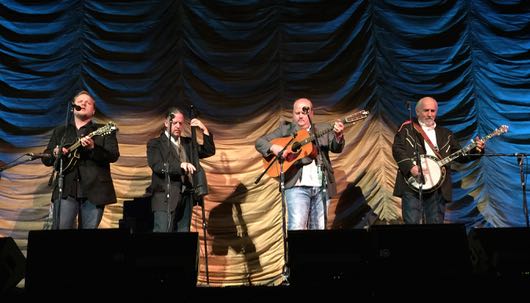 I first saw Special Consensus, a Chicago-based bluegrass band, in 1983 at my first Kentucky Fried chicken Bluegrass Music Festival in Louisville. The band members are a bit older but the music is still lively and fast as bluegrass string music should be. Banjoist and frontman Greg Cahill is the only original band member (and the only Chicagoan) still with the band. The concert was at the historic Ellen Theatre on Bozeman’s Main Street. It was a pretty traditional bluegrass concert with a nice combination of ballads, old-time bluegrass and some tracks from their new album, Scratch Gravel Road. The band’s two a cappella numbers were outstanding. You can listen to some song demos in the lower right here.
Robots and punch cards
Bozeman is the home of the fascinating American Computer & Robotics Museum, which apparently came about because its founder saved everything. The museum smashes together exhibits from a human brain and a Gutenberg printing press to typewriters, adding machines, original Alan Turing papers, punch cards (and their antecedent, the 1801 Jacquard punch cards for textile manufacturing) and the first neural computer. There’s also the latest in smartphone, robots and artificial intelligence devices. And a 1984 Macintosh like my very first.
The exhibits create a timeline of developments in computing and communications over the centuries. The museum, founded in 1990, was developed by and apparently based on the collections of Barbara and George Keremedjiev. They originally intended to locate the museum in Princeton, New Jersey, but changed their minds when they moved to Bozeman. The museum’s Wikipedia page is much more informative about the museum than its own website.
Handcrafted maps
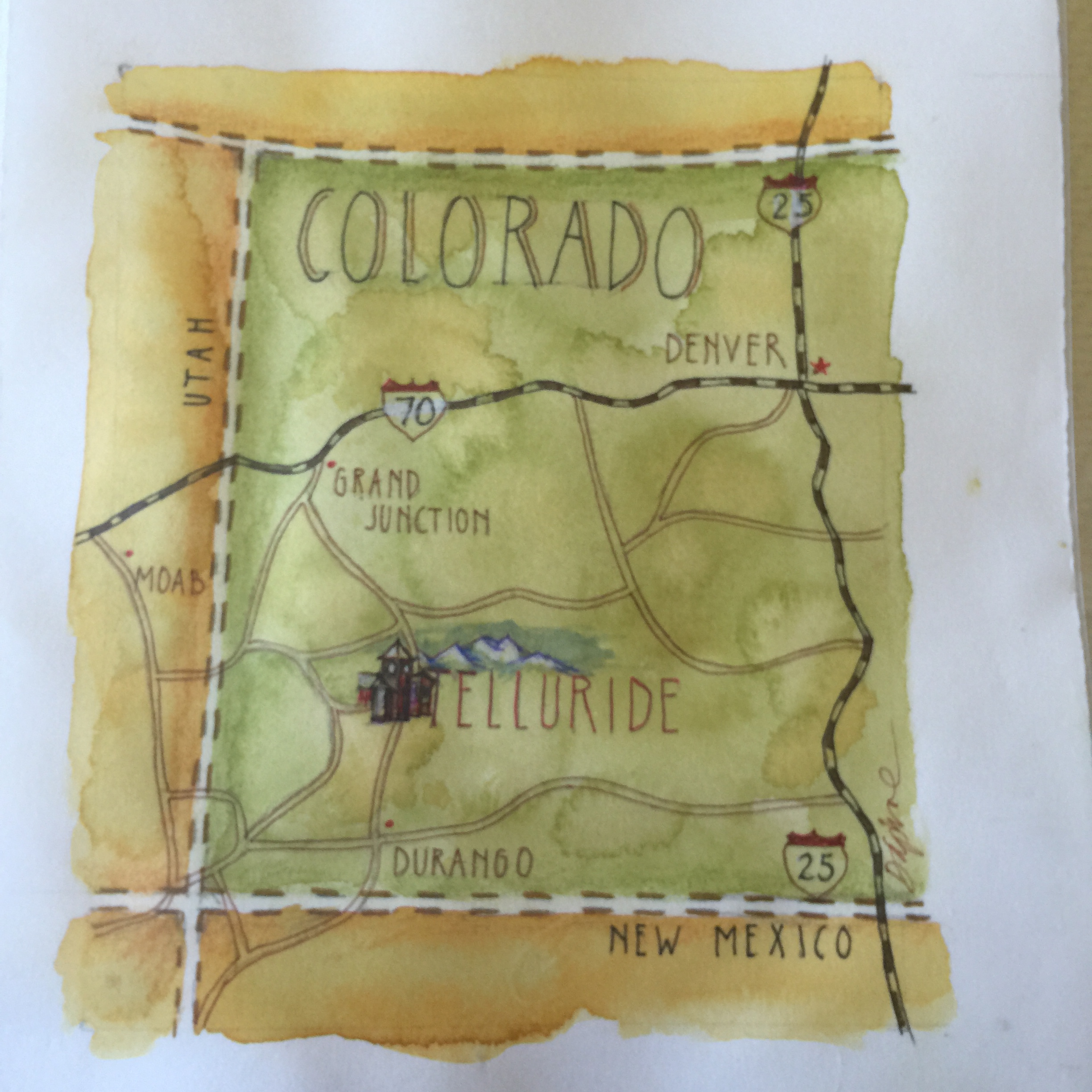 One day we visited Daphne Gillam, an artist who creates beautiful illustrative maps, at her home in the Shields River Valley. I was eager to see how she creates these maps and expected to see her sitting in front of a giant LCD screen. Instead, she is working on a piece of linen-finish paper taped to her desk top, painting with a well-used set of water colors and brushes, both medium and fine. You can see a gallery of her maps on her website, where she also describes the process she goes through when creating a map for a client, which is often a publisher.
Livingston, home of the Depot Center Museum
Livingston is a small town in the mountains near the Yellowstone River. It’s best known as the location of a museum created from a Northern Pacific Railroad depot built in 1902 as the original access to Yellowstone National Park. Passenger service ended in 1979 and in 1987 the city opened it as a museum to preserve Livingston’s railroad past.
Architects Reed and Stem, who were part of the design team for Grand Central Station in New York, designed the building. The exterior is notable for its terra cotta ornament and the interior for its beautiful wood and terrazzo. The exhibits illustrate how the railroad was built and maintained, how steam engines were serviced in the roundhouse, and how the railroad was run from the yard office, complete with tools and papers of the time. One exhibit demonstrates how the telegraph office worked and you can pretend to send your own dots and dashes.
An exhibit of paintings—Train in Art—was on display at the museum. The works were by two artists and I was particularly taken by the paintings by Sheila Hrasky (in the slideshow above).
After visiting the museum, we had dinner at a café in the historic Murray Hotel and then went to a play at the Blue Slipper Theatre in the historic district. The venue was pleasant and included an upstairs parlor where refreshments were served during intermission. The play, unfortunately, was forgettable.
Be bear aware
 When I checked in at the Bozeman airport for an early flight to Chicago, I was confronted by this warning, a sign I never have seen at O’Hare or LaGuardia. Must be lots of bears in Bozeman.
Brand magic – from the south side of Chicago
Posted: June 7, 2015 Filed under: Art & architecture, Chicago, Design | Tags: Archibald Motley, Chicago Cultural Center, Valmor Products 1 CommentBrand identity is a modern concept, or so it’s said. Companies, profit and nonprofit, and political campaigns devote extravagant amounts of time, money and energy to position themselves consistently—verbally and visually—with their priority audiences.
But almost a century ago, a small but creative company on the south side of Chicago developed its own distinctive brand and visual identity for an array of products designed to help its customers find beauty and romance.
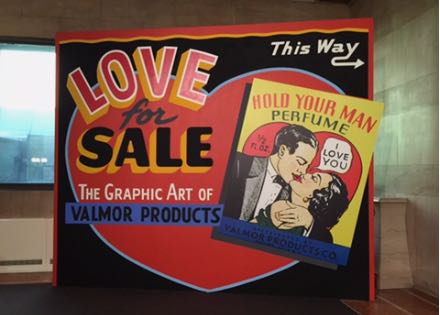 Valmor Products’ advertising and packaging is the subject of a funny, provocative and eye-opening exhibit at the Chicago Cultural Center. Love for Sale: The Graphic Art of Valmor Products runs until August 2 in the 4th floor north exhibit hall, just across from the not-to-be-missed exhibit of the paintings of Archibald Motley: Jazz Age Modernist. See my Motley review for details. (All photos by Nancy Bishop.)
Valmor operated on the near south side (as the location image shows, near the intersection of Cermak Road and Indiana Avenue) from the 1920s through the 1980s. Their products were perfumes, hair pomades and straighteners, incense and a great variety of other products designed to help the individual (male or female) attract and please the opposite sex. Some of the products claimed to have mystical or magical powers.
The Cultural Center’s comprehensive exhibit is the first to show Valmor’s remarkable works of graphic design—product labels, packaging and advertising. Some of the labels were no bigger than a postage stamp, as you can see from the photo of the spilling bin of packages. (Other vintage bottles and containers are also on display.) Those tiny labels were enlarged to poster-size using modern imaging technology. The result is an exuberant display of social and cultural history as well as graphic design.
Charles Dawson, Valmor’s first designer, was a distinguished artist. His life and career are described here by the American Institute of Graphic Arts (AIGA), the professional organization for design. Dawson’s unpublished autobiography is in the DuSable Museum of African American history.
The Chicago Cultural Center, as I’ve noted before, is a Chicago treasure that many people aren’t aware of. It was opened as the city’s central library in 1897, designed by the Boston architectural firm, Shepley, Rutan and Coolidge. They created a number of monumental civic structures in the Romanesque style of Henry Hobson Richardson (best known here as architect of the John Glessner House). In 1977, the building was re-created as a city cultural center. It offers many exhibits of artistic and architectural interest, concerts, films and other performing arts events–and admission is always free.
The Washington Street side has a grand Carrara marble staircase leading to Preston Bradley Hall with its beautifully restored 38-foot Tiffany glass dome. The hall was the library’s main circulation room, which is why the mosaics that line the walls display the names of authors and philosophers. (View the restoration story in the video above.) If you enter on the Randolph Street side, you’ll find a large area with tables and seating, where you can meet with a friend or client, read or do a little work. But be sure to walk up (or take the elevator) to the fourth floor, where you’ll find both the Motley and Valmor exhibits.
Art you don’t want to miss: Archibald Motley, Jazz Age Modernist
Posted: April 22, 2015 Filed under: Art & architecture | Tags: Archibald Motley, Chicago Cultural Center 2 CommentsThe Chicago Cultural Center at 78 E. Washington St. is an under-appreciated gem of our city. The building is home to many interesting and often spectacular exhibits and events. Like concerts under the beautifully restored dome of Preston Bradley Hall. Art exhibits in the Sidney Yates Gallery and in smaller galleries around the building. There’s a comfortable seating area with tables in case you need a spot to rest or get some work done on the Randolph Street side of the building. Too bad the coffee bar is gone, but you can bring your own coffee in.

Motley, Blues, 1929
Right now the Sidney Yates Gallery is home to a fabulous exhibit of the art of Archibald Motley Jr., an African-American artist who studied painting at the School of the Art Institute from 1914 to 1918, whose work was exhibited all over the world and who won many honors. He lived in Paris for a time and traveled widely but he always called Chicago home.
The exhibit–Archibald Motley, Jazz Age Modernist—is here through August 31, then it moves to the Whitney Museum of American Art in New York, opening October 2. That will be the new Whitney, which opens next month. (The new building in the meatpacking district at 99 Gansevoort St. replaces the Marcel Breuer-designed building on the Upper East Side at 75th and Madison. (The Metropolitan Museum will take over the old Whitney, which is good news for preservationists. Some people don’t like the Brutalist-style Breuer building, but I do.)
The exhibit at the Cultural Center is informative and well-organized and includes a substantial section on Motley’s early work. He’s best known for colorful urban scenes but his early portraits (like the one titled Mulatress with Figurine) are insightful glimpses into African-American life of the time. You’ll see portraits of his grandmother and of his wife, Edith Granzo. Motley was born in New Orleans in 1891 and his family moved to Chicago in 1894. He grew up in Englewood, then a German/Irish/Swedish neighborhood, but his social life and artistic inspiration was in Bronzeville. You’ll find exhibits on Motley, his life, thoughts and art in the corridor leading into the Yates gallery.
See my review in Gapers Block for more descriptions of the exhibit and of Motley’s work.
Big art questions: What is art and who gets to make it?
Posted: March 4, 2015 Filed under: Art & architecture, Theater | Tags: "This Is Modern Art", Idris Goodwin, Kevin Coval, Steppenwolf for Young Adults, Steppenwolf Theatre 1 Comment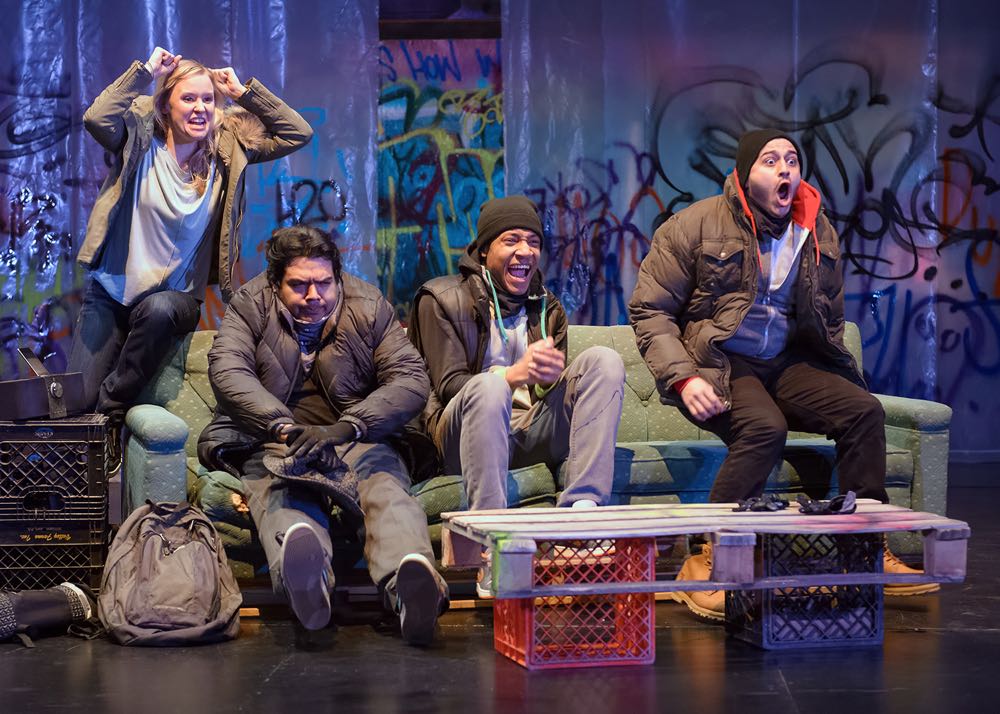 My review of This Is Modern Art, the new Steppenwolf for Young Adults play, went live on Gapers Block Monday night, soon after the scathing reviews by the two daily newspaper critics had been posted or published. I was surprised at the level of criticism in the two reviews—not criticism of the play itself, but of the theater for producing it at all.
This Is Modern Art (based on true events) is the story of the crew of young graffiti writers who decide they need to define “modern art” on their own terms and so they paint a “piece” (short for masterpiece) on the east wall of the new Modern Wing of the Art Institute. The event actually took place five years ago. In the play, the artists are shown at a party where an art student brags about attending the opening of the Modern Wing and seeing all the masterpieces plus “everybody in the art world.” Clearly Seven (the leader of the crew) knows his art history, but he says “We only paint everywhere else, because they won’t let us paint inside.”
The play acknowledges the illegality of graffiti writing—and also distinguishes between gang graffiti (usually tags) and the street art created by the graffiti writers. Among the criticisms of the play is that it sends the wrong messages to young people. This is a really offensive argument for young people, who do not see themselves as naïve and malleable to suggestion. As my grandson said, “Yeah, I liked the play a lot but that doesn’t mean I’m going to go out and buy spray paint and write on walls.”
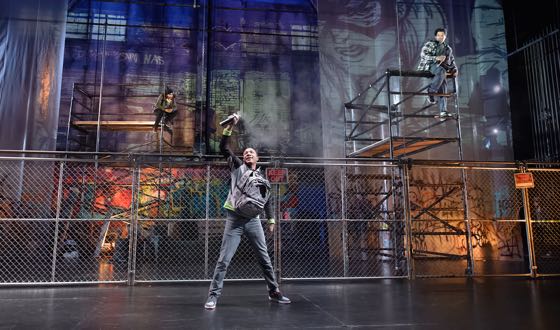 In my review, I commented, “Was what happened an act of vandalism or important artistic commentary? The question deserves to be addressed. The script and the characters acknowledge that they are committing an illegal act. But the important message the play articulates is that art shouldn’t be confined to elite galleries and museums with $18 admission tickets. The graffiti writers are artists shouting to be seen and heard. They demand visibility in a society that decrees them invisible–as artists and as individuals.
Twitter commenters noted, “If you see a Shakespeare or McDonagh drama, do you criticize the artists for glorifying/condoning murder?” And “Does anyone try to ban the Netflix series ‘House of Cards’ because Francis Underwood commits murder to get ahead?” The reviews by the Tribune and Sun-Times critics received their share of Twitter snark. Trust me. It wasn’t pretty.
I have written frequently about street art and post-street art (see Related Posts below) and I find the genre fascinating and vibrant. I wouldn’t want to shut it down. But I agree that I wouldn’t want to wake up one morning and find my house (if I had a house) covered with graffiti. The play also differentiates between “permission walls,” where an owner or a community invites artists to write on or paint walls. This would cover some of the paintings in highway and railroad underpasses that have been sponsored by local communities. Some graffers are happy to be able to show their art on permission walls, while to others, the risk is the drug that fuels their creativity. In any case, I believe they ought to be able to paint public walls and abandoned spaces.
And the Art Institute should have left the “modern art” masterpiece on its east wall for a few days instead of immediately calling in the graffiti blasting crew. And most importantly, Steppenwolf should have commissioned a “piece” for the south wall of their building, to be displayed at least during the run of this thought-provoking play. That would have been a meaningful way for the theater to make a statement supporting their production.
See my review of This Is Modern Art and go to Twitter and search #thisismodernart or @kevincoval to see the commentary about the play.
Let me know what you think about this issue. Who gets to make art and where should it be shown? Please comment below.
Related posts
Art in the gallery and out in the street.
Out in the street: street art and post-street art
New wall mural in Old Irving Park
Literary lions: Chicago authors celebrate their own hall of fame
Posted: January 6, 2015 Filed under: Art & architecture, Chicago | Tags: Chicago Literary Hall of Fame, Ganz Hall, Louis Sullivan Leave a commentYou’ll be pardoned if you didn’t know there was a Chicago Literary Hall of Fame. It’s been pretty low key during its short life, and so I excused myself for just discovering it in time for its fifth annual induction ceremony.
The ceremony, presided over by journalist/author Rick Kogan, brought six Chicago authors into the Literary Hall of Fame. I wrote a preview of the event for Gapers Block and decided to attend, even though it was a Saturday night in December with three other events trying to grab my attention. But I was happy I decided to be literary.
The event was held in the richly ornamented Ganz Hall at Roosevelt University. Ganz Hall, originally designed as a banquet hall, was built suspended over the Auditorium Theater space in another example of the engineering genius of Dankmar Adler and Louis Sullivan. (All photos by Nancy S Bishop.)
The authors inducted are all dead, have a strong Chicago connection, and are considered writers of literary works. In other words, they are poets, novelists, playwrights, and occasionally one whose work extends beyond those boundaries. (Donald Evans, CLHOF founder and executive director, outlines the guidelines and history in an essay in the event program.) This year’s six honored authors were:
Margaret Anderson, who founded and edited the literary magazine, The Little Review, in 1914
David Hernandez, a street poet and unofficial poet laureate of Chicago
Edgar Lee Masters, author of The Spoon River Anthology
Willard Motley, Englewood native and author of Knock on Any Door and originator of the Bud Billiken columns in the Chicago Defender
Shel Silverstein, author of iconic books for children including The Giving Tree and Where the Sidewalk Ends
Margaret Walker, whose first book of poems, For My People (1942), made her one of the youngest published black poets of the 20th century
This wasn’t one of your dry awards ceremonies with envelope openings and honorees fumbling for their speeches. (For one thing, they are all dead.) Each honoree was introduced with a remembrance about the author by a relative or literary connection, followed by a reading from the author’s work, and an acceptance speech by another relative or literary connection. Some of the readings were quite dramatic. Sandra Seaton performed an emotional reading from Margaret Walker’s For My People. Leslie Holland Pryor read a passage about the character Nick Romano from her great-grand-uncle’s novel, Knock on Any Door. Cynthia Judge performed a reading from Life Without Roses, June Sawyer’s play about Margaret Anderson.
These presentations, interspersed with comments from Kogan, made an entertaining evening that revealed Chicago literary secrets and history that should not be forgotten.
The evening also included the Rutledge Writing Awards to 13 Chicago high school student writers.
The sponsors of the CLHOF event include the Chicago Writers Association and the new American Writers Museum, which will open its new museum in 2016 on Michigan Avenue near the Art Institute of Chicago.
2014: My pop culture memories
Posted: January 2, 2015 Filed under: Art & architecture, Books, Movies, Music, Theater Leave a commentIt’s the beginning of a new year and time to reflect on the pop culture year just ended. Critics did their top 10 lists of everything, but I’m going to do my list of 2014 favorites. Some of these are clearly eccentric choices–not necessarily “the best.” I’ve written about most of them during the year – either here or at Gapers Block or Culture Vulture.
Professionally….
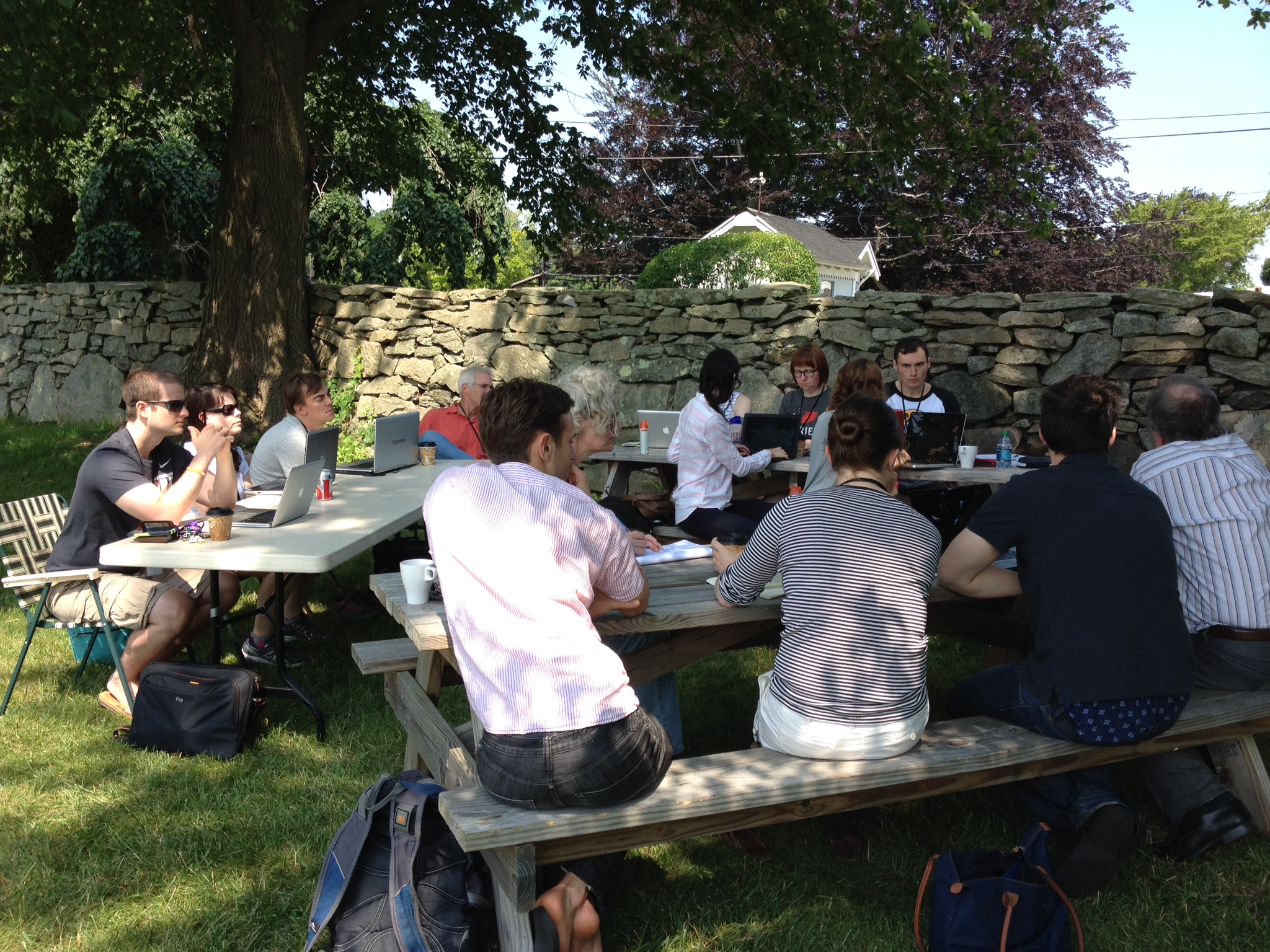
Critics at work in the Sunken Garden
My favorite professional experience – my two weeks at the National Critics Institute at the Eugene O’Neill Theater Center. It was a fabulous and enriching two weeks, complete with inspiration from colleagues and visiting experts, lots of plays to review, and sleep deprivation.
The institute strengthened my ability to write theater criticism and I did a lot of it this year. I wrote about 60 reviews—mostly theater but also reviews of art exhibits—for gapersblock.com and about 20 for culturevulture.net, a national arts website.
For Nancy Bishop’s Journal, I wrote 46 essays, which drew 4500 visitors from 86 countries—mostly the US, UK and Brazil. The two essays that drew the most visitors were:
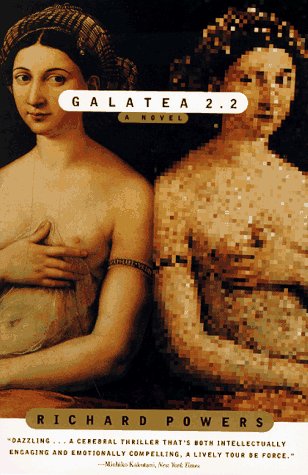 — My review of Spike Jonze’s film Her, which I compared to Richard Powers’ novel Galatea 2.2.
— An article demanding freedom for Oscar Lopez Rivera, a political prisoner in the US for 33 years.
Theater
My favorite experiences as a theater critic and theatergoer aren’t necessarily the plays on other top 10 lists, but they are shows that I found thrilling.
The Hypocrites’ All Our Tragic. This play was a masterful combination of all 32 extant Greek plays by Aeschylus, Euripides and Sophocles, written by Sean Graney. The 12 hours flew by, with plenty of breaks for food and conversation.
Oracle’s The jungle was a searing theater experience; a big story in the smallest space imaginable. My review commented, “Your Chicago ancestors may have greeted the Pilgrims, arrived on the Mayflower or a slave ship, or come in through Ellis Island. Whatever their origin, they’re part of our history. You can relive it in this stirring drama.”
A fabulous visiting production of Arguendo, a dramatization of a Supreme Court First Amendment case, directly from the transcript, by the Elevator Repair Service, the inventive New York theater company. Scroll down in this long post to see my review of Arguendo. The choreography of the justices on office chairs was priceless. Here’s the trailer:
Elevator Repair Service presented Gatz, a word-for-word reading of The Great Gatsby, at the MCA theater in 2006. Here’s a video sample of Gatz.
Also among my 2014 favorites: Seven Homeless Mammoths Wander New England at Theater Wit; a fine production of Martin McDonagh’s The Lieutenant of Inishmore at Aston Rep; and Chicago Shakes’ King Lear highlighted by Larry Yando’s moving performance in the title role. My reviews of The Lieutenant and Lear.
Films
Picking my favorite films of 2014 was really difficult, but here’s my try:
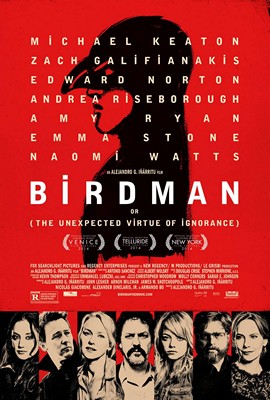 — Birdman, because it’s wildly inventive, sadly realistic, and beautiful to behold—especially if you love the backstage areas of old New York theaters. I’ve seen it twice and loved it both times.
— Boyhood, because Richard Linklater, who is obviously fascinated with the concept of time (re his “Before” film trilogy), took the time to see a boy and his family grow and change over 12 years.
— The Imitation Game. I could nitpick at plot points but the story is fascinating and Benedict Cumberbatch’s performance is award-worthy.
— The Grand Budapest Hotel. Yes, I know this is kind of sweet and quirky or “twee” as Greg Mitchell tweeted. I just saw it for the second time and still enjoyed Wes Anderson’s visual fun and games.
Favorite movie viewing experience: The Cabinet of Dr Caligari with a live organ performance at the Symphony Center on Halloween night.
Plus two exceptional art documentaries:
— National Gallery, a Frederick Wiseman documentary profile of London’s National Gallery, done in his fly-on-the-wall style with no narration or background music.
— The Hairy Who and the Chicago Imagists, about which I wrote two different pieces—first when it was shown here briefly in June and then when the Gene Siskel Film Center showed it in the fall.
Television
 — True Detective, the weird, creepy, gothic HBO series starring Woody Harrelson and Matthew McConnaughey. True Detective will come again this year with a different cast and story line, but I doubt it will compare to year 1.
— The 2013 MusiCares Tribute to Bruce Springsteen, which was finally televised by PBS this fall. Many great performers cover his songs, finding new ways to interpret them, while Springsteen sat in the audience and watched. But he finally got to the stage to give his acceptance speech and play a few of his own songs.
— Sonic Highways, Dave Grohl’s tribute to American music, illustrated with the music and musicians of eight cities on HBO. The Chicago segment was episode 1. You can still view it on demand, if you subscribe to HBO.
Music
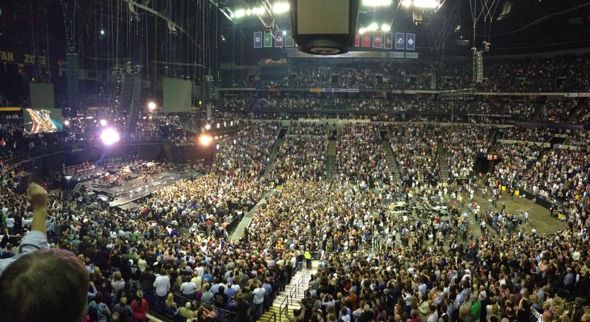
Bridgestone Arena, waiting for The Boss. Brad Paulsen photo.
— Bruce Springsteen and the E Street Band in Nashville. No, he didn’t come to Chicago, so we took a road trip.
— The Bruce Springsteen 65th birthday bash at Fitzgerald’s in Berwyn, organized by my friend, June Sawyers. In addition to the music, June and I read literary and not-so-literary commentary on Mr Springsteen.
Biggest musical disappointment: The October concert at the Symphony Center by Chris Thile and Edgar Meyer. The music and the performances were quiet, indistinguishable and without passion. I knew they weren’t going to rock out, but I did expect some enthusiasm.
Favorite album release: Leonard Cohen’s Popular Problems. The opening track, “Almost Like the Blues,” is especially fine. As the Pitchfork reviewer said, his music “sounds slick, but slightly off-kilter.” Springsteen’s High Hopes was also released in 2014, and of course I’ve listened to it many times.
Visual art
My favorite art and museum exhibits:
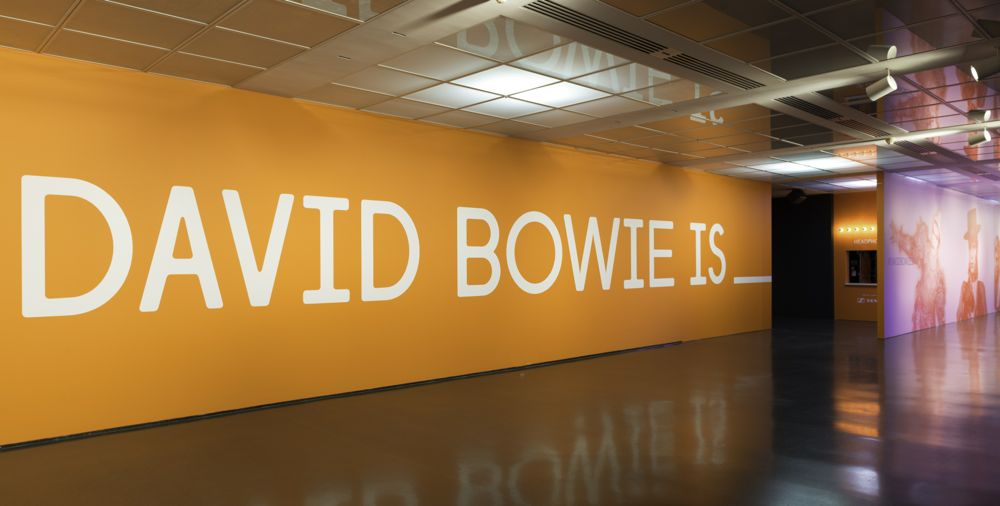 — David Bowie Is, which closes this weekend at the MCA. It’s an excellent exhibit and illuminates the genius of a musician who is ever conscious of his identity. My review.
— Magritte: The Mystery of the Ordinary, 1926-1938, at the Art Institute. My comments.
— The new Ed Paschke Art Center in Jefferson Park opened this summer and I was there.
Mecca Flat Blues, an amazing exhibit of one of the many places where Chicago’s architecture and civic life collide, at the Chicago Cultural Center. This was my personal favorite article of the year. Chicago Magazine named it one of the must-reads of the week in April. I reprised it on my blog with added memories of Mies.
Books and authors
— Hilary Mantel’s short stories, The Assassination of Margaret Thatcher. I had only read Mantel’s first book about Thomas Cromwell, Wolf Hall, which won the Man Booker Award. Her short stories are wildly different.
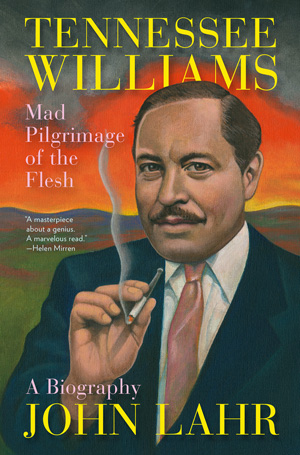 — John Lahr’s biography, Tennessee Williams: Mad Pilgrimage of the Flesh, is one of the best biographies I’ve ever read. I reviewed it and his appearance onstage at Steppenwolf.
— Stoner, the 1965 novel by John Edward Williams that was recently rediscovered. Julian Barnes declared it the must-read novel of 2013. Stoner was a farm boy who went to college to study agriculture and discovered the world of literature. One reason I loved its quiet prose about a life of disappointments is that it’s mostly set on the campus of the University of Missouri; it was lovely to read Williams’ descriptions of the place where I spent two years.
 nancy bishop's journal