Potpourri, farrago, mishmash & hot dogs–my pop culture week
Posted: August 11, 2015 Filed under: Art & architecture, Food, Theater | Tags: Baby It's You, CBGB, Cirque du Soleil, Gapers Block, Pride Films & Plays, Sideshow Theatre 1 CommentFarrago, potpourri, mishmash. Whatever you call a week of variety, that was my last week. A few tidbits and capsule reviews.
Cirque du Soleil: Kurios — Cabinet of Curiosities
The kid (he’s now 17) and I went to opening night at Cirque du Soleil with some friends. The Big Top (or le grand chapiteau) is set up on the United Center parking lot. Cirque du Soleil hasn’t been in Chicago for a few years and the show has been re-created or reimagined for a new audience, as my friend Kim reported when she interviewed the director, Michel Laprise, for Gapers Block. All the amazing acrobatics and gorgeous pageantry and choreography are still there but it’s done with a “steampunk” theme, suggesting late 19th century industrial machines with a whiff of fantasy. The costuming suits the theme and the period too.

Cirque du Soleil’s Kurios, Grand Chapiteau by A1 Federation – via Wikimedia Commons
We loved the Acro Net, where a giant net stretches across the stage and operates like a trampoline. The performers bounce, dance, jump and leap, sometimes all the way to the tent’s peak. The Rola Bola man balanced on a board, first atop a ball, then several balls and finally a hill of balls and spools–and still he balanced. The Invisible Circus was very clever, with all the lights and contraptions operating as if someone was using them, but not a soul was in sight–except for the circus announcer who described what was taking place. I could go on and on. It’s an amazing show. Whether or not you’ve seen Cirque du Soleil before, try to see this one. And take a kid or a kid at heart.
Hot Dog Festival at the Chicago History Museum
Next day we wandered over to the south end of Lincoln Park for the Chicago History Museum’s Hot Dog Festival. The hot dogs were great; I had a Chicago classic with all the trimmings layered in the proper order*. The kid had a dog plus fries and then went back for a Godzilla dog, which is the equivalent of two or three regular ones. We shared an ice cream because I ran out of dog dollars.

This is a perfect Chicago hot dog. Photo courtesy Vienna Beef.
In addition to great food, there were bands and a speakers stage. We got there early so we could hear Bill Savage, the Northwestern pop culture professor, discourse on “Ketchup: The Condiment of Controversy.” He discussed the nature of hot dogs (“the ultimate democratic street food”) in other locales, concluded that Chicago is rightly considered the hot dog capital of the world, and described how hot dogs and their peculiar Chicago condimentry came to be. He took a poll of his audience. Seventy percent of us agreed that ketchup on a hot dog is an abomination, but ketchup is ok for kids under 10. Bill’s conclusion was Chicago is a great democratic city and Chicagoans are free to do as we please, and if that means ketchup on a hot dog, that’s ok. I respectfully disagree.
* The layers have to be: mustard, neon green relish, chopped onions, tomato wedges, hot sport peppers, dill pickle wedges and finally celery salt.
Two nights at the theater
My two most recent reviews were (1) brilliant satire and (2) a flashy musical. Guess which one I liked best?
The Boy From Oz is the new show by Pride Films & Plays at Stage 773. It’s the story of Australian musician and entertainer Peter Allen, who was married to Liza Minnelli for a while, was a great hit as a cabaret performer, but never was a huge success in the US. At least his music was never a huge success–and since there was nothing melodic or hummable about his music, that made sense. The production is very well done, with some good performances from both the actors and the dance ensemble. Great costumes and choreography. So my review is: It’s a pleasant evening with a lot of talent and energy wasted on boring raw material. See my review here. The play runs through August 30. See it if you like gratuitous singing and dancing.

Katy Carolina Collins as Mash in SFB
Stupid Fucking Bird is Aaron Posner’s play that kinda/sorta deconstructs Chekhov’s The Seagull. Sideshow Theatre is staging it now at Victory Gardens/ Biograph and you can see it through August 30. You need to see it. The script is witty and the characters are sort of based on Chekhov’s except their angst is contemporary rather than 19th century. It’s a case where A loves B who loves C who loves D who flirts with E who is the lover of F. (I’m quoting my review.) Plus there’s a playwright who wants to invent a new kind of theater and when he succeeds in getting a play produced complains that he will now have to put up with being criticized by perfect strangers in addition to family members. Some nice musical interludes throughout the play with Mash (Masha in Chekhov) on the ukulele.
Movies with musical themes

Madame Marie’s booth on the boardwalk, September 2012. Photo by Nancy Bishop.
Baby It’s You is a 1983 film directed by John Sayles. It’s a little indie film about Jill, a Jewish girl with dreams of college and a theater career (played by Rosanna Arquette), and her boyfriend, the Sheik (Vincent Spano), a well-dressed greaser who loves Jill and Sinatra. They are not going to walk off together into the sunset because Jill is not interested in marriage and babies and that’s the only relationship that Sheik can see for them. It’s a good film–I gave it 4 stars out of 5 on letterboxd.com. Two great things about the film are the music (plenty of Springsteen songs) and the trip that Jill and Sheik make to the Jersey shore. We see how Asbury Park looked 30 years ago when the Casino and the Palace were in much better shape; Madame Marie’s was there too and it still is. She died in 2008 but family members still tell fortunes in her booth on the boardwalk.
CBGB is a movie that I really wanted to like. It’s a 2013 docustory about the iconic punk rock club on the Bowery and its owner, Hilly Kristal (played, incongruously, by Alan Rickman). It was fun to see actors play the great bands that started there, like the Dead Boys, Television, Blondie, Talking Heads, Iggy Pop, the Ramones and Patti Smith– but the producers ruined the effect by playing polished studio recordings of those bands while the actors lip-synced. The music totally missed the raw, rough edge that it should have had. It’s not a very good movie–unless, of course, you loved the memory of CBGB.
One more thing ….
An exhibit of photos of rock star legends by Chicago photographer Paul Natkin was on display at the Ed Paschke Art Center in Jefferson Park. One Saturday afternoon, he sat surrounded by his photos and talked about his career, shooting some of the greatest musicians of our time, and how photography has changed with the digital revolution. His talk was fascinating and he was kind enough to talk to me later and answer a question about artists’ rights for one of my SCORE clients. Natkin’s work was shown in a more comprehensive exhibit a few years ago at the Chicago Cultural Center. You can check out his website.
The kids are OK: My 4-star theater reviews
Posted: July 30, 2015 Filed under: Theater | Tags: Albany Park Theater Project, American Theater Company, Emily Mann, Feast, Goodman Theatre, Greensboro massacre, Greensboro: A Requiem Leave a commentThis week I’ve seen and reviewed two youth ensemble theater productions. I did that with some trepidation because I didn’t want them to be dreadful. It’s one thing if an adult production is dreadful and I have to write a bad review. But I really didn’t want to write a bad review when teenagers are involved. It turned out happily because both productions are outstanding, and in totally different ways.
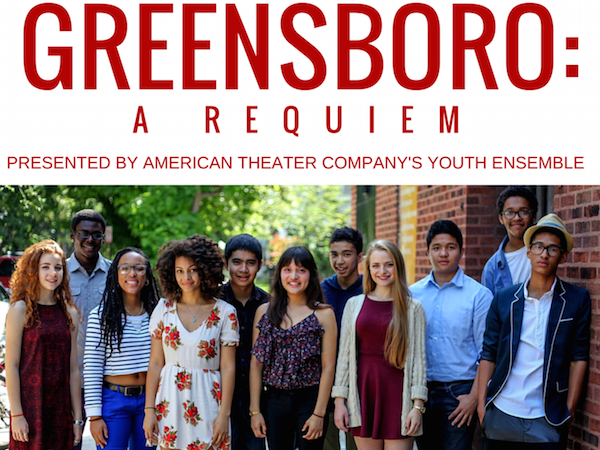
American Theater Company’s Greensboro: A Requiem is an example of the serious, documentary theater created by ATC’s late lamented artist director, P.J. Paparelli. This youth ensemble production presents a play by Emily Mann, which tells the story of a 1979 event in which five protestors were murdered by members of the Ku Klux Klan and the American Nazi party.
Albany Park Theater Project’s Feast, originally mounted in 2010, is a lively, colorful series of scenarios about food in Chicago’s many immigrant communities, presented by a multiethnic group of 25 performers of high school age. Five just finished middle school and four will go on to college in the fall.
Both productions involve the young performers doing additional research to update or recreate the stories (in the case of Feast) or to travel to the scene of the event to interview participants and survivors. In each case, the research served to deepen the actors’ understanding of the issues portrayed in their productions.
Greensboro: A Requiem uses verbatim text from interviews, court transcripts and other documents to describe what happened on November 3, 1979, in the North Carolina city. The Communist Workers Party organized a group of mostly black textile workers to protest the Ku Klux Klan, which was then growing in influence. The protesters had a police permit for their march, but somehow the police conveniently managed to be out to lunch at the time of the march. A caravan of cars loaded with Klan and Nazi party members attacked the marchers and killed five of them.
The 11 Chicago Public High School juniors and seniors do an excellent job of creating the mood and portraying what has become known as the Greensboro massacre and its aftermath. Read about their production in my review here.
You can also read about the ensemble’s Kickstarter campaign that raised money for their travel to Greensboro.
This show runs through August 2 at American Theater Company, 1909 W. Byron. Tickets are free, but reservations are suggested (and a $25 donation will be requested).
Feast is a much less somber production, but underlying the joy of shopping (with a LINK card), cooking, eating and dancing are the real stories of the scarcity of food and its importance in tying the immigrant community to its home traditions. And of course food plays a glorious role in life and in family celebrations. See my review.
Feast continues in the Goodman’s Owen Theatre through August 16. The circular stage with a runway on each end is a perfect setting for the production. Music and costuming complete an authentic picture of the lives of the many immigrant communities represented.
Both of these productions provide an excellent and thought-provoking evening of theater. They will fill you with optimism about the future of Chicago and American theater.
The Freedom Principle: The art of jazz on display at the MCA
Posted: July 23, 2015 Filed under: Art & architecture, Music | Tags: AACM, Museum of Contemporary Art, Nick Cave Leave a commentThe Freedom Principle: Experiments in Art and Music, 1965 to Now. That’s the title of the new exhibit at the Museum of Contemporary Art. It’s a euphonious blend of the visual and the aural. It celebrates 50 years of the Association for the Advancement of Creative Musicians, a group always dedicated to progressive sounds.
I’m glad to see the MCA continuing their exploration of the confluence of art and music, as they did with the exciting David Bowie Is exhibit last fall. This exhibit is a little more low-key but it displays paintings and photographs that represent the visualization of jazz and depictions of AACM from its beginnings to now.
In addition to two-dimensional art, there are exciting sculptural exhibits, such as the stage set showing the huge range of instruments, especially percussion, that the AACM played. Two of the original AACM members collaborated with a sound designer to create “Rio Negro II,” a roomful of bamboo and rain sticks, chimes and robotic instruments. It’s a sight and sound to behold and enjoy.
You’ll also see archival materials such as record jackets, posters and brochures. I especially liked the display, “Speak Louder,” Sound Suits created by Nick Cave (no, not the Australian rocker–this one is the artist and fashion designer). They’re beautiful and functional.
The title of the exhibit is drawn from a book by Chicago music writer John Litweiler. My reviews are here and here. The exhibit price is included with the cost of admission. Musical performances are scheduled for some dates during the exhibit, which runs until Nov. 22. It’s an intriguing and well-curated exhibit, so support your local art museum!
Date with a diva: Interview with E Faye Butler & other theater news
Posted: July 15, 2015 Filed under: Music, Theater | Tags: Brilliant Adventures, E. Faye Butler, Goodman Theatre, Johnny Cash, Mercury Theater, Ring of Fire: The Music of Johnny Cash, Steep Theatre, Vanya and Sonia and Masha and Spike Leave a commentRecently I reviewed the new Goodman Theatre production of Christopher Durang’s Vanya and Sonia and Masha and Spike, a play with many Chekhovian and other theatrical references. I thought it was very good but regretted the fact that Goodman has been promoting it as a slaphappy summer comedy. That means the audience members think they have to be entertained and therefore find every line absolutely hilarious. As I said in my review:
“Durang’s treatment certainly contains much wit and draws the fine line between comedy and tragedy, but the opening night audience’s raucous laughter throughout both acts weakened the poignancy of the characters’ stories. Really, this isn’t the Marx Brothers.”
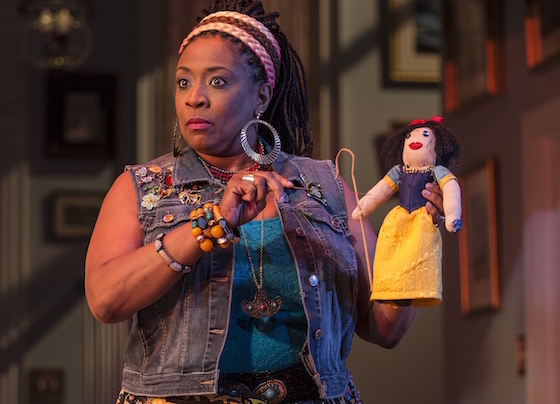
The Goodman publicity team was offering actor interviews and I was asked if I would like to interview one of the lead actors. After seeing the play, I said, “No, I want to interview the actor who played Cassandra. I want to hear her story about how she created her character.” And so one morning last week, I went back to the Goodman Theatre with my tape recorder (my iPhone actually) and a set of questions to ask E. Faye Butler.
I don’t do interviews often, because they’re time consuming and can end up being bland if the subject is afraid of sounding undignified. But E Faye was fabulous. She’s a classically trained actor who also sings and has a powerful voice and a magnetic persona. She is smart, articulate and funny and was absolutely the best interview I’ve done. Turning her recorded interview into an interesting story was easy. At least I think it’s interesting and I hope you do.
Here’s my date with the diva. My reviews of VSMS also appeared here and here.
Review: Brilliant Adventures at Steep Theatre
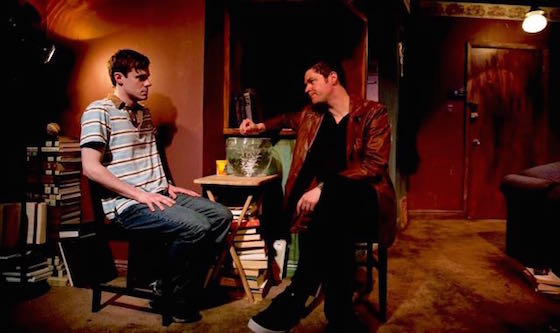 Last week I reviewed the new gritty British drama at Steep Theatre. It’s a US premiere of a play by Alistair McDowall, a new English playwright. Excellent play, directed by Robin Witt, with a group of six fine actors. The fascinating thing about Brilliant Adventures is that it starts out like one of those 1970s British working class films, but then devolves into sci-fi and fantasy. Really, it’s fascinating and it works.
As I said in my review, “It is a deeply classist play that explores the lives of those who live in Middlesbrough, a failed industrial city on the River Tees in northeast England.” The Steep playbill and the lobby exhibits do a good job of acquainting you with the environment and language of Middlesbrough.
Brilliant Adventures is an outstanding two hours of theater and I recommend it. You can see it through August 15. Steep is located on Berwyn, just east of the Berwyn Red Line station. You can also see my review here.
Review: Ring of Fire at the Mercury Theatre
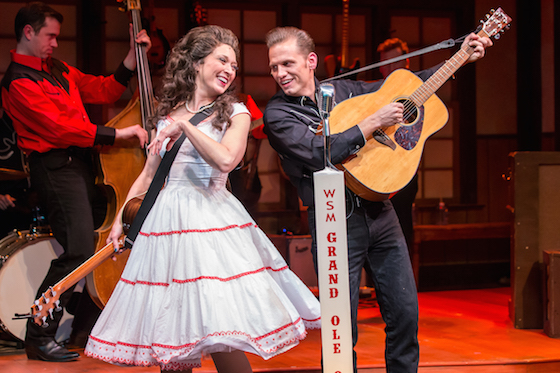 I also had a chance to review the Johnny Cash musical tribute in its extension through the end of August. (I missed it when it first opened this spring.) I went with friends who are music lovers like me and fans of rock, blues, bluegrass and country). June Sawyers has written dozens of books about music and musicians. It was a treat to see the show with two music fans and discuss the music at intermission and afterwards.
We all agreed it’s a great piece of entertainment but we thought it lacked the depth that the tortured story of Johnny Cash’s life would have added. But no, it’s strictly a jukebox musical with about 30 songs by Cash and other songwriters performed by a talented group of seven musicians.
Here’s a song from the show that was often performed by Johnny Cash but it was written by Geoff Mack (an Australian) and Hank Snow (who wrote the North American lyrics). I describe the lyrics as a tongue-twister travel itinerary. This is a Hank Snow version from 1965.
The Mercury Theatre is a comfortable venue with an excellent sound system. Ring of Fire is a pleasant evening of entertainment in the same way that Million Dollar Quartet is. But even that play is built around some narrative elements.
My Gapers Block review is posted now. You can read it here.
My July Fourth week: Fireworks, art and movies, silent and not
Posted: July 9, 2015 Filed under: Movies, Music | Tags: GSOHoppers, Love & Mercy 4 CommentsFourth of July may be my favorite holiday. Parades and fireworks! What could be better. And there’s nothing like a small town Fourth of July. I loved the Fourth when we lived in small college towns and this year I spent the holiday in a medium-sized city in North Carolina. Greensboro is something over a quarter million people but they still have a July Fourth parade down main street. Greene Street, actually—named for Nathanael Greene, the Revolutionary War general who forced the British troops to leave the Carolinas. The decisive battle was the Battle of Guilford Courthouse in 1781, near what is now Greensboro.
Since July 3 was a First Friday, the galleries and artisan shops on Elm Street were open and we walked around and looked at many creative endeavors. One of the places we visited was Elsewhere, an experimental venue of art, music and salvaged art (or junk, if you wish).
The Saturday parade featured a few bands, motorcycles and classic cars, fire engines, Uncle Sam on stilts and lots of politicians. Costumed paraders walked along the route tossing candy to the crowd and handing out small flags. My grandsons loved the candy and the fire engines. There was a block party and street festival downtown on both July 3 and 4.
Saturday night the Fourth we were invited to a skybox at the stadium to watch the Greensboro Grasshoppers play the Hickory Crawdads. (The Hoppers are a Class A team in the South Atlantic League, and a farm team of the Miami Marlins.) I won’t report the score to avoid embarrassing the Hoppers. The kids were delighted when the team mascot, Guilford Grasshopper, visited our skybox. He took pictures with everyone and gave me a hug. The evening ended with an excellent fireworks display, one of many around town that night.
Silent movies: Chaplin and Keaton
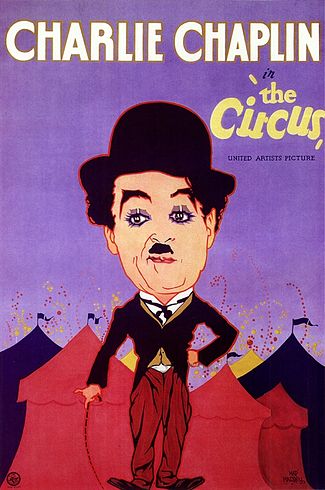 One quiet afternoon the 7-year-old and I went to a screening of Charlie Chaplin’s 1928 film, The Circus, at the aptly named Geeksboro Coffee Cinema. The coffee house caters to gaming geeks and the downstairs cinema shows weekly films. They also have Lawn Chair Movie Nights outside on weekends.
Meyer and I and about 20 other film geeks saw Chaplin’s silent film, in which the owner of a traveling circus hires the Little Tramp because he’s accidentally funny. There are all kinds of wonderful sight gags, like a pickpocket sequence, the Tramp locked in a cage with a lion and performing a high wire act beset by five monkeys.
The film ends as the circus pulls up stakes and leaves town. The Little Tramp walks off across the field in a tracking shot framed by an iris lens.
Meyer, who just finished first grade and is a great reader, could read all the title cards. He sat on the edge of his seat through most of the 71-minute film. What fun to take a child to such an entertaining old classic and discover it with him!
Here’s the lion cage clip from The Circus.
My film group discussed two Buster Keaton films last night, so I had a chance to watch two more silent films, both of them available for streaming. It was a chance to compare the talents of Chaplin and Keaton and I was surprised to discover that I found Keaton more subtle and interesting. The two Keaton films (both of which are often on best-film lists) are The General (1926) and Sherlock Jr. (1924), in which Keaton is a film projectionist who also cleans up the cinema after the show. He’s in love with a pretty girl and longs to be a detective. He carries around a pocketsize manual, How to Be a Detective. In one scene, Keaton appears to walk onto the screen and become part of the film. (The film runs 45 minutes.)
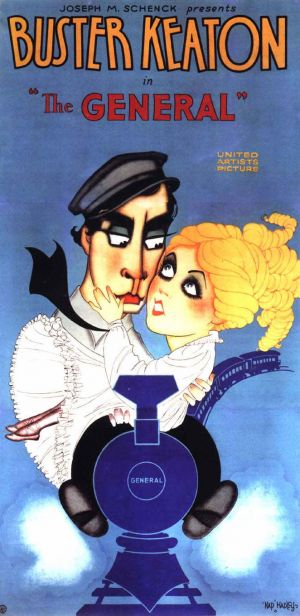 I think The General (78 minutes) is the better of the two films. The film (adapted from a book titled The Great Locomotive Chase by William Pittenger) is set in the South during the Civil War and Keaton is Johnnie Gray, a railroad engineer in love with Annabelle Lee. He wants to enlist, but is rejected, and ends up being a daring hero as the engineer of the Confederate train (titled General) that helps prevent the Northern Army’s supply trains from advancing into the South. The film has lots of amazing footage that was carried out in real time, including the train chase and a scene where a bridge collapses and one train falls into the gorge below. It was a very expensive film to produce and Keaton’s career suffered as a result.
Keaton is always calm, serious and practical about the situation he’s in, even while he’s performing amazing physical feats as he keeps the General running, finding wood, chopping it and tossing it into the firebox. He doesn’t mug for the camera or overact as most silent film stars (including Chaplin) did. Keaton’s deadpan expression earned him the nickname The Great Stone Face.
In the last 15 minutes of the film, however, it was pretty horrifying to realize that I was cheering for Johnnie Gray and the South, especially when the Southern troops appeared carrying the Confederate battle flag.
You can watch The General in full online, probably because Keaton let the copyright expire and it became public domain.
Here’s a classic Keaton scene from his 1920 short film, The Scarecrow, in which dining is an efficiency exercise.
One more movie: Love & Mercy
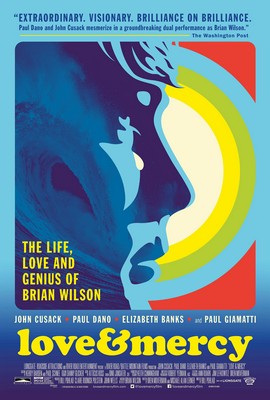 This Brian Wilson biopic is an excellent film that shows Wilson at two different times of his life, played by two different actors. Paul Dano is Wilson as a young man, frontman for the Beach Boys and orchestrator of Pet Sounds. The older Wilson, ~30 years later and suffering from serious emotional problems, is played by John Cusack. The two times of his life are shown seamlessly, with the early scenes paving the way for his later decline. The older Wilson was in such bad shape (“Lonely. Scared. Frightened,” he writes on a card he hands to a young woman he has just met) that he allows himself to be totally controlled by the venal Dr. Eugene Landy, vigorously played by Paul Giamatti.
The best scenes, to my mind, are those where Dano as Wilson is directing the development of Pet Sounds with the studio musicians known as the Wrecking Crew. He walks around the studio, perfecting the sound of each instrument, and adding sound effects. (The fact that the Beach Boys themselves were not the backing musicians caused a serious rift in the band.)
Love & Mercy runs two hours and is showing now at theaters in Chicago and Evanston.
Celebrate the week by going to the theater: Three reviews
Posted: June 27, 2015 Filed under: Theater | Tags: All Our Tragic, Chicago Dramatists, Moby Dick, Scene Shop Showcase, The Who and the What 2 CommentsCelebrations are in order! This is a landmark week for all Americans, especially those who might want to choose their own home or their own life partners without discrimination or for those who might ever get sick and need health care. Like, all of us.
To celebrate, you might want to go to the theater. And I have some recommendations.
Moby Dick at Lookingglass Theatre
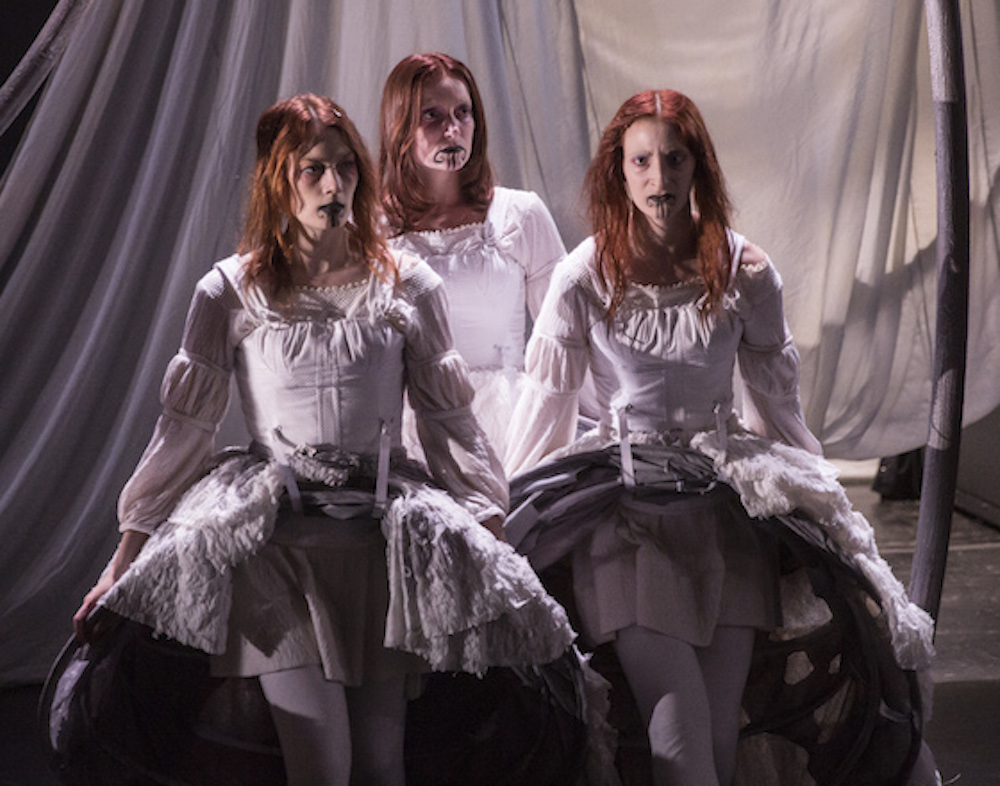
Three Fates, as dead fish
I have seen the legend of the great white whale in many forms on stage and screen and read the book twice (once in college). The new production of Moby Dick at Lookingglass is one of the best, perhaps the best, I’ve seen. The staging is very creative and the acting is excellent. Most important, director David Catlin’s script, which he adapted from Herman Melville’s novel, is strong and cohesive and manages to tell the whole story economically. The source of Captain Ahab’s monomaniacal hatred of Moby Dick, the habits and practices of the crew of a whaling ship, and even what life is like at sea. The friendship between Ishmael and Queequeg is sensitively told and the characters of Ahab and Starbuck take on reality.
My Gapers Block review also noted some of the other recent Moby Dick portrayals. I gave the play four stars, a “highly recommended” review. It runs two-and-three-quarter hours with two intermissions. It’s been extended and you can see it through August 28.
The Who and the What at Victory Gardens
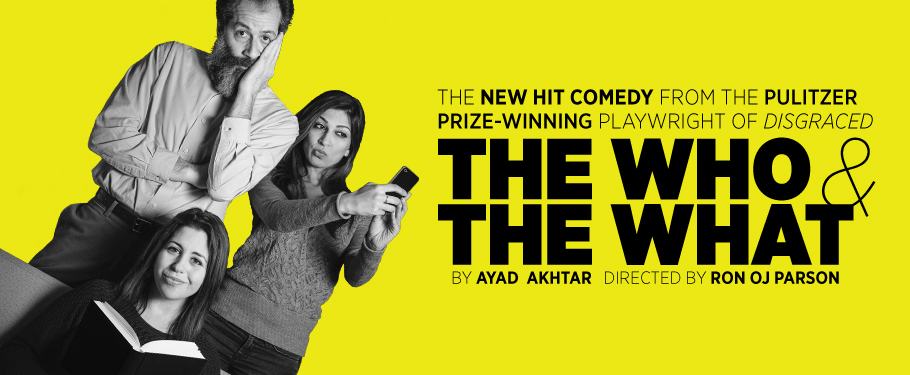
This is a smart, funny play about a conservative Pakistani-American family and their attempts to come to grips with modern realities. Father Afzal is a widower, still grieving the loss of his wife and trying to do what’s best for his two daughters. Zarina, the older sister, past 30 and unmarried, is writing a novel about “gender politics.” If she gets over her writer’s block, the story she tells will be explosive in their conservative community. Ron O J Parsons, the director, has crafted a thought-provoking and moving play. Here’s my review. (Link added 6/29/15.)
The Who and the What, by Ayad Akhtar, runs just under two hours with one intermission. It continues at Victory Gardens through July 12.
All Our Tragic at The Hypocrites
The Hypocrites have remounted their compilation of all 32 extant Greek tragedies by Aeschylus, Euripides and Sophocles, deftly adapted by Sean Graney. It’s funny, poignant, slapstick, bloody … and really, it’s a theatrical experience not to be missed. You can binge on the 12-hour experience—but think of it as nine hours of theater and many food and relaxation breaks. I reviewed it last year.
All Our Tragic runs Saturdays and Sundays through August 9.
And also …. Chicago Dramatists Scene Shop Showcase
I recently had the opportunity to attend the Scene Shop Showcase that Chicago Dramatists holds twice a year to give a glimpse at new plays in progress. Scenes (about 10 minutes each) were shown from 10 plays by 10 playwrights. Chicago Dramatists is “the playwrights’ theatre” and they offer playwriting classes and present new plays in their Saturday Series of readings.
My friend Debbie Dodge invited me to attend the showcase. Her scene, “Ashes to Ashes,” was about siblings deciding how to handle a parent’s ashes. “Cut: A Restoration Drama,” by Brenda Kilianski, raised the circumcision question and controversially compared it to female genital mutilation. It’s amazing how much drama can be packed into 10 minutes.
The scenes are staged readings with some props and blocking. Many of the playwrights, actors and directors are Equity members. The scenes were performed on the Chicago Dramatists’ main stage, which was set for the show then in production.
The next Scene Shop Showcase will be in December. It’s open to the public and the cost is a suggested $5 donation.
Meandering Montana: Mountains, maps, robots and trains…and bluegrass too
Posted: June 17, 2015 Filed under: Art & architecture | Tags: Bozeman, Daphne Gillam, Livingston, Montana Leave a comment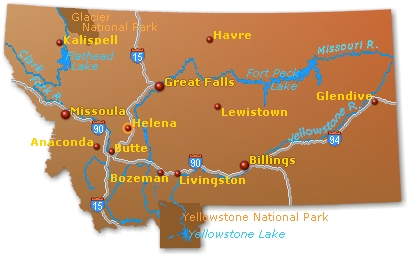
Because I’m a city girl at heart and habit, my visit to Bozeman, Montana, was probably more citified than yours might have been. Yes, there’s lot of great hiking over prairie and peak and we did some moderate walking, but most of our peripatetic adventures were city walking tours and museum treks. It was a great weekend in a university town that’s probably going to be like Boulder or Madison in another five years. The number of quirky coffee shops is a sign of things to come. (They have cold-brewed iced coffee in Bozeman!)
I lived in Colorado many years ago and have often visited Denver and Colorado Springs to visit friends and relatives and see Bruce Springsteen in concert. So I’m familiar with this part of the west. But the place I lived (Cortez, near the Four Corners) was a relatively young town whereas Bozeman has a lot of history.
We took many gorgeous mountain walks and drives, but I’ll report on the cultural highlights of a few days in southern Montana.
Bozeman’s Bon Ton district
This district of about 260 elite homes has been listed on the National Register of Historic Places since 1897. (You can take a guided walking tour or do it yourself by installing a tour app on your smart phone.) The Bon Ton District totals about 27 blocks, with examples of Italianate, Queen Anne, Craftsman, Colonial Revival and Bungalow architecture including buildings with Eastlake features and some examples of vernacular architecture, such as pattern-book homes from the turn of the century. Most of the homes are beautifully preserved and represent elements of Bozeman’s history, including its failed effort to become the state capital. The tour takes about 90 minutes, unless your tour guide talks too much, in which case it’s two hours.
Bluegrass on Main Street
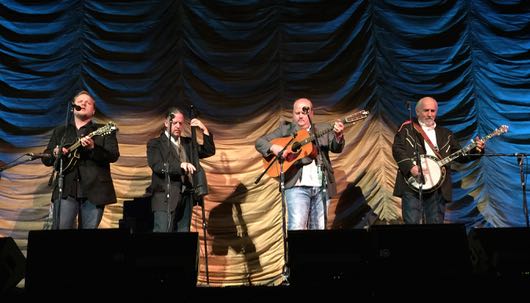 I first saw Special Consensus, a Chicago-based bluegrass band, in 1983 at my first Kentucky Fried chicken Bluegrass Music Festival in Louisville. The band members are a bit older but the music is still lively and fast as bluegrass string music should be. Banjoist and frontman Greg Cahill is the only original band member (and the only Chicagoan) still with the band. The concert was at the historic Ellen Theatre on Bozeman’s Main Street. It was a pretty traditional bluegrass concert with a nice combination of ballads, old-time bluegrass and some tracks from their new album, Scratch Gravel Road. The band’s two a cappella numbers were outstanding. You can listen to some song demos in the lower right here.
Robots and punch cards
Bozeman is the home of the fascinating American Computer & Robotics Museum, which apparently came about because its founder saved everything. The museum smashes together exhibits from a human brain and a Gutenberg printing press to typewriters, adding machines, original Alan Turing papers, punch cards (and their antecedent, the 1801 Jacquard punch cards for textile manufacturing) and the first neural computer. There’s also the latest in smartphone, robots and artificial intelligence devices. And a 1984 Macintosh like my very first.
The exhibits create a timeline of developments in computing and communications over the centuries. The museum, founded in 1990, was developed by and apparently based on the collections of Barbara and George Keremedjiev. They originally intended to locate the museum in Princeton, New Jersey, but changed their minds when they moved to Bozeman. The museum’s Wikipedia page is much more informative about the museum than its own website.
Handcrafted maps
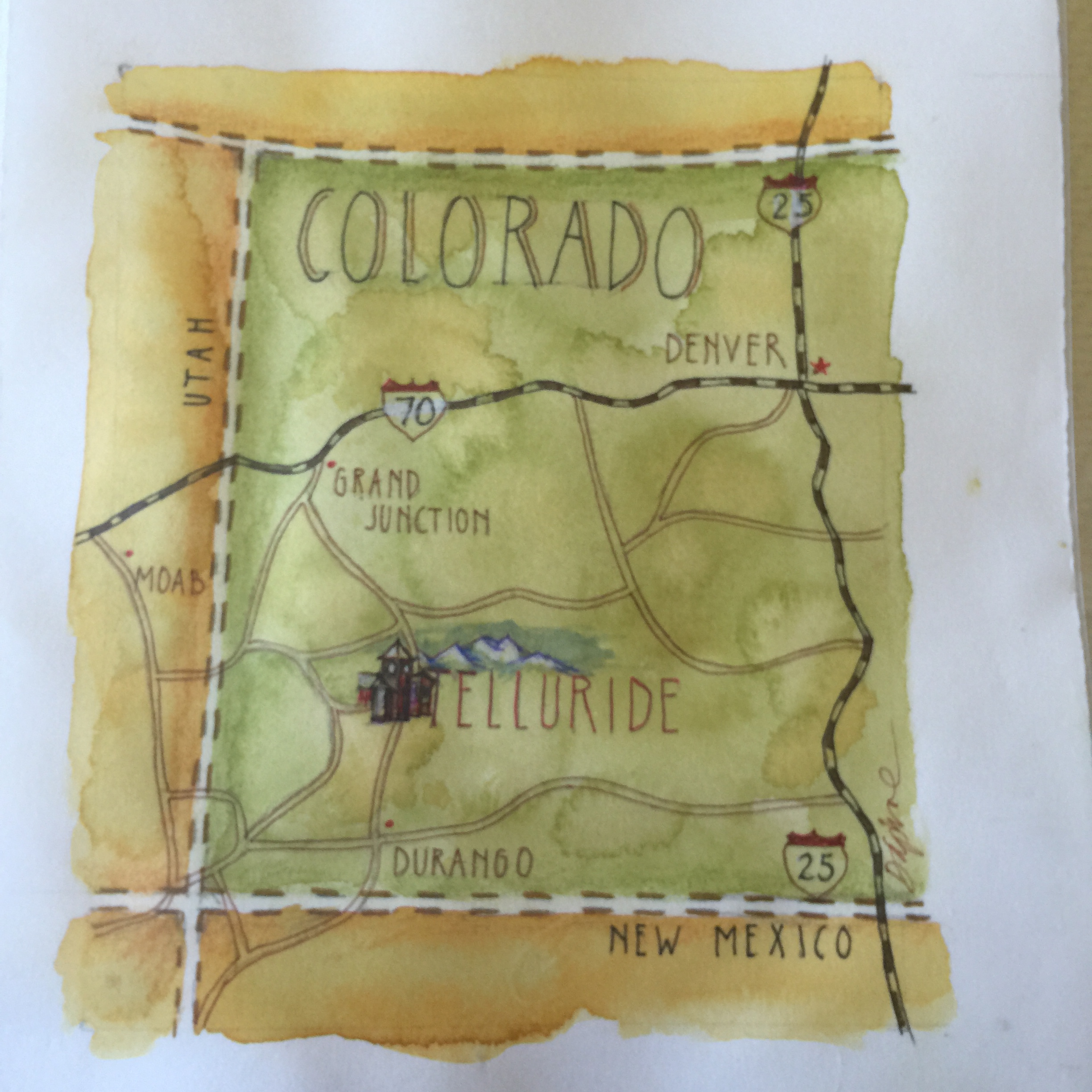 One day we visited Daphne Gillam, an artist who creates beautiful illustrative maps, at her home in the Shields River Valley. I was eager to see how she creates these maps and expected to see her sitting in front of a giant LCD screen. Instead, she is working on a piece of linen-finish paper taped to her desk top, painting with a well-used set of water colors and brushes, both medium and fine. You can see a gallery of her maps on her website, where she also describes the process she goes through when creating a map for a client, which is often a publisher.
Livingston, home of the Depot Center Museum
Livingston is a small town in the mountains near the Yellowstone River. It’s best known as the location of a museum created from a Northern Pacific Railroad depot built in 1902 as the original access to Yellowstone National Park. Passenger service ended in 1979 and in 1987 the city opened it as a museum to preserve Livingston’s railroad past.
Architects Reed and Stem, who were part of the design team for Grand Central Station in New York, designed the building. The exterior is notable for its terra cotta ornament and the interior for its beautiful wood and terrazzo. The exhibits illustrate how the railroad was built and maintained, how steam engines were serviced in the roundhouse, and how the railroad was run from the yard office, complete with tools and papers of the time. One exhibit demonstrates how the telegraph office worked and you can pretend to send your own dots and dashes.
An exhibit of paintings—Train in Art—was on display at the museum. The works were by two artists and I was particularly taken by the paintings by Sheila Hrasky (in the slideshow above).
After visiting the museum, we had dinner at a café in the historic Murray Hotel and then went to a play at the Blue Slipper Theatre in the historic district. The venue was pleasant and included an upstairs parlor where refreshments were served during intermission. The play, unfortunately, was forgettable.
Be bear aware
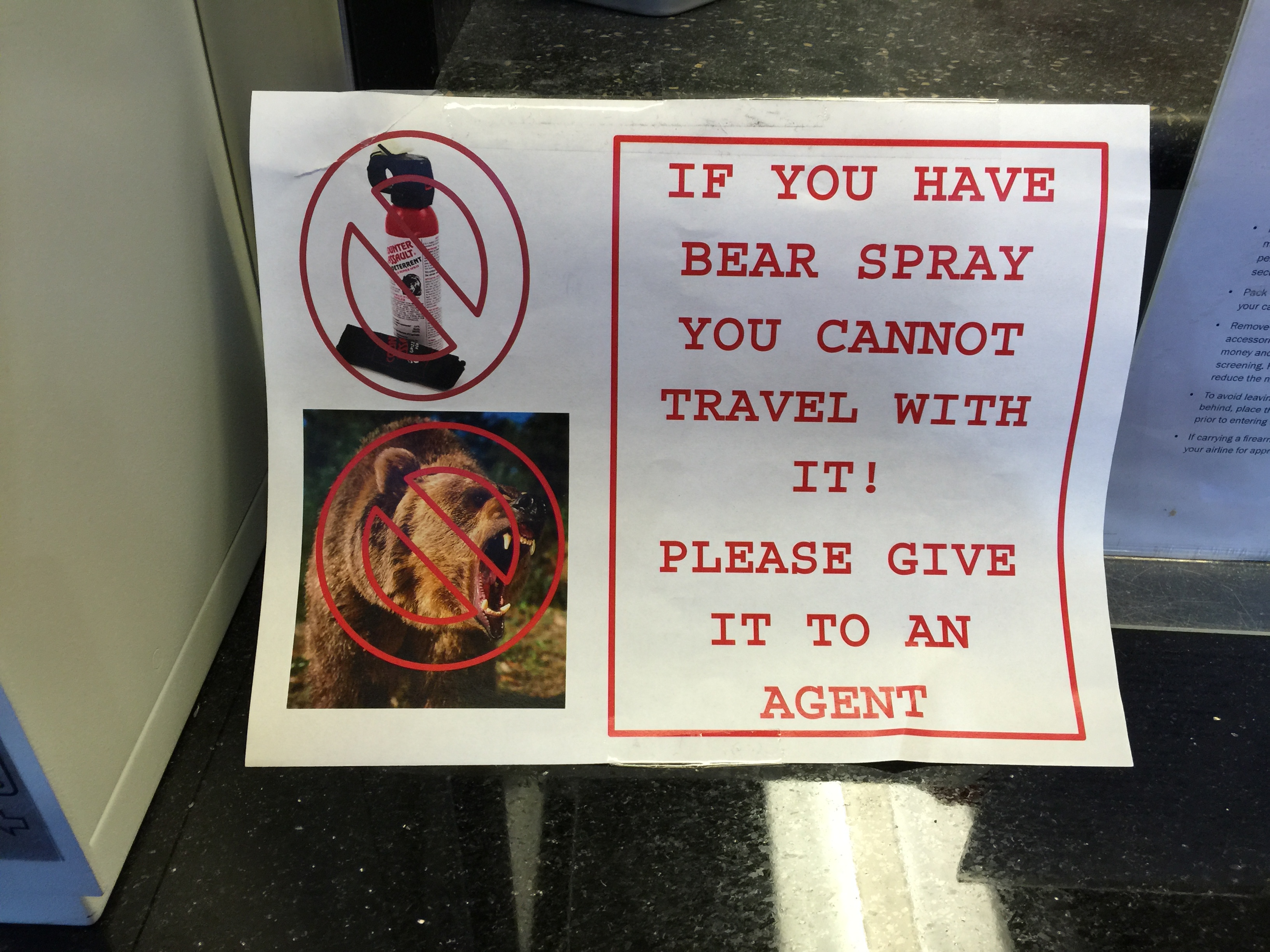 When I checked in at the Bozeman airport for an early flight to Chicago, I was confronted by this warning, a sign I never have seen at O’Hare or LaGuardia. Must be lots of bears in Bozeman.
Brand magic – from the south side of Chicago
Posted: June 7, 2015 Filed under: Art & architecture, Chicago, Design | Tags: Archibald Motley, Chicago Cultural Center, Valmor Products 1 CommentBrand identity is a modern concept, or so it’s said. Companies, profit and nonprofit, and political campaigns devote extravagant amounts of time, money and energy to position themselves consistently—verbally and visually—with their priority audiences.
But almost a century ago, a small but creative company on the south side of Chicago developed its own distinctive brand and visual identity for an array of products designed to help its customers find beauty and romance.
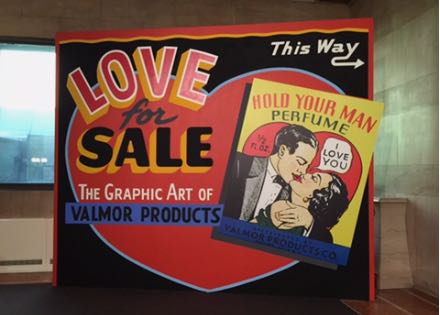 Valmor Products’ advertising and packaging is the subject of a funny, provocative and eye-opening exhibit at the Chicago Cultural Center. Love for Sale: The Graphic Art of Valmor Products runs until August 2 in the 4th floor north exhibit hall, just across from the not-to-be-missed exhibit of the paintings of Archibald Motley: Jazz Age Modernist. See my Motley review for details. (All photos by Nancy Bishop.)
Valmor operated on the near south side (as the location image shows, near the intersection of Cermak Road and Indiana Avenue) from the 1920s through the 1980s. Their products were perfumes, hair pomades and straighteners, incense and a great variety of other products designed to help the individual (male or female) attract and please the opposite sex. Some of the products claimed to have mystical or magical powers.
The Cultural Center’s comprehensive exhibit is the first to show Valmor’s remarkable works of graphic design—product labels, packaging and advertising. Some of the labels were no bigger than a postage stamp, as you can see from the photo of the spilling bin of packages. (Other vintage bottles and containers are also on display.) Those tiny labels were enlarged to poster-size using modern imaging technology. The result is an exuberant display of social and cultural history as well as graphic design.
Charles Dawson, Valmor’s first designer, was a distinguished artist. His life and career are described here by the American Institute of Graphic Arts (AIGA), the professional organization for design. Dawson’s unpublished autobiography is in the DuSable Museum of African American history.
The Chicago Cultural Center, as I’ve noted before, is a Chicago treasure that many people aren’t aware of. It was opened as the city’s central library in 1897, designed by the Boston architectural firm, Shepley, Rutan and Coolidge. They created a number of monumental civic structures in the Romanesque style of Henry Hobson Richardson (best known here as architect of the John Glessner House). In 1977, the building was re-created as a city cultural center. It offers many exhibits of artistic and architectural interest, concerts, films and other performing arts events–and admission is always free.
The Washington Street side has a grand Carrara marble staircase leading to Preston Bradley Hall with its beautifully restored 38-foot Tiffany glass dome. The hall was the library’s main circulation room, which is why the mosaics that line the walls display the names of authors and philosophers. (View the restoration story in the video above.) If you enter on the Randolph Street side, you’ll find a large area with tables and seating, where you can meet with a friend or client, read or do a little work. But be sure to walk up (or take the elevator) to the fourth floor, where you’ll find both the Motley and Valmor exhibits.
Stage and screen reviews + a little rock ‘n’ roll
Posted: May 27, 2015 Filed under: Movies, Rock and roll, Theater Leave a commentIs it my imagination or is the arts world slowing down a little, in preparation for the summer? Maybe it’s my own lethargy but I’ve seen fewer plays recently. However, I have some excellent recommendations for you, in case you’re looking for something to do this weekend.
ATC: The Project(s)
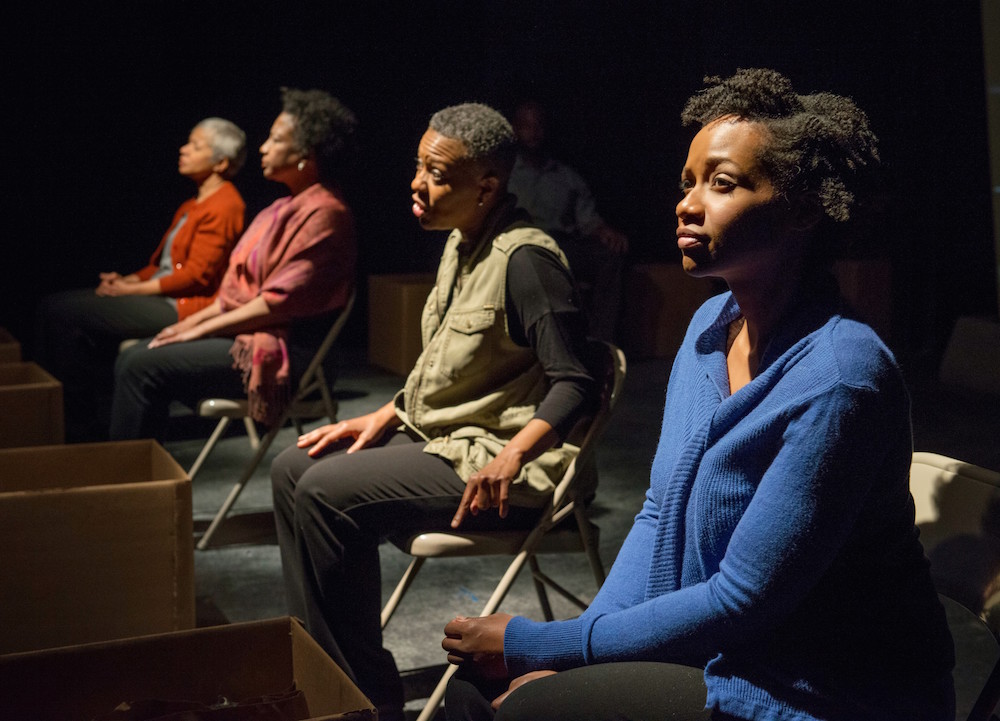 American Theater Company’s The Project(s) is a sad and celebratory docudrama about public housing in Chicago. Writer/director P.J. Paparelli interviewed more than 100 past and present residents of Chicago public housing as well as scholars and public officials. The cast and the performance are outstanding and although the story does not end happily, it illustrates how residents in the CHA projects built communities for themselves. The 2.5 hour play (two intermissions) has been extended to June 21. Read my review.
It’s important to note that Paparelli, 40-year-old artistic director and inspiration behind many of ATC’s great productions, was killed in a car accident in Scotland last week. It’s a huge loss for Chicago theater.
Timeline: Inana
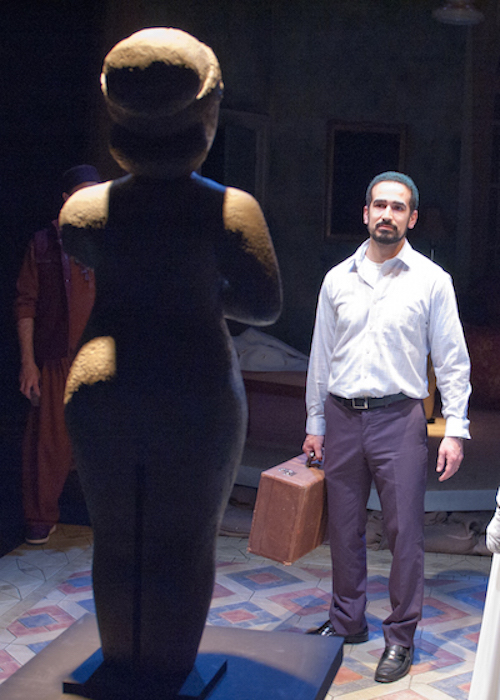 Timeline Theatre creates a little bit of London and adds a backstory in Mosul, Iraq, in its new play Inana by Michele Lowe. The story, set in February 2003, is about a museum curator who wants to protect the art and culture of his institution from the looming U.S. invasion. Inana is a 3000-year-old statue of the goddess of love and war; the statue was damaged in an earlier attack. As I said in my review, Inana reminds us that sometimes Americans are the barbarians at the gates. The 90-minute play runs through July 26.
AstonRep: Les Liaisons Dangereuses
This play was adapted from an 18th century French novel that displayed the decadence and arrogance of the aristocracy just before the 1789 Revolution. AstonRep made a gutsy move in taking it on and for the most part, it’s a decent production in the smaller space at Raven Theater. However, the director for some reason decided to set it in 1917 Russia, before that revolution. On the surface, that could add an interesting political twist to the production, except the execution wasn’t carried out very well. It’s still 18th century France in costuming and setting with a few Russian touches. Here’s my review, which notes the memorable 1988 film, Dangerous Liaisons starring John Malkovich, from the same literary source. The AstonRep show runs until June 21.
One lovely film: Clouds of Sils Maria (2014, 124 minutes)
Clouds is an interesting, complex and beautifully filmed story about art, aging and celebrity. Olivier Assayas directs this film, which stars Juliette Binoche and Kristen Stewart. Here’s my mini-review on Letterboxd. Yorick Le Saux’s cinematography of the Swiss Alps is incredibly beautiful. I gave it four stars out of five. It’s in theaters now.
Kafkaesque comedy by Martin Scorcese: After Hours (1985, 97 minutes)
After Hours is 12 nightmare hours in the life of Paul, a word-processor in 1980s New York. Paul’s interest in getting acquainted with a pretty girl in Soho turns into a nightlong quest to just get home. His $20 bill blows out a taxi window, then he can’t take the subway because the fare increased an hour ago. He’s seduced by women, taken for a burglar, chased through the streets by a mob, and encased in a paper-mache sculpture. Is it Kafkaesque? Yes and it’s hilariously funny. It has a film noir quality too. It’s available on DVD.
The hardest working musician….
As I write this, I’m listening to and half watching a June 2009 Bruce Springsteen concert, London Calling: Live in Hyde Park in London. It’s relevant here (but when isn’t Springsteen relevant?) because his music celebrates and mourns for the working class (and he’s the hardest working musician I know). When Bruce comes out on stage in the afternoon in bright sunlight, he’s wearing a light gray-green shirt with jeans and motorcycle boots. By the time he’s singing “Night” (“you work 9 to 5 and somehow you survive until the night”), the third song on the setlist, his shirt is dark with sweat all around his arms and shoulders.
Three songs later, he’s singing “Johnny 99” (a guy who loses his job and gets in bad trouble), and now his shirt is half dark and half light and his hair is soaked with sweat. (If you’ve never seen a Springsteen concert, I have to tell you that he doesn’t just stand in front of a microphone and sing. He’s all over the stage, down on the platform in front of the crowd in the pit. Sometimes he does a backbend off the microphone and at least once he jumps up on the piano to dance. And by the ninth song, “Youngstown,” a labor anthem, the shirt is fully soaked and dark with sweat and it’s dusk at Hyde Park.
But he’s only one-third through the concert, which goes on for hours more. The DVD is almost three hours but he performed for much longer. You can get a feeling for the flow of the concert and the madness of a Springsteen crowd from this trailer. (The guy who joins him near the end for “No Surrender” is Brian Fallon of Gaslight Anthem.)
The power of performance in two Lillian Hellman plays
Posted: May 20, 2015 Filed under: Politics, Theater, Writers & writing | Tags: Goodman Theatre, John Brown's Body, Lillian Hellman, Stephen Vincent Benet 2 CommentsLast week I saw two masterpieces of 20th century theater by Lillian Hellman, the great playwright and leftwing political activist. (I‘m a fan on both counts.) The two shows were extremely different in production values but demonstrated the power of performance.
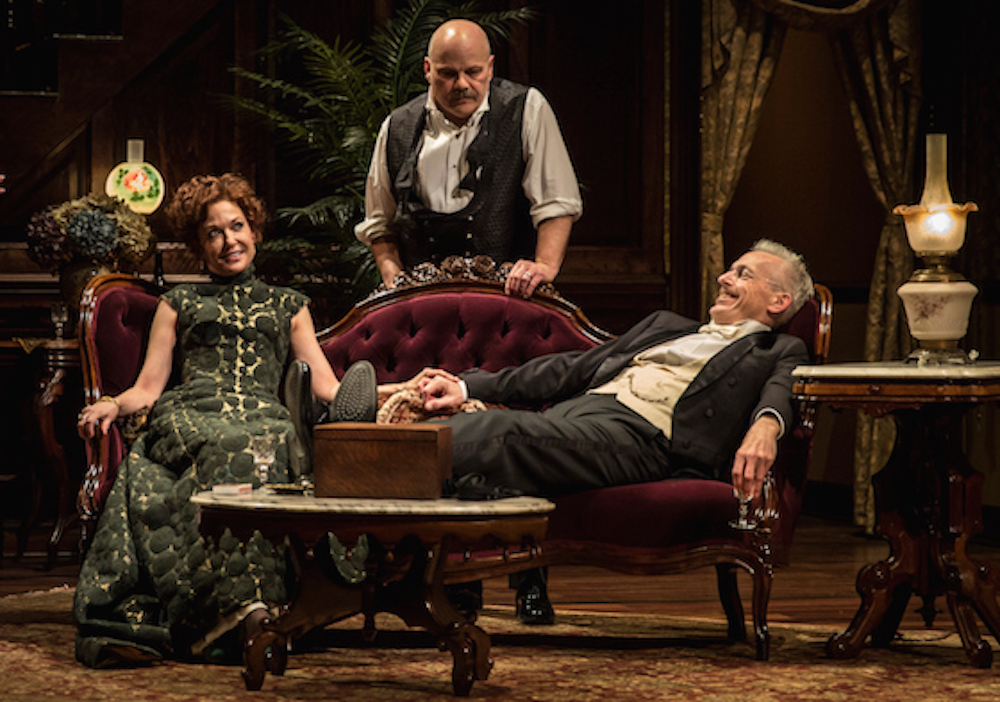
Goodman Theatre image.
I attended Goodman Theatre’s The Little Foxes on opening night and reviewed it for Gapers Block. (My review also appears on culturevulture.net and berkshirefinearts.com, by the way.) It was an excellent production with a sumptuous set and gorgeous, richly detailed costuming, especially the women’s gowns. As I said in my review, the production “stars a galaxy of Chicago’s finest actors and surely resonates with some of the current discussions about racism, sexism, domestic abuse and income inequality.”
The venal Hubbard siblings (Regina, Oscar and Ben) who fight over the family legacy and the spoils of a new cotton mill are played by Shannon Cochran, Steve Pickering and Larry Yando. John Judd plays Horace, Regina’s husband, and Mary Beth Fisher plays Oscar’s sweet and abused wife Birdie. The rest of the cast is equally excellent. The nearly three-hour play (with two intermissions) is not only a visual treat; it’s gripping from beginning to end.
On Saturday afternoon, the Goodman presented an amazing one-time only event; a free performance of a reading of Hellman’s Another Part of the Forest, the prequel to The Little Foxes, which is set in 1900 and was first produced in 1939. Another Part of the Forest is set in 1880 and was written in 1946. Both are set in a town in rural Alabama and are based on Hellman’s own family story.
Courtesy Wikimedia.
The reading was held in a rehearsal room on the second floor of the theater and held probably 60 or 70 seats at the most. (Needless to say, it was a capacity crowd.)
It was a plain vanilla reading, not a staged reading where there is some blocking and action. The actors all had their scripts on paper and usually stood at music stands at the front of the stage area. When they weren’t reading, they sat on folding chairs at the rear.
The most significant thing about the reading is that the 12-member cast was fully equivalent to that in the fully staged production. The acting was superb with attention to accents, vocal intonations, gestures and expressions. Some of Chicago’s finest actors were here too (none of them from the cast of The Little Foxes). Deanna Dunagan (you saw her as the mother in August: Osage County) plays Lavinia Hubbard, the siblings’ mother, whose fading memory comes through in the end. The always superb Larry Neumann Jr. read the part of Marcus Hubbard, the father who made a lot of money during the recent war, trading with the enemy (the Union forces). That’s the real source of the siblings’ later wealth. Neumann is one of those character actors who you’ve seen many times. He played the doctor in the legendary Famous Door production of the two-part Cider House Rules, Richard Nickel in Lookingglass’ production of They All Fell Down: The Richard Nickel Story; and Samuel Finkelbaum in Writers Theatre’s The Puppetmaster of Lodz.
John Hoogenakker gave an excellent reading as Ben, the younger version of the character played by Larry Yando. (You may have seen Hoogenakker on TV in Chicago Fire or Empire or in Goodman’s The Iceman Cometh or Other Desert Cities. Steppenwolf’s Tim Hopper (Marie Antoinette, The Night Alive, Russian Transport) played John Bagtry, Birdie’s brother and the young Regina’s sweetheart.
I thought perhaps Goodman would abbreviate Another Part of the Forest, but no, the full script was performed: almost three hours with two intermissions. The story was gripping from beginning to end and proved that great actors make you forget what they’re wearing or what the scenery behind them looks like.
The Little Foxes continues at the Goodman Theatre until June 7. Sorry you missed the prequel. Also you can find 1940s film versions of both plays.
Lillian Hellman’s South—It’s really about the economy
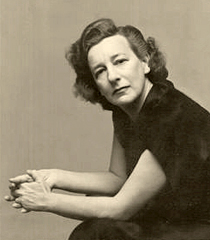
Image courtesy southernliterarytraiil.org.
Hellman based these two plays on the stories of her southern family, so there are some economic parallels. My published review of The Little Foxes emphasizes the economic aspects of the story, which make the play richer than just a family melodrama, as it’s usually characterized. I wrote:
Hellman’s play is set in 1900 “when the South was dying after the failure of Reconstruction, whose planners had hoped that the region would turn into a new industrial power. That didn’t happen. (In fact, slavery was detrimental to the southern economy. It inhibited manufacturing and technological innovation as well as the growth of cities.) And Hellman wrote the play in 1939 when the impact of the Depression on people and society was much on the mind of Hellman and her audience members.”
Now I’m not an economist, but I do have one on call. However, as a resource here I’m going to call on a poet instead. Stephen Vincent Benet wrote John Brown’s Body, the stirring book-length verse narrative of the Civil War (or the War Between the States, as the Hubbards would call it). Benet’s poem, published in 1927, characterizes the war as preparing the South for its future as part of industrial America, but his prediction is about 75 years off. After 372 pages of the romantic saga of the war, its soldiers, victims, fictional characters, and Abraham Lincoln’s death, Benet wrote this in his optimistic conclusion:
John Brown’s body lies a-mouldering in the grave.
Bury the South together with this man,
Bury the bygone South.
Bury the minstrel with the honey mouth,
Bury the unmachined, the planters’ pride,
Bury the whip, bury the branding bars,
….
And with these things, bury the purple dream
Of the America we have not been,
The last foray of aristocracy
Based not on dollars or initiative
Or any blood for what the blood was worth
But on a certain code, a manner of birth.
….
Out of his body grows revolving steel,
Out of his body grows the spinning wheel,
Made up of wheels, the new, mechanic birth
No longer bound by toil
To the unsparing soil
….
Out of John Brown’s strong sinews the tall skyscrapers grow,
Out of his heart the chanting buildings rise,
Rivet and girder, motor and dynamo,
Pillar of smoke by day and fire by night,
The steel-faced cities reaching at the skies,
The whole enormous and rotating cage
Hung with hard jewels of electric light….
Benet’s book won the Pulitzer Prize in 1929. It’s not really great literature, because it’s rather uneven and not a little melodramatic. But it’s a great way to read the Civil War story. The book is out of print, but you can buy copies online.
 nancy bishop's journal