The day the music died – or lived forever
Posted: February 3, 2013 Filed under: Music, Rock and roll | Tags: "American Pie", Buddy Holly, Don McLean, Gaslight Anthem, rock and roll, The Lumineers 2 CommentsFifty-four years ago today was The Day the Music Died, according to lovers of early rock and roll and the lyrics of the iconic song, “American Pie,” by Don McLean. Early in the morning of Sunday, February 3, 1959, a small plane carrying Buddy Holly, Ritchie Valens and the Big Bopper (J.T. Richardson), crashed in a snowstorm soon after taking off. The musicians had played at Clear Lake, Iowa, that night and were on the way to Moorhead, Minnesota. They were part of a Midwestern tour called the Winter Dance Party.
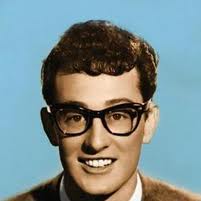 Holly died at 22 after only a few years of performing, but his work has influenced many musicians including the Beatles, the Rolling Stones, Bob Dylan and Eric Clapton. Many people had heard Buddy Holly and the Crickets by then; they had made several records and performed in Europe as well as across the US. He was one of the first performers to write and perform his own music, which reflected country and rockabilly music as well as R&B. His hiccupy vocal style and the rhythms of early rock and roll still are infectious. And the Crickets’ lineup of two guitars, bass and drums became the template for many small rock bands – and some high profile ones such as U2 and The Gaslight Anthem.*
Contrary to McLean’s lyrics, the music didn’t die that night in 1959. In fact, Holly’s music took on a new life, inspired many musicians and scholars. Holly’s death was devastating to many musicians and fans at the time. In his autobiography, Eric Clapton, who was 13 at the time, says “I remember walking into the school playground … and the place was like a graveyard, and no one could speak, they were in such shock. Of all the music heroes of the time, he (Holly) was the most accessible and he was the real thing.” (Clapton, 2007, Broadway Books.) The Beatles are said to have named their band in homage to the Crickets’ bug-themed name. Bob Dylan tells (in an award-acceptance speech) of seeing Buddy Holly play in Duluth just a few days before, on January 31. People of a certain age will tell you they remember where they were when they heard that Buddy Holly had been killed in a plane crash.
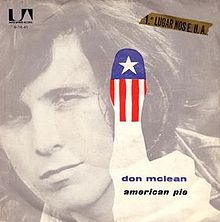 McLean’s song was released 12 years after the plane crash. Although superficially it may sound like just a great rock song, every phrase has meaning in the lore of rock and roll. One of the best known lines is: “Drove my Chevy to the levee but the levee was dry, Them good ol’ boys were drinkin’ whiskey and rye, Singing ‘This’ll be the day that I die, This’ll be the day that I die.’” The first part is said to be a metaphor for the death of the American dream; the latter is adapted from Holly’s song “That’ll Be The Day.”
Try this Super Bowl Day activity if football bores you: See one of the exegeses that has been made of the line-by-line meaning of “American Pie,” such as The Octopus’s Garden at http://www.rareexception.com/Garden/Garden.php My favorite story about the song is from Chicago radio station WCFL’s Bob Dearborn, who analyzed the song for listeners in 1972. His story and his analysis are online here http://user.pa.net/~ejjeff/pie.html. (The station is now sports radio WMVP.)
So get out your Buddy Holly and the Crickets CD and join me in listening to a little “Peggy Sue,” “Look at Me” and “That’ll Be the Day.”
For more on Holly, especially the influence of his music after 1959, see Buddy Holly by Dave Laing in the Icons of Pop Music Series published by Indiana University, 2010.
Other music notes ….
* A shoutout to my friend Steve the Scrivener for suggesting I listen to Gaslight Anthem’s CD, The ’59 Sound. Nice punk sound. They do rock. I particularly liked the Springsteen references in “High Lonesome” and “Meet Me by the River’s Edge.”
My other new CD is the Lumineers’ self-titled debut album. They’re a folk rock band with great songs, intriguing melodies, percussion and lyrics. My favorite tracks are “Dead Sea” and their hit single “Ho Hey.” Like Gaslight Anthem, they’re from New Jersey. The Lumineers now are based in Denver.
Guilt and trust in the Tunnel of Love
Posted: January 29, 2013 Filed under: Music, Rock and roll, Theater | Tags: Bruce Springsteen, Court Theatre, Steppenwolf Theatre 3 CommentsTwo Chicago plays, both riveting productions, explore the angst of relationships and the gulf between guilt and trust. Skylight, David Hare’s play at Court Theatre set in the Thatcher era, finds a couple meeting again after several years and trying to discover whether they are still the same people who once loved each other. At Steppenwolf Theatre, The Motherf**cker with the Hat (I’m spelling it as they do on the playbill) by Stephen Adly Guirgis, puts two couples in a contemporary setting about addiction, infidelity, trust and guilt. And of course, there’s a Bruce Springsteen connection.
Skylight, which I also saw at Steppenwolf about 15 years ago, is about a reunion of Kyra, a young woman who teaches in a tough part of London, and Tom, her former lover, a wealthy restaurant owner, whose wife died a year ago. (He seems patterned after Terence Conran.) She lived with his family earlier and left when his wife discovered their affair. They talk about their lives, their feelings about the past, and their profound disagreements about Kyra’s chosen way of life. Actually they talk far too much and both acts of the play drag to a 2.5-hour ending. (My motto: Everyone needs an editor.)
The Motherfucker With the Hat (all the reviews and the script itself spell out the word; I don’t know why Steppenwolf was so dainty) is a profane, fast-moving series of scenes in which men and women swear to stay clean and faithful and manage to do neither.
Jackie, the dealer and ex-convict, says to his AA sponsor, Ralph D: “Even though we’re fucked up, we got a code. It’s a fucked up code, but still, it’s a code.” However, the code is broken over and over again while the players profess love and trust and unashamedly acknowledge guilt. The Motherfucker does not need an editor; it’s tightly written and runs about 100 minutes.
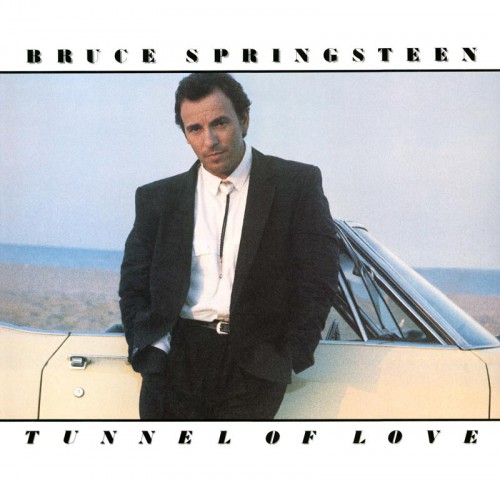 I came home from this theater evening and picked up my copy of Bruce, the 2012 Springsteen biography by Peter Ames Carlin. I had put the book down in the middle of the chapter about the creation of the Tunnel of Love album, during Bruce’s first marriage. He acknowledged to interviewers that he was learning how to be married. Writing the songs for Tunnel of Love, Carlin says, “Bruce followed the knotted strands of his married life, working to string them into words and music.” The songs are about the difficulties of keeping a relationship together, about love and trust, longing and guilt – and possibly the lack of an escape route. I listened to the album while I read, knowing the story ended in divorce.
I didn’t care for the album when it was first released in 1987. For one thing, the E Street Band played almost no part in its production and that always turns off the true Bruce obsessives. However, I’ve come to really like Tunnel of Love. The songs are poignant and probably the closest things to love songs that Bruce ever wrote. (But they still rock, of course.) My favorite song on Tunnel of Love is “Brilliant Disguise,” which hit #5 on the singles chart in 1987. It sums up this discourse nicely.
Well I’ve tried so hard baby but I just can’t see
What a woman like you is doing with me
So tell me what I see when I look in your eyes
Is that you baby or just a brilliant disguise?
Richard Blanco’s inaugural poem
Posted: January 21, 2013 Filed under: People, Politics | Tags: poetry 2 CommentsRichard Blanco read a beautiful poem today for the President’s second inaugural. It encapsulates the grandeur and the unity of our people and our country — real or aspirational. Blanco is a poet and teacher and the first Hispanic and the first gay poet to write a poem for an inauguration. You can see a video of Blanco reading his poem. http://bit.ly/WBLBGO
One Today
By Richard Blanco
Spoken at the 2013 second inauguration of President Barack Obama
January 21, 2013
One sun rose on us today, kindled over our shores,
peeking over the Smokies, greeting the faces
of the Great Lakes, spreading a simple truth
across the Great Plains, then charging across the Rockies.
One light, waking up rooftops, under each one, a story
told by our silent gestures moving behind windows.
My face, your face, millions of faces in morning’s mirrors,
each one yawning to life, crescendoing into our day:
pencil-yellow school buses, the rhythm of traffic lights,
fruit stands: apples, limes, and oranges arrayed like rainbows
begging our praise. Silver trucks heavy with oil or paper—
bricks or milk, teeming over highways alongside us,
on our way to clean tables, read ledgers, or save lives—
to teach geometry, or ring-up groceries as my mother did
for twenty years, so I could write this poem.
All of us as vital as the one light we move through,
the same light on blackboards with lessons for the day:
equations to solve, history to question, or atoms imagined,
the “I have a dream” we keep dreaming,
or the impossible vocabulary of sorrow that won’t explain
the empty desks of twenty children marked absent
today, and forever. Many prayers, but one light
breathing color into stained glass windows,
life into the faces of bronze statues, warmth
onto the steps of our museums and park benches
as mothers watch children slide into the day.
One ground. Our ground, rooting us to every stalk
of corn, every head of wheat sown by sweat
and hands, hands gleaning coal or planting windmills
in deserts and hilltops that keep us warm, hands
digging trenches, routing pipes and cables, hands
as worn as my father’s cutting sugarcane
so my brother and I could have books and shoes.
The dust of farms and deserts, cities and plains
mingled by one wind—our breath. Breathe. Hear it
through the day’s gorgeous din of honking cabs,
buses launching down avenues, the symphony
of footsteps, guitars, and screeching subways,
the unexpected song bird on your clothes line.
Hear: squeaky playground swings, trains whistling,
or whispers across café tables, Hear: the doors we open
for each other all day, saying: hello, shalom,
buon giorno, howdy, namaste, or buenos días
in the language my mother taught me—in every language
spoken into one wind carrying our lives
without prejudice, as these words break from my lips.
One sky: since the Appalachians and Sierras claimed
their majesty, and the Mississippi and Colorado worked
their way to the sea. Thank the work of our hands:
weaving steel into bridges, finishing one more report
for the boss on time, stitching another wound
or uniform, the first brush stroke on a portrait,
or the last floor on the Freedom Tower
jutting into a sky that yields to our resilience.
One sky, toward which we sometimes lift our eyes
tired from work: some days guessing at the weather
of our lives, some days giving thanks for a love
that loves you back, sometimes praising a mother
who knew how to give, or forgiving a father
who couldn’t give what you wanted.
We head home: through the gloss of rain or weight
of snow, or the plum blush of dusk, but always—home,
always under one sky, our sky. And always one moon
like a silent drum tapping on every rooftop
and every window, of one country—all of us—
facing the stars
hope—a new constellation
waiting for us to map it,
waiting for us to name it—together.
Wintry Mix: Recent plays, films and music
Posted: January 17, 2013 Filed under: Movies, Music, Rock and roll, Theater | Tags: Bruce Springsteen, Movies, Music, Opera, theater 1 CommentWhat have I been doing lately? Not cocooning, when there’s lots to do and see in Chicago.
Homage to Molière. Put the actors on stage in froufrou costumes, both male and female, from the rococo era. Have them speak in Molière’s rhyming couplets, transformed into 20th century slangy tropes. That’s David Ives’ School for Lies, an adaptation of Molière’s The Misanthrope, now playing at Chicago Shakespeare Theater. Ives, who wrote the brilliant Venus in Furs, which I saw in New York last year, pays homage to Molière in an outrageous way. The acting is excellent with some surprising characterizations (Kevin Gudahl as a lisping twit, Sean Fortunato, momentarily the queen, in a stunning blue dress) and the set is glorious.
Nancy’s rating: Catch it before it closes.
Theater for the fearless. Park somewhere on Cortland in the quiet area west of the Elston/Armitage/Ashland/Kennedy tangle. Have a little dinner at Jane’s Café, then walk down the narrow gangway next to the restaurant. Voila. You’re at Trap Door Theater to see the Vaclav Havel one acts, The Unveiling and Dozens of Cousins. Trap Door performs in a tiny theater space that enables you to get nose-to-nose with the actors. I like the Trap Door mission – to perform “challenging yet obscure works” usually of European, mainly Eastern European, playwrights. http://trapdoortheatre.com These two plays (total run time about an hour) are witty, head-spinning and somewhat fabulistic. You are never sure what or who is real and truthful.
Trap Door’s choice of plays reminds me of the late European Repertory Company, which performed some highly visual, startling and memorable productions. I have missed them for years, but Trap Door makes up for their loss.
Nancy’s rating: Both Jane’s and Trap Door are always recommended.
Opera at the movies. As you probably know, the Metropolitan Opera simulcasts performances live in HD to cinemas around the country. There’s an encore showing for each opera. We saw the encore of Verdi’s Aida last night and it was excellent. I really like the HD version of these operas, although some opera purists disagree. The sound quality is excellent. The opera is shot from multiple camera angles so you have closeups of the performers during the arias. (I wish they would do that during televised hockey games!) It seems to me you get a more direct connection to the opulent visual art and the music by this kind of viewing.
My favorite part of any HD opera is the long intermission when you really get a backstage view. During the Aida intermissions, the stagehands moved huge pieces of Egypt around and put the altars, thrones, sphinxes and statues back together for the next scene. The soldiers lined up with their spears and practiced marching. This cast included five horses (sometimes an elephant appears, but not in this production). During the intermission, you also see interviews with cast and crew members and the animal trainers.
The Met Live in HD is shown at four theaters in Chicago and many suburban venues; there are five operas left in the season. I still believe that live is always better (See “Live or Memorex” here https://nancybishopsjournal.com/2012/11/10/live-or-memorex/ but I’ll make an exception for the Met in HD. This is a great way to see opera and far less expensive than going to a live performance.
Bruce wins WXRT 2012 Listener Poll. XRT listeners voted Bruce Springsteen at Wrigley Field September 7 and 8 as the Best Concerts of 2012. The tour album, Wrecking Ball, was voted #6 on Best Albums list. Here’s what I wrote about the Wrigley concerts. https://nancybishopsjournal.com/2012/09/12/wrigley-x-2/
Leonard Cohen gives me another chance. I missed Leonard last time around in November but he’ll perform one of his great concerts Wednesday, March 13, at the Chicago Theatre. I recommend his latest album, Old Ideas, again. http://www.leonardcohen.com/us/home.
Film clips. Finally saw a few more of the Oscar and Golden Globe nominated films. My micro-reviews:
Argo was one of my favorite movies of the year. Very well acted; dead on with costumes, hair and hirsuteness, cars and props. Sharp dialogue, quick-moving direction by Ben Affleck. His character, as well as Alan Arkin’s and John Goodman’s, were a treat to watch. I’ll see it again when it’s out on DVD or streaming.
Silver Linings Playbook. Good film with fine acting, especially by Robert DeNiro as the Philadelphia Eagles fan who was banned from the stadium for overzealous behavior. I found some of it painful to watch as people with serious emotional problems tried to cope with their lives. But by the way, wasn’t it a little unrealistic for these wounded characters to be so beautiful and perfect-looking, even when they were supposedly in the depths of depression?
Beasts of the Southern Wild. A lovely magical film starring the sparkling child actor, Quvenzhané Wallis as the six-year-old Hushpuppy. You will weep for the disasters the changing environment wreaks upon the bayou community where Hushpuppy lives. But the film is ultimately about love and courage, not disaster.
Et Cetera. I’m about to see Django Unchained and I still want to see Amour, maybe Life of Pi and Zero Dark Thirty. I won’t see Les Miserables since it’s in my egregious singing and dancing category. https://nancybishopsjournal.com/2013/01/03/not-fade-away-soundtrack-of-the-60s/ I wanted to see Promised Land but other things kept getting in the way and I think now I’ll have to wait to see it when the DVD is released. It appears to be disappearing from theaters, as Not Fade Away has already done.
The day I discovered bluegrass
Posted: January 9, 2013 Filed under: Music | Tags: bluegrass, dobro, string bands 1 CommentIt was the summer of 1983. The Chicago girl (that is, me) packed up her belongings in her new Honda Accord and set out down I-65 through Indiana for Louisville. A few days later, I was at work as the brand new press relations manager at Kentucky Fried Chicken (before the company dropped the F word). The KFC headquarters was in a large mansion-like building that we called the 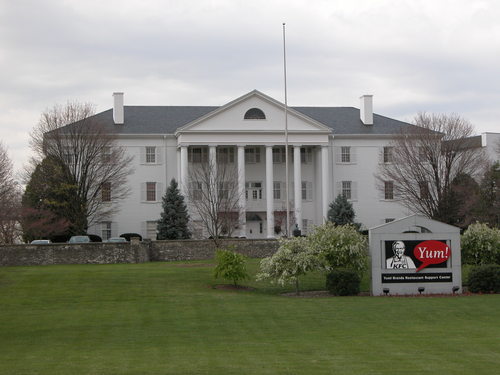 White House; people asked if Colonel Sanders had lived there. (Nope.)
My first assignment was helping the team get ready for the KFC Bluegrass Music Festival, held each September on the riverfront in Louisville. Bluegrass music played on the office tape player as I sorted out photos of the visiting bands and wrote captions for the press kits we would send out and have available for on-site press. My knowledge of bluegrass was limited, but my untrained ear thought it sounded like folk music. And I could recognize a guitar or a banjo so I wrote copious caption copy. However, my copy quickly became the office joke since I persisted in calling a certain stringed instrument a violin. (They’re really the same instrument but in bluegrass, it’s a fiddle.) By the time the festival started a few weeks later, I had immersed myself in everything bluegrass so I could avoid more stupid mistakes.
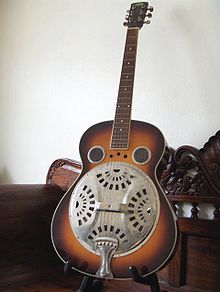 These memories came flooding back last month when I read about the death of Mike Auldridge, a Dobro master and founding member of the Seldom Scene. (A Dobro is a resonator guitar, usually held flat and played with a slide.) I remembered how I came to love Mike’s band and bluegrass music and to appreciate the masters of all stringed instruments.
Taped bluegrass was fine but at my first festival, I learned again about the magic of live music. (See my essay Live or Memorex? posted in November.) Festival performers included some of the biggest names – Bill Monroe and the Bluegrass Boys, Red Clay Ramblers, Doc Watson, New Grass Revival, the Seldom Scene, Ralph Stanley, Hot Rize, Tony Rice and Mark O’Connor. There were always international bands; that first year, the festival had bands from Scotland and Czechoslovakia. The program also included six young bands competing for the title of Best New Bluegrass Band.
KFC was a big supporter of traditional bluegrass (strings only, no percussion, no amps) but Seldom Scene and New Grass Revival were “new grass” bands that merged elements of rock, folk and jazz with the traditional string band. I bought a Seldom Scene double album, along with (yes, vinyl) albums by New Grass, Doc Watson and other bands.
I worked at KFC less than two years but returned to work at the bluegrass festival for several years thereafter. (Unfortunately, the festival didn’t survive the merger of KFC’s parent company with another giant corporation.) The festival was a highlight of my year – spending several days on the riverfront hanging out with music press and musicians, talking to festival attendees, and listening to music, music, music. By the way, the winner of the Best New Bluegrass Band competition in 1986 was Alison Krauss with her band Union Station. She was a young teenager at the time and both her fiddle playing and her vocals were powerful. I like to remember that I saw her at the beginning of what has become an illustrious career.
I was lucky to see the Seldom Scene play a couple of times at the Birchmere in Alexandria, Va., and to hear bluegrass in North Carolina and occasionally in Chicago. I’ve remained a bluegrass fan, although it usually plays second fiddle to rock and roll. But right now, I think I’ll play some Alison Krauss, a little Steve Earle and maybe the soundtrack from O Brother, Where Art Thou?
Not Fade Away: Soundtrack of the ‘60s
Posted: January 3, 2013 Filed under: Movies, Music | Tags: rock and roll, the Sixties Leave a commentI don’t like musicals, on stage or film. I dislike them because they take a perfectly good drama and add egregious singing and dancing that does little to advance the story or explore the characters. (Like James Joyce’s The Dead on stage or Light in the Piazza.) So I won’t be seeing or reviewing Les Miserables (I suggest Victor Hugo’s book instead). But I’m excited about a new film with music titled Not Fade Away — a rock and roll film set in the 1960s.
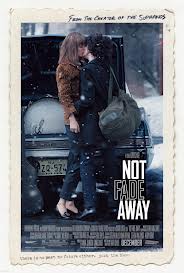 As one reviewer said, a great movie is always about more than what it’s about.* Not Fade Away is written and directed by David Chase in his first project since The Sopranos. Chase clearly loves this music. His film is about kids who want to be rock and roll stars. And it has lots of music. Constant music, in fact. But don’t call it a jukebox movie. It’s far more than that. It’s an exploration of the cultural upheaval of the ‘60s – in music, TV, film and politics. And it’s another chapter in the story I started to tell in my earlier essay, The Rock and Roll Escape Route. Rock and roll has often been an escape for teenagers who perceive their families living dreary, ordinary lives that they do not want to repeat.
In Not Fade Away, Doug, an Italian-American kid in New Jersey, and his friends form a band; practice in a family garage, and play teenage gigs. Doug starts on drums and turns out to be a pretty good lead singer. They produce a demo tape and make a contact with a record producer, who outlines for them all the practicing and performing they need to do before they will be ready to audition for a record contract.
There are several subplots, including Doug’s relationship with his father (played by James Gandolfini) who doesn’t understand Doug’s dreams, his long hair or his dress. The romantic subplot involves Grace, a girl from a wealthy family, and includes an unnecessarily complicated subplot about her sister, who suffers mental illness. The band members are unknown actors and do a credible job with the music.
The classic film plot of birth/failure/success is turned on its head by Chase. The story progresses as the band changes character and eventually Doug leaves. The film ends — with Doug in Los Angeles — in a fanciful but ambiguous street scene. (You’ll remember that The Sopranos finale drove many fans crazy. Love ambiguity, I say.)
There’s not a moment in the film where we don’t hear music; the soundtrack is killer. Steve Van Zandt of the E Street Band was the music supervisor and embroiders a masterful rock and roll sound track. Interestingly, the song “Not Fade Away,” written by Buddy Holly and covered by dozens of musicians, is not played in the film. If you’re a music fan, stay and watch all the credits. (Of course, if you’re a real movie fan, you do that anyway.)
Nancy’s rating: Highly recommended
* Keith Uhlich in Time Out New York, 12/17/12.
Nancy’s Favorites of 2012
Posted: December 31, 2012 Filed under: Movies, Music, People, Politics, Theater, TV, radio | Tags: Movies, Music, Politics, theater 8 CommentsWe love making lists. This is a restrained list of my favorite things about 2012, not necessarily the bests in any category. Politics, music, movies, theater, TV, books. Wanna argue? Write a comment here.
Politics
- Constant political coverage, which annoyed everyone but political junkies like me
- The reelection of President Obama
- Bruce Springsteen campaigning for the President and riding on Air Force One.
- Crowning of Nate Silver as King of Stats (others who did much the same, like Sam Wang of Princeton, unfortunately were not recognized)
Music – the Bruce Springsteen factor
- Release of Bruce Springsteen’s Wrecking Ball album (yes, I still buy them). Excellent, substantive story songs even though the music is better played live
- The Wrecking Ball tour and the six fabulous concerts I attended in Greensboro, New York (first time at the Garden!), Detroit, Los Angeles and Chicago (yay, Wrigley Field)
- Taking my grandson James to his first Springsteen concert at Wrigley Field (see my September post)
- Taking a road trip to Detroit with my nephew Brad and friend Craig to see Bruce at the Palace in Auburn Hills, with several dynamite food stops
- Bruce’s keynote speech at South by Southwest. Regretted not going to Austin but I watched him streaming live. He gave us a history of rock and roll through his own career in music Read the rest of this entry »
The Rock and Roll Escape Route
Posted: December 27, 2012 Filed under: Music, People, Rock and roll | Tags: Music 4 CommentsRock and roll is a vibrant, dynamic art form in all its permutations from classic, punk, metal and alt to roots and country (and hundreds more*). Rock and roll emerged in the 1950s from popular music forms such as blues, R&B, country and rockabilly; it has grown to dominate popular music sales (now downloads), and live music performances to become a ~$67 billion industry globally. While the death of rock is often predicted, it continues to thrive as young musicians join the industry veterans, now in their 60s and 70s and still recording and touring.
What keeps rock vibrant and dynamic, I believe, is that it is an escape route for young musicians, usually male, from the humdrum lives their parents and peers settle for. This is a socioeconomic story as much as a rock and roll story. Read the rest of this entry »
I love you, Palladia
Posted: December 19, 2012 Filed under: Music, Rock and roll, TV, radio | Tags: Hard Rock Calling, Levon Helm, Palladia, The Band, The Last Waltz Leave a commentPalladia, you made my day, vastly improved my week, and cemented your position as the greatest TV network ever tonight. You are showing — back to back — Hard Rock Calling 2012 and that fabulous concert film by The Band, The Last Waltz.
 Hard Rock is a 2.5-hour version of the music festival in Hyde Park, London, last June. The performances are not shown in setlist order but edited to one or two songs per band in rotation. Several songs of Bruce Springsteen were shown at various points and the film ended with Paul McCartney joining Bruce and the E Street Band for “I Saw Her Standing There” and a rousing version of “Twist and Shout,” which ended the festival. And took place just before Live Nation (not the London police) famously shut down the concert because it was past curfew.
The Last Waltz was the final performance of The Band at the Winterland Ballroom in San Francisco in November 1976, directed by Martin Scorsese. For me, the highlight of this film is always seeing the late Levon Helm in his prime, singing and drumming. His voice was powerful and betrayed a bit of his Southern background. (Helm continued performing — and drumming — until his death last April.) The other band members, by the way — Robbie Robertson, Rick Danko, Richard Manuel and Garth Hudson — were all Canadians.
Not only is The Band in fine form, but they are joined throughout the concert by various special guests — Muddy Waters, Eric Clapton, Bob Dylan, Neil Young, Dr John, Van Morrison, Joni Mitchell, Emmylou Harris and the Staples Singers, among others.
Hearing The Band and Levon perform “Up on Cripple Creek,” “The Weight,” and “The Night They Drove Old Dixie Down” tonight really was soul-satisfying.
Palladia, by the way, is an HD network owned by MTV. Look for it on your cable system. If you love rock and roll like I do, it will make you very happy.
Let’s demand sensible gun control now
Posted: December 18, 2012 Filed under: Politics | Tags: gun control 4 CommentsI don’t often write about explicitly political topics because the focus of my journal is the nexus of politics and popular culture — especially music and film. And truthfully, what I’ve been writing lately is pretty heavy on the pop culture side. But recent events inspire me to write about my position on gun control and see what happens.
If I were Queen of the USA or of the world, I would banish all guns to the bottom of the sea. We don’t need to be able to kill each other with guns. I know I could do a lot of damage with a good kitchen knife or even by stabbing someone in the throat with a sharp pencil. But a knife or a pencil can’t kill dozens of people in a few minutes. Read the rest of this entry »
 nancy bishop's journal