True Detective is over, but I’m still #hookedonTDweirdness
Posted: March 13, 2014 Filed under: TV, radio | Tags: Richard Powers, Tom Stoppard, True Detective 3 CommentsThe finale of the HBO crime drama, True Detective, ran Sunday night and I’ve watched it twice so far. I’ve been thinking about TD, its writer/producer and his literary influences–as well as his possible literary compatriots. Here’s what I’m thinking.
Sunday morning, I tweeted this out:
Nancy Bishop @nsbishop
The long, slow tracking minutes of Rust Cohle and Marty Hart wending their separate ways through the utter spooky weirdness of Carcosa*, with its skulls, bodies and overgrown foliage, were breathtaking. They sought and found the monster who committed the murders and, for a while, it appeared all three were dead. Marty had a hammer plowed into his right lung and Rust had a long knife jabbed into his midsection and still had enough strength to shoot the top of the killer’s head off. But in the epilogue, we learned that the two detectives survived. Another miracle of TV medicine. Since season 2 will feature a different plot and different characters, they could have been left to die. But instead we were treated to a final scene of the two outside the hospital looking up at the stars, with Rust telling how he felt when he almost died. Here’s a link to his final speech.
* What is Carcosa? The unearthly setting for this segment was an old brick military fortress, Fort Macomb, built in 1822 and decommissioned in 1871. You can see some photos of it here. More about Carcosa below.
I thought Matthew McConaughey’s Oscars acceptance speech was gag-making, by the way. I prefer this clever video recap that shows Rustin Cohle eviscerating McConaughey’s thanks-to-god speech. “And it’s a scientific fact that gratitude reciprocates,” he said. Really? Scientific? Personally, I’d rather have a beer with Cohle than McConaughey.
* * *
We really are in an amazing era of quality television, as New York Times media columnist (and one of my favorite journalists) David Carr wrote this week, in his article titled “Barely Keeping Up in TV’s New Golden Age.” He said, “The vast wasteland of television has been replaced by an excess of excellence that is fundamentally altering my media diet and threatening to consume my waking life in the process. And I’m not alone.”
Television recently has blessed us with several astonishingly good series, starting with my favorite, The Sopranos. I still mourn its disappearance (but I loved the ending…. Tony looking up from his French fries as the diner door opens, and then fade to black.). Six Feet Under, Mad Men and Breaking Bad were also captivating series.
This year’s True Detective has been called one of the best TV series ever by a number of critics. It’s almost a genre in itself. It’s brilliantly written and manages to create two contentious detective partners. Marty Hart (Woody Harrelson), on the surface a good old Louisiana boy with many personal complications. Rustin Cohle (Matthew McConaughey), a loner detective from Texas with a dark and troubled past and a propensity for opaquely gloomy comments. I quoted these when I wrote about TD in January.
“Time is a flat circle. Everything we ever done or will do we’ll do over and over and over again.”
“This place is like someone’s faded memory of a town, and the memory’s fading…like there was never anything here but jungle.”
“Human consciousness is a tragic misstep in human evolution.”
The eight-part series covered the detectives’ efforts to solve a bizarrely ritualistic murder; clues indicated that it was committed by a serial killer or a weird cult emerging in the swampy Santeria and voodoo culture of bayou Louisiana. The cinematography of the swampland setting was so visually powerful that it became a character in itself.
The show was written and produced by an English teacher turned scriptwriter named Nic Pizzolatto. Future TD seasons apparently will follow a similar eight-part anthology format with one story arc and different sets of characters in each. So we have seen the last of Marty and Rust. I have mixed feelings about that. The combination of story line, writing quality and characters took hold of me with a weirdly obsessive attachment.
One attribute of Pizzolatto’s writing that made it intriguing is his use of symbolism and stories from unrelated fields. Of course, True Detective draws on pulp detective fiction of the 1940s and 1950s. In addition, the Yellow King and Carcosa and the iconic figures made of sticks and straw are references not only to Louisiana bayou culture but also to the weird supernatural horror writings of Robert W Chambers, Ambrose Bierce and H P Lovecraft, among others. (So deep is my obsession that I’ve downloaded The King in Yellow Omnibus: Tales of the Carcosa Mythos to my e-reader. Believe me, reading horror stories or most any kind of genre fiction is not my taste. I lean toward literary fiction or nonfiction.) 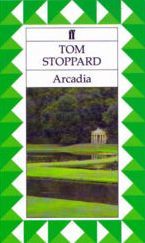
Drawing connections among manifold fields of science, politics and the arts is a characteristic of two of my favorite writers: Playwright Tom Stoppard and novelist Richard Powers. Stoppard, for instance, combines obscure mathematics, English gardens and emotion vs reason in Arcadia; he creates a Zurich confluence of James Joyce, Vladimir Lenin and Tristan Tzara (a founder of Dadaism) in Travesties. Powers combines DNA discovery, Bach’s Goldberg Variations, and Edgar Allen Poe’s The Gold Bug in his amazing and complex novel, The Gold Bug Variations; and literature, learning and neural networks in his 1996 novel Galatea 2.2. (I wrote about Powers in my review of the Spike Jonze film, Her—comparing Jonze’s concept with Powers’ Galatea 2.2.)
Anna Metcalfe of the Financial Times interviewed Richard Powers a few years ago and asked him what work he wished he had written.
Powers answered, “Tom Stoppard’s [play] Arcadia. I’d trade my soul for it.”
To me, this kind of literature crossed with science, technology and other arts is often more compelling than fiction that is purely plot- and character-driven—just as Stoppard’s plays give you something to chew on later, not just to laugh at in the moment.
I’m not saying that Pizzolatto deserves to be categorized with Stoppard and Powers yet. His resume is still short, but I think he may be heading in that direction.
Now I can go back to watching season 2 of House of Cards, which is a terrific show but I will not obsess over it.
Beauties and beasts: A mixed bag of culture
Posted: March 7, 2014 Filed under: Chicago, Movies, Music, Theater | Tags: Aliota-Haynes-Jeremiah, Chicagoland, Hayao Miyazaki, Women of Letters 6 CommentsKind of a Chinese menu of a post today. A little theater, a little film, a little TV and some fine music.
Jean Cocteau on stage
The Artistic Home has mounted a riproaring family sex story at its venue on Grand Avenue. This Jean Cocteau farce is Les Parents Terribles—it’s two hours-plus of high-speed theater. Very funny, very well acted. My Gapers Block review is here. The play runs until April 13.
In the course of writing the review, I thought about Cocteau’s other work. His 1946 film, La Belle et La Bête, is unforgettable and visually arresting. Here’s the trailer so you can check it out. It happens that the lobby of my apartment building has a giant framed poster of Cocteau’s La Belle et La Bête, so I am reminded of it every day.
Wondrous Japanese animation
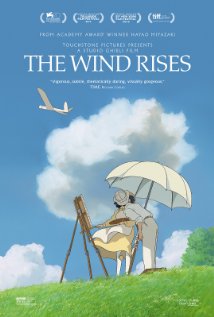 Animated film has not been one of my interests, since I always connected it with dreadful cute animals. But recently I’ve been educated in the beauty and sophistication of animated film and I’ve seen three films lately by the Japanese master, Hayao Miyazaki.
My film group had a discussion on Miyazaki this week and it was fascinating because several of the members are anime, animation and Miyazaki experts. His current (and final, he says) film is The Wind Rises, which just opened in local cinemas. His work is always beautiful, rich in hand-drawn detail, and sophisticated in its use of Japanese history and mythology (most of which I probably miss because of my own education gap).
His other films are mostly works that would be of family interest, but The Wind Rises is quite adult in plot and character. The leading character is Jiro, who is enchanted with flight and idolizes an Italian aviation engineer. He grows up wanting to design beautiful airplanes that carry people—but he ultimately designs the planes that are used in World War II, specifically to bomb Pearl Harbor. (There’s kind of an Oppenheimer effect at work here. Oppenhemer and the other Manhattan Project physicists designed the atomic bomb and then were chagrined at the results.)
War is an underlying theme in the film but not the main topic. In addition to Jiro’s engineering work, there’s a love story; his fiancée suffers from tuberculosis. The film is beautiful and gets many four-star reviews. (Seeing the “rising sun” logo on the airplanes was slightly unsettling for me, a child of that wartime period.)
I recommend this film highly and would also recommend Spirited Away (2001) and Princess Mononoke (1997) as two of his more typical films. He uses strong female characters and in each case blends in Japanese history and mythological symbols. His films are enchanting and I have a list of four or five more on my list to see.
Women of Letters
The Australian literary salon known as Women of Letters is bringing its project to revive the lost art of letter-writing to Chicago. Women of Letters will be performed with local writers and artists on Friday, March 21, at the Mayne Stage. Here’s my Gapers Block preview. Sounds like good literary fun and I’ll report on it back here.
Chicagoland: My favorite city on TV
CNN, apparently trying to become something more than just another cable news outlet, has just started an eight-part series called Chicagoland (Thursdays at 9pm CT, with several reruns). The first episode ran last night and so far Mayor Emanuel looks good—perhaps a little too good. However, given the principals involved, I believe the series will be fair and well done—and I hope I’m not wrong. The production has the Sundance/Robert Redford imprint so I’m expecting quality.
The first episode had some great footage of Chicago but the story was depressing. The reporting focused on murders and gang activity (with an emphasis on Fenger High School) and the city’s closing of 50 public grammar schools, almost all of them in African-American and Latino neighborhoods. We saw parents and teachers protesting the closings and CTU president Karen Lewis telling us what she thinks of Rahm Emanuel.
Of course, I’ll watch the other episodes, even though I know the story probably doesn’t have a happy ending. But to make up for that, I have a special Chicago musical treat for you, even though someone who shall be nameless remembers it as a song “I used to listen to in college while stoned.”
The song is “Lake Shore Drive” by Aliota-Haynes-Jeremiah. It was a big hit in 1975 and rereleased on CD in 1998. If you love the song, you can download it on iTunes and put it on your iPod, so it’s always with you, despite what the person quoted above calls “a jarring piano line.” If you’re not a Chicagoan, you may think that the LSD mentioned in the lyrics and shown in the visuals refers to a drug …. but to Chicagoans it refers to the drive that runs along the lakefront from Hollywood Avenue to 66th Street. The Lake Shore Drive Wikipedia page is a nice history of its construction, use and appearances in popular culture.
And now for some related posts….
On the subject of animation: One of the five sort of obscure movies I recommend is Richard Linklater’s 2001 Waking Life, an amazing approach to animation–and philosophy.
For some thoughts on J. Robert Oppenheimer, see my review of the current play being mounted by Saint Sebastian Players.
Arts & culture heat up Chiberia: 4 plays to see
Posted: February 25, 2014 Filed under: Movies, Theater | Tags: Ann K Powers, Mary Arrchie Theatre, Porchlight Music Theatre, Saint Sebastian Players, St. Louis Blues, The Monuments Men, Trap Door Theatre 1 CommentChicago had two days of almost-spring with temps above 40 last week but now winter is back in force. I just spent a few days in North Carolina, where their eight inches of snow melted very quickly. While I was there, we had three 60-degree/no-jacket days. Meanwhile, there have been lots of theater openings recently. Here are a few plays I’ve seen that you might enjoy too
In the Matter of J Robert Oppenheimer at Saint Sebastian Players
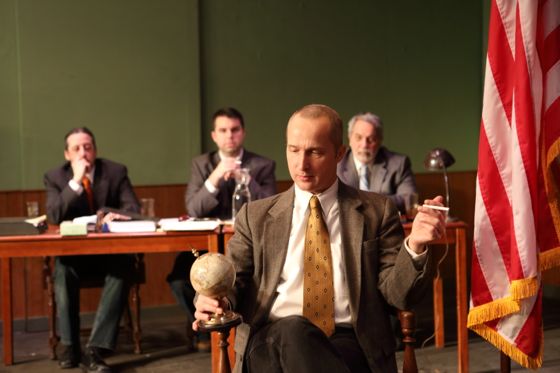 Yes, it’s talky and intellectual and it makes you think. Thinking might warm up your head. This three-hour play by the German writer Heinar Kipphardt leads us thru the Atomic Energy Commission hearing that resulted in Oppenheimer, the “father of the atomic bomb,” being stripped of his security clearance. This production by the Saint Sebastian Players is very good, despite some actorly flaws. The main characters are portrayed very well and the pace is engrossing. The play runs until March 9. See my Gapers Block review here, along with ticket and location details.
Ain’t Misbehavin’ at Porchlight Music Theatre
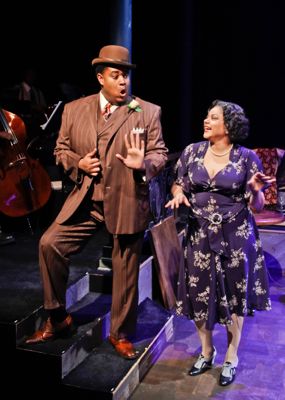 In the mood for some stride piano playing, lively singing and dancing by five charismatic performers to the music of Thomas “Fats” Waller? Ain’t Misbehavin’, a musical revue by Porchlight Music Theatre, is terrific and I don’t even like musicals. It’s sure to win plenty of Jeff awards.
My Gapers Block review noted that this is Porchlight’s contribution to Black History Month: a musical revue and tribute to the music of Thomas “Fats” Waller and the Harlem Renaissance. “Fats himself would be proud of this production, performed at Stage 773 with an excellent live band led by über-pianist Austin Cook.” See my review for all the logistics and production details.
Crime and Punishment at Mary-Arrchie Theatre
If you never managed to finish the Dostoyevsky book in high school or college, here’s your chance to gain a new appreciation for the character Raskolnikov and the theme of crime and guilt. Here’s how my Gapers Block review started: “Mary-Arrchie Theatre takes on a difficult task in staging this 2003 adaptation of the Fyodor Dostoyevsky novel, Crime and Punishment. But with intelligent direction by Richard Cotovsky, this talented and respected off-Loop theater gives the audience a gripping 90 minutes. We meet Raskolnikov (a strong performance by Ed Porter), the poor, sickly, arrogant former law student who commits the crime, suffers guilt and psychological trauma and, finally, punishment.”
The script is the same one presented in 2003 by Writers Theatre in Glencoe on their tiny back-of-the-bookstore stage, with Scott Parkinson doing a superb job playing Raskolnikov. The novel was adapted into a play by two Chicago playwrights–Marilyn Campbell and Curt Columbus. The Mary-Arrchie play runs until March 16.
Judith: A Parting of the Body at Trap Door Theatre
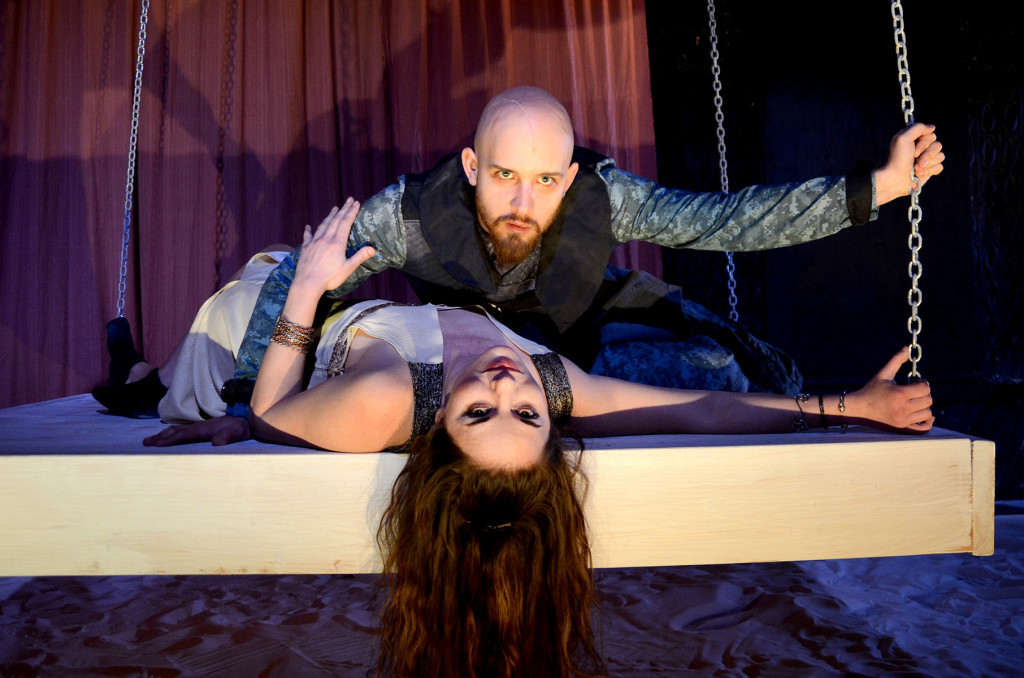 Trap Door’s excellent production of Judith: A Parting of the Body by Howard Barker is a revisionist take on the biblical story of the Israelite widow who goes to the enemy camp to seduce General Holofernes. The language is poetic and sometimes vulgar. The three actors each play out their stories in an engrossing way.
You’ll remember the image, even if the story is not familiar. There are many famous versions of the painting often titled “Judith with the Head of Holofernes”; the one by Artemisia Gentileschi may be best known. But I have always liked the Caravaggio version best. You can see it on this Wikipedia page.
Judith has been extended so you can see it at Trap Door, the little theater space at the end of a gangway at 1650 W Cortland, until March 8.
Tribes at Steppenwolf Theatre
Tribes by Nina Raine recently ended its run at Steppenwolf. We saw it near the end of the run since we had to change our tickets from one of the deep-freeze days. The reviews of this play were mixed, varying from “somewhat ” to “highly recommended.” The story is about a family with one deaf son, who leaves the family cocoon and discovers the outside world and the deaf community. The theme isn’t new—the controversy over the benefits of sign language vs. lip-reading for the deaf–and it still demands our attention. I really wanted to like the play, but I found most of the characters unlikable and the play failed to keep me from checking my watch to see when I could leave.
And also . . . .
 A film recommendation. In case you, like me, were disappointed in the reviews for The Monuments Men and decided not to see it, I’d like to recommend a good documentary that tells the story and even includes some of the real Monuments Men. The Rape of Europa, 2006, was written and directed by Richard Berge, Bonni Cohen and Nicole Newnham, with narration by Joan Allen. 117 minutes. Streaming on Netflix.
The film is drawn from the book of the same title by Lynn H Nicholas, who appears in the film; her book won the National Book Critics Circle Award in 1994. One of the co-producers is Robert M Edsel, the author of the book The Monuments Men, from which the current film is adapted.
An example of transitivity. Did you know that the song, “The St Louis Blues” got its name from a street, not from the Missouri city? Ann K Powers, the NPR music critic, posted a photo on her Facebook page of a memorial plaque in Bessemer, Alabama. The W C Handy song, “Pipeshop Blues” was also known as the “St Louis Blues” for St Louis Avenue, the street that ran through the Howard-Harrison Steel Company of Bessemer.
When I shared the image on my Facebook timeline, my economist son observed that this is an example of the mathematical concept of transitivity, which is
A relation among three elements. If it holds between the first and second elements and it also holds between the second and third, it must necessarily hold between the first and third.
Could this be four-part transitivity? The song was named after a street, which was named after a city, which was named after a French king and saint, Saint Louis himself, King Louis IX of France. So song, street, city, saint.
* * *
Follow my blog, please. If you’d like to receive an email when I post a new article on nancybishopsjournal.com, just put in your email address on the upper right side of this page. I promise no spam and you don’t need a password!
Out in the Street—Street art and post-street art
Posted: February 12, 2014 Filed under: Art & architecture | Tags: Chicago street art, Maxwell Colette Gallery, Post-street art 1 CommentWhen I’m out in the street
I walk the way I wanna walk
When I’m out in the street
I talk the way I wanna talk
When I’m out in the street
When I’m out in the street
Baby, out in the street I don’t feel sad or blue
Baby, out in the street I’ll be waiting for you
–Bruce Springsteen, “Out in the Street” from The River, 1980
How could I resist an opportunity to start an essay with a piece of Springsteen art? It fits because I’ve recently seen two fascinating exhibits of street art and post-street art. What is post-street art? I’ll get to that in a minute.
Chicago Street Art
The street art exhibit was Paint Paste Sticker: Chicago Street Art, shown at the Chicago Cultural Center from November thru January. I stopped in to spend some time there one day and I was struck by the creativity and vibrant use of materials. There was plenty of tagging, of course, and lots of image-based art created in many media. The fact that the exhibit was housed in a city building was interesting because not too long ago, the mayor had graffiti blasters out cleaning up such creativity all over the city.


The exhibit legend noted that graffiti writing proliferated in the ‘70s with improvements in spray-can technology and moved into image-based art in the ‘80s and ‘90s. The exhibit is a “multi-ethnic, intergenerational gathering of Chicago artists, many of whom were first connected by the ‘L,’ and whose disciplines are Graffiti and Street Art.” Some of the artists whose work I noted were Zore, Traz, Thor, Risk, G.P., The Champ, Capser, Nick Adam and Flex. We may not have heard of them but they’re well known in the street art community.
Post-Street Art
Not long after that, I spent time at an exhibit of “post-street art” at the Maxwell Colette Gallery on Ashland Avenue in the Noble Square neighborhood.
Gallery director Oliver Hind defined post-street art as art that has come off the street into galleries and collections; it has almost become mainstream. I interviewed him for my Gapers Block review and we had a fascinating conversation about the art and some of the events that brought about the acceptance of street art by the gallery community. I mention these in my review: The 2008 use of a street artist’s portrait of Barack Obama as the official campaign portrait, and the 2010 documentary Exit Through the Gift Shop about the work of street artists.


The current exhibit at Maxwell Colette is the work of two post-street artists: Peeta, an internationally known painter whose beautiful crystalline work is based on letterforms; and Alecks Cruz, a Chicago artist who creates tag-like sculptures out of corrugated boxes.
The art in the two exhibits is for sale and Hild has more interesting street art for sale in his gallery and online. My heart beat faster for several of them.
You can view The Maxwell Colette exhibit through March 1. Hours are 12-6pm Wednesday through Saturday. More information in my review.
Out in the Street
The Springsteen song I quoted above has been adapted into a street ballet but so far I can’t find it online. I haven’t given up, however. I was transfixed by it at a Springsteen symposium in 2009. In place of that, as today’s treat, here’s a video of a young Bruce Springsteen singing “Out in the Street” in Paris in 1985. This is the period when he was touring on his album Born in the USA. The video includes his red-haired future wife, Patti Scialfa (they were married in 1991), and the late great Clarence Clemons in white.
Lives, finished and unfinished + my 100th post
Posted: February 7, 2014 Filed under: Movies, Music, Theater | Tags: Pete Seeger, Philip Seymour Hoffman 6 CommentsPhilip Seymour Hoffman’s private funeral is being held today at a church in Manhattan. There will be a memorial service later. Hoffman died February 2 of a drug overdose at the age of 46.
Pete Seeger’s memorial service was held in Beacon, NY, where he lived—on the day Hoffman died. The service was a moment of quiet reflection about Seeger’s life along with plenty of his songs. He died at 94 on January 27 after being hospitalized for a few days.
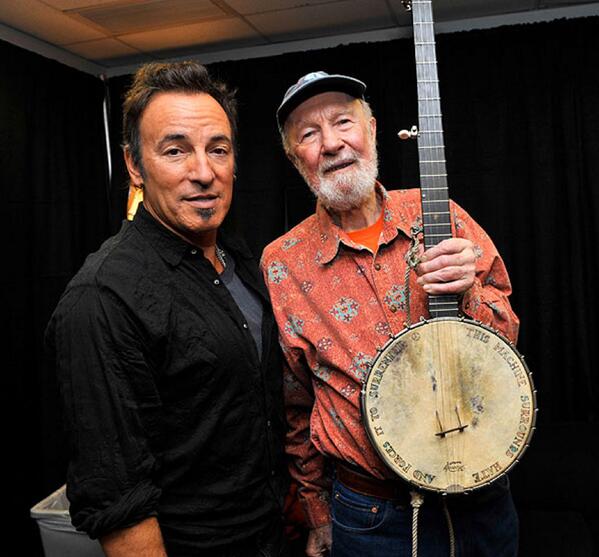
Springsteen and Seeger at Pete’s birthday party in 2009. Copyright Kevin Mazur/WireImage.
I can’t help but think of the contrast between the two lives. Seeger was a singer, songwriter, political and environmental activist for more than 70 years. At 17, he joined the Young Communist League and later the Communist Party; he severed his CP ties in 1949. He started singing with the Almanac Singers in 1941; their work included antiwar and other leftwing political songs. Over the years, he was investigated by HUAC and blacklisted; sang on public television and on college campuses and coffeehouses when he couldn’t get more commercial gigs because of the blacklist. But he never quit songwriting, performing and political activism. He has a huge repertoire of songs and recordings and is considered a national treasure by the public and a role model by many current musicians, including Bruce Springsteen and Tom Morello.
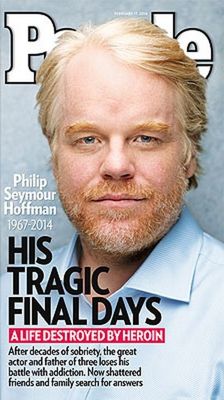
People Magazine cover, 2//12/2014, cropped.
Hoffman was a brilliant, prolific actor with some 50 movies plus TV shows and stage performances on his resume. Recently he played Willy Loman in Arthur Miller’s Death of a Salesman. In 2000 he and John C Reilly performed Sam Shepard’s ultimate sibling-rivalry play, True West, switching roles occasionally thru the run. My favorite Hoffman films are probably Synecdoche, New York, and Capote.
Many writers have commented in the last week about his talent and how he fully inhabited every role. A.O. Scott said he “made unhappiness a joy to watch.” He lived only half the life that Pete Seeger lived. Think how many amazing movie experiences we are going to miss because of the drug habit he kicked and then kicked him back.
We can’t possibly know what demons tortured Hoffman and made him rely on prescription drugs and heroin. But the loss of his life is a loss to us as well as to his family and friends.
There are many unfinished lives in the literary, music and entertainment businesses, and in everyday life. This is a topic that interests me, as I’ll explain below.
Buddy Holly, the early rock and roll musician, died at 23 in a wintry plane crash 55 years ago last week.
John Kennedy Toole, the bizarrely comic novelist and author of The Confederacy of Dunces, died at 32 in 1969.
Janis Joplin, the great blues and rock singer/songwriter, died at 27 in 1970.
Jimi Hendrix, perhaps the world’s best guitarist (and left-handed too) died at 27 in 1970.
John Millington Synge, the Irish playwright and author of Playboy of the Western World, died at 37 in 1909.
John Wellborn Root, the Chicago architect and design partner of Daniel Burnham’s firm, Burnham & Root, died at 41 in 1891. The house where he lived is a block away on my street.
And my sister Lynda died at 27 in 1970 when a drunken driver crashed into the passenger side of the family car, killing her and her 3-month-old baby. Even after four decades, I find it difficult to talk about her death, so few of my friends know the details. Some day I’ll dedicate stories of unfinished lives to Lynda.
* * *
Nancy Bishop’s Journal: My 100th post
This is my 100th post. When I started this blog in July 2012, I wasn’t even sure what I was doing or where I was going. Since then, I’ve become much more focused on writing about the things I love—movies, theater, music, books, art and Chicago stories. It’s been more fun than I thought possible. I feel as if after all those decades of business writing, I’ve finally become a writer.
Those 100 posts average 800-900 words each, so in the last 18 months, I’ve written about 85,000 words, the equivalent of a book, a substantial book at that. In addition, since May 2013, I’ve written 80 stories—mostly theater and art reviews—for Gapers Block, the Chicago-centric website. That’s another ~40,000 words, in case we’re counting. So in ~20 months, I’ve written the equivalent of two books. That’s not bad productivity.
Pop culture pool: Drowning in TV, music, theater
Posted: January 31, 2014 Filed under: Music, Theater, TV, radio | Tags: Grammys, Lookingglass Theatre, Pete Seeger, Rosanne Cash, Sideshow Theatre, The Hypocrites, True Detective 6 CommentsA little of this. A little of that. It’s January. It’s cold and snowy. Have fun while you’re hibernating but don’t stay inside and mope.
True Detective on HBO
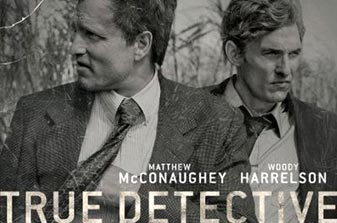 This new HBO series has a dark, ominous atmosphere, clued by the opening theme music and visuals. Woody Harrelson and Matthew McConaughey are detectives with the state CID in rural Louisiana near the town of Erath. Harrelson plays Martin Hart, the senior guy, and McConaughey plays his partner Rustin Cohle, a moody, sometimes poetic detective. (This is another step in the McConaissance, as Tribune writer Christopher Borrelli termed it. McConaughey, who spent years playing in romantic comedies, has now turned into a serious actor. I personally think the change started with his 2011 performance in Killer Joe, the Tracy Letts script that started as a stage play.)
True Detective (in the Sunday night quality TV ghetto) starts out in 1995 like a police procedural when they find the first evidence of a serial killer who performs ritual murders. It’s also a character study of the two detectives, who are seen in 2012, testifying in separate internal investigations about the case.
The show is intense and the plot will keep your attention. But the best thing about the program is the writing. I’ve watched the first three shows and each time I hear several lines I want to write down, usually spoken by McConaughey’s character, who has been through a failed marriage and lost a child in an accident. He’s cynical, brooding and critical of religion. He often offends his partner, who represents the traditional small-town milieu in which they operate.
“Time is a flat circle. Everything we ever done or will do we’ll do over and over and over again.”
“This place is like someone’s faded memory of a town, and the memory’s fading…like there was never anything here but jungle.”
“I think human consciousness was a tragic misstep in evolution. We’ve become too self-aware.”
The screenwriter is Nic Pizzolatto, a former lit and writing teacher at the UofC and DePauw University in Indiana. He left teaching for Hollywood and worked on the AMC show, The Killing, before this. The Tribune article I noted above is a good overview and interview with Pizzolatto. (Registration required to access article.)
GRAMMYs mashups
The Grammys have become more of a variety show than an awards program since most awards are presented off-camera. But the musical performances are often absorbing collaborations between performers you would not often see together on a stage. The most publicized teamups this year were Daft Punk with Pharrell Williams and Stevie Wonder and the super-hot opener by Beyonce and Jay Z. But my favorite was the classical pianist Lang Lang with Metallica. They performed the Metallica song “One,” which was inspired by the Dalton Trumbo book and film, Johnny Got His Gun, a horrifying war story. Footage from the 1971 film formed the backdrop for the Grammys performance. It was a song you had to pay attention to.
Pete Seeger, “a heart of gold and a spine of steel”
Bruce and Pete, 2009
You have to love a radical folk singer who never gives up his activist ideas and activities into his 90s. Pete Seeger was a national treasure and role model and leaves us with so many memories. Like his performance with Bruce Springsteen at the 2009 inaugural concert. (The description of Seeger above is from Springsteen’s New York Times comments on January 29.) And his performances of children’s programs on educational TV when he was banned from the commercial networks. After Pete’s death on Tuesday, a testament to his grittiness surfaced: the transcript of his testimony before the House UnAmerican Activities Committee in 1955. He never took the Fifth Amendment; he persisted in saying the committee had no right to ask him questions about what he belonged to or for whom he played and so he wasn’t answering. He would talk about his songs and that was it. Great reading.
Rosanne Cash’s new album, The River and the Thread
I’ve had Rosanne Cash’s album The List on my iPod for a long time—and full confession: I bought it because she does a duet with Bruce Springsteen on “Sea of Heartbreak.” It’s a fine album and now I have her newest as well. It’s The River and the Thread, an excellent album of original songs by Cash and a few collaborators including her producer husband John Leventhal. The thread follows the towns along highway 61, the main highway from Memphis to New Orleans, also famous as a musical route because of the many songs written about it, including Bob Dylan’s “Highway 61 Revisited.” Most of the songs have road references and a strong sense of place. So far, my favorites are “Modern Blue” and “World of Strange Design.” There are many layers of culture and memory in these songs, plus the sound and the beat are more vibrant than her previous work. Rosanne Cash is worth a listen.
ON STAGE: The Golden Dragon by Sideshow Theatre
This is a short, fast-moving, sometimes puzzling play that I called a dark fairy tale. Here’s how my Gapers Block review begins:
“The Golden Dragon by German playwright Roland Schimmelpfennig is a fanciful story presented by Sideshow Theatre Company. It’s a sort of dark fairy tale about the workers, residents and guests at a Thai/Chinese/Vietnamese fast food restaurant in a warehouse building in a certain global city. We are not sure where, but it doesn’t matter. The play is made up of the intertwined stories of 15 or 20 characters, played by five actors who quickly move from role to role without regard to gender, nationality or costume.“
I puzzled over it before writing my review, but it is really a fun and adventurous outing by Sideshow and displays the versatile acting chops of the five performers. The Golden Dragon runs until February 23 at Victory Gardens’ Richard Christiansen Theater.
The Little Prince by Lookingglass Theatre

Lookingglass’ home
The Little Prince is adapted from the beloved story by Antoine de Saint-Exupery and Lookingglass gives the wonderful story its due with a terrific production. I’ve loved this story forever and enjoyed reading it with my children as well as reading it in Spanish and French when I was studying those languages.
The play is produced by Lookingglass with the Actors Gymnasium, so there is plenty of flying, zooming and energetic action on the deceptively simple set. The play is poetic, visually beautiful and emotionally satisfying. It’s extended until March 16 at Lookingglass’ Old Water Tower space.
Tennessee Williams Project by The Hypocrites
The Hypocrites is doing a trilogy of mostly unproduced Tennessee Williams plays at their space in the Chopin Theatre. The first—Tell Sad Stories of the Deaths of Queens—is set in the rather baroque lobby area in the downstairs space. For the second—The Remarkable Rooming House of Madame Le Monde—the audience moves into a creepy London boarding house set—and finally to a St. Louis hospital ward for The Big Game.
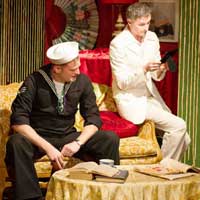 Director Matt Hawkins takes the same cast thru each transformation. The first play is the longest and the most successful. Patrick Gannon plays a wealthy transvestite who brings home a sailor, played by Joseph Wiens. The drinking, seduction and interaction is quite intense and well performed by the two actors. The second play seemed most unlike any Tennessee Williams play I have ever seen and had a strong Brechtian flavor—and for a moment, took a Sweeney Todd turn. It was, I can only say, odd. The third play is about a young man with congenital heart disease and his two roommates, one a football player on his way to the titular game, the other with a severe brain disease. The play is fraught with disease and death, as are many of Williams’ plays.
The trilogy is an interesting, if uneven, evening of theater. The Tennessee Williams Project runs until March 2.
And et cetera….
I’ve seen a bunch of movies lately too, but I wrote about Movies, Movies, Movies last week, so I’ll save these for my next film fix: The Wolf of Wall Street, Princess Mononoke, Captain Phillips and Like Father, Like Son. And probably more.
Movies, movies, movies: It’s that time of year
Posted: January 23, 2014 Filed under: Movies | Tags: @CFLX312, Chasing Amy, Clerks, Dogma, Her, Inside Llewyn Davis, Kevin Smith, NPR Ann Powers, The Great Beauty 1 CommentAs I’ve confessed before, I’m a movie geek. I love quirky, obscure films as well as the critics’ darlings. I revel in the technical, behind-the-scenes details about filmmaking. That’s why I enjoy the discussions at my Meetup film group. People like Al, Brad, Julie, Celine, Rebecca, Rui, Peter, Marisa and Kristine bring new insights to our discussions.
Here’s my perspective on some of the current batch of award winners and nominees, as well as some that should have made it but didn’t.
But first, something completely different….
The Kevin Smith trilogy: Clerks, Chasing Amy and Dogma
The film group had a rousing discussion of Kevin Smith’s work recently, focused on these three films. I watched them all again and discovered new things about each. If you think Smith’s films are goofy and sophomoric, I would like to disabuse you of that idea.
Clerks (1994) is about two convenience and video store clerks, Dante and Randal, trying to get by and figure life out. Best line: “This job would be great if it weren’t for the fucking customers.” Jay and Silent Bob appear as two stoners. Dante and Randal occasionally engage in philosophical musings about life and love. It’s shot in black and white on a very low budget and filmed in and around Monmouth County, New Jersey. Scene cards announce mood changes like Syntax, Purgation, Catharsis and Denouement.
 Chasing Amy (1997) has more plotline and higher production values as it follows two friends and partners who have created a popular comic book series, Bluntman and Chronic. Their Holdup Studios is in Red Bank, NJ. The main plot concerns Holden (Ben Affleck) falling in love with a bisexual woman who turns out to prefer girls, much to Holden’s distress. Jason Lee is terrific as his partner. Jay and Silent Bob play pivotal roles when Silent Bob finally speaks and explains to Holden about why he’s still “chasing Amy” and why Holden should recognize his mistake and deal with it.
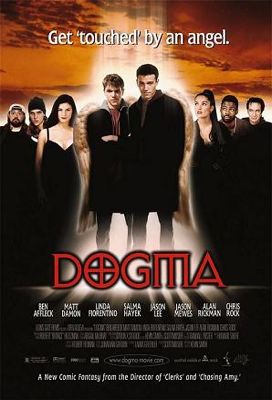
Dogma ((1999) is on my all-time favorite film list. I will tell you just a snippet of the story: Two fallen angels (Matt Damon and Ben Affleck) want to return to heaven and think they have found a theological loophole that will get them back in. The cast is amazing (Chris Rock, George Carlin, Alan Rickman, Selma Hayek, plus Jay and Silent Bob.). I have always thought of Dogma with glee as an anti-religious film and that suits my irreligious attitudes. But it is really a film by a disappointed Catholic who wishes his church would do better. Well, I still love it.
Dogma opens on the boardwalk in Asbury Park and continues to a church in Red Bank. It’s set in Springsteen country, the geographic soulmate to Chicago.
2013 favorites
The Great Beauty (La Grande Bellezza)
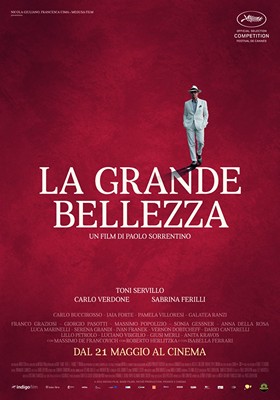 This film has already won the Golden Globes’ award for best foreign language film. As I wrote in my letterboxd.com diary, this is a gorgeous film meditation on love, life and death, written and directed by Paolo Sorrentino. Toni Servillo plays Jep, an Italian journalist who would be called a flaneur in 19th century Paris. He’s a party animal, but after his glorious 65th birthday party near the beginning of the film, he begins to reflect on his life … and what lies ahead. Rome has never looked so beautiful with this splendid cinematography and amazing tracking shots. The film is poetic, sad and very funny as Sorrentino takes witty jabs at the church, journalism and anti-aging techniques. The film is often compared to Fellini’s La Dolce Vita, but I think that comparison is superficial. Jep is a much more self-aware person than Fellini’s Marcello.
Sorrentino also wrote and directed one of my favorites (a possible cult film?) of 2013: This Must Be the Place (2011). I wrote about it here.
Two documentaries: The Act of Killing and 20 Feet from Stardom
The Act of Killing is a stupefyingly chilling film about the men who led the death squads that killed more than a million people in Indonesia in the 1970s and are celebrated as heroes. Director Joshua Oppenheimer gets them to reenact their deeds in whatever dramatic genre they choose, in costume and makeup. The result is goofy and horrendous.
20 Feet from Stardom celebrates the backup singers (almost all women) who give rock and roll stars the sound we love. Several singers are profiled in the film, as are many of the musicians they worked with, including Bruce Springsteen. The singers nearly all worked in the background for their entire careers, as my review describes. But nevertheless it’s a great, happy film and now is available on DVD.
Five best-picture nominees (I won’t pick winners)
Nebraska, directed by Alexander Payne. How often do you see a film in black and white? It takes some audacity to do that in a straightforward way. The film is partly striking road movie and partly wrenching human story. Excellent performances by Bruce Dern, Will Forte and June Squibb.
American Hustle, directed by David O Russell, has been called homage to a wig factory. The re-creation of ‘70s hair and fashion is outstanding and cringe-inducing. Did we really dress like that? American Hustle has a great, witty script and a joyous set of plot twists and turns. A lot of great acting, but Christian Bale’s personal transformation is amazing. His extra 40 pounds and the elaborate comb-over make him unrecognizable. For two other films—The Machinist and The Fighter—he lost so much weight that he looked near death. The physical changes almost make you overlook the acting, which is superb.
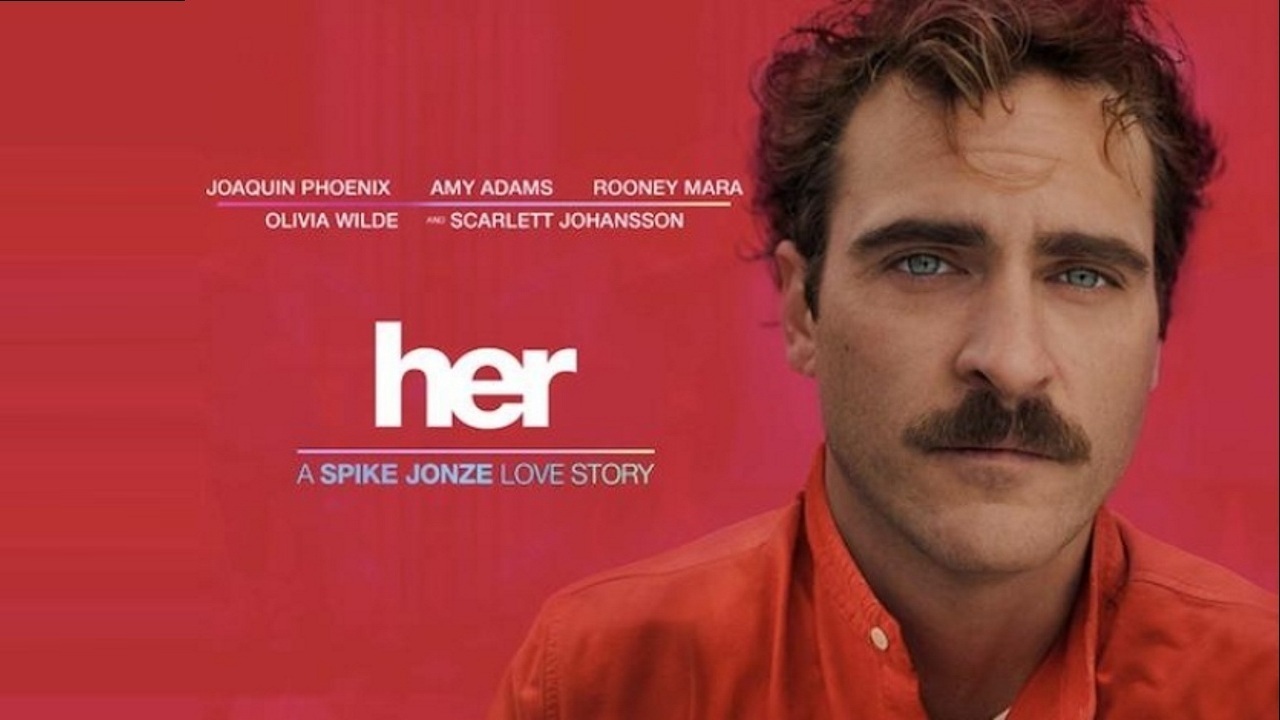 Her by Spike Jonze. I’ve written about this and compared the “Her” story to that of the Richard Powers novel, Galatea 2.2. This is an excellent film and really thought-provoking, both about our attachment to technology (mea culpa) and our difficulties with personal relationships. It deserves a lot of awards–for the film, for Joaquin Phoenix as the lead, and for the original script. Her has generated much online discussion, about the film and its implications, including this insightful article about Spike Jonze in Paste Magazine.
Gravity by Alfonso Cuaron, who directed two of my favorite films ever—Children of Men (2006) and Y Tu Mama Tambien (2001). I saw Gravity in 3D at an Imax theater and the physical effects are simply breathtaking. Sandra Bullock’s performance is very good. But I don’t think this film in any way deserves the best-film award. It’s simply too much bells and whistles, too little drama, plot and character development.
12 Years a Slave by Steve McQueen is also breathtaking in a different way. It’s a shocking slap in the face to those who forgot what slavery was like—the human condition that the United States enabled for so many decades. At least two excellent performances—by the leading actor Chiwetel Ejiofor and Lupita Nyong’o as supporting actress. 12 Years won the Golden Globe for best film and it may be the sentimental favorite to win the Oscar.
Three films that deserved more attention
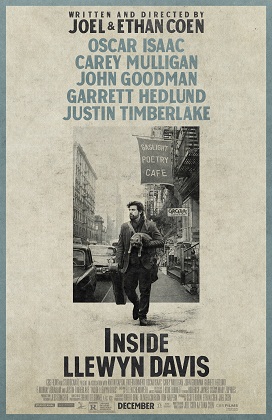 Inside Llewyn Davis, the Coen brothers’ film about Greenwich Village in 1961 was one of my favorites of the year and many critics placed it in their top five or ten for best film. But it didn’t get much Oscar love. Just a couple of nominations for technical awards. I acknowledge my own bias—the film is about the music business and lets me reminisce about life in the sixties. But I still think it deserved better. If not best film, then for directing and original screenplay.
Blue Jasmine, an excellent film by Woody Allen, may earn a well-deserved best-actress award for Cate Blanchett. There are other fine performances in this film—Sally Hawkins, Alec Baldwin, Bobby Carnevale and Andrew Dice Clay (yes, really!), as well as an excellent, thought-provoking script.
Blue is the Warmest Color by Abdellatif Kechiche was shockingly neglected in every category. I was surprised that it wasn’t nominated in the best foreign language film section. It did win some regional film awards in that category, including France’s Lumiere Award and the Palme d’Or. And the young lead–Adèle Exarchopoulos—received several regional acting awards.
I reviewed Blue here briefly in December and said: This controversial film about a young woman and her older woman lover in Lille, France, is beautifully filmed and to my mind, too long at three hours plus. The much-discussed sex scenes are quite beautiful and almost painterly in their composition. Most importantly, the film raises issues of male viewpoint, social class and life choice between the two lovers and their friends and families; those issues are fruitful discussion topics.
It was a good year for films, in my opinion. Perhaps that’s why some of my favorites were neglected.
Related posts
Samantha vs. Galatea. My review of Spike Jonze’s fanciful and fascinating film, Her.
Reliving the Sixties: My review of Inside Llewyn Davis, in which I compare Llewyn Davis’ story to Bruce Springsteen’s–only with a better ending. Imagine how happy I was to hear Bruce say exactly that in his long interview with Ann Powers, NPR’s pop music editor. Bruce says: “My life was, it was Inside Llewyn Davis with a happy ending, you know. I was, you know, I was that guy. I was the guy sleeping on the couch in midtown and taking the subway to Greenwich Village.”
Theater reviews and reveries
Posted: January 18, 2014 Filed under: Theater | Tags: Court Theatre, Shattered Globe Theatre, Theater Wit, Theatre in Chicago, Trap Door Theatre 2 CommentsChicago theaters are opening new shows in January and February, so after a slow December, I’ll be reviewing lots of theater again. Here are a few current highlights.
Our Country’s Good
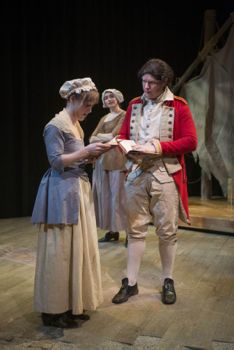 This play by Shattered Globe Theatre is being presented at Theater Wit on Belmont. The historical subject matter of the play—prisoners and their English soldier-captors in the new Australian penal colony in 1788—is fascinating. The play by British playwright Timberlake Wertenbaker also involves a play within a play performed by the convicts. Many interesting possibilities, but the play ultimately is a bit flat. I was disappointed because Shattered Globe usually does sterling work. My Gapers Block review notes some of the problems.
It’s possible that the director could take notes from some of the reviews and snap up the production, however. The show runs thru February 22, so if the subject matter interests you, check it out. (Image courtesy Shattered Globe Theatre.)
Mr Shaw Goes to Hollywood
This is a smart, funny play with lots of celebrity name-dropping and appearances by GBS and Clark Gable. I haven’t posted my Gapers Block review yet, so I won’t go into more reviewer details here. But I will tell you it’s by MadKap Productions at the second floor studio at the Greenhouse Theater Center thru February 16.
Update: here’s my Gapers Block review. I gave it a Recommended rating for theatreinchicago.com.
Blood on the Cat’s Neck
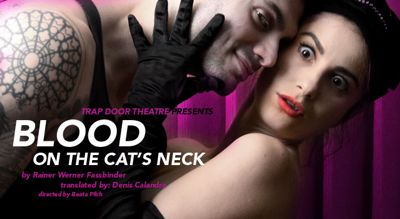 This was another sparkling production by Trap Door Theatre, pulling out crazy visual magic on their tiny stage. The play is closed now, but I will only say: Watch for the next Trap Door production. They do plays mainly by European playwrights and they always have a political/social edge reminiscent of Bertolt Brecht and Max Frisch.
Blood on the Cat’s Neck is by Rainer Werner Fassbinder, a German film innovator who died of a drug overdose at 36 in 1982, ten years after writing this play. Blood plays out in three parts; it’s part monologue, part short scenes, and it ends with a mad party scene. The character we follow with most interest is Phoebe Zeitgeist (played by Simina Contras), a vampire from another planet. She’s completely naked throughout, except for a hat, gloves, heels and glittery red lipstick. She has a fixed smile and repeats the other characters’ slogans and complaints, without seeming to know what they mean. The party scene ends with Phoebe doing what vampires do – to each character in turn. (Image courtesy Trap Door Theatre.)
Invisible Man at Court Theatre and on the page
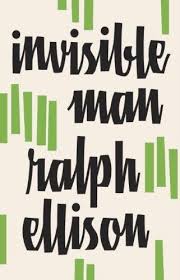 Court Theatre presented Ralph Ellison’s 1952 novel Invisible Man two years ago. The play was marvelous, compelling but confusing. I left feeling dissatisfied, wishing I had read the book before seeing the play. Now I’ve read the book (my book group had an excellent discussion on it) and I would love to see the play again. I think it would be more dramatic and meaningful.
Ellison is a lyrical writer, influenced by jazz as a musical form. He tells the story of a nameless young man who leaves a Southern black college to go to New York where he experiences northern racism and bigotry in the course of making a living and making human contact. He is a talented, even charismatic, speaker and becomes a spokesman for a white-led political organization called the Brotherhood where he is tasked to recruit in Harlem. Ellison was a Marxist for a while so the Brotherhood is probably patterned after the Communist party. The character makes us understand why he is invisible and how social and political racism affect him. The book is structured episodically and sometimes requires flipping back to reread an earlier section. Ellison’s writing is rewarding, however, and the book is a wonderful read.
Theatre in Chicago website
I want to recommend this website as a resource for Chicago theater-goers. It’s a very good way to find out what plays are showing now and what reviewers are saying. To see the compilations of reviews, go to the home page and select Review Round-Up in the left-hand column. My Gapers Block reviews are now appearing there.
There are sister sites in other cities: Minneapolis, Boston, DC, Seattle, LA, Atlanta and San Francisco. You can find links to those pages in the footer at theatreinchicago.com.
Related posts
Read about the two plays I recommend here: The Seafarer runs until February 1. An Inspector Calls just closed.
Reviewing Spike Jonze’s Her: Samantha vs Galatea
Posted: January 7, 2014 Filed under: Digital life, Movies | Tags: CFLX312 meetup, Galatea 2.2, Her, Joaquin Phoenix, Richard Powers, Scarlett Johansson, Spike Jonze 4 CommentsSpike Jonze’s new film Her is a charming, tender love story with a soulful 21st century edge. I loved the film, but the story was familiar. In Her, Joaquin Phoenix plays Theodore, a writer who falls in love with a computer operating system. In 1995, Richard Powers wrote Galatea 2.2, a novel about a writer who loves a neural network that he teaches to know and understand literature and the world. In both stories, the computer companion turns away from the lover and shuts down.
Jonze’s film is visually delightful with sterling performances from Phoenix and Scarlett Johansson as Samantha, the voice of the OS. Phoenix plays a likable character for a change; he’s lonely after a recent divorce and opens an account with a new operating system (its logo is an infinity sign) that promises companionship. That’s how he meets his new OS, who chooses the name Samantha. She says she has intuition and that’s how her personality will continue to develop. “I continuously evolve,” she says.
At first Samantha is a friendly assistant, waking up Theodore, sorting his emails, alerting him to appointments. But as she evolves, she becomes more of a companion and eventually a lover. The brilliant thing about both actors’ performances is that they are so convincing despite their physical restrictions: Theodore has only a voice to react to. Samantha is only a voice with no corporeal presence. Both performances should receive award nominations.
The film is set in the not-too-distant future in a Los Angeles that looks something like Shanghai. Theodore is a writer who creates computer-generated analog love letters for clients at a company called BeautifulLetters.com.
Tbeodore’s friend Amy (Amy Adams) is also going through a divorce. She’s a video game developer and Theodore tests her perfect-mom game, which takes away points for poor-mom performance. Amy has some great lines. “The past is just a story we tell ourselves” and, best of all:
“Love is a form of socially acceptable insanity.”
Theodore lives well in a modern LA high-rise. The color palette, mainly of his wardrobe, is rich in orange, red and gold. The office of BeautifulLetters is primarily pinks, fuchsias and deep reds. I kept trying to decide what the designer was trying to tell me with those emotionally charged colors. Technology is not cold and inhuman? In addition, the film features music by Arcade Fire, one of today’s great indie rock bands.
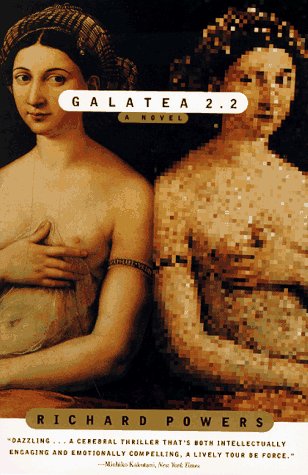 When I first read about the film and in the days since I saw it, I keep thinking of the excellent Powers novel. Powers is one of my favorite authors; I think of him as the Tom Stoppard of novelists. Like Stoppard’s plays, his books combine science or technology topics with music, literature, character and plot. He was very prescient in writing Galatea 2.2 almost 20 years ago—before smartphones, apps or Siri. The leading character (who happens to be named Richard Powers and shares some features of Powers’ biography) is working as a sort of humanist in residence at the University of Illinois in a center for advanced sciences. His project is to teach a neural network (an artificial intelligence device) to understand and interpret the great works of literature as well as “geography, math, physics, a smattering of biology, music, history, psychology, economics.” Richard and the scientists create a device named Helen, a funny, smart, charming personage with whom Richard develops a strong personal relationship. The goal of the project is for Helen and a human graduate student to take a Turing test, which examines a computer’s ability to show intelligent behavior equivalent to a human’s. Unfortunately, Helen loses the Turing test and at the end of it says “Take care, Richard. See everything for me.” The politics and meanness of the world cause Helen to implode and shut down.
At the end of Her, Samantha has expanded her OS clients, while Theodore thought he was her only lover. He asks Samantha how many others she has a relationship with. She answers “8,316.” How many are you in love with? he asks. “641.” She explains “The heart is not a box that gets filled up. It expands (as we live).” At the end, Theodore logs on and learns his operating system is not available.
Galatea, of course, is the name of the statue carved by Pygmalion of Cyprus in mythology; the statue comes to life and George Bernard Shaw adapted that story into his play Pygmalion. Later someone decided it needed singing and dancing and it became the musical My Fair Lady. (I never prefer a musical.)
More on Richard Powers
If you enjoy literary fiction, I strongly recommend you check out Powers’ work. Besides Galatea 2.2, my favorites of his many novels are:
- The Gold Bug Variations (which combines genetics, Bach’s music, computer science and Poe’s stories).
- Three Farmers on Their Way to a Dance, about an historic photograph and a technology editor who becomes obsessed with it.
- The EchoMaker, about an accident victim who suffers a brain injury known as Capgras syndrome, which won the National Book Award in 2006.
Powers holds a chair in English at the University of Illinois. His undergrad and graduate education is in physics and literature. Early in his career, he worked as a computer programmer. He was named a MacArthur Fellow (the “genius grant”) in 1989. And he graduated from DeKalb High School, a year or two before my older son.
The Best Things About 2013
Posted: January 2, 2014 Filed under: Art & architecture, Movies, Music, Theater, TV, radio | Tags: Bruce Springsteen, Chicago Dramatists, Gapers Block, Interrobang Theatre Project 2 CommentsYes, there were some horrible things about 2013, mostly political, Congressional, in fact. But there were some great things about the year. Here’s are some of the things I want to remember about the last 12 months.

I’ve written about most of these things here, but I decided not to provide links because then the whole post would be links. If you want to follow up on a topic, check the Categories selections on the right. (Image courtesy PSD Graphics.)
Personally….
- Retirement means I’m finally able to be a writer. Writing about the things I love. I was a business writer for 35 years, but it was never this much fun.
- Being “hired” to write for Gapers Block has been terrific. Thank you, Andrew and LaShawn. In just seven months, I’ve posted 71 articles, mostly theater and art reviews. All Gapers Block writers work as volunteers, but I do get free theater tickets and personal previews of art exhibits.
- Nancy Bishop’s Journal has been in business for 18 months and this year I wrote 65 new posts, as my WordPress Annual Report announced yesterday.
Theater bests
- An Iliad at Court Theatre was absolutely the best play of my year.
- The Seafarer at Seanachai Theatre, performed at The Den Theatre, was a close second. It’s been extended, so you can still see it until February 1.
- Homeland 1972 at Chicago Dramatists. How could I not love a play based on a Bruce Springsteen song? (“Highway Patrolman” from the 1982 album Nebraska.)
- Terminus performed by Interrobang Theatre Project at the Athenaeum.
- The Half-Brothers Mendelssohn by Strange Tree Theatre at Signal Ensemble Theatre. The time machine was worth the ticket price but the whole show was smart and funny.
- Remy Bumppo seems to do no wrong, at least this year. Both Northanger Abbey and An Inspector Calls were outstanding productions.
- Hypocrites is another company that does great work. Their production of the Chicago story titled Ivywild was wondrous.
- Trap Door Theatre’s production of The Balcony was outstanding, and so is most of this group’s work.
- There were many more excellent shows, many that I reviewed for Gapers Block. But I’ll stop at nine.
Music
- Leonard Cohen at the Chicago Theatre. Leonard was his usual charming, sprightly self and left me cheering for a performer who knows how to present a great show. Both Leonard and I are approaching the age at which we might be called “super-agers” and I look forward to seeing how both of us do in our 80s.
- The farewell to Lou Reed, who died in October at 71, was a musical tribute played outside in a grove of trees near Lincoln Center. Watch this video to see friends and fans rocking out to his “Walk on the Wild Side.”
- The soundtrack from the film Inside Llewyn Davis, taking us back 50 years to relive the ‘60s in Greenwich Village, in the pre-Dylan era. The songs are all new arrangements of traditional folk songs, except for “Please Mr. Kennedy,” done in a hilarious performance by Oscar Isaac, Justin Timberlake and Adam Driver (providing the bass notes).
- “Dream Baby Dream,” the Springsteen song I couldn’t stop listening to
- Anticipation: A new Springsteen record, High Hopes, will be released January 14. We’re hoping that Bruce will finally come home to tour but so far the 2014 dates are only in South Africa and Australia.
Films (a few of my favorites, in random order)
- Inside Llewyn Davis, which I’ve seen twice and reviewed here last week.
- Russian Ark, a 2002 film by Aleksandr Sokurov, a technological and artistic masterpiece, despite being plotless. It’s a tour thru the Hermitage with a cast of thousands.
- Sound City, a documentary made by Dave Grohl about one of the last analog music production studios in Los Angeles.
- Anna Karenina, a gorgeous film innovatively staged—literally on a theater stage—with beautiful costumes, settings, cinematography and acting.
- Holy Motors, a bizarre masterwork directed by Leos Carax, starring Denis Lavant.
- Springsteen and I, in which his fans talk about how they came to be Springsteen fans and what his music means to them.
- 20 Feet from Stardom, a film about the background singers, mostly black and female, who make rock sound like the music we love.
- I didn’t see Spike Jonze’s Her until January 3, but it’s one of the top films of 2013. My review is coming up.
- The Story of Film: An Odyssey, written and produced by Mark Cousins, an Irish film critic. The fascinating 15-part series starts with the first barely moving pictures in the 19th century and ends with today’s filmmakers. TCM ran it on 15 consecutive Monday nights this fall and Netflix is streaming it.
- As always, a bow to the Gene Siskel Film Center and its dedication to excellent, rarely seen films
Television
- House of Cards, the Netflix political drama available for binge-watching
- Treme, a somewhat flawed HBO series, centered on the eponymous New Orleans neighborhood, with great music; it ended this week after four seasons.
- Breaking Bad on AMC; it’s all over for Walter White. Looking forward to the final season of Mad Men, also to be shown in two parts. Will Don Draper finally become Dick Whitman?
- Stand Up for Heroes, the annual benefit concert for wounded warriors, on which Mr. Springsteen did a 20-minute set and told bad jokes.
- Palladia, the 24/7 rock music channel. What would I do without it?
Art and art venues
- The Art of Fashion X 3. The most underrated of the three exhibits–Inspiring Beauty: 50 Years of the Ebony Fashion Fair—is at the Chicago History Museum until May 11. It’s a fabulous show; don’t miss it. The other two were Punk: Chaos to Couture at the Metropolitan Museum of Art in New York; and the Art Institute of Chicago’s Impressionism, Fashion and Modernity exhibit.
- Shutter to Think: The Rock & Roll Lens of Paul Natkin. This exhibit of the Chicago rock and roll photographer’s work for magazines, album covers and posters is excellent. It’s at the Chicago Cultural Center thru January 4, so you still have a minute to see it.
- Chicago’s Bauhaus Legacy, a superb exhibit at the Ukrainian Institute of Modern Art on West Grand Avenue. I wrote a feature about this excellent small museum for Gapers Block.
- The Work at Play exhibit of graphic design at the Chicago Design Museum in the Block 37 building, part of the Pop-Up Art Loop project. The exhibit honored the work of John Massey, a famous Chicago designer, and other important graphic designers
Books and book events
- I’ve written about short stories, my book group, ebooks on the CTA, and musical author book events: Richard Hell at the BookCellar and Peter Hook at the MCA
- Emile Zola, whose novels I binged on this year. Nana, The Ladies’ Paradise, The Joy of Life and Germinal are just the beginning.
- The 50th anniversary of the release of Betty Friedan’s The Feminine Mystique.
Miscellaneous but important
- The death of Roger Ebert left a huge gap in film criticism and the movie biz.
- Edward Snowden and the NSA. Snowden’s release of NSA files, whether legal or not, made us aware of how much the government is invading our privacy. My view is that Snowden is a patriot and should be given amnesty so he can come home. He should not be imprisoned and tortured as Bradley/Chelsea Manning was for similar acts. Today the New York Times published a powerful editorial agreeing with me.
- Oscar Libre. After 32 years, it’s time to release Oscar Lopez Rivera, the Puerto Rican independence activist. I wrote about him a few weeks ago.
- And now, it’s time for ….

 nancy bishop's journal
