It’s Oscar time: Love the art, if not the artist
Posted: February 6, 2015 Filed under: Movies | Tags: Birdman, Boyhood, Bruce Springsteen, Mr Turner, The Third Man, Vivian Maier, Whiplash 1 CommentI’ve seen most of the Academy Award nominee films this year and talked to friends about them often. My friends know I’m a movie geek and that I occasionally write about films so they like to know what I think or tell me why they disagree with my opinions. (I’m not naming my Oscar winners here, but I may let something slip in this essay.)
Most of these films I’ve seen with friends and their reactions are often quite interesting. If they find the major characters unappealing or boring, they decide they don’t like the film, no matter how excellent it is in every way (including the performance of the disliked character). This puzzles me.
Mr. Turner
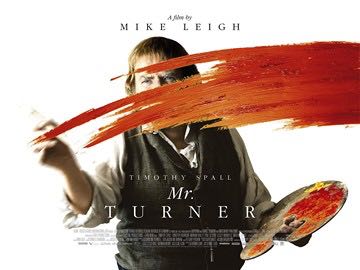 For instance, in the late 2014 film Mr. Turner, JMW Turner is depicted from mid-career on as he becomes recognized for his magical, almost mystical, seascapes and landscapes. He’s not upper class, he’s a man of the middle class at best. His father, a former barber, acts as his assistant in the studio. Timothy Spall portrays Turner as crude and rough, both in speech and actions. He’s unkind to his employees and probably not pleasant company. But his paintings are gorgeous and the Mike Leigh film is insightful and beautifully made. It received outstanding reviews and a Metascore of 94 out of 100 on metacritic.com.
The friend I saw the film with hated the Turner character and didn’t care for the film much either.
Boyhood
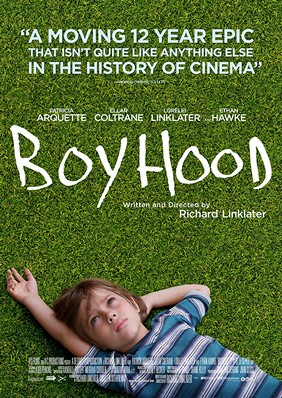 Another film I loved (and have seen twice) is Richard Linklater’s Boyhood. After I first saw it in July, I wrote that it’s “a beautifully edited story of a boy growing into a young man. That’s all. Just life, compressed into 164 minutes. The transitions of age and family change are done so smoothly that sometimes you miss them. The film is rich in conversation (that often seems improvised, although it isn’t) about life, its meaning and potential.”
A friend who also saw the movie thought it was boring. She found the boy unappealing and none of the characters interesting.
In the first place, I don’t agree with that view of Boyhood. And I don’t think whether you happen to “like” the characters has anything to do with the nature, quality and excellence of the film.
Whiplash
In Whiplash, directed by Damien Chazelle, JK Simmons plays a jazz band coach, who is blunt, unkind, even physically brutal to the teenaged musicians. A despicable character, surely? But that doesn’t mean the film and Simmons’ performance aren’t Oscar-worthy. (Whiplash received an 88 Metascore.) Take a look at Simmons with the teenaged drummer played by Miles Teller.
Birdman
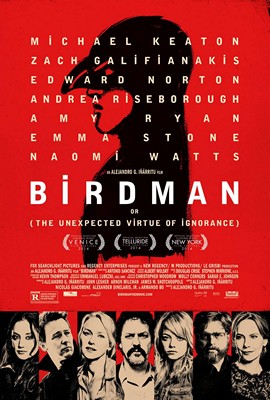 Birdman was another brilliant film, directed by Alejandro Iñárritu. Although it’s nominated (and may well win) best film and has received excellent reviews (88 on Metacritic), it seems to really divide viewers. Many people I talked to about Birdman said they hated it and hated Michael Keaton and his character. I just don’t understand what that has to do with your opinion of a film. The premise and plot of Birdman is brilliantly creative, the acting is superb and it’s astute about ego and aging—plus the cinematography is outstanding. (Yes, I would be happy if it wins best film.)
The Third Man. I just watched The Third Man, the 1949 Carol Reed film starring Orson Welles and Joseph Cotton, for the fifth or sixth time. (I’ll write about this gorgeous early noir film in a later post.) Harry Lime (Welles) is a thoroughly despicable character and Holly Martin (Cotton) is an ineffectual American writer in Vienna just after World War II. Neither of them is likable or admirable. But how could that possibly change your view of this epic film?
The art is what it is
I’ve written about this topic before: Love the art even if you don’t love the artist. My point is that the work of art deserves to be viewed on its own, separately from the artist. In April, I wrote about the documentary on photographer Vivian Maier, which depicts her (through interviews) as controlling and mean to the children she cared for. I said that I don’t care about that. I appreciate her work for what it is. Brilliant, engaging images of humanity.
And I added a comment about Woody Allen, who some believe is a horrible, perverted, child-abuser. And he may be that. Or not. Either way, that doesn’t affect the nature of his films or whether I want to see them or appreciate them. The art is what it is.
And finally, there’s Bruce
Of course, there’s a Bruce Springsteen corollary. (Isn’t there always?) Springsteen does not hide his political views; he’s a committed blue-collar liberal. He expresses his views in his songs (especially in his recent albums, Magic and Wrecking Ball). In every concert he takes a few minutes for what he calls his PSA, where he criticizes the current administration (especially under Bush 43), demands punishment for those who caused the financial crisis and help for those who are in need. This drives his conservative fans crazy. (I know because I’ve gone to plenty of concerts with some of them. And I love them anyway.) But those fans love his music—his stories, his lyrics, his melodies, his performance, his band. They appreciate his art for what it is.
Here’s Bruce singing about “Death to My Hometown,” brought about by the banksters. “Send the robber barons straight to hell,” he sings, to the cheers of this huge crowd at the Isle of Wight festival in 2012.
2014: My pop culture memories
Posted: January 2, 2015 Filed under: Art & architecture, Books, Movies, Music, Theater Leave a commentIt’s the beginning of a new year and time to reflect on the pop culture year just ended. Critics did their top 10 lists of everything, but I’m going to do my list of 2014 favorites. Some of these are clearly eccentric choices–not necessarily “the best.” I’ve written about most of them during the year – either here or at Gapers Block or Culture Vulture.
Professionally….

Critics at work in the Sunken Garden
My favorite professional experience – my two weeks at the National Critics Institute at the Eugene O’Neill Theater Center. It was a fabulous and enriching two weeks, complete with inspiration from colleagues and visiting experts, lots of plays to review, and sleep deprivation.
The institute strengthened my ability to write theater criticism and I did a lot of it this year. I wrote about 60 reviews—mostly theater but also reviews of art exhibits—for gapersblock.com and about 20 for culturevulture.net, a national arts website.
For Nancy Bishop’s Journal, I wrote 46 essays, which drew 4500 visitors from 86 countries—mostly the US, UK and Brazil. The two essays that drew the most visitors were:
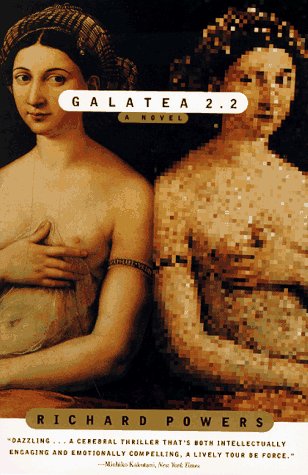 — My review of Spike Jonze’s film Her, which I compared to Richard Powers’ novel Galatea 2.2.
— An article demanding freedom for Oscar Lopez Rivera, a political prisoner in the US for 33 years.
Theater
My favorite experiences as a theater critic and theatergoer aren’t necessarily the plays on other top 10 lists, but they are shows that I found thrilling.
The Hypocrites’ All Our Tragic. This play was a masterful combination of all 32 extant Greek plays by Aeschylus, Euripides and Sophocles, written by Sean Graney. The 12 hours flew by, with plenty of breaks for food and conversation.
Oracle’s The jungle was a searing theater experience; a big story in the smallest space imaginable. My review commented, “Your Chicago ancestors may have greeted the Pilgrims, arrived on the Mayflower or a slave ship, or come in through Ellis Island. Whatever their origin, they’re part of our history. You can relive it in this stirring drama.”
A fabulous visiting production of Arguendo, a dramatization of a Supreme Court First Amendment case, directly from the transcript, by the Elevator Repair Service, the inventive New York theater company. Scroll down in this long post to see my review of Arguendo. The choreography of the justices on office chairs was priceless. Here’s the trailer:
Elevator Repair Service presented Gatz, a word-for-word reading of The Great Gatsby, at the MCA theater in 2006. Here’s a video sample of Gatz.
Also among my 2014 favorites: Seven Homeless Mammoths Wander New England at Theater Wit; a fine production of Martin McDonagh’s The Lieutenant of Inishmore at Aston Rep; and Chicago Shakes’ King Lear highlighted by Larry Yando’s moving performance in the title role. My reviews of The Lieutenant and Lear.
Films
Picking my favorite films of 2014 was really difficult, but here’s my try:
— Birdman, because it’s wildly inventive, sadly realistic, and beautiful to behold—especially if you love the backstage areas of old New York theaters. I’ve seen it twice and loved it both times.
— Boyhood, because Richard Linklater, who is obviously fascinated with the concept of time (re his “Before” film trilogy), took the time to see a boy and his family grow and change over 12 years.
— The Imitation Game. I could nitpick at plot points but the story is fascinating and Benedict Cumberbatch’s performance is award-worthy.
— The Grand Budapest Hotel. Yes, I know this is kind of sweet and quirky or “twee” as Greg Mitchell tweeted. I just saw it for the second time and still enjoyed Wes Anderson’s visual fun and games.
Favorite movie viewing experience: The Cabinet of Dr Caligari with a live organ performance at the Symphony Center on Halloween night.
Plus two exceptional art documentaries:
— National Gallery, a Frederick Wiseman documentary profile of London’s National Gallery, done in his fly-on-the-wall style with no narration or background music.
— The Hairy Who and the Chicago Imagists, about which I wrote two different pieces—first when it was shown here briefly in June and then when the Gene Siskel Film Center showed it in the fall.
Television
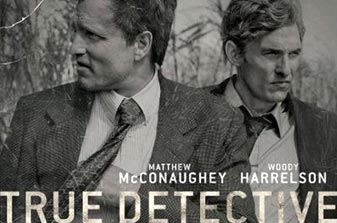 — True Detective, the weird, creepy, gothic HBO series starring Woody Harrelson and Matthew McConnaughey. True Detective will come again this year with a different cast and story line, but I doubt it will compare to year 1.
— The 2013 MusiCares Tribute to Bruce Springsteen, which was finally televised by PBS this fall. Many great performers cover his songs, finding new ways to interpret them, while Springsteen sat in the audience and watched. But he finally got to the stage to give his acceptance speech and play a few of his own songs.
— Sonic Highways, Dave Grohl’s tribute to American music, illustrated with the music and musicians of eight cities on HBO. The Chicago segment was episode 1. You can still view it on demand, if you subscribe to HBO.
Music

Bridgestone Arena, waiting for The Boss. Brad Paulsen photo.
— Bruce Springsteen and the E Street Band in Nashville. No, he didn’t come to Chicago, so we took a road trip.
— The Bruce Springsteen 65th birthday bash at Fitzgerald’s in Berwyn, organized by my friend, June Sawyers. In addition to the music, June and I read literary and not-so-literary commentary on Mr Springsteen.
Biggest musical disappointment: The October concert at the Symphony Center by Chris Thile and Edgar Meyer. The music and the performances were quiet, indistinguishable and without passion. I knew they weren’t going to rock out, but I did expect some enthusiasm.
Favorite album release: Leonard Cohen’s Popular Problems. The opening track, “Almost Like the Blues,” is especially fine. As the Pitchfork reviewer said, his music “sounds slick, but slightly off-kilter.” Springsteen’s High Hopes was also released in 2014, and of course I’ve listened to it many times.
Visual art
My favorite art and museum exhibits:
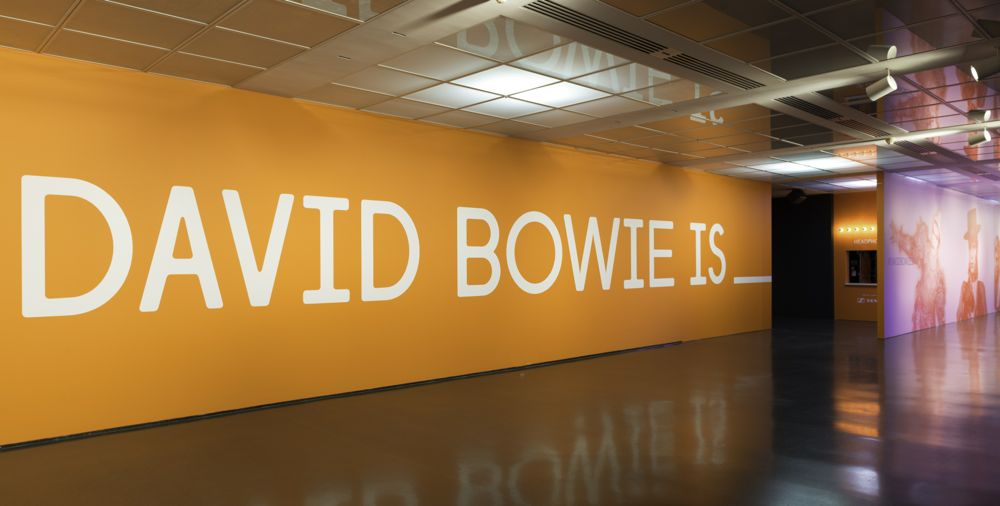 — David Bowie Is, which closes this weekend at the MCA. It’s an excellent exhibit and illuminates the genius of a musician who is ever conscious of his identity. My review.
— Magritte: The Mystery of the Ordinary, 1926-1938, at the Art Institute. My comments.
— The new Ed Paschke Art Center in Jefferson Park opened this summer and I was there.
Mecca Flat Blues, an amazing exhibit of one of the many places where Chicago’s architecture and civic life collide, at the Chicago Cultural Center. This was my personal favorite article of the year. Chicago Magazine named it one of the must-reads of the week in April. I reprised it on my blog with added memories of Mies.
Books and authors
— Hilary Mantel’s short stories, The Assassination of Margaret Thatcher. I had only read Mantel’s first book about Thomas Cromwell, Wolf Hall, which won the Man Booker Award. Her short stories are wildly different.
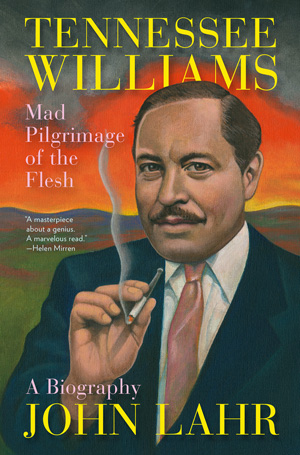 — John Lahr’s biography, Tennessee Williams: Mad Pilgrimage of the Flesh, is one of the best biographies I’ve ever read. I reviewed it and his appearance onstage at Steppenwolf.
— Stoner, the 1965 novel by John Edward Williams that was recently rediscovered. Julian Barnes declared it the must-read novel of 2013. Stoner was a farm boy who went to college to study agriculture and discovered the world of literature. One reason I loved its quiet prose about a life of disappointments is that it’s mostly set on the campus of the University of Missouri; it was lovely to read Williams’ descriptions of the place where I spent two years.
Holiday reviews: A play or three to end your year
Posted: December 19, 2014 Filed under: Movies, Theater | Tags: Chicago Shakespeare, Gene Siskel Film Center, Irish Theatre Company, Pericles, Remy Bumppo Theatre, Sarah Ruhl, Shining City, Tale of the Princess Kaguya, The Clean House Leave a commentIt’s almost the end of the year and I don’t want you to miss these three plays now on stage in Chicago. Plus notes on a fourth play and a film recommendation.
The Clean House by Remy Bumppo Theatre
 You may have seen Sarah Ruhl’s smart, funny play The Clean House in its first production at the Goodman Theatre in 2006. Even if you did, you might want to see it again by Remy Bumppo, a theater company that always thrills me with its attention to language and diction. In this case, some of the language is Portuguese and Spanish (which I understand un poquito), but the actors always help you along with the sense of what they’re saying in another language.
This play is about cleaning houses, and a lot more than that. It’s a commentary on how we love and care for each other and Ann Filmer’s direction enhances its great humor and charm.
Running time is 100 minutes with one intermission; thru January 11.
Pericles by Chicago Shakespeare
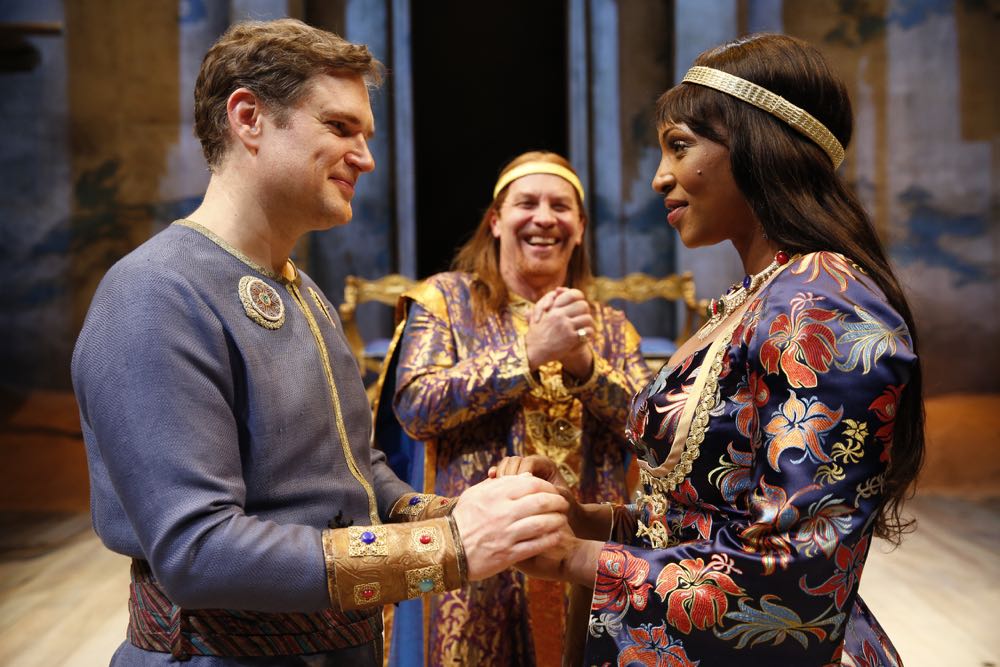 Pericles is one of Shakespeare’s plays that isn’t produced often, but Chicago Shakes has done a great job in staging it to bring out its best parts and subdue its lesser aspects. David Bell’s direction is excellent and the staging, costumes and music are superb. My Gapers Block review calls it a “lush, celebratory production.”
The play has a fine crew of actors, led by Canada’s Ben Carlson in the lead with grand support from Chicago stalwarts Sean Fortunato, Kevin Gudahl, Lisa Berry, Ora Jones and the always delightful Ross Lehman.
It runs 2 hours and 35 minutes with one intermission. My review notes that the first act is too long, but the production is worth your time. You can see it thru January 18.
Shining City by the Irish Theatre Company
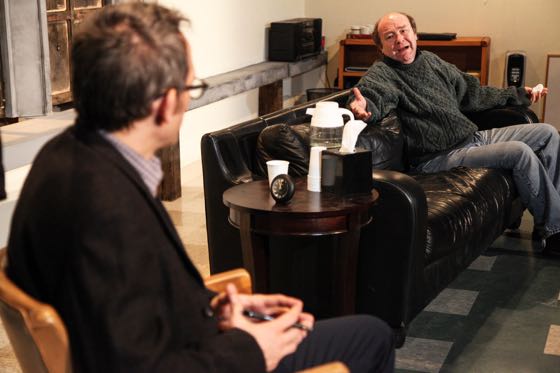 This is one of those minimalist, slightly claustrophobic productions that makes you feel that you’re peering over the shoulders of the characters whose life traumas you’re watching. The staging of this Conor McPherson play in the small Den Theatre space enhances that mood. It’s set in the office of an ex-priest, now-therapist, who is feeling his way through his own life as well as that of his patient.
Beautifully acted, with a special performance by Brad Armacost in the role of John, the patient. In his long monologue, he unburdens his soul and guilt to the therapist. You will be on the edge of your seat, lest you miss a word. Warning: there are ghosts in this play.
This 100-minute, five-scene production runs thru January 4. See my review.
Iphigenia in Aulis at Court Theatre
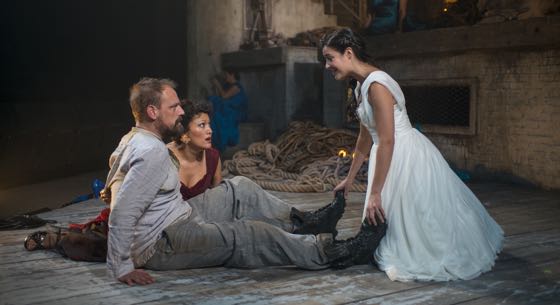 This was a rather low-key production by Court Theatre of the tale of Agamemnon, who sacrificed his daughter Iphigenia so that the winds would blow and send his fleet to attack Troy and bring back “that whore, Helen.” My review of this quote and of the play, which is now closed. Those bloody tales in which human fates rest on the whims of the gods and goddesses never fail to be interesting. However, this play has nowhere near the power of Court’s production, twice mounted, of An Iliad, which I noted in my review.
And on screen: The Tale of the Princess Kaguya at the Gene Siskel Film Center
 This is a new and exquisite entry in the collection of superb work by Japan’s Studio Ghibli, known for its beautiful hand-drawn animated films. I mentioned the work of Studio Ghibli when I reviewed The Wind Rises by Hayao Miyazaki last spring. This new film is by Isao Takahata, drawn in subtle, almost water-color delicacy and black brush-stroke detail. It tells the story of a tiny baby girl adopted by a woodcutter and his wife when he finds her in a bamboo plant. She is an enchanted child and the film, based on a 10th century Japanese folk tale, tells the story of her growth, love and loss.
Runs thru December 30 at the Siskel Film Center–137 minutes. You can see it with Japanese subtitles (my preference) or voiced in English; the Siskel schedule tells which showings are which.
(All photos courtesy of the theater companies.)
Art in the gallery and out in the street
Posted: November 26, 2014 Filed under: Art & architecture, Movies | Tags: Banksy Does New York, Smart Museum of Art 1 CommentSculpture: Carved, Cast, Crumpled at the Smart Museum
The Smart Museum of Art in Hyde Park has dedicated its entire space to a sculpture exhibit that spans the eras from ancient to contemporary. Carved, Cast, Crumpled: Sculpture All Ways is well displayed and organized by historical era. There are works by modern masters like August Rodin, Jacques Lipschitz and Henry Moore, Asian religious figures, classic European bronzes, and neon, metal and fabric sculptures from the modern era. My slideshow will give you a quick overview of the diversity of the exhibit, which is open through December 21.
The Smart Museum is small and a two-hour visit will give you plenty of time to appreciate the entire exhibit plus have a snack in the café, which serves coffee, pastries and light lunch items. It’s popular with students so tables are scarce during the lunch hour. The museum is nestled behind Court Theatre at 5550 S. Greenwood on the University of Chicago campus. (All photos by Nancy Bishop.)
Out in the street: Banksy Does New York
Why do I love street art? I’m particularly fond of it because it takes art out of the elite realm and puts it out for everyone to enjoy. No admission fee, no checking your bag, no waiting in line. I also like it because it is part of the cycle of people’s art that encompasses comic books and graphic novels, pop art, the Chicago Imagists and the Hairy Who, and today’s post-street art.
Banksy is the famous and elusive British street artist who produced the delightful 2010 documentary, Exit Through the Gift Shop. In October 2013, Banksy took up a “residency” in New York. Every day of the month, he installed a piece of street art somewhere in New York and started a frenzy of art lovers and hipsters seeking out each day’s work. Banksy would post a tease on his website each morning, suggesting something about the art, but not identifying the location.

Copyright Daily Mail Online.
HBO Documentaries has produced a 90-minute film, directed by Chris Moukarbel, about this month of street art adventures, titled Banksy Does New York. It’s been running on HBO channels and it’s available on HBO on demand as well.
The installations are varied in form, materials and message. They range from stenciled figures and balloons to a crumbling sphinx to a slaughterhouse truck filled with squealing animal puppets that parked in front of various meat markets throughout the day.
Art on screen: National Gallery
National Gallery is a Frederick Wiseman documentary profile of London’s National Gallery. It’s running through December 4 at the Gene Siskel Film Center and although it’s almost three hours long, I highly recommend it. It’s a magnificent look at this immense art museum and its visitors, staff members and, most of all, its collection. There’s no narrative voiceover, no background music, just the museum and its denizens—and sometimes silence. The trailer will give you an idea of its charm.
As I said in my Gapers Block review, my favorite aspect of the film is the faces. Faces looking at faces. All manner of expression in the visitors and all manner of people portrayed on the walls.
Related posts:
More on street art. https://nancybishopsjournal.com/2014/02/12/out-in-the-street-street-art-and-post-street-art/
The Chicago Imagists and the Hairy Who as influencers. http://gapersblock.com/ac/2014/10/01/the-hairy-who-returns–to-the-siskel-film-center/
Ed Paschke et al. https://nancybishopsjournal.com/2014/08/02/art-that-mystifies-and-moves-magritte-koudelka-and-paschke/
Films and filmmakers: Surrealism and horror stories
Posted: November 7, 2014 Filed under: Movies, Music | Tags: CSO, Gapers Block, Guy Maddin, Halloween, MCA Chicago Leave a commentThis week this cineaste* had two outstanding film experiences. One was with one of my favorite filmmakers and the other was a Halloween horror story.
* Michael Phillips called himself a cineaste in the Tribune today, so I can too. That’s a little more pretentious that calling yourself a cinephile or movie nut, but I like it.
Guy Maddin, madman filmmaker
Wednesday night Canadian filmmaker Guy Maddin was at the MCA theater in a Chicago Humanities Festival event. The packed house of film students and film fans hung on his every word and appreciated his frankness and engaging humor. I have loved his bizarre films since I first saw The Saddest Music in the World. The chance to see him in person was impossible to resist.
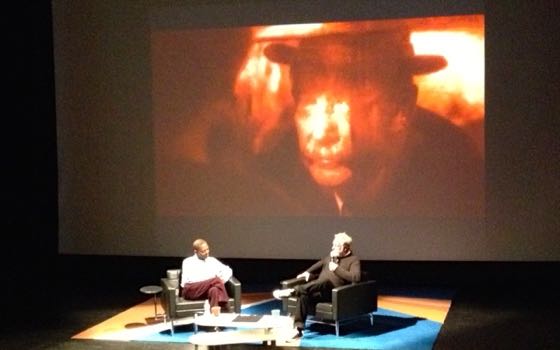
Coleman and Maddin at the MCA. Photo by Nancy Bishop.
Maddin is probably best known for two films, The Saddest Music in the World (2003), a Depression-era story about a beer baroness with glass legs played by Isabella Rossellini, and My Winnipeg (2009), an homage and “surrealist mockumentary” to his hometown. He also has made many short films and creates film installations.
As I said in my Gapers Block article, Maddin looked like a perfectly normal and sane person, but I hoped that didn’t mean we were in for a quiet evening of intelligent discussion. Then Maddin said his major film influences were David Lynch and Luis Bunuel and my brain exploded. Bunuel, the Spanish surrealist, is one of my favorite filmmakers. In fact, I’m going to lead a discussion on his work for my film group next month. I have recently rewatched a lot of David Lynch films, including Eraserhead and Blue Velvet. The Bunuel/Lynch combination is mind-bending.
Maddin talked nonstop and was sort of interviewed by Charles Coleman from Facets. The conversation veered all over Maddin’s personal bio and film viewing and film making habits. He’s a great fan of silent films and is committed to saving or recreating lost films. Coleman showed two of Maddin’s short films, including The Heart of the World. See my Gapers Block article for more about Maddin and his work.
Maddin said he’s now reading Greek tragedies, which he thought would be boring … “but they’re like Mexican comic books!” He also lately has become obsessed with Herman Melville’s Moby Dick. (Aren’t we all?)
Confession of a diarist
I went to see Guy Maddin because I like his work. I had no intention of writing about it. (Except when you’re a diarist or blogger, all of life is raw material.) I’ve been to a couple of author events lately that I fully intended to write about and the authors said nothing of interest. (I’m talking to you, Junot Diaz. And you, Thomas Dyja and Neil Steinberg.) But Maddin started strong and never stopped. I have 12 pages of scribbled notes in my notebook and I could hardly keep up with him. The evening was exhilarating.
Halloween horror story
It was Halloween night at the Symphony Center. The audience was a little different than the everyday CSO audience. Many were in costumes and weird makeup. Many were not. I wore my everyday costume of jeans and a Springsteen shirt.
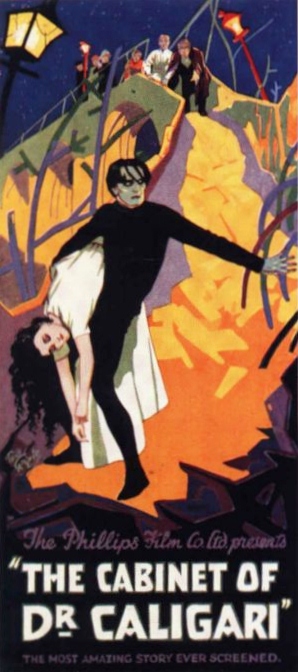 The CSO was hosting one of its special movie night concerts. The film was Robert Wiene’s 1920 film, The Cabinet of Dr Caligari, with site-specific music performed by the punky organist Cameron Carpenter. He played a stirring score on a massive digital organ set center stage under the giant movie screen. Carpenter says he is the first concert organist to prefer the digital organ to the pipe organ. His touring instrument is a “monumental cross-genre organ” built to his own design specs.
The film, which I’ve seen several times in the past, was a marvel to see on the big screen. It’s dazzlingly expressionistic with jagged lines, angled shapes, trees with spiky leaves, tilted walls and windows. It’s black and white, of course, but tints suggest daytime or night. The distorted sets are obviously two-dimensional, rather than real sets, but the effects are remarkable for the time.
The Dr Caligari story is about madmen and murder, delusions and deception. The expressionistic visual style surely paved the way for films like Metropolis, Nosferatu and M and inspired filmmakers like Fritz Lang and F W Murnau.
There must be different cuts of the film because its length is variously listed from 50 to 67 minutes. The CSO version was about 65 minutes. This version of the film on YouTube is 51 minutes.
In researching this, I also found a valuable archive of silent films in the public domain. Check out some you’re familiar with and find new ones, maybe even some of Guy Maddin’s lost films.
Follow this blog, please
You can sign up to follow Nancy Bishop’s Journal by putting your email address in at the top of the right hand column. You’ll get an email when I post a new article, usually about once a week. No spam, no passwords.
Two men on screen at CIFF: Birdman and Algren reviews
Posted: October 21, 2014 Filed under: Movies | Tags: Algren, Birdman, Chicago International Film Festival 2 CommentsThe Chicago International Film Festival is a wealth of great and, if not so great, at least very intriguing, filmmaking from all over the world. I’m not through using my CIFF tickets this year, but here are two terrific films I wanted to tell you about.
Birdman, directed by Alejandro González Iñárritu, 119 minutes
 I saw Birdman Saturday night, the only night it was shown at the festival. This is sort of a preliminary review of Birdman because I’m still thinking about this very creative piece of filmmaking. Is it the film of the year? Maybe. It’s an hypnotic film, partly because of the amazing cinematography. It’s also the most wildly creative film I’ve seen in a long time. Joyous, high energy, madly manic … and sad.
I loved all the long tracking shots following actors down the backstage corridors of old theaters, mainly the St. James Theatre on 44th Street. Actually, it was probably the backstage theater nature of this film that made me like it so much. The street scenes in the theater district and from the theater roof were fabulous. In one scene, the Edison Hotel on 47th Street, where I stayed last year, makes a cameo.
The performances by Michael Keaton and Edward Norton are gnarly, gritty and masterful. (Norton’s performance made me go back and watch Fight Club again. A great film, but not a fun film. It’s one that gives you a lot to chew on.) There’s been some criticism about Birdman’s plot and about Keaton’s character, the unravelling actor whose success is in the past. But there is substance to the film in Riggan’s angst about his career and his life and how he approaches regenerating both. I don’t agree with David Edelstein that this is an “empty masterpiece” or “a triumph of vacuous virtuosity.” Most critics gave it high praise. But okay, we can say it’s not Hamlet. I do want to see it again soon. The film opens Thursday the 23rd.
Algren, directed by Michael Caplan, 87 minutes
This excellent documentary about icon of the Chicago literary underworld Nelson Algren was directed by Chicago filmmaker Michael Caplan. It’s a fine film with interviews with many interesting artists and journalists he inspired. Ernest Hemingway, an Algren admirer, said he was second only to William Faulkner as a literary giant. The film comes alive with a treasure trove of black and white photos by Art Shay, the great Chicago freelance photographer who shot for Life, Time, Sports Illustrated and many other national magazines. Shay and Algren met in 1949 and collaborated on many projects over rhe years. Shay took photos of Simone de Beauvoir, the French feminist writer who became Algren’s lover and spent time with him in his Wabansia Avenue apartment (when she wasn’t in Paris with Jean Paul Sartre). Among other things, we learn that Nelson and Simone “fucked in Stuart Brent’s bookstore.”
The fascinating interviews in Caplan’s film include Studs Terkel, musicians Billy Corgan and Wayne Kramer, filmmakers John Sayles, Wiliam Friedkin and Philip Kauffman, Northwestern professor Bill Savage, journalist Rick Kogan and photographer Shay.
Algren wrote Man with the Golden Arm, A Walk on the Wild Side, The Neon Wilderness and the marvelously poetic book of essays, Chicago: City on the Make. Algren never gained the reputation that his writing deserved because he wrote about bums, drunks, junkies and prostitutes–the denizens of the neighborhood he loved centered around Damen and Division streets in the mid-20th century. (I’m glad Algren isn’t around to see what that neighborhood is like now.)
The film features music and music direction by Wayne Kramer of the Detroit rock group MC5 and a closing song to “Chicago” by Billy Corgan. Check out the trailer for the film. It surely will show up at the Gene Siskel Film Center or the Music Box.
Doubles and doppelgängers on page and screen
Posted: September 13, 2014 Filed under: Movies | Tags: CFLX Meetup, Denis Villeneuve, Enemy, Fyodor Dostoyevsky, Jose Saramago, Richard Ayaode, The Double Leave a commentDid you ever think you might have a double, someone identical to you but unrelated? A doppelgänger, that is, or “double goer” in German, a lookalike or alternate self. The term has ominous portents in some traditions and the concept has appeared in various cultural forms many times over the centuries.
Two current films, both based on novels, explore the idea of the double or doppelgänger. They are both fascinating films and generated a great discussion at a film group meeting this week. (These films are available on DVD or streaming on Amazon Instant Video or Netflix.)
The films and the books from which they are adapted are:
Enemy directed by Denis Villeneuve and starring Jake Gyllenhaal, adapted from The Double, the 2002 novel by Jose Saramago, the Portuguese Nobel Prize winner, who died in 2010. (The original title translates as The Duplicated Man.)
The Double directed by Richard Ayaode and starring Jesse Eisenberg, adapted from the 1846 novella, The Double, by Fyodor Dostoyevsky.
Both films stand on their own as distinctive works of art. There’s no need to read the books to appreciate them. But both books are excellent and well worth reading. The Saramago book is one of his best.
Both films tell the story of men who suddenly discover that another person looks and sounds exactly like him. The double seems to be trying to take over his life, or is he really? They raise questions of duality and identity, of psychic bifurcation. They follow the general plot lines of the original novels fairly closely but the endings vary dramatically.
Enemy is set in a contemporary but dystopic-looking Toronto. Skyline scans are tinted a murky sepia tone; Brutalist concrete architecture is featured; spiders and their webs are a recurring theme. (Note: there are no spiders in the Saramago book.) Gyllenhaal plays Adam, a college history professor who we see teaching about dictatorships and totalarianism. By chance he sees an actor who looks exactly like him on a DVD he’s watching. He researches the actor and finds out his name and address from a production company. When he goes to the actor’s agency to find out more about him, the security guard thinks he’s the actor. When he calls the actor’s home, his wife mistakes Adam’s voice for her husband’s.
Now believing that he really has a double, Adam contacts Anthony; eventually they get together and discover they are identical, even to scars, moles and birthdays. I will not tell you the rest of the plot, but Anthony and Adam’s girlfriend are killed in a car accident. It may be that Adam will take over Anthony’s life, or at least his wife invites him to do that. The film has a scary and bizarre ending. The book’s ending, in which a third double phones Adam to request a meeting, was also quite intriguing.
In The Double, Jesse Eisenberg is Simon James, a minor functionary in a government bureaucracy set in an indeterminate time and place. The locations and exteriors are Kafkaesque, and seem to be in an industrial European city. Office and computer equipment looks like it’s from the 1950s or ‘60s. One day a new employee joins the department and the director, played by Wallace Shawn, thinks he will be the best employee ever. His name is James Simon and he is identical to Simon James, which no one else seems to notice. James, however, is brash and charismatic, whereas Simon is timid and bumbling. (Mood, setting, plot and characters follow the Dostoyevsky story closely.)
Although Simon befriends James, the latter gradually takes over Simon’s life, his job, his love interest (Mia Wasikowska), even his apartment. The ending suggests that James is Simon’s alternate self, and he has to dispose of him. The film’s ending is somewhat ambiguous and different from Dostoyevsky’s more defined ending.
Both films are well done; I would rate both as three stars out of four. Both Gyllenhaal and Eisenberg do excellent jobs of being the same person, but not quite. They do appear together in the same scenes but usually not together in the same scene with a third person. The film group had a spirited argument about self and identity and whether Adam/Anthony and Simon/James were “one bifurcated psyche,” as Gyllenhaal says in an interview. (I agreed about Simon/James but not about Adam/Anthony. I chose to suspend disbelief and accept that there could be an exact duplicate or doppelgänger.)
Film group members suggested other fine movies that deal with duality/identity/doubles, such as Adaptation (Charlie Kaufman, 2002), Mullholland Drive (David Lynch, 2001), and The Double Life of Veronique (Krzysztof Kieslowski, 1991). In a 2013 film, The Face Of Love (Arle Posin), a widow falls in love with a man who seems to be her late husband’s double.
There have been several articles recently on the current interest in doubles or doppelgängers. I particularly like this quote from a Slate article: “Any story constructed around the theme of the double—one of the most ancient in literature, which plays on the human fascination with identity and belonging, repetition and uniqueness—lives and dies by its ending.” Here we have four works of art, two on page and two on screen, and four endings.
Saramago’s novel and Villeneuve’s film open with this statement:
“Chaos is order waiting to be deciphered.”
After seeing both films and rereading both books, I would say chaos still waits to be deciphered. And that’s what makes life intriguing. There’s a surprise around every corner.
Follow this blog, please
You can sign up to get an email each time I publish a new essay on Nancy Bishop’s Journal–usually about once a week. No spam, no password. Just put in your email address at the upper right side of this page. And thanks for reading!
Steve & Rob on The Trip to Italy: Sequel without equal
Posted: August 23, 2014 Filed under: Food, Movies, Punk rock | Tags: 24 Hour Party People, Rob Brydon, Steve Coogan, The Trip to Italy 6 CommentsA sequel that’s at least as good as the original? I wouldn’t have thought that possible, but I wasn’t going to miss The Trip to Italy, the latest road trip by Steve Coogan and Rob Brydon. Their first culinary journey film was The Trip (2010) in which these two hysterically funny, highly literate British comics traveled and ate in restaurants in the north of England. The pretext was that Rob was asked to take on this assignment for The Observer and his girlfriend was not able to go, so he asked his old friend Steve. The highlight of these films is not the food, although there are food porn scenes and clearly these two enjoy eating and drinking fine wine.
 Nope. The highlight is their interaction, banter and constant dueling impressions of famous actors. In The Trip, they outdid themselves in imitating Michael Caine at many stages of his career. In The Trip to Italy, they try to outdo each other in the best Brando, De Niro, Pacino, Bogart and Eastwood impressions. In one hysterical scene, they imitate Tom Hardy and Christian Bale in their unintelligible dialogue from behind the Batman mask. However, that is outdone by the impressions of the various James Bond actors, culminating in the bawdiest joke you will ever hear about a kumquat.
Coogan and Brydon also show their British loyalty by retracing the paths of their favorite Romantic poets, Byron and Shelley, posing in front of their plaques and statues and quoting them at length. Oh, and they drive a new Mini convertible, but that is homage to what Michael Caine drove in the 1969 caper film, The Italian Job. (Better than its 2001 remake, but both are very funny.) Another lovely moment is the two singing along to Alanis Morissette’s Jagged Little Pill, the only CD Rob brought along. (First they have to debate how to pronounce her first name and whether her father was named Alan and really wanted a son.)
Coogan and Brydon are laugh-out-loud, snort-thru-your-nose funny. The 108-minute film is mostly improvised and director Michael Winterbottom may only need to plot out the itinerary and turn these two madmen loose. They travel down the Ligurian and Amalfi coasts, stopping in half a dozen places to dine and visit. The scenery is gorgeous, from the seacoasts to the streets of Rome to the glories of Capri.
There are some serious points in this lightly fictionalized film. The two leads play themselves, but their backstories are fictionalized. In the film, Coogan has a teenaged son who joins them briefly and Brydon has a wife and young daughter. Occasionally, they will stop their banter and mourn the problems of being aging men. While watching a table of young people drink and chat, Coogan notes that he probably would have gotten a smile from at least one young attractive women. “Now they just look straight through you,” he laments.
Here are the trailers for The Trip to Italy (2014) and The Trip (2010). The former is in theaters right now and the latter is available on Netflix streaming and other sources.
Both Brydon and Coogan are well-known comics and actors in England, but you may not be familiar with them. Coogan played the journalist Martin Sixsmith in Philomena, where he helps the character played by Judy Dench to seek out the child she was forced to give up for adoption when she was a teenager living in an Irish convent.
24 Hour Party People
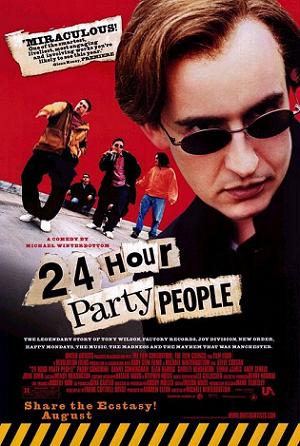 My other favorite Steve Coogan film, however, is 24 Hour Party People from 2002. Taking place in 1976 through 1992, it’s the story of the birth of the punk rock scene in Manchester, England, set off by a legendary concert by the Sex Pistols. The concert audience was only 42 people, but was one of those events that hundreds claim to have attended.
Among those rocking with the Sex Pistols that night were four young musicians who were inspired to form the band Joy Division. Tony Wilson (Coogan), a Granada TV presenter, was there and decided it was his mission to bring this new kind of music to a larger audience. He founded Factory Records to record it and later opened a club, The Hacienda, to present it. The Hacienda became part of the rave and drug culture and eventually closed down for lack of revenue. The two-hour film is mainly the story of Joy Division, which later became New Order, and other Manchester bands.
I just watched the film again on YouTube and it’s as good as it was the first time I saw it. Click on this link and see it in its entirety.
Follow this blog, please
You can sign up to get an email each time I publish a new essay on Nancy Bishop’s Journal–usually about once a week. No spam, no password. Just put in your email address at the upper right side of this page. And thanks for reading!
Midsummer movies: Foreign films + Talking Heads
Posted: August 17, 2014 Filed under: Movies, Music 2 CommentsEuropeans may consider August a month for a long holiday, but Chicagoans, those American workaholics, are not taking the month off. We’re busy making and consuming art. Mostly consuming.
Foreign films: Brazil and the UK
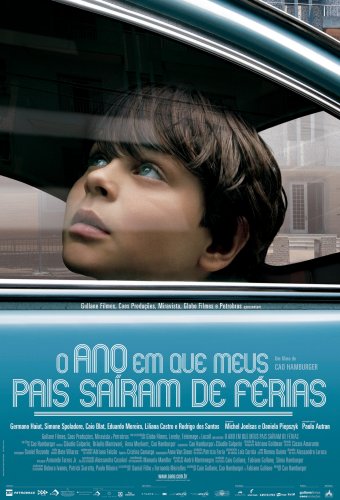 August is foreign film month for the Chicago Film Lovers Exchange. We’re discussing a film from a different country each Wednesday night. Last week we took on Brazil and member Ana led a discussion on The Year My Parents Went on Vacation, a film told from the point of view of Mauro, about the events surrounding the 1970 World Cup and political turmoil in Brazil. Mauro’s parents leave him to live with his grandfather (not knowing that the elderly man just died) because they have to flee the right-wing dictatorship that overthrew the elected left-wing government. (Familiar political story, isn’t it?) How Mauro survives and builds his own community is the crux of the film.
Ana recommended another interesting film also told from a child’s viewpoint. Valentin is an 8-year-old boy whose parents have scattered and left him to live with his grandmother in 1967 Buenos Aires. Valentin is determined to be an astronaut and walks around in heavy boots to prepare for zero gravity. He knows there are problems in his family and decides he’ll solve them himself, since the grownups have failed him.
Both films are charming and troubling. Troubling because both Mauro and Valentin are deserted by their parents.
 This week the group discussed Blowup, the landmark 1966 film written and directed by Michelangelo Antonioni (his first English-language film). It’s about a successful fashion photographer in mod London, played by David Hemmings, who shoots film in an isolated park to kill time one day. When he processes the film, he sees evidence of a possible murder, and crops and blows up the negative to try to determine what happened. Vanessa Redgrave plays the woman in the park.
Blowup is on many lists of best films of the decade and century and, as a character study, it benefits from multiple viewings. One of the treats of the film is a club scene where the Yardbirds are playing: Jeff Beck and Jimmy Page as young musicians. The cameras and darkroom equipment used by the photographer are fascinating and represent an evolution in the history of photographic technology. In the park scenes, he’s shooting with one of the first Nikon Fs, a 35mm single lens reflex camera that enables him to move agilely, compared to the Hasselblad medium-format camera and the 4×5 sheet-film camera he uses in his studio.
Summer Music Film Festival: Stop Making Sense
The Music Box currently is showing its annual Summer Music Film Festival with great films like Purple Rain, Hard Day’s Night, Good Vibrations and Rubber Soul. The festival benefits Sound Opinions, the rock and roll talk show, and WBEZ.
Best of all, the 30th anniversary version of Stop Making Sense, the concert film by the Talking Heads. It’s 95 minutes of magic, directed by Jonathan Demme. You can see it again Tuesday, August 19, the last night of the festival. I may go again.
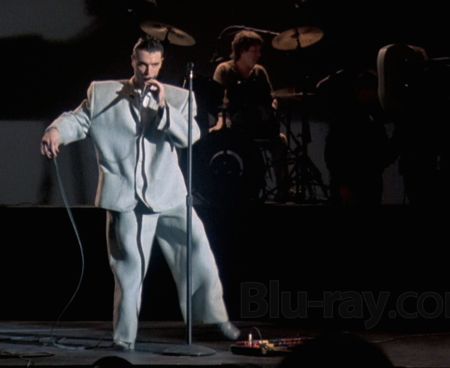
The Big Suit. Photo courtesy http://www.typografiks.wordpress.com
The film is a real treat on the big screen; I was very excited to see it that way because I’ve only seen it on a TV screen. Stop Making Sense opens with David Byrne walking out on an open stage with a boombox and a guitar. He starts off with “Psycho Killer” and near the end of it is joined by bassist Tina Weymouth. One by one, more band members join him as roadies push the drum kit stand on stage, then the keyboard stands. Chris Frantz on the drum kit, Jerry Harrison on guitar, two backup singers, Steve Scales on percussion and Alex Weir on guitar. Finally Bernie Worrell hops up on the keyboard stand and the band is complete. Musicians change off instruments throughout the concert, which was filmed over two days at a theater in Los Angeles.
Demme’s touch is obvious in dramatic performer lighting and visual projections. Byrne’s creative madness is on display throughout, in his dancing, marching, duets with his bandmates, and finally, in the Big Suit. In the second half of the concert, Byrne appears in a giant suit to perform “Girlfriend Is Better.” Gradually over the next few songs, the tall skinny Byrne takes off pieces of the suit. The concert also includes one number by the Tom Tom Club, a group made up of the other band members, sans Byrne.
Just one more: Mood Indigo
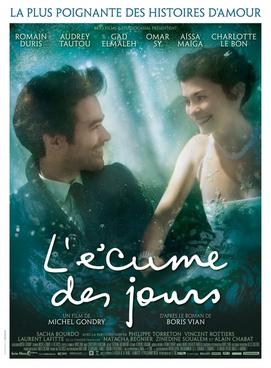 I’ll mention one more film that gave me great pleasure recently. It’s Mood Indigo or L’écume des jours, written and directed by Michel Gondry (who we know for Is the Man Who Is Tall Happy?, Eternal Sunshine of the Spotless Mind and The Science of Sleep).
Mood Indigo is a charming romantic film with some surrealistic features. The film bounces delightfully from one strange situation to another. Colin’s shoes run down the steps in front of him and he slips into them at the bottom. A tray of petit fours is served that actually are tiny ovens. When Colin’s sweetheart Chloe becomes ill, it’s diagnosed as caused by a water lily growing in her lung. There are some magical events and weird gadgets in this film that remind me of the crazy animation of Triplets of Belleville.
Gondry is a former art student and drummer for a pop-rock band. He gained his reputation directing music videos, including five of them for the Icelandic singer, Björk. He then made many award-winning commercials for major corporations, which gained Hollywood attention and smoothed his way into film direction.
Mood Indigo is adapted from a cult novel by Boris Vian. You will either love it or hate it.
Springsteen 65th birthday bash

Bruce at 64 on the beach at Rio
Consider this a save-the-date notice. If you’re a Bruce Springsteen fan, or just a fan of Americana and roots rock and acoustic music, you’ll be interested in the 65th birthday party we’re planning for Mr. Springsteen. No, he won’t be there. But Bucky Halker and friends will be there, to play Springsteen music and read some poems and doggerel.
The date is Saturday, September 27, at Fitzgerald’s in Berwyn. Tickets are $10 and are on sale now.
The event is being planned by the Phantom Collective, a grassroots Chicago group partly inspired by pub theater. The Phantom Collective sponsors programs of music and theater pieces—mostly from the North American and Anglo-Celtic traditions— at various venues around town. Nothing formal or regularly scheduled; that’s why it’s a phantom.
Ibsen on screen: Lust, ambition, ego and envy
Posted: August 12, 2014 Filed under: Movies 2 Comments
Photo courtesy Gene Siskel Film Center.
A Master Builder is a really special film running for just a few more days at the Gene Siskel Film Center. So I urge you to see it, if you are fond of the work of Henrik Ibsen, of Wallace Shawn and Andre Gregory, of Jonathon Demme, or of great filmmaking in general. Check out my review on Gapers Block, where the headline is: A Master Builder: A Claustrophobic Stew of Lust, Ambition, Ego and Envy.
Chicago actor Lisa Joyce is hardly an unknown, but her performance here as the bewitching Hilde is stunning. In fact, the ensemble of seven actors is excellent.
There are rumors that A Master Builder will be added to the Criterion Collection of famous Shawn/Gregory collaborations, which now include My Dinner with Andre and Vanya on 42nd Street. That would be in the Buy It category for me.
 nancy bishop's journal