Art-talk with Jaume Plensa, creator of that magical fountain
Posted: December 2, 2013 Filed under: Art & architecture | Tags: Crown Fountain, Gapers Block, Jaume Plensa, Millennium Park 2 Comments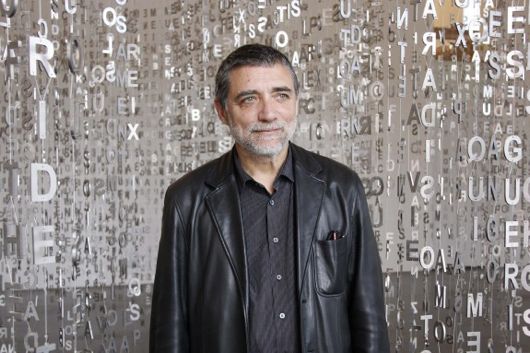
Photo courtesy Chicago Architecture Foundation
“I have eyes in my fingers. I have to touch my art.”
That was just one of the comments made by Jaume Plensa, the Spanish artist who created the Crown Fountain at Millennium Park, in his appearance at the MCA recently. Plensa, who is a true creative spirit and a thoughtful artist, showed an 18-minute slide presentation of his sculptures in locations all over the world and was interviewed by Reed Kroloff, director of the Cranbrook Academy of Art.
I was only familiar with his fountain design here and it is considered his most important piece in the US. Why do I call it magical? Have you ever taken a child there or sat and watched kids play in the summer? Plensa has created the ultimate in interactive art. You can physically become part of his work of art. (But be sure to bring a towel.)
The MCA event was cosponsored with the Chicago Architecture Foundation and titled “Architecture Is Art…Is Architecture Art?” The question was never answered directly but Plensa did muse about the relationship between architecture and art. You can read more about him and his work in my Gapers Block article.
Related articles on public art and sculpture
Sculpture in Portage Park and Pioneer Court, plus new tours at a Frank Lloyd Wright landmark building. Read it here.
Public sculpture on the parklet on the State Street median and a global view of art under a viaduct. Art everywhere! You have to love it.
A/C report: An Iliad, some Tiffany + goodbye Lou
Posted: November 22, 2013 Filed under: Art & architecture, Music, Theater | Tags: An Iliad, Court Theatre, Driehaus Museum, Lou Reed, Tiffany 1 CommentA/C. That’s art and culture in Chicago. Your intrepid blogger is here to report on two items that you should consider adding to your calendar. Plus: what a way to say goodbye! To Lou Reed, the legendary punk rock musician who died last month.
An Iliad at Court Theatre: The poet reports
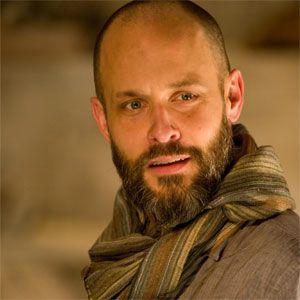
Photo courtesy Court Theatre
Court Theatre has remounted An Iliad two years after it was first produced. I was blown away the first time by the power of the story, the language and the acting. Timothy Peter Kane, a very talented Chicago actor, performs a tour de force one-man show as the poet or observer of this classic blood and glory story set at the end of the Trojan War.
The remounting, which runs until December 14, is perhaps even more powerful than the original. Is it because we all, including Kane, have seen two more years of the endless US war in the Middle East? He seems to be sadder, more traumatized and distraught by the many deaths around him. The single most gripping scene is his three-minute soliloquy of wars through history, beginning with the conquest of Sumer and ending, this year, with Libya and Syria. I was in tears at the end of it. Here’s a clip of that speech from the 2011 play.
The play, adapted from the Robert Fagles translation of Homer’s long poem, was written by Denis O’Hare, another masterful Chicago actor, and Lisa Peterson, a director at the New York Theatre Workshop.
An extravaganza of Tiffany at the Driehaus Museum
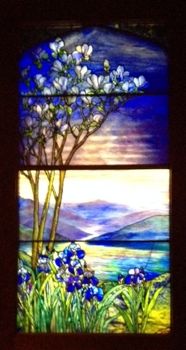
Photo by Nancy Bishop
Richard Driehaus, a successful investment banker, is an important supporter of the arts and historic preservation in Chicago. He purchased the Samuel Nickerson mansion (1883, Burling & Whitehouse, architects) at 40 E Erie St and restored it to its ornately decorated, Gilded Age form. In 2007, it was opened as the Richard H Driehaus Museum of Decorative Arts and it’s worth visiting on its own, but even more so now. Sixty pieces from Driehaus’ large collection of works by Louis Comfort Tiffany are on exhibit on the second floor of the museum until June 29, 2014. The museum is open Tuesday through Sunday until 5pm and you can take a docent-led tour or meander through on your own.
I went with three of my ex-CAF docent friends and, as always, we create our own tour. The four of us have a combined treasure of knowledge on architecture, art and design and we love doing these tours collaboratively.
The photo at left is one of the Tiffany windows, beautifully displayed, in the exhibit.
Goodbye Lou
What a great way to say farewell to an iconic musician like Lou Reed. Just his music, played 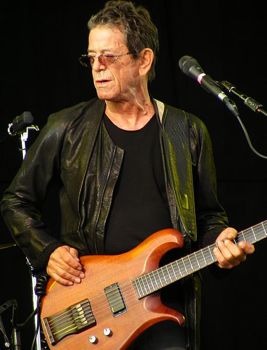 at the appropriate volume (that is, loud) in a grove of trees near Lincoln Center. It was one of those days I wish I lived in New York…or at least had the wherewithal to fly there on a whim for a landmark event.
Lou Reed, known as a solo musician, guitarist, songwriter and founder of the Velvet Underground, the preeminent punk rock group, died at 71 on October 27.
See Greg Mitchell’s site here for three videos from the event. My favorite is “Walk on the Wild Side.” It’s wonderful to see people communing over music, many singing along, others dancing, all paying tribute to Reed’s music.
The photo is Lou Reed performing at the Hop Farm Music Festival on Saturday, July 2, 2011, courtesy of Wikimedia Commons.
October madness: Too much, too much
Posted: October 20, 2013 Filed under: Art & architecture, Movies | Tags: Armory Show, cats, Hannah Arendt, Pocket Guide to Hell, Siskel Film Center 1 CommentThis is madness! Chicago Ideas Week. Open House Chicago. Chicago Humanities Festival. Chicago International Film Festival. SOFA Chicago. The Internet Cat Video Film Festival.*
How can all these fabulous activities be happening in one month? There are at least five or six other months in Chicago when timid tourists would not have to worry about snow, ice and temps below freezing. Why is all this stuff smashed into one month?
I tried but didn’t partake of everything. Here are a few things I liked recently; some weren’t even part of October Madness.
Walking the Mies staircase
At the Arts Club of Chicago, I walked up and down the iconic Mies staircase. I held my breath and appreciated every step. That was a special experience for an architecture aficionado. I attended a UIC event introducing the new dean of architecture, design and the arts. (I’m writing about that for Gapers Block, and here’s the link to that story.) The Arts Club was one of the Open House Chicago locations. (You can see an image of the staircase on the Arts Club’s Wikipedia page.)
A.T. Kearney’s Chicago office, where I worked for 20+ years, has a similar “floating staircase” linking the firm’s original four floors. I remember occasionally being able to watch the workers install the cables and stairs when it was being constructed in 1992. It is a stunning staircase and certainly the highlight of the firm’s beautifully designed office. It was meant to create spaces for casual and random meetings and enhance socializing among consultants. I didn’t realize at the time that the architect was surely influenced by the Mies design.
Jumping into The Pit at the Chicago Board of Trade
Pocket Guide to Hell tours performed a sterling reenactment of a scene from Frank Norris’ novel The Pit about commodities traders in Chicago in 1898. I’ve been gobbling up the novel on my Kindle in preparation. The performance was a 45-minute scene with costumed traders, authentic props, music and play-by-play announcing by Alex Keefe from WBEZ and two color commentators. Bertolt Brecht even made an appearance to explain his interest in Chicago commodities trading and why he never finished that play. I previewed this in Gapers Block this week.
Hannah Arendt: A film made for discussion
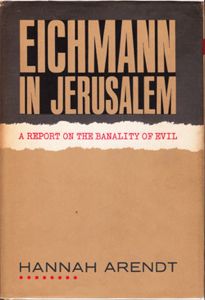 The 2012 German film, Hannah Arendt, directed by Margarethe von Trotta, just finished a two-week run at the Siskel Film Center. Barbara Sukowa does a superb job portraying political theorist/philosopher Arendt in this docudrama. My book group had an intense discussion last year about Arendt’s book, Eichmann in Jerusalem, which the film focuses on. Arendt asked The New Yorker to assign her to cover the 1961 trial of Nazi Adolf Eichmann, captured in Argentina and taken to Israel for trial as a war criminal. Her coverage appeared in a series of articles in the magazine and then was adapted with minor changes for the 1963 book. The film uses actual trial footage of the defendant in his glass cage, the prosecutor and some of the witnesses along with Sukowa as Arendt viewing and reporting on the trial. (The image is the cover of the first edition.)
Her writing developed the concept of the “banality of evil.” She grievously offended much of the American Jewish community by describing Eichmann as an ordinary man, a bureaucrat concerned most with his own advancement, with no personal motives or imagination; he was following orders—the Nuremberg defense. He was banal, not even sinister, and incapable of thinking, she wrote. (Does that mean we are all capable of such horrendous acts?) A brief comment on the Jewish Councils ignited further controversy. She described a group of Jewish leaders who apparently were trying to work in the best interests of local Jews, but in effect collaborating with the Nazis.
The reaction to Arendt’s coverage, and her reaction to that, is the crux of the story. The film isn’t exactly subtle, but it poses some important questions. Questions that deserve discussion.
Wish I was in New York….
If I was in New York this month, I would be sure to see The Armory Show at 100: Modern Art and Revolution, showing at the New York Historical Society. The show presents more than 100 works from the original show in one long gallery. Some of the famous European pieces are included, such as Duchamp’s Nude Descending a Staircase (No. 2) and Matisse’s Fauvist Blue Nude. A New York Times review describes how the American work on one wall seems to be very conservative in comparison to the more explosive nature of the Europeans’ on the opposite side. The show runs until February 23, so maybe I will see it after all. Just not in October.
————————————————-
* Really. A festival of cat videos. The first Internet Cat Video Film Festival was a smash hit when the Walker Art Center in Minneapolis inaugurated it last year. Thousands of people came to sit outside and watch cat videos for hours. The Chicago version was held October 19 at the Irish Heritage Center; a $10 ticket bought you an hour of cat videos. Much as I love kitties, I didn’t go. And I don’t have cats because I have allergies.
Six things you didn’t know you missed in Gapers Block
Posted: October 11, 2013 Filed under: Art & architecture, Theater | Tags: Gapers Block, Hebru Brantley, Interrobang Theatre Project, Six Corners Association, Ted Sitting Crow Garner, Ukrainian Institute of Modern Art, Unity Temple 1 CommentI love writing for Gapers Block. It gives me an excuse to view, think and write about some of the things I love—like theater, art, architecture and design. So here are some things I’ve been writing about recently. You can still catch some of them.
Six Corners dedication of Portage sculpture
The Six Corners Association partnered with the American Indian Center to create a piece of art to celebrate the contributions of Native Americans to the history of the community, which is part of the larger area known as Portage Park. The sculpture titled Portage by artist Ted Sitting Crow Garner is being dedicated at 12 noon Saturday, October 12, at the Six Corners Sears store at the intersection of Cicero, Irving Park and Milwaukee.

Here’s a photo from a slideshow charting the progress of the sculpture. Garner is shown putting it into position on the west side of the Sears store. Image courtesy Six Corners Association.
See my preview here, which includes some of the history of the neighborhood.
In my high school years, I worked at a chain woman’s clothing store on Cicero Avenue across from the Sears store, so I feel a pride of ownership in my old neighborhood.
Even if you miss the dedication, you can drive by and check out the sculpture later.
Hebru Brantley’s The Watch at Pioneer Court
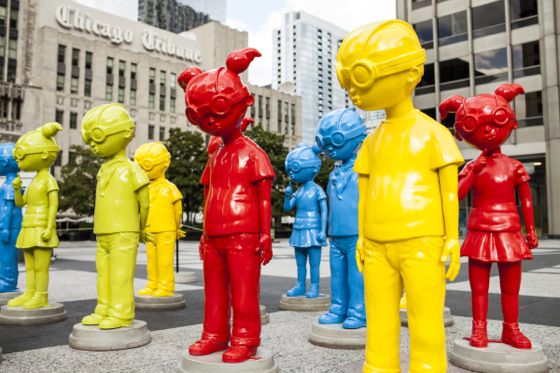 A collection of brightly colored figures has taken up residence at Pioneer Court Plaza, formerly the site of the Marilyn Monroe figure. They’re part of Chicago Ideas Week and created by Chicago artist Hebru Brantley, who is the Chicago Ideas Week 2013 Artist in Residence. Read about them here. They’ll be in place at least until October 20.
Photo by Kristie Kahns, courtesy Chicago Ideas Week.
Ukrainian Institute Artists Respond to Genocide exhibit
I wrote recently about the excellent Bauhaus exhibit at the Ukrainian Institute of Modern Art. The institute recently unveiled its new exhibit, Artists Respond to Genocide, which enables artists to take a broad look at genocide over the last century. The exhibit is made up of paintings, drawings, photography, sculpture and assemblages by 20 local and international artists. Many of them are really gripping, such as the large brightly colored painting by Mary Porterfield titled Engraved, or the woodcut and intaglio prints by Harold Cohen titled Auschwitz, Baba Yar and Genocide. The exhibit recognizes the Holodomor or secret holocaust in the Ukraine in 1932-33 as well as the appalling list of genocides over time. A chilling list in the back of the exhibit program enumerates 13 of them, with the number of fatalities in each.
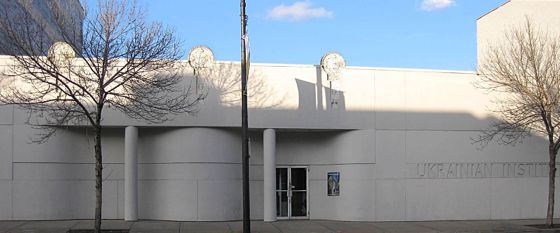
I wrote a preview of this exhibit for Gapers Block. You can see the exhibit until December 1 at this excellent small museum at 2320 W Chicago Ave.
The image is the Stanley Tigerman-designed facade of the building.
Image courtesy Ukrainian Institute of Modern Art.
You can tour Wright’s Unity Temple
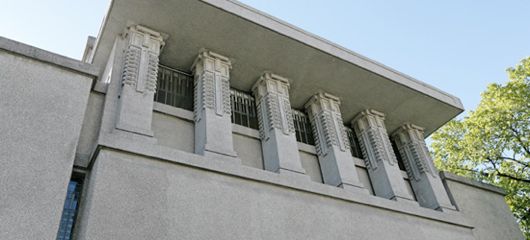 It’s been some time since formal tours of the landmark Frank Lloyd Wright structure, Unity Temple in Oak Park, have been available. Up until now, the only way to see the interior of this innovative building was if you knew someone or by chance went to a program there. (I’ve done both and even happily went to several services with friends. Even an avowed atheist will do anything to see the interior of a famous religious structure.)
But now the FLW Preservation Trust is offering docent-led tours again. Get more information here.
Image courtesy Frank Lloyd Wright Preservation Trust.
Terminus at Interrobang Theatre Project
I’ve seen and reviewed many plays in the last month, but one of the very best was this amazing three-actor blend of monologues produced by Interrobang Theatre Project at the Athenaeum. Here’s how my Gapers Block review started:
“Mark O’Rowe is one of the new generation of Irish playwrights whose work was first seen in the 1990s. In Terminus, being presented by Interrobang Theatre Project, he displays his fascination with language and his passion for words. Terminus isn’t so much a play as a series of stories, intertwined in monologues by three characters, known only as A, B and C. Their stories, set in the streets of Dublin, begin separately, and gradually become more connected, until they are finally merged in a glorious fantasy of blood, sweat, tears and sex.”
Truly, this was one of the finest nights of theater I’ve seen lately. Unfortunately, the play closed last week.
The Benchmark at Step Up Productions
I also reviewed this play about a well-read homeless man and although the lead actor’s performance is excellent, the play as a whole was somewhat flat. I wanted desperately to love it, but couldn’t. But tastes vary and other viewers might well enjoy it. Read my review here and then check out other reviews here.
How I spent my week…theater, art, music
Posted: September 25, 2013 Filed under: Art & architecture, Music, Rock and roll, Theater | Tags: Athenaeum Theatre, Interrobang Theatre, Museum of Contemporary Art, Steve Earle, the Bauhaus, The Vic, Ukrainian Institute of Modern Art 1 CommentA great theater experience, plus some cartoon art and memories of the Bauhaus. The finishing touch was a Steve Earle concert. Am I lucky to live in Chicago or what?
Terminus at Interrobang Theatre Project
Mark O’Rowe is one of the new generation of Irish playwrights whose work was first seen in the 1990s. In Terminus, being presented by Interrobang Theatre Project, he displays his fascination with language and his passion for words. Terminus isn’t so much a play as a series of stories, intertwined in monologues by three characters, known only as A, B and C. Their stories, set in the streets of Dublin, begin separately and gradually become more connected, until they are finally merged in a glorious fantasy of blood, sweat, tears and sex. That’s how my review of Terminus begins. It’s a terrific play with thrilling language. Truly a treat to listen to. I recommend it highly.
Modern Cartoonist: Daniel Clowes exhibit at MCA

Daniel Clowes is a well-known graphic novelist, who has published nearly 50 books and magazines. Modern Cartoonist: The Art of Daniel Clowes is his current exhibit at the Museum of Contemporary Art, which runs until October 13. The show is beautifully designed and curated and has many lovely little graphic surprises.
It was very interesting to see the progression and process of Clowes’ work, sometimes from sketch through inking and printing. For some publications, a series of pen and ink on tissue pages was shown. Since so much art today is created on the computer, it’s fascinating to see so many of Clowes’ pages drawn by hand on paper.
Image: Collection of Daniel Clowes. Courtesy of the artist and Oakland Museum of California
Chicago’s Bauhaus Legacy at the Ukrainian Institute of Modern Art
 It’s been years since I visited this little gem of a museum on Chicago Avenue in Ukrainian Village. Do not think it’s only about Ukrainian art; it’s really a center for modern and contemporary art. The Bauhaus exhibit is fabulous and it’s open through this Sunday, September 29. If you are interested in modernism, you don’t want to miss it.
The legacy starts with Lazslo Moholy-Nagy moving to Chicago to establish the US version of the famous German citadel of design. The Bauhaus’ existence was threatened in the 1930s by Hitler’s aversion to modern art. Moholy-Nagy was followed by other artists and designers who moved to Chicago (including Mies van der Rohe). The New Bauhaus went through many name changes and locations and in 1949 became part of the IIT Institute of Design.
The exhibit includes about 150 pieces by 90 artists and designers. Work includes painting, sculpture, photography, architecture plans, furniture and design pieces. A lovely example of the latter is a bar of Dove soap, designed by three students in 1952 as part of a special project funded by Lever Brothers. Dove still uses the same shape for its soap bars. (The original carved wooden prototype is on show at the Chicago History Museum.)
In addition to the main exhibit in the west gallery, the east gallery includes Bauhaus work from the institute’s permanent collection. There’s also a very interesting wall that shows the birth and development of the Ukrainian institute.
I’m going to write a feature on the institute for Gapers Block and I’ll provide a link to it here when I do.
Steve Earle at the Vic 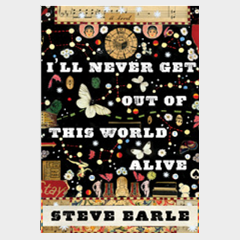
Steve Earle and the Dukes played a great concert at the Vic Saturday. The setlist included many of his fine old songs as well as tracks from his new album, The Low Highway. His band is made up of four musicians: a drummer, upright bass player, lead guitarist and fiddler/mandolin player. Earle plays a number of stringed instruments himself (guitar, mandolin, banjo) and sings lead vocals. Many of his songs (and his occasional patter between songs) involve social commentary. Here are a few lines from the song “The Low Highway.”
Heard an old man grumble and a young girl cry
A brick wall crumble and the white dove fly
A cry for justice and a cry for peace
The voice of reason and the roar of the beast
And every mile was a prayer I prayed
As I rolled down the low highway.
His novel–I’ll Never Get Out of This World Alive–is on my reading list and coming up soon.
Weekend update / no apologies to SNL
Posted: September 6, 2013 Filed under: Art & architecture, Digital life | Tags: E-readers, Old Irving Park, Tony Sparrow 1 CommentSuggestions for two new art installations to explore and some thoughts on reading.
New art and music on the State Street median
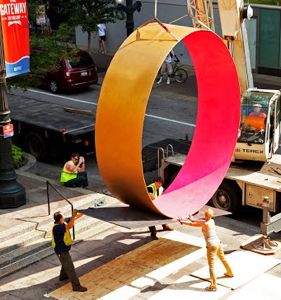
Photo by James John Jetel for Chicago Loop Alliance.
I wrote about the new State Street plaza in June when the public space on the State Street median opened. This pleasant parklet is still there, between Wacker Drive and Lake Street.
Tables and plantings create a place where you can read a book with your lunch or meet a friend for coffee.
Now there’s a new piece of sculpture at the south end of the plaza, created by Dusty Folwarczny. I updated the story about the plaza in Gapers Block this week.
And the Chicago Street Musicians play popup concerts at lunchtime occasionally. It’s an admirable urban oasis.
City melting pot: The new mural in Old Irving Park
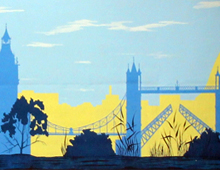 If you’re out and about Saturday morning, you can stop by Irving Park Road and Keeler Avenue for the dedication of the new mural celebrating the Old Irving Park community. You can read my story about it in Gapers Block. Artist Tony Sparrow led a team of artists to create the mural on both walls and all the pillars in the Metra/Union Pacific underpass just west of the Kennedy Expressway underpass. Tony was a delightful host when I visited last week to interview him and tour the neighborhood. (The image shown is a small portion of the mural; thanks to Tony for the image.)
The mural is a world skyline titled Positive Babel: The World Lives, Works and Plays in Old Irving and celebrates the residents of some 70 ethnicities who live in the neighborhood. Old Irving is generally bound by Pulaski Road and Cicero Avenue east and west and Addison Street and Montrose Avenue north and south. The Old Irving Park Association has been working for the last 10 years to improve the neighborhood environment and one of its projects has been turning underpasses into art galleries. The Positive Babel murals are the 10th and 11th created.
If you want to explore the murals on foot, there’s easy street parking on Avondale just east of the Positive Babel underpass.
Reading on the CTA Redux
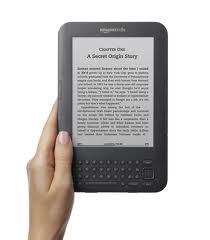 Some time ago, I wrote about how I like to spy on what people are reading on the CTA. I said I never go anywhere without something to read because you never know whether the bus will get stuck in traffic or whether your lunch date will be running late. I complained about how anonymous e-readers keep me from spying on book covers (and I admitted that I read all formats—print, phone, Kindle and iPad).
Now here’s Transit Readings, a fun site where the blogger thrives on photographing people as they ride and read their books, real books. Sometimes the bus or rail line info is included too.
And here he explains what’s he’s doing and his rules for doing it. If you’re reading a book on the Blue Line or the #36, you may find yourself here.
Labor Day agenda: Food, art and street signs
Posted: August 31, 2013 Filed under: Art & architecture, Chicago, Food, Theater | Tags: A Red Orchid Theatre, Blue Sky Bakery, Jack Kerouac, Michael Shannon, Sam Shepard, State and Madison streets 1 CommentA few things on my mind today, some of which you might want to think about too.
Bakery love
I’m fond of the fruits and vegetables from the farmers’ market but I’m also a superfan of good bakeries. I discovered  a new one today and you should try it. It’s Blue Sky Bakery at 3720 N Lincoln, just north of the Addison stop on the Brown line. Street parking should be pretty easy too. I bought some delicious berry scones and an apple-brie croissant baked in a muffin cup. Mmmm-mmm. Lots of delicious-looking cookies and cakes too.
There’s another reason why you should visit Blue Sky Bakery. They provide employment and training for homeless and at-risk youth. So those deliriously luscious baked goods are also helping bring about social change. CBS Channel 2 did a story on Blue Sky recently. Check it out.
Borders at Solti Park
I wrote about these intriguing figures earlier this week in my Art Around Town roundup. Here’s another photo.
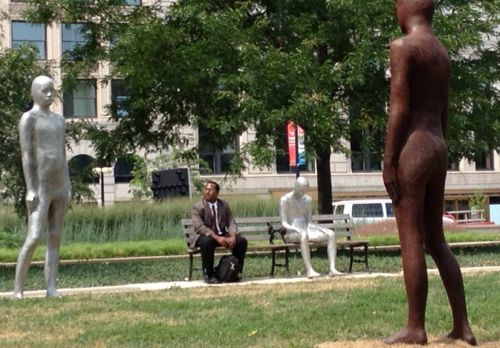
Photo by Nancy Bishop
Theater pick
Simpatico by Sam Shepard runs until September 15 at A Red Orchid Theatre. It’s a terrific show with a gripping first act so get a ticket if you possibly can. That may not be easy because (1) the play has gotten four-star reviews and (2) it’s showing in the tiny A Red Orchid Theatre on Wells Street. The theater describes it like this: “High society meets low life in the slippery netherworld of thoroughbred racing. This tragic-comedy explodes when a simple phone call threatens to undo years of blackmail and false identities.” The small tough cast features Michael Shannon and Guy Van Swearingen. It’s sold out but a standby ticket line forms one hour before each performance.
Reading list
The Mexican Girl by Jack Kerouac. I confess that every once in a while I look at the obituary page if I’m reading an actual newspaper, to see if anyone interesting or important died. One day last week, there was a gem of an obit. The woman who inspired the character Teresa or Terry in Jack Kerouac’s On the Road died at 92. The wonderful part is that she didn’t know the identity of the young man with whom she had a brief affair in 1947.
The short story, The Mexican Girl, was excerpted from the manuscript of On the Road and first published in The Paris Review in 1955. The review paid Kerouac $50 for the story. It was a big hit and resulted in the whole book being published by Viking Press in 1957. I thoroughly enjoyed rereading the story–it starts on page 74 of my edition of On the Road. If you can’t find yours, you can listen to an audio version of the story recorded in 2003.
Chicago street signs
Chicago has a lot of weird and amazing engineering achievements. Reversing the flow of the Chicago River, sending it downstate rather than into Lake Michigan. Raising the grade of the city and all its buildings by five feet to lift the city above the mud and sludge of the unpaved streets. My favorite bit of reengineering, however, happened in 1909, when all the streets in the city were renumbered with State and Madison as the zero point. State Street became zero for east-west streets and Madison for north-south streets.

Hear that, Manhattan? In Chicago, you know exactly where an address is going to be because you have memorized the arterial streets in each direction. Every good Chicagoan does that. You know if you are going to the 2700 block of Halsted Street that it will be a block south of Diversey, which is 2800. In New York, you have to ask what the cross street is because streets are haphazardly numbered as they were built in centuries past.
Patrick Reardon did a nice story on this in the Tribune this week. The story marked the occasion of officially naming the corner of State and Madison streets as Edward Brennan Way, in honor of the private citizen who devised the plan and fought for its acceptance by the City Council.
Gapers Block recap: Art and a little more
Posted: August 28, 2013 Filed under: Art & architecture, Movies, Theater | Tags: American Made Movie, Expo Chicago, Gapers Block, Solti Park, Strange Bedfellows Theatre Leave a commentHere are a few events I’ve been writing about recently on Gapers Block to pique your interest in current and future art events in Chicago.
Art Around Town
Borders, 26 Icelandic Sculptures, in Solti Park
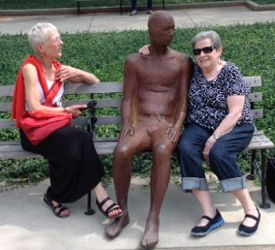
Next time you’re near the Art Institute, meander south to Solti Park at the southeast corner of Jackson and Michigan. You’ll find these pairs of figures – one iron, one steel – that seem to want to talk to you or make you sit down and reflect. And you can sit down next to one of them and look into his eyes. My friend Linnea and I had a conversation with one of them. The Icelandic artist, Steinunn Thórarinsdóttir, modeled the figures after her oldest son. Read my article.
Expo Chicago to Display Art from 120 Galleries
The massive annual art exhibition known as Expo Chicago will return next month with displays from 120 galleries at the Festival Hall at Navy Pier. There will also be contributions from other organizations and a citywide week of arts and culture called Expo Art Week. Included in the week’s activities will be museum and gallery exhibits, music, theater and dance performances. The exhibition is open for public viewing September 20-22. See my Gapers Block story for more info.
Constantly Consuming Culture to Showcase Work of Little-Known Chicago Artists
It may not attract curators and collectors from around the world, but this exhibit September 7-13 at 222 N. DesPlaines St. should be very intriguing. It will show the work of eight local artists, who work in painting, sculpture, found art and video art. Who knows? You may fall in love with a piece of art that you can actually afford to buy. Because the expenses of mounting the show are funded by crowdfunding, the artists will receive 100 percent of any sales at the show. Read about it here.
Theater
Strange Bedfellows Theatre Invents Van Gogh
Strange Bedfellows, another one of our creatively crazy storefront theaters, just finished a run of Inventing Van Gogh, an imperfect but intriguing story about Vincent Van Gogh’s rumored last painting, another of his self-portraits. Strange Bedfellows’ motto is “Redefining mischief,” which makes me want to see what their next play promises. See my Inventing Van Gogh review.
And a movie
American Made Movie Tells Story of Manufacturing Decline, Revival

This 82-minute documentary opens this Friday and runs for a week at AMC Loew’s 600 N Michigan. It repeats the familiar story of US manufacturing’s decline over the last 30-40 years and suggests a rather naïve solution: Buy local, buy American and that will build a new domestic manufacturing base. The story is told with some compelling personal stories and anecdotes about half a dozen businesses, large and small, that changed their practices to survive. Buy local and buy American are practices that some of us can follow. But the big-box stores sell lowest-cost products made overseas and those are the products that many American families can afford. So this film, while well made, is “preaching to the choir.” Read my review.
Image of stars and stripes jewelry by Merrily Made Jewelry, courtesy of the producers; see review for the jewelry story.
This weekend: Chicago
Posted: August 23, 2013 Filed under: Art & architecture, Chicago, Food, Movies, Music | Tags: Bayard Rustin, Bruce Springsteen 1 CommentSummer in Chicago is drawing to an end, but there are great outdoor and indoor activities in my city this weekend.
Festa Italiana
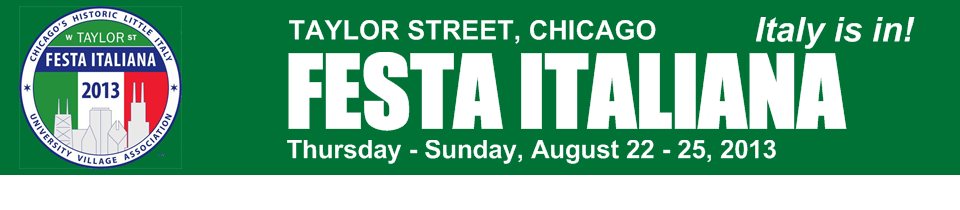 Summer is the time for street and neighborhood festivals. This is one of my favorites. It’s in little Italy, the old Italian neighborhood near the UIC campus. Festa Italiana runs through Sunday on Taylor Street between Racine and Ashland. There’s food from all the great Taylor Street restaurants and entertainment ranging from Italian-surnamed crooners to new bands such as This Must Be the Band, Acoustic Generation and my favorite band name, Inbound Kennedy.
The highlight of the festival, for some, will be the meatball-eating contest. Personally, I’m grossed out by food-gorging displays. The winner will be the person who eats eight meatball-slider sandwiches in two minutes. (That is disgusting.)
Lill Street Art Festival
The Lill Street Art Center (which started out on Lill Street) is celebrating its 10th year in its Ravenswood location, at the corner of Ravenswood and Montrose. The opening reception tonight will celebrate Best Served Hot: Ceramics for the Coffee Ritual, cosponsored by Intelligentsia Coffee. Saturday will include an open house and block party. Lill Street Art Center offers classes, a gallery and studio space for artists in ceramics, metalsmithing and jewelry, painting and drawing, printmaking, textiles, glass, digital arts and photography. I treasure a few pieces of ceramic jewelry from Lill Street.
Movies
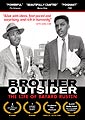 In honor of the 50th anniversary of the 1963 March on Washington and Martin Luther King’s “I have a dream” speech, you should watch the documentary about Bayard Rustin, the strategist and activist who organized the march. He was a key adviser to MLK until he was asked to leave (or was pushed out) because of his political past (socialist) and sexual orientation (gay). The film is Brother Outsider (available on DVD and streaming). It’s an excellent view of Rustin’s background, leadership and his activist life after 1963. President Obama will award a Presidential Medal of Freedom to Rustin posthumously. It’s bloody well time.
The Huffington Post has a good article on Rustin by Peter Dreier, E.P. Clapp Distinguished Professor of Politics at Occidental College.
Anna Karenina, the gorgeous Joe Wright version of Tolstoy’s tragic novel with a script by Tom Stoppard, is showing occasionally on HBO right now. If you haven’t seen it, do. It’s creatively staged–and staged is the right word because much of it is set in an old theater. The railroad scenes, as ice-encased trains arrive in Moscow or St. Petersburg, are not to be missed.
Eats
Have you been to Big & Little’s? It’s a fine place to stop for a fish taco, a fried oyster or shrimp po’ boy (my favorite) and many varieties of burger and sandwich choices. Also foie gras & fries or truffle fries. Yum. Delish. Not fancy. Big & Little’s is at 860 N Orleans, just north of Chicago Avenue. There’s a tiny parking lot and you can sit inside or outside (as I did today) or carry out. Cash only. It’s been featured on the Food Network’s Triple-D (Diners, Drive-Ins and Dives) and on Chicago’s Best on WGN and on Check Please on WTTW.
Wish I was at the Jersey Shore
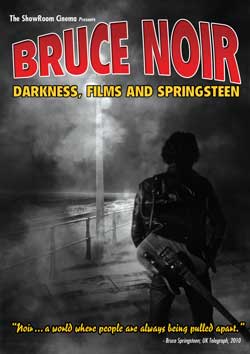 I often wish that and I occasionally go to that neighborhood we call Springsteenville: Freehold, Asbury Park and West Long Branch, New Jersey. This is one of those weekends. There’s a Bruce Noir Film Festival in Asbury Park. The five films being shown are those he’s mentioned in interviews or in songs.
Since I can’t be there, I’ll find another way to watch them. The films are:
- — Gun Crazy (1950; on which Springsteen based his song “Highway 29” from the Nebraska album)
— Badlands (1973; based on the Charles Starkweather murder spree story, which Springsteen tells in the song “Nebraska”)
— Out of the Past (1947; a Robert Mitchum film about a private eye)
— Atlantic City (1980; a Louis Malle film with script by playwright John Guare, starring Burt Lancaster and Susan Sarandon)
— Thunder Road (1958; Robert Mitchum plays a bootlegger trying to save the family moonshine business from big-city gangsters; lots of great road footage as Mitchum drives a “tanker,” a car modified to carry alcohol in the fuel tank)
Lit pick: Nana, Emile Zola and Second Empire Paris
Posted: August 22, 2013 Filed under: Art & architecture | Tags: Art Institute of Chicago, Emile Zola's Nana, Julia Gray, Mr Selfridge Leave a commentI just finished reading Nana by Emile Zola, a deliciously risqué novel about Paris and the demimonde at the end of the 1860s. I haven’t read anything by Zola since college but I was inspired to read it by the current exhibition at the Art Institute of Chicago.
 After touring it or the second time, I’m totally under the spell of Impressionism, Fashion and Modernity. As everyone who has written about the exhibit has said, it’s a delectable feast of paintings of the Impressionism period by Manet, Monet, Renoir, Degas, Morisot, Tissot and others, drawn from the Art Institute’s own excellent collection, and featuring exceptional works from the Musee d’Orsay in Paris and the Metropolitan Museum in New York.
The art is enhanced by beautifully displayed archival gowns and accessories of the period. Most important, the exhibit signage weaves a compelling story about societal and cultural change of the period from the 1860s through ca. 1890 and its impact on women’s apparel and lives.
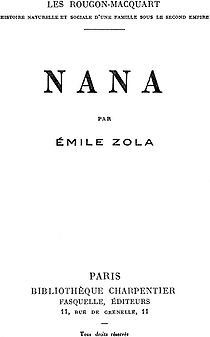
At one of the Art Institute lectures on the exhibit, the speaker talked about other artists of the period and mentioned the writings of Emile Zola and especially his novel Nana, which features lavish descriptions of the costumes, décor and customs of the Second Empire in Paris. (Image: Cover of the original French edition, courtesy of Wikipedia.)
I had never read Zola’s novel, so I downloaded it to my Kindle when I got home that day. From the first chapter, I was amazed at Zola’s attention to detail of women’s costumes and the décor of the period.
The protagonist, Nana, is a young up-from-the-streets courtesan who becomes famous as “la blonde Venus” playing the lead in a fictional operetta, where she appears clothed only in a head-to-toe veil. She can’t act and can’t sing. But she is beautiful, voluptuous and charismatic. Nana is irresistible to wealthy Parisian men of all ages. In the beginning, she wants to find a man who can help support her and buy her suitable gowns and jewelry. But her tastes expand to include mansions, horses, servants – all requiring more and richer men. She becomes more and more grasping, profligate and promiscuous and ruins each of the men in turn until finally creating her own downfall.
The story is vivid, dramatic and quite erotic (without X-rated detail). Most of the chapters in the book detail the happenings at a given event. The opening night at Théâtre des Variétés. A midnight dinner party at Nana’s home. A day at the races, when a filly named Nana owned by one of her admirers miraculously wins the race despite early odds against it. An engagement party for the daughter of Nana’s chief “sugar daddy,” who is about to go bankrupt. The crowd scenes–masses of fashionable people gossiping, chattering, flirting—are especially noteworthy. The first half of the book is a little slow but the second half is full of energy and speeds to the denouement.
You could say that Nana prefigures the celebrity culture of the 21st century. The book is about wealth, sex and society and shows us how the fashionable set lived in Paris in the last few years of the Second Empire. The book was a huge success when it was published in 1879.
Nana on screen
Does Nana sound like a movie? It’s been made into movies four times. I started to watch the one that was available online (streaming on Netflix) and decided I’d rather finish the book. It is the 1982 Italian version (everyone speaks English) directed by Dan Wolman. This Nana is very racy (lots of female nudity) and very loosely based on the novel. I would like to see the 1926 version by Jean Renoir; I’m looking for a DVD.
Also by Zola
Zola, a prolific writer, wrote another book that’s related to the Impressionism/fashion exhibit. Titled Au Bonheur des Dames or The Ladies’ Paradise, it’s set in the world of a department store, an innovation of the 19th century as detailed in some of the Impressionism/fashion displays. The store is modeled after Le Bon Marché (still in business today and owned by LVMH Luxury Group) and details the operations of the department store. Retailing is a part of my business background and so these stories fascinate me. I’ve written about my retailing life in this article about Mr. Selfridge, the PBS series that has a strong Chicago connection. Season two will be showing in 2014.
And one more reading suggestion
Julia Gray, a Chicago writer, has written an excellent article on the strange copyright issues connected to the photography of Vivian Maier, whose work has become famous since her death in 2009. Check out the article at Gapers Block. Gray’s article also describes how Maier’s film, negatives and other photographic possessions were bought in rental storage locker auctions, mainly by three people who have profited from her work in various ways.
 nancy bishop's journal