May mashup: My pop culture diary
Posted: May 31, 2014 Filed under: Art & architecture, Movies, Music, Theater | Tags: Court Theatre, E Street Band, Profiles Theatre, theandygram.com 3 CommentsBusy end-of-May at Nancy’s house. House guests, including two perfectly darling grandsons, and a family wedding at a grand venue. So I haven’t seen much theater since the last time we chatted. Still, there were a few great movies, one so-so play, and news about a new website that I’m writing for. You’ll find some TV recs too.
First, some architecture notes
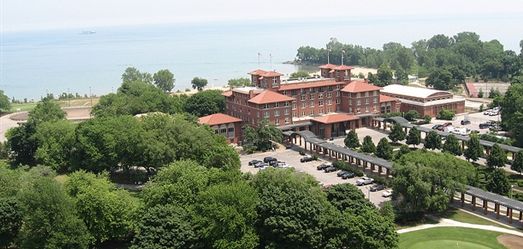
South Shore Cultural Center. Photo courtesy Chicago Park District
A lakefront wedding. The wedding was at the beautiful South Shore Cultural Center, right on the lakefront at 71st Street. It was originally a private country club and it’s now part of the Chicago Park District. If you haven’t been there, it is simply lovely and worth a visit. If you’re planning an event, it should be on your list of venues.
The country club, built in 1906, was designed by Marshall and Fox, who designed the Drake and Blackstone Hotels. It was expanded in 1916, also by Marshall and Fox. (Benjamin Marshall also designed the elegant Beaux Arts apartment building at 1550 N State Parkway.) The wedding ceremony was held in the beautiful solarium, looking out at the lake, and then we moved to a reception hall for champagne and greetings, and finally to the dining room. You can see some CPD photos here.
An architecture scavenger hunt. If you’re a fan of Chicago’s Loop architecture, you should sign up for the Chicago Architecture Foundation’s scavenger hunt next Saturday afternoon, June 7. The game starts and ends at the Railway Exchange Building at 224 S Michigan; there’ll be an awards reception in the grand atrium. You’ll find the details in my story on Gapers Block.
Theater notes
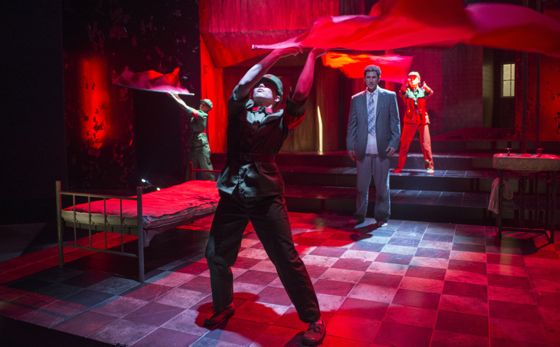
Photo by Michael Brosilow.
M Butterfly at Court Theatre. The script by David Henry Hwang is marvelous, very smart and well-written. I thought the Court production left a little to be desired—it was a bit flat. The reviews were definitely mixed from “not recommended” to “highly recommended.” I imagine director Charles Newell might have taken some notes and spiffed up his production since then. The play tells the amazing story of the French diplomat who was deceived for 20 years by a male opera star posing as a female diva. Despite my review, I do recommend a trip to Hyde Park.
Here’s my review; my rating was “somewhat recommended.”
TheAndyGram.com. This is a New York-based theater website that covers Broadway, off-Broadway, Washington, Connecticut and, now, Chicago. My first review (of Cock at Profiles Theatre) is now up on theandygram.com. See it here. It’s a terrific show and I highly recommend it. It runs until June 29; details are at the end of my review.
My headline is “… A Riveting Play That Explores All the Meanings of Its Title.” Here’s how my review begins:
Cock is a play title you very rarely find in a theater review headline. I’m hoping that’s because of fear of internet anti-obscenity filters, rather than puritanism on the part of copy editors. The play by Mike Bartlett is a comedy about sexual identity, a love triangle and a power play among three characters: John, a bisexual who is fighting to discover his identity; M and W, his lovers, who battle each other and John himself to determine the course of their lives.
Movies I loved…or at least liked
The Normal Heart. HBO’s production of Larry Kramer’s play about the early years of the AIDS epidemic is excellent. I wasn’t sure what to expect but I had read enough about the production, and the playwright’s involvement, to be optimistic that its edges wouldn’t be softened. And they weren’t. We needed to be reminded about the terror of the disease first known as “gay cancer.” And to be reminded that the war is not over. The tagline, “To win a war, you have to start one,” is an ideal descriptor.
The acting is excellent. Mark Ruffalo plays a very believable Ned Weeks (Larry Kramer) and there are terrific performances by Julia Roberts, Jim Parsons and Matt Bomer. I originally saw the play off-Broadway in about 1985 and Timeline Theatre did an excellent production last year. I highly recommend the HBO film. Here’s the trailer.
Stoker and Blue Velvet. My film group discussed Stoker last week and we’re discussing Blue Velvet soon. They are both excellent films and each is weird, creepy and outrageous in its own way.
Stoker (2013, 99 minutes) is the first English-language film by the Korean director, Chan-Wook Park. (He directed the so-called vengeance trilogy, which includes Oldboy.) His title is surely meant to remind us of Bram Stoker, who created Dracula, but Stoker is just a family name. A family whose father is killed in a mysterious auto accident, whose daughter ( Mia Wasikowska) is obsessed with hunting and saddle shoes, and whose mother (Nicole Kidman) can’t get her daughter to love her. But at the funeral, an uncle (Matthew Goode) appears out of nowhere and befriends mother and daughter. The story is a bit of a takeoff on an Alfred Hitchcock film, Shadow of a Doubt, about a young girl’s relationship with her serial-killer uncle. Stoker has lots of strange and beautiful cinematography and features a psychologically steamy piano duet of Philip Glass music.
If you stay up late or get up early or set your DVR, HBO is showing Stoker June 1 at 3:20am CT.
Blue Velvet (1986, 120 minutes) is an early David Lynch film, before Twin Peaks. The weirdness is set off when an earnest young man (Kyle MacLachlan) finds a severed human ear in a field as he’s walking home. The plot revolves around his boy detective attempts to solve a mystery with a very young Laura Dern as his co-star. Isabelle Rossellini is a nightclub singer who performs “Blue Velvet” and Dennis Hopper is her crazed tormentor, who uses a mask to breathe in gas to energize his crimes.
Roger Ebert hated this film so much that he gave it one star in 1986. He and Gene Siskel disagreed on it, however. (When it was revived 20 years later, one reviewer said it was still “a hilarious, red-hot poker to the brain.”) Here’s a clip of the “At the Movies” review from 1986. Go to 2:35 to see Roger and Gene debate the film.
Rock and Roll Hall of Fame Induction
Yes, tonight is the night that we can see the E Street Band inducted into the Rock and Roll Hall of Fame. Their frontman, Bruce Springsteen, was inducted in 1999. The induction ceremony took place in April but tonight is the three-hour-plus event, with all the honorees, along with a bunch of special guests performing. The band is being inducted in a category that used to be known as sidemen and now is called the Award for Musical Excellence.
Other inductees are Peter Gabriel, Nirvana, Hall and Oates, KISS, Linda Ronstadt and Cat Stevens. Artists are eligible for the Rock Hall 25 years after their first recording. Rock Hall members (including me) voted for a list of eligible musicians and then the panel of judges picks the inductees. My DVR is already set.
Wrigley Field: Memories, behind the scenes
Posted: May 23, 2014 Filed under: Chicago | Tags: Baseball, bleedcubbieblue.com, Bruce Springsteen at Wrigley Field, Wrigley Field 4 CommentsIt’s always fun to go behind the scenes at a favorite venue. I did that recently at the grand old Auditorium Theatre and yesterday I had a “backstage” tour of grand old Wrigley Field, now celebrating its 100th anniversary.
SCORE, a business nonprofit for which I volunteer, had its monthly meeting in the United Club at Wrigley. We heard from Cubs’ owner Tom Ricketts on the day his new plan for renovating Wrigley was announced. His talk was about business, but mostly the business was baseball.
He made a good case for his renovation plan. The rooftop owners are not happy with it, of course, but I have trouble being sympathetic with them. For years, people dragged lawnchairs and coolers up to their roofs to sit and watch the game. That was fun and cool. But when they started selling tickets, building “bleachers” on their roofs, and forming corporate entities, they lost my sympathy. Some even tore down old three-flats and built faux old buildings that are just an excuse for a huge seating area on the roof. Yes, they have a 2005 revenue-sharing contract with the Cubs, but it still amounts to selling a service owned by another entity. The Cubs’ position is that the contract legally permits them to make any renovations, including adding large signage, etc., as long as the city approves.
“Hey, Rooftop Owners! Shut Up, Already,” is what Al Yellon has to say about this at his website, bleedcubbieblue.com.
David, our tour guide, walked us up to the bleachers for a little history of the park and a great view of the scoreboard, one of only two manual scoreboards in the majors. (The other one is at Fenway Park, which celebrated its 100th in 2012.)
Then we walked down to the visitors’ locker room (tiny and in its original 1914 size and shape), up to the press boxes, and then back down to the stairs and corridors, lined with portraits of famous Cubs and Wrigley scenes, to the Cubs’ locker room. David provided anecdotes and history tidbits all along the way. Finally, we went out to the visitors’ dugout on the first base line and found out what it felt like to sit on that dugout bench.
The last time I was at Wrigley Field was for the Bruce Springsteen concerts in September 2012. As I stood in the lower boxes, about where I sat for the second concert, I looked out toward center field, wishing there was a concert stage there.
My first visits to Wrigley Field were when I was 7 or 8 with my mother and neighborhood moms and kids. We would go to Wrigley on Ladies’ Day, when tickets were 25 cents for “ladies” and kids were free. We rode the streetcar from our far northwest side Montclare neighborhood and took a picnic lunch. I loved the excitement of being in the ballpark and the fun of the long streetcar ride with my friends.
When I was 12, my father bought tickets for us to go to Opening Day at Wrigley Field. But it turned out he wasn’t able to take the day off after all, so Mom and I went. It was cool and drizzly but it was the first time I had a box seat and it was great. Mrs. Shannon, my seventh grade teacher, didn’t think opening day was a good excuse for my parents taking me out of school. She was snippy with me for weeks. I guess it would have been better if my mother had just sent a note saying I was sick.
I have lots of other Wrigley memories, including taking German colleagues to a game in 1988 when I was working at A.T. Kearney, the management consulting firm. They thought baseball was a very odd, slow game. Before we went to the game, I wrote an essay to orient them titled “Baseball in Chicago.” I’ve revised it over the years, and since it’s now more than 2000 words, I’ll spare you. This is part of the introduction; remember it was written in 1988.
Baseball fans in Chicago are divided geographically. The White Sox play in Comiskey Park on the south side; the Cubs play in Wrigley Field on the north side. If you live on the south side, you grow up a Sox fan; if you live on the north side, you are a Cubs fan. Any deviation is considered treasonous.
Sox fans tend to be vicious, however, while Cubs fans are generous and benevolent. A Sox fan will cheer when the Cubs lose. A Cubs fan will only cheer a Sox loss if they lose to the Cubs.
All Chicago baseball fans dream of a “subway series,” a World Series between the two Chicago teams. At any time during any season when both teams are in first place in their divisions, even if it’s only for one day, Chicago fans and sports columnists will say wistfully “this may be the year.” The two teams now play each other every season in the Crosstown Series.
Chicago storefronts: Great new theater
Posted: May 17, 2014 Filed under: Chicago, Theater | Tags: Interrobang Theatre Project, Profiles Theatre, Steppenwolf Theatre, The Den Theatre, The Hypocrites, Trap Door Theatre 1 CommentI’ve seen five plays in the last two weeks. Most of them are provocative and well-produced gems from small theater companies, generically called storefronts, although they may well be in warehouses, church basements, behind restaurants or in old neighborhood centers. They’re by far the best theater bargains in Chicago and often demonstrate quality superior to the more high-profile theaters. Here are my theater picks for today.
Vatzlav at Trap Door Theatre
 Yes, I’m always raving about this company, which produces plays mostly by eastern European dramatists. I like the bitter edge of these plays, their black humor and their historical references and precedents. Their current show, Vatzlav by Slawomire Mrozek, pokes fun both at capitalism and authoritarian governments. Vatzlav, a former slave, is saved from an ocean disaster when he lands on a magical island where inexplicable things happen. The inhabitants include a blind old man named Oedipus, a youth who turns into a bear, a roving ukulele player, and the rich couple who own the island. Don’t try to make sense out of it; just enjoy it. The set is simple and the costumes as usual are brilliant and colorful.
Playwright Mrozek died last August in France. He was often referred to as the Polish Ionesco and his work is compared to that of Czech playwright Vaclav Havel. Vatzlav runs thru May 24 at the Trap Door Theatre, 1655 W Cortland.
Director Beata Pilch, whose bio says she was born in the Polish district of Chicago, is founder and artistic director of Trap Door. The company has been invited to Poland to work with Teatr Witkacy and they’re raising funds for the trip. You can donate here.
The Doll’s House Project: Ibsen Is Dead at Interrobang Theatre Project
 Henrik Ibsen’s The Doll’s House, published in 1879 and premiered in English in 1889, is now considered a groundbreaking piece of modern drama. It explores gender politics, scandals and marital relationships, and it brought realism to theater, when most were staging traditional costume drama. Calamity West’s new play is inspired by Ibsen’s but it’s not an adaptation. Nora in the original is the first dissatisfied housewife—84 years before Bette Friedan’s book explained the problem to us.
In the new version, Nora is a stay-at-home housewife, dominated by her successful husband Torvald, who doles out her allowance sparingly and monitors her activities. Her main job is recreational shopping. So far, like Ibsen. The new play is set in Manhattan in 1989 on the day the Berlin Wall fell. An old friend of Nora’s arrives to visit and the play veers away from the Ibsen version. The memories and tensions between Nora and Christine are the highlight of the play, while Torvald and the neighbor doctor circle around them and spar over Nora’s affections. The performers are excellent and director Jim Yost keeps the 90-minute play snapping along. The script still needs some work; there are parts that are slow and some of the dialogue seems dated.
The idea of Nora as a rich stay-at-home wife was dated in 1989, unless you moved in the circles of high-powered lawyers, financiers and consultants. In those worlds (where I worked as a marketing minion in those years), the rich stay-at-home dabbler wife was the standard. I met dozens of them at partner meetings. I couldn’t figure out how they spent their time. Recreational shopping, most likely.
The Doll’s House Project runs thru June 8 at the Athenaeum Theatre.
Cock at Profiles Theatre
 Cock is a play title you very rarely find in a review headline. I’m hoping that’s because of fear over internet anti-obscenity filters, rather than puritanism on the part of copy editors. The play by Mike Bartlett is a love triangle and a power play among three characters: John, a bisexual who is fighting to discover his identity; M and W, his lovers, who battle each other and John himself to determine the course of their lives.
The setting is London in the present but the set mimics a small arena where cock-fighting might take place. The floor is covered with fake gravel; the arena is surrounded by a low iron wall. The characters frequently take positions at opposite sides, as if about to face off. In the first half, new scenes are signaled with a bell like the start of a new boxing round; after blackouts, the characters open new scenes in attack pose. The set design and the production vigorously directed by Darrell Cox make clear that the title refers to several meanings of the word, including adult male chickens and gunlocks, in addition to the male anatomy.
The actors create an intense atmosphere, which is enhanced by the intimate space. (The audience sits in tiered wooden stalls with cushions provided at the door.) The semi-comfortable seats and the tension among characters mean that 80 minutes is about the most one can tolerate of this drama that forces John to, finally, make a choice.
Cock runs thru June 29 at Profiles Theatre, 4139 N Broadway.
The Way West at Steppenwolf Theatre
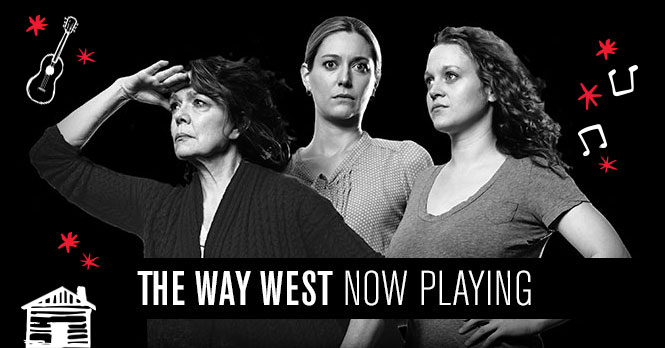 Mona Mansour’s play seems to celebrate America’s pioneer spirit and our western expansion, but ends up in personal bankruptcies in 21st century Los Angeles. The family members—a mother and two daughters—have each in her own way found a way to financial ruin. Mom just quit paying her bills, is ignoring her illness, and believes everything will be ok. The older daughter has taken time off from her job in Chicago to help her mom sort thru her records and file bankruptcy. Her younger sister cares for her mother and has gone from job to job; she is in much the same financial shape as her mother. The older sister at first seems like the responsible one, but after she loses her job (learning about it by voice mail), everything falls apart for her too.
The story line is right out of 2008 and could be stronger with a more tightly edited script. The unfortunate musical interludes with western songs by the mother, accompanied by her daughters on guitars, are strange breaks in the action that just don’t work. (The wagon train and campfire projections behind the performers only increase the silliness.)
The Way West runs two hours plus intermission and can be seen thru June 8 in Steppenwolf’s downstairs theater. It’s one of the few times in my 20+ years as a Steppenwolf subscriber that I’ve been disappointed by a production.
More theater news: Expansion project for The Den Theatre and The Hypocrites
The Hypocrites, one of my favorite small theaters, will be leaving their claustrophobic basement space at Chopin Theatre and moving into a new space nearby on Milwaukee avenue that’s being taken over by The Den Theatre. The Den, another of my faves, currently has several performance spaces at 1333 N Milwaukee over a large empty retail space. They’re taking over that space and it will be the new home of The Hypocrites. It’s a great story for Chicago theater and for the Wicker Park neighborhood. You can read more about it in my article at Gapers Block.
The joy of talking: Conversations short and long
Posted: May 10, 2014 Filed under: Digital life, Movies | Tags: CFLX312 meetup, Gene Siskel Film Center, WordPress meetups 3 CommentsI was thinking the other day how much I enjoy the various meetups and discussion groups I belong to. Most weeks I have one or two get-togethers with friends and acquaintances who share some of my diverse interests. It’s a real joy of city life.
The news media confirm that more and more of us are getting tangled up in our technology. We’re not having as much human interaction as we used to—or as much as we should have for our mental and emotional health.

My iPhone–the source of tech addiction
Serious highway accidents are caused by texting while driving, pedestrian tumbles are caused by texting while walking. Actually, while I’m a major tech geek, I don’t understand either of those phenomena. When I’m sedentary or at least stationary, I’ll use whatever device I have in hand for most any purpose. Reading, listening, talking, texting, getting directions, taking photos, finding a coffee shop. When I’m walking (or driving), I want to know that I’m not going to crash or tumble. In motion, I’m paying attention to where I’m going. (This is only partly because, with age, you’re more likely to fall, and some of your senses are in decline. Or so I’m told.)
Casual chat. I read a New York Times article recently in which social scientists studied the value of casual conversations. A chat with the coffee barista, the store cashier, the pharmacist, the doorman, the person sitting next to you on the bus. These interactions make us more cheerful, the social scientists found, and may ease the anomie of living in a modern metropolis.
I enjoy those interactions. And I especially enjoy long conversations on interesting and sometimes provocative topics—with friends, relatives, members of my discussion groups. Right now, I belong to four discussion groups. I really value them as ways to expand my circle of friends and acquaintances, and to keep my brain in constant activity, mulling over new ideas and churning out concepts for discussion and writing.
Two of my groups are fairly traditional discussion groups—one political, one focused on books. They were formed by friends inviting friends inviting friends. Each meeting is at someone’s home and focuses on one topic.
Book group
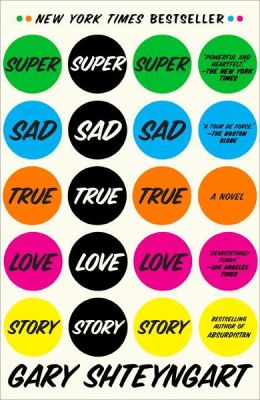
Next up for my book group.
We discuss one book, either fiction or nonfiction, at each meeting, agreed on by members in advance. It’s very rare that a member doesn’t finish a book. Everyone really takes the reading seriously. (There was one occasion when the book choice—Henry James’ The Ambassadors—brought about a near-unanimous revolt. We changed books midstream.) Sometimes we have a professional moderator but usually one of our members leads the discussion. And if we spend a little time chatting about family, work and travel, that tends to knit the group more firmly together.
Political group
The political/policy group discusses one topic, usually chosen from articles in The Nation, a political magazine we all value. Yes, we too often agree on everything but we really do try to bring in topics and members that will generate disagreement.
Meetups are a newer kind of group. They bridge the technological and the personal relationship world by bringing together total strangers who have common interests for in-person meetings.
Film meetup
I belong to an excellent film meetup. It has hundreds of members, but the meetups at a local tea shop, bar or cinema are rarely more than 12 or 15 people. The cast shifts for each meetup, but there’s a core group of about 30. Very diverse group. All ages, races, genders, film interests, areas of expertise. I have never had such good discussions at which I also learned so much about a topic. This group has an excellent and creative organizer, which is the basis for its success.
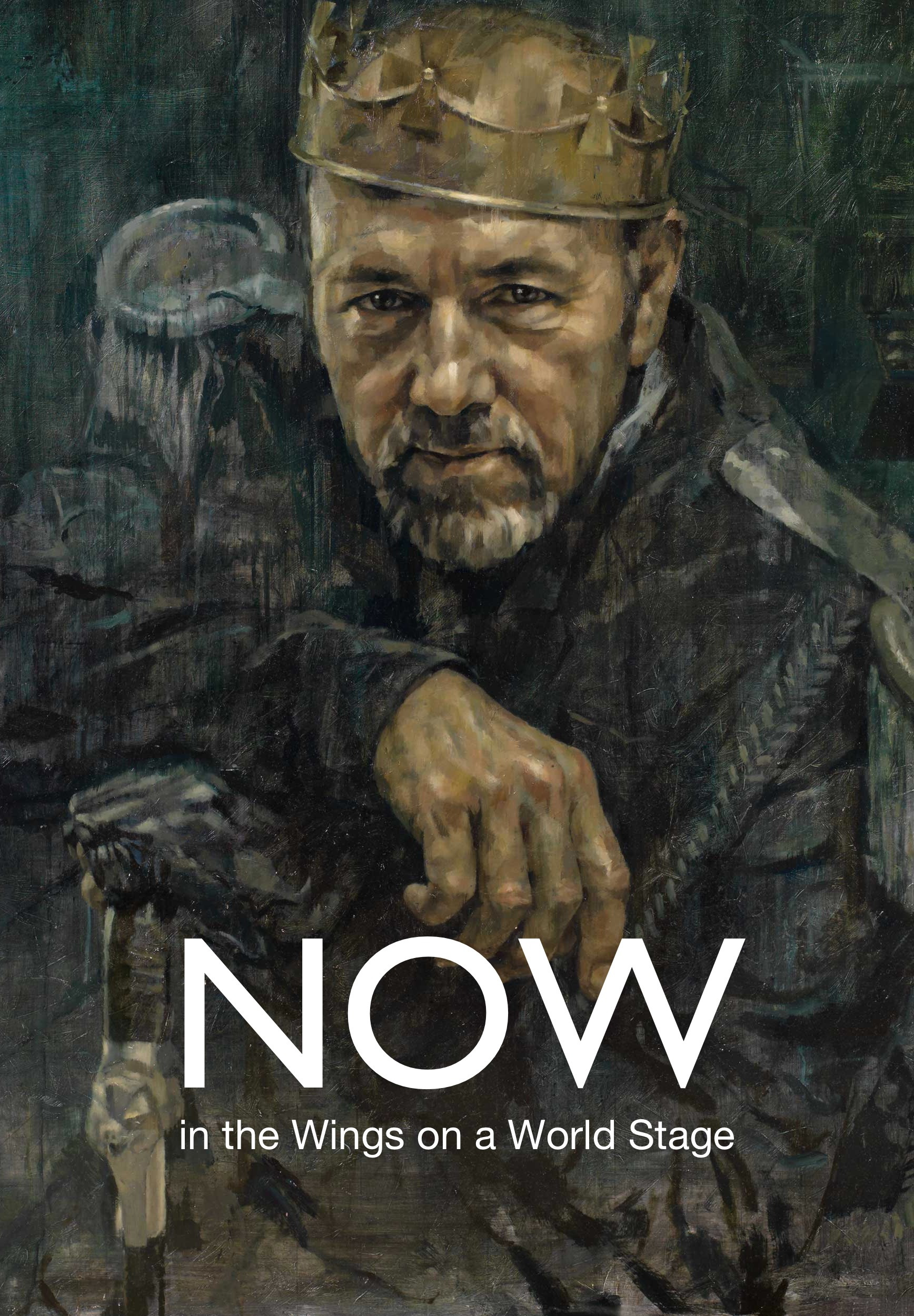 Our regular film discussions are planned to discuss one or two (related) films that we all see in advance. Other events are held to view a film together and then discuss it afterwards. In the last week, I hosted two such meetups at the Gene Siskel Film Center. We saw Orson Welles’ Othello and a few nights later, a different group joined me for the new Sam Mendes/Kevin Spacey documentary about their Richard III production—NOW in the Wings on a World Stage. After both films, we stayed at the Siskel Center or found a cafe nearby to talk about the films. Both discussions lasted more than an hour.
Tech meetups
I also belong to a couple of WordPress meetups, which focus on WordPress usage questions and practices. (WordPress is the tech platform on which this blog is built; it’s a user-friendly and widely used platform.) I always meet new people and get answers to my questions and new ideas at these meetups. You can probably find a meetup for virtually any techy project you’re working on.
A sidebar on Meetups
 Meetups run on a social networking portal that facilitates offline, in-person local meetings. Meetup was founded after the 2001 attack showed the founders how the internet could help connect people in a crisis. Today, Meetup says it has almost 16 million members in 196 countries. Meetup organizers pay a small fee each month to meeetup.com and members are usually asked to chip in.
If you want to try out Meetup, go to meetup.com and put in your zip code. Check the topics you’re interested in and you’ll be offered a menu of meetups in your categories. You create an account to join and then you’ll receive email announcements about coming meetups on your topics.
Yes, some meetups are lame and never do much while others are vibrant and active. If you find one of the former, just try out another. You’ll meet new people and learn new things. And most important, you’ll find you are creating new human interactions (i.e., friendships) in this complex and tendentious technological age.
Follow this blog
If you’d like to receive an email when I post a new article on nancybishopsjournal.com, just put in your email address on the upper right side of this page. I promise no spam and you don’t need a password!
May Playbill: Fighters, painters, mammoths and more
Posted: May 2, 2014 Filed under: Movies, Theater | Tags: @CFLX312, A Red Orchid Theatre, Gene Siskel Film Center, Remy Bumppo Theatre, Saint Sebastian Players, Seanachai Theatre, The House Theatre, Theater Wit 1 CommentI’ve seen lots of plays lately, as usual, and wanted to give you a little recap of a few to see, or not.
Lay Me Down Softly at Seanachai Theatre
Seanachai does an excellent job with this terrific Irish script by Billy Roche. It’s a tough story about a traveling roadshow that includes a fake bearded lady, carnival booths and fake boxing ring challenges. Every day is the same; only the towns change. The main story thread is about Dean, a boxer who can’t seem to win, and Junior, a once-champion who was forced to retire because of an injury. The bullying roadshow owner Theo and the cut man and boxers’ mentor Peadar are the other two male characters. Two women create really strong performances to anchor the play. The boxing ring set is handled with great care and almost seems to create a play within a play.
My Gapers Block colleague, Alice Singleton, reviewed it and adds some interesting insights.
Lay Me Down Softly runs until May 25 at the Den Theatre, 1333 N Milwaukee Ave. Like Seanachai’s recent production of The Seafarer, which I reviewed in December, it’s a must-see. Oh, how I love those Irish playwrights.
Dorian at The House Theatre
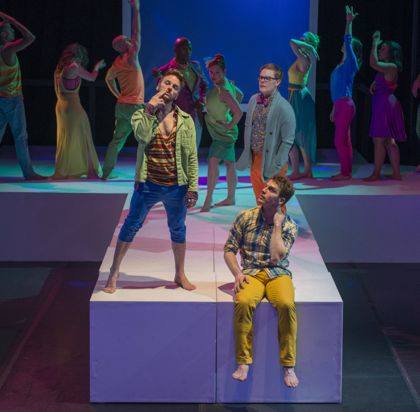
Photo by Michael Brosilow.
Dorian is an adaptation of the great Oscar Wilde novel, A Picture of Dorian Gray. It’s a visually interesting production that stresses the personal relationships among Dorian, his portraitist and friends and party people of today’s London. It’s the well-known story of Dorian–the man who didn’t age while his portrait did. House stages it in “promenade” style, which means most of the audience is mingling with the actors during the action, which can take place in the artist’s studio, at parties, galleries or performance spaces. I recommended it with a three-star review, and added this:
“This is not a play to attend because you love the writing of Oscar Wilde, notably in his fabulous plays like Lady Windermere’s Fan, A Woman of No Importance, Salomé, An Ideal Husband, and The Importance of Being Earnest, all written in the 1890s. The Picture of Dorian Gray, his only novel, is complex and challenging–and filled with smart, witty dialogue, but you won’t find much of that complexity or dialogue in Dorian.”
Dorian runs until May 18 at the Chopin Theatre on Milwaukee Avenue. My review here.
Seven Homeless Mammoths Wander New England
at Theater Wit
This play has received excellent reviews, every one of them richly deserved. It’s smart and well written, warmly acted by a fine cast, and directed by Jeremy Wechsler. The script is by Madeleine George, a writer with Massachusetts and Brooklyn connections. It’s about relationships between friends and lovers and the financially stressed closing of the museum at a small northeastern college, which will leave the mammoths homeless.
Every cast member is excellent. The day I saw it, one of the major roles was played by a superb substitute, Penelope Walker. Laura Fisher, an old friend from Famous Door Theatre days, is outstanding in one of the other lead roles. A special treat is the performance by Steve Herson, who plays various characters including the museum caretaker, a reporter, citizens at a town hall meeting, and a board member reading the hilarious minutes of the meeting. In each case, his accent is different and perfect. Also the museum exhibits include prehistoric people in diorama exhibits who voice the concerns of museum visitors.
Seven Homeless Mammoths is a great treat and you shouldn’t miss it. It runs until May 17 at Theater Wit on Belmont.
Mud Blue Sky at A Red Orchid Theatre
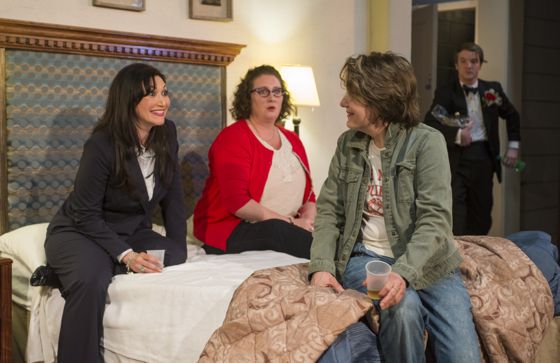
Photo by Michael Brosilow.
This is a terrific show at Red Orchid, with great humor, warm relationships, and things you didn’t want to know about airplanes. Here’s how my Gapers Block review begins:
“Loneliness, regrets, friendship, humor, and a little maternal instinct season A Red Orchid Theatre’s new play, Mud Blue Sky. Director Shade Murray gets the most out of Marisa Wegrzyn’s fine script, which revolves around airport life. The tiny Red Orchid space on Wells Street is perfect for the claustrophobic story of three very mature flight attendant friends on a layover at a hotel near O’Hare.” Beth and Sam are still flying. Angie lost her job recently and now lives in a Chicago suburb. Angie misses flying and the others can’t wait to get away from it. That’s the story until they get acquainted with a young man named Jonathan, who helps them find some relaxation and entertainment.
My review is highly recommended at theatreinchicago.com. Mud Blue Sky has been playing to sold-out houses and it’s now extended until June 29.
Our Class at Remy Bumppo
Our Class by Tadeusz Slobodzianek is a play about the Holocaust—set in the small Polish town of Jedwabne in the years leading up to World War II. The play was troubling and thought-provoking and my friends debated and disagreed about it afterwards.
The story begins in the schoolroom where members of “our class” study and play together. They are all friends, whether Jewish or gentile. Hints of anti-Semitism creep in to their school and their play from time to time and gradually increase. The key event is the 1941 massacre of virtually all the Jewish citizens—1,600 men, women and children–by their neighbors. The perpetrators are never accused, never held accountable. In the years that follow, various survivors lie about their role in the event, including one who hid and one who had converted to Christianity.
Despite the power of the first act, most of the second act is bogged down in excessive exposition. Too much detail kills the power of the first act. The play runs nearly three hours, with one intermission.
This is a risky sort of play for Remy Bumppo, which tends to produce superb quality Anglophile theater by great writers. Their regular ensemble is made up of talented and experienced Chicago actors. Our Class takes Remy Bumppo in a totally different, riskier direction and brings in some younger actors new to the company.
Reviews are virtually all “highly recommended” or four star. Our Class runs until May 11 at the Greenhouse Theatre Center.
Death Defying Acts at Saint Sebastian Players
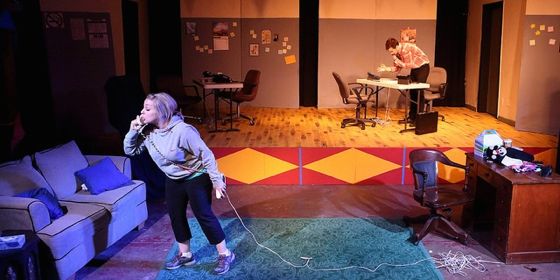
Photo by John C Oster.
Three short plays by three brilliant writers: David Mamet, Elaine May and Woody Allen. Unfortunately, they were all writing on their off days because the scripts in Death Defying Acts aren’t very good. The production is medium, with a few good performances. I really wanted to give this play a better review but I just couldn’t. The theater company decided to create a circusy atmosphere in the lobby and around the production, which was not a great idea. Here’s what I said about that in my Gapers Block review.
“One problem with the whole production is the overworked circus atmosphere. Yes, death-defying acts suggest a carnival with risky high-wire acts. Old circus posters decorate the lobby of the church-basement theater. Before the show opens, an old circus film, Here Comes the Circus, is projected across the stage floor. The crew is dressed in circus clown and aerialist costumes while making stage changes. But it’s a bit over the top, especially considering the lack of death-defying acts on stage.”
Death Defying Acts runs until May 18 at St Bonaventure Church, 1641 W Diversey. The theater space is in the basement; entry door on the west side of the church. Good news is that there’s free parking in the church lot.
And on screen, not stage
The Wind Rises returns. This wonderful Japanese animated film by the master filmmaker Hayao Miyazaki is scheduled for a two-week run at the Gene Siskel Center, May 16-29. I wrote about this film when it opened recently. It’s beautiful, hand-drawn throughout, rich and complex in its use of Japanese history and mythology. If you didn’t see it before, you have another chance.
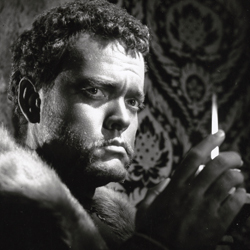
Photo courtesy Siskel Film Center.
Othello at Siskel. The great and greatly flawed Orson Welles 1952 production of Shakespeare’s Othello has been running at the Gene Siskel Film Center. I saw it for the third time last night (the first time was when I was in college at the old Fine Arts cinema, the second a few years ago at the Music Box). The 1992 restoration made a lot of improvements in visual and sound quality. It’s a powerful film, with Welles starring as the Moor. It’s clear why his film presence was so huge; he dominates every scene with his size, voice and expression.
The play is really Iago’s, as Harold Bloom insists in his essay on Othello in his book, Shakespeare: Invention of the Human. The actor who plays Iago in the film (Micheal Mac Liammoir, an Irish actor who founded the Gate Theatre),does a creditable job but can’t stand up to the Welles persona. Because he is Orson Welles, no matter what role he is playing.
 nancy bishop's journal